79 People Just Shared Their Creepiest Unsolved Mysteries | Unexplained
Top 10
79 People Just Shared Their Creepiest Unsolved Mysteries
When ordinary people start sharing their strangest, most disturbing, most unexplained experiences — and millions of others can’t stop reading — something deeper than entertainment is happening. These are unsolved…
Art Grindstone is the hard-nosed storyteller behind Unexplained.co, a veteran investigator whose life’s work sits at the crossroads of the paranormal, fringe science, and the shadows most people try not to look into. With decades spent chasing impossible stories — black-budget psychic programs, vanished Cold War experiments, desert rituals that sparked UFO waves, and the strange phenomena buried in America’s forgotten backroads — Art brings a rare combination of skepticism, awe, and journalistic precision. He’s not here to debunk. He’s not here to blindly believe. He follows the evidence wherever it leads — even when it leads someplace deeply uncomfortable. Known for his immersive, cinematic style and his ability to turn obscure research into gripping narrative, Art has built a devoted following across podcasts, long-form features, documentaries, and serialized investigations. His interviews are direct. His analysis is unflinching. His voice has become a staple in the modern paranormal renaissance — the guy people turn to when a story is too strange, too complex, or too dangerous for anyone else to touch. Off-mic, Art works with a distributed network of researchers, archivists, and field operatives who help surface the stories mainstream media ignores. On-mic, he transforms their findings into meticulous, high-impact reporting that refuses to insult the intelligence of true believers. His philosophy is simple: Take the phenomenon seriously. Treat the audience with respect. Tell the story as if the world depends on it — because sometimes it does. When Art Grindstone digs into a case, he isn’t just chasing a mystery. He’s tracing the fault lines of reality itself.
6 min · 1,247 words
In This Report(13)
When ordinary people start sharing their strangest, most disturbing, most unexplained experiences — and millions of others can’t stop reading — something deeper than entertainment is happening. These are unsolved mysteries real stories that refuse to be explained away, and they’re resonating across the internet like a collective confession.
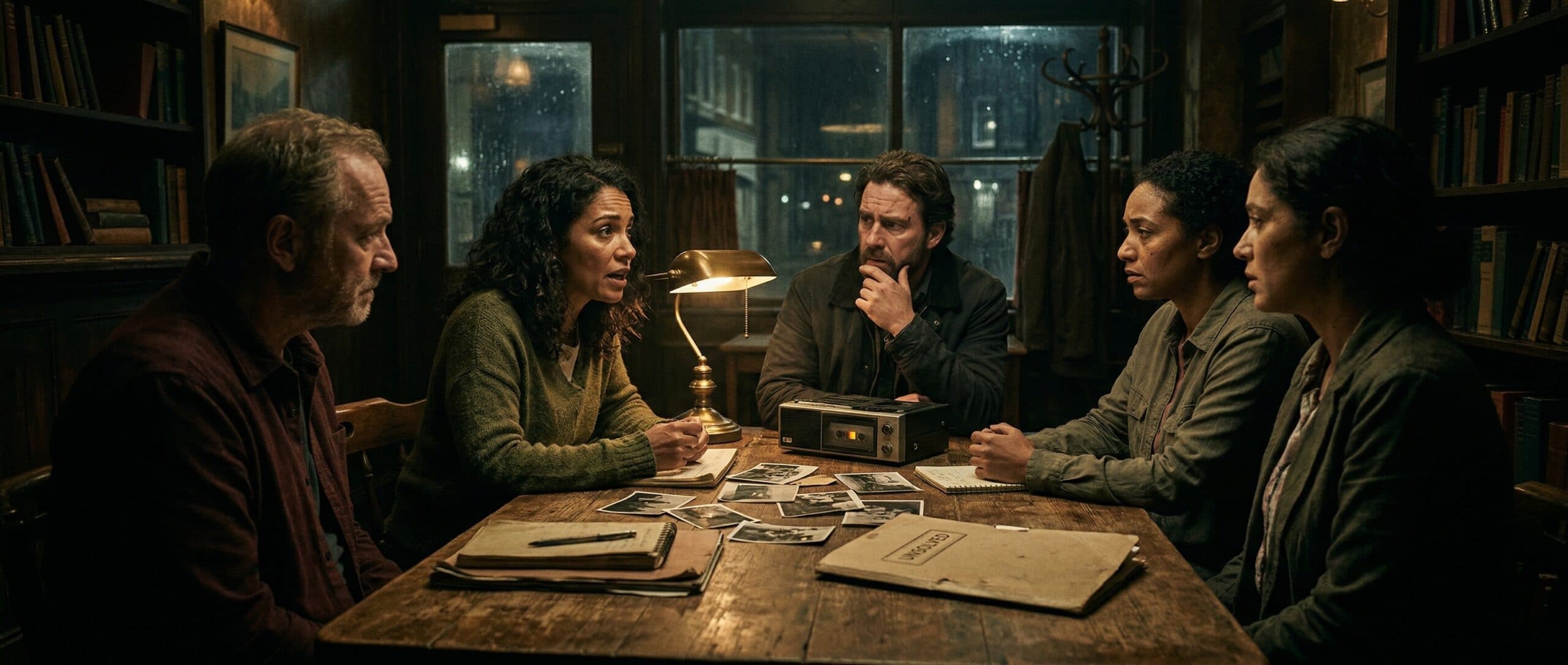
Bored Panda recently published a listicle compiling 79 of the creepiest unsolved mysteries shared by real people online — and the response was immediate and overwhelming. Ghost sightings, shadow people lurking in doorways, unexplained disappearances of loved ones, dreams that predicted accidents before they happened, cold cases that haunted entire communities. The piece went massively viral, not because it was sensational or fabricated, but because it felt profoundly, uncomfortably real. These weren’t Hollywood horror stories. They were your neighbor’s story. Your aunt’s story. Maybe even yours.
What This Story Actually Says
The Bored Panda compilation didn’t invent anything. It gathered. What makes it remarkable is the sheer breadth and consistency of what people submitted. Across dozens of contributors spanning multiple countries, several themes emerged with striking regularity: encounters with shadow figures that couldn’t be explained by sleep paralysis alone, precognitive dreams that turned out to be accurate down to specific details, disappearances of people or objects that defied rational explanation, and cold case connections that left contributors wondering whether they’d witnessed something connected to an unsolved crime.
Advertisement
The stories weren’t polished. They were raw, often grammatically imperfect, and filled with the kind of specific sensory detail — the particular smell in the hallway, the way the shadow moved, the exact words spoken in the dream — that’s hard to fabricate convincingly. Readers responded not with disbelief, but with recognition. Thousands of comments began with some version of: “This happened to me too.”
Why This Topic Spreads So Easily
Viral paranormal content isn’t a new phenomenon, but the Bored Panda format tapped into something particularly powerful: social proof at scale. When one person shares a ghost story, it’s anecdote. When 79 people share structurally similar experiences from independent sources, it starts to feel like data — even if it isn’t scientific data.
Social sharing platforms have fundamentally changed how paranormal experiences are communicated. Where these stories once lived in hushed conversations or regional folklore, they now spread globally within hours. The result is a kind of distributed folklore archive — unvetted, unfiltered, but also unscripted. has consistently found that large percentages of Americans report believing in or having experienced something they consider supernatural, and platforms like Bored Panda are simply giving those experiences somewhere visible to land.
Obama Says UFO Disclosure Won’t Happen — ‘Government Is Terrible at Keeping Secrets’
Former President Obama’s unexpected remarks on UFO disclosure and government secrecy are spreading across Reddit and UAP forums. Is it an off-hand joke or a genuine signal from a former commander-in-chief?
May 12, 2026 • 5 min read
Prophecy
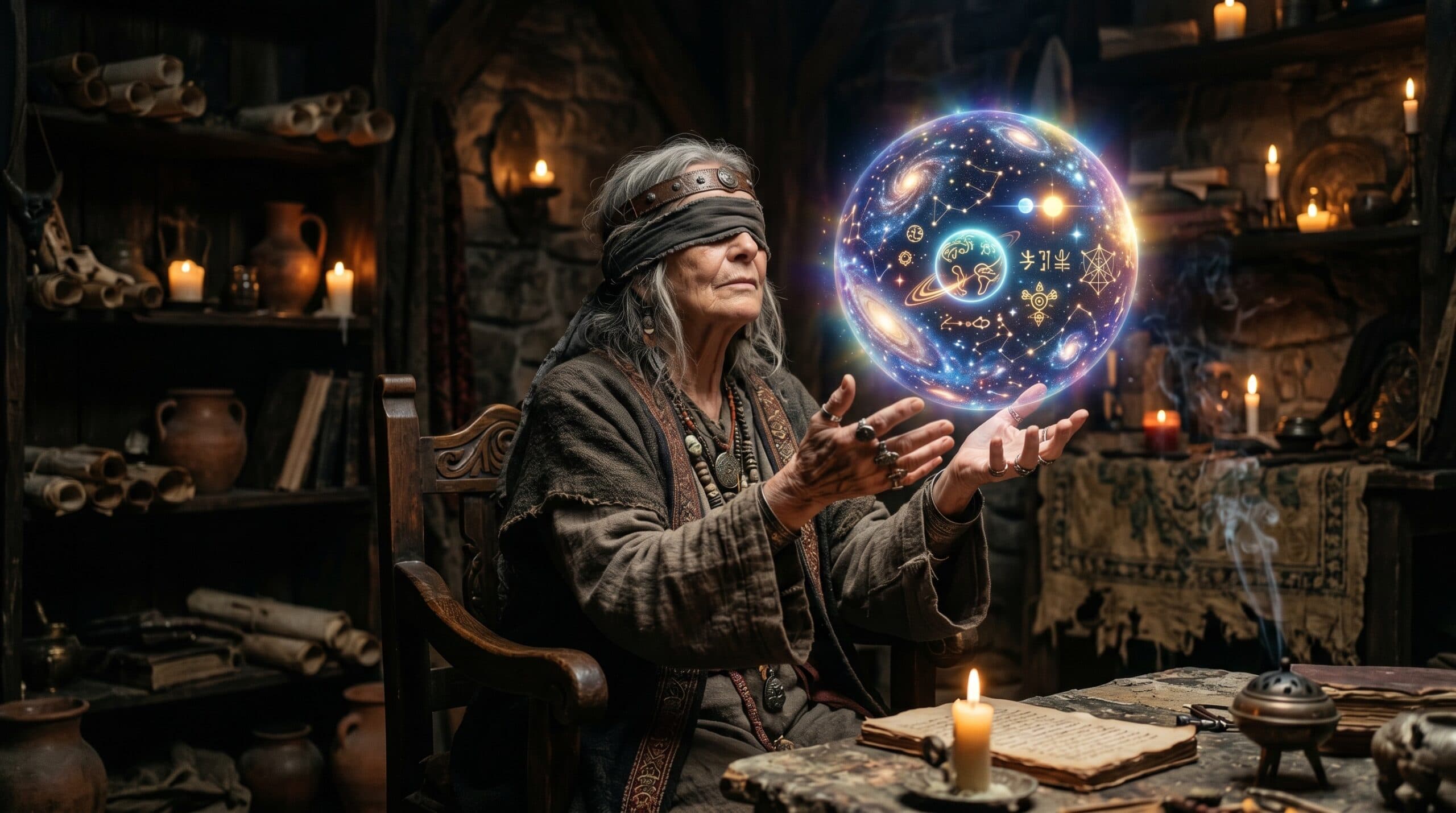
Baba Vanga’s 2026 Alien Prophecy: The Blind Mystic Who Predicted Mass Alien Contact and Why People Are Taking It Seriously Again
Bulgarian mystic Baba Vanga reportedly predicted that non-human contact would occur in 2026. With UFO disclosure accelerating in real-time, the timing has prophecy watchers locked in.
May 12, 2026 • 5 min read
UFO & Aliens
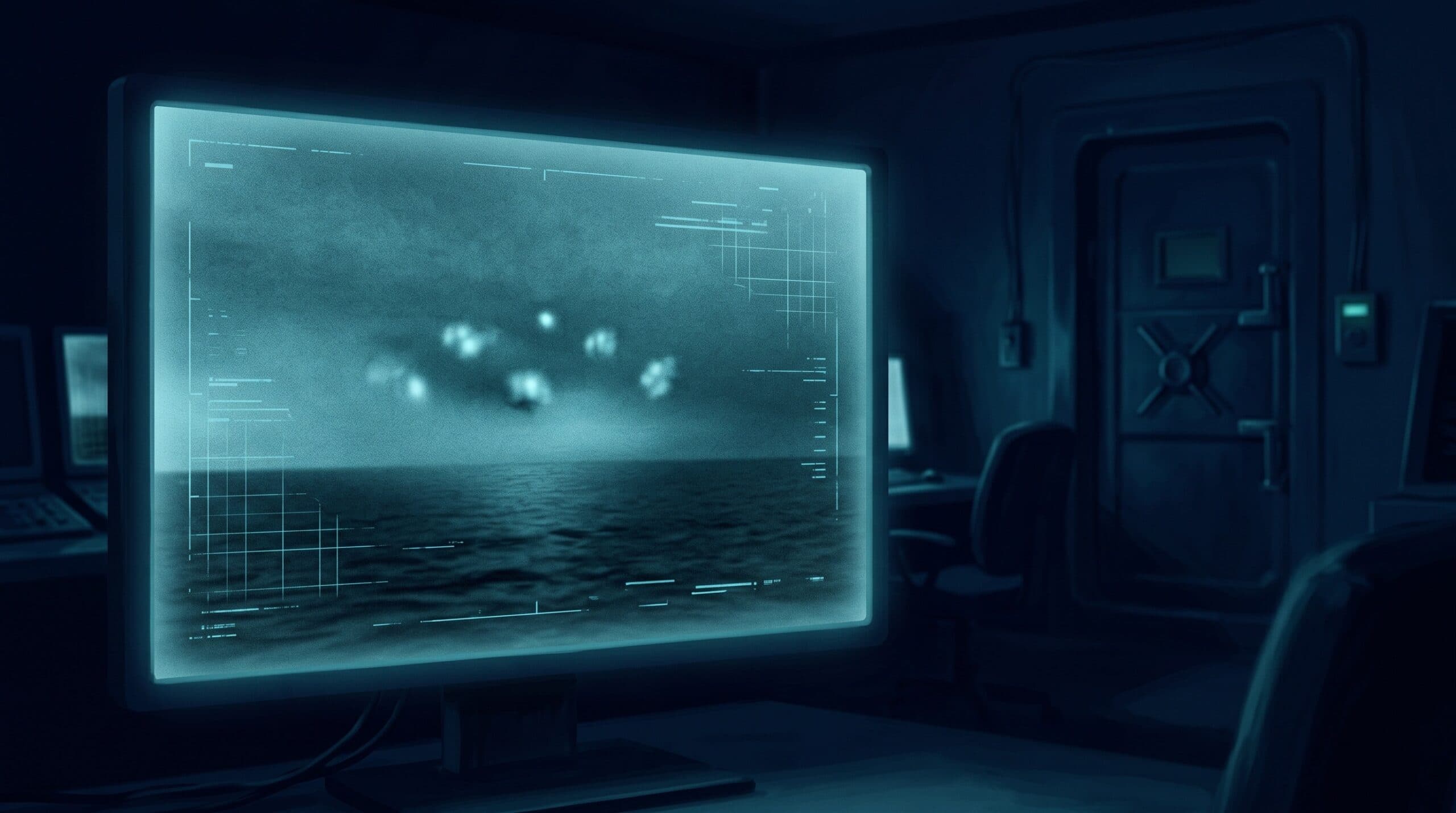
The Pentagon Released More UAP Files—but Not the Data Needed to Solve Them
The Pentagon’s fifth UAP release reveals cold orbs and a giant triangle—but missing sensor data keeps its strangest cases unresolved and untested.
There’s no scientific evidence that the specific events described — ghost sightings, prophetic dreams, shadow people — represent genuinely paranormal phenomena. What the evidence does support is that these experiences are real to the people who have them, and that they’re far more common than mainstream culture tends to acknowledge.
Sleep research offers partial explanations for some categories: hypnagogic hallucinations, sleep paralysis, and REM intrusion can produce vivid, terrifying experiences of presence or movement. Cognitive research on memory and pattern recognition helps explain why some people see meaningful patterns in coincidences. But these explanations don’t account for all reported cases — particularly the subset of precognitive dreams, which have been studied in controlled settings with results that remain disputed rather than definitively debunked.
What Skeptics or Mainstream Experts Would Say
Skeptics would correctly note that a viral listicle is not a research paper. Confirmation bias is a powerful force — people who’ve had strange experiences are more likely to submit, read, and share content that validates those experiences. The absence of mundane explanations in the stories doesn’t mean mundane explanations don’t exist; it more likely means contributors didn’t mention them, or didn’t pursue them.
Mainstream psychologists would also point to the contagion effect of paranormal belief: exposure to others’ accounts can prime people to interpret ambiguous experiences through a paranormal lens. That said, dismissing 79 accounts across diverse demographics as pure confabulation is its own kind of intellectual overreach.
Why This Story Still Matters
The Bored Panda piece matters because it’s a cultural artifact — a snapshot of what people are actually experiencing and choosing to share publicly in 2026. The fact that millions engaged with it tells us something important: the appetite for authentic, unresolved paranormal narrative has not diminished. If anything, it’s growing.
In an era of algorithmically curated content designed to deliver comfortable certainty, the enduring appeal of genuinely unsolved mysteries is striking. People aren’t just consuming these stories for entertainment. They’re using them to process experiences they don’t have language for, to find community around phenomena that feel isolating, and to push back against a culture that often treats the unexplained as the unimportant.
The Bigger Unexplained Pattern
The American Folklore Society has long documented how communities use shared supernatural narratives to process fear, grief, and the unknown. What Bored Panda’s listicle represents is a digital-age evolution of that same impulse. The stories follow recognizable folkloric structures — the warning dream, the entity at the threshold, the vanished person — because these archetypes map onto real psychological experiences that humans have been having for millennia.
Advertisement
What’s new is the speed and scale. A 1970s shadow person encounter stays local. A 2026 shadow person encounter gets 2 million impressions by Thursday. The folklore is the same. The distribution is entirely new — and that changes what these stories can do, how many people they can reach, and how quickly a shared mythology can form around genuinely unexplained human experience.
Final Assessment
The Bored Panda 79 unsolved mysteries compilation is not evidence of the paranormal. It’s evidence of something arguably more interesting: the scale and consistency of human experiences that remain genuinely unexplained. Whether those experiences point toward something beyond conventional understanding is a question the listicle doesn’t answer — and that’s precisely why it went viral. The best unsolved mysteries real stories don’t resolve. They resonate. And right now, they’re resonating with millions.
Frequently Asked Questions
Are the stories in the Bored Panda unsolved mysteries list verified?
No — the compilation is user-submitted and crowd-curated rather than independently verified. That said, the consistency of certain themes across unrelated contributors is itself noteworthy, and many details align with well-documented categories of anomalous experience research.
Why do unsolved mysteries stories go viral so reliably?
Unresolved narrative creates a psychological itch that demands scratching. Stories with no clean ending trigger continued mental engagement — you keep thinking about them. Combined with social proof from multiple contributors, viral paranormal content exploits some of the deepest engagement mechanisms in human psychology.
What’s the most commonly reported type of unexplained experience?
Shadow figures and precognitive dreams appear most frequently in large-scale user-submitted compilations. Both categories also appear consistently in academic anomalous experience research, making them the most studied — and most contested — categories in paranormal literature.
Is there scientific research into precognitive dreams?
Yes, though results are disputed. Studies conducted at institutions including the University of Edinburgh’s Koestler Parapsychology Unit have found statistically anomalous results in some dream precognition trials. Mainstream science remains deeply skeptical, but the research exists and has not been uniformly discredited.
Art Grindstone is the hard-nosed storyteller behind Unexplained.co, a veteran investigator whose life’s work sits at the crossroads of the paranormal, fringe science, and the shadows most people try not to look into. With decades spent chasing impossible stories — black-budget psychic programs, vanished Cold War experiments, desert rituals that sparked UFO waves, and the strange phenomena buried in America’s forgotten backroads — Art brings a rare combination of skepticism, awe, and journalistic precision. He’s not here to debunk. He’s not here to blindly believe. He follows the evidence wherever it leads — even when it leads someplace deeply uncomfortable. Known for his immersive, cinematic style and his ability to turn obscure research into gripping narrative, Art has built a devoted following across podcasts, long-form features, documentaries, and serialized investigations. His interviews are direct. His analysis is unflinching. His voice has become a staple in the modern paranormal renaissance — the guy people turn to when a story is too strange, too complex, or too dangerous for anyone else to touch. Off-mic, Art works with a distributed network of researchers, archivists, and field operatives who help surface the stories mainstream media ignores. On-mic, he transforms their findings into meticulous, high-impact reporting that refuses to insult the intelligence of true believers. His philosophy is simple: Take the phenomenon seriously. Treat the audience with respect. Tell the story as if the world depends on it — because sometimes it does. When Art Grindstone digs into a case, he isn’t just chasing a mystery. He’s tracing the fault lines of reality itself.