
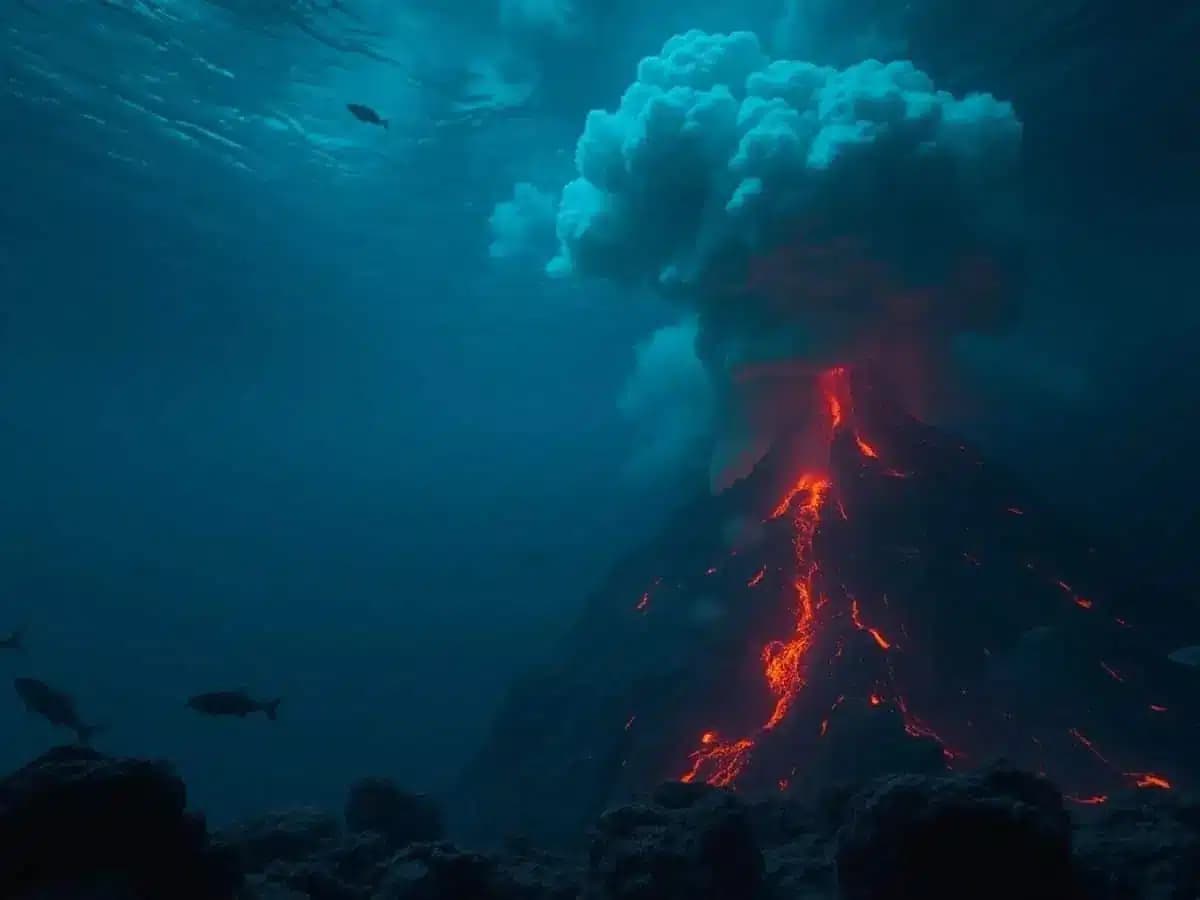

Beneath the vast expanse of the ocean lies a hidden world of untamed geological activity. Submarine volcanoes, often overlooked, are powerful forces shaping our planet. Recently, an underwater volcano erupted dramatically, reminding us of the dynamic processes beneath the waves. Let’s explore this event and its implications.
Key Takeaways
- Location: AI Seamount, part of the Mariana volcanic arc.
- Recent Activity: Eruptions detected from October 2022 to April 2024.
- Potential Hazards: Submarine eruptions can trigger tsunamis and alter marine ecosystems.
- Scientific Importance: Provides insights into submarine volcanism and Earth’s geological processes.
Understanding Submarine Volcanoes
Submarine volcanoes are among the most enigmatic geological features on Earth. They can alter ecosystems, influence climate, and even trigger tsunamis. AI Seamount, located in the Western Pacific Ocean, is one such volcano. It lies approximately 11 miles southeast of the northernmost island of the Mariana archipelago and is classified as a submarine volcano, sitting 450 feet deep in the Pacific Ocean.
The Mariana Arc, where AI Seamount is located, is formed by the Pacific Plate being driven beneath the Philippine Sea Plate. This tectonic activity generates magma that rises to the surface, creating a chain of volcanic islands and seamounts. AI Seamount has a history of eruptions, with notable events recorded in 1969, 2001, and 2014.
Recent Eruptions and Monitoring
Recent eruptions of AI Seamount were detected from mid-October 2022 to May 2023, and again from December 2023 to April 2024. The most recent signs of unrest began in August 2024, with satellite imagery revealing weak activity, including plumes of discolored water.
The US Geological Survey and the Pacific Tsunami Warning Center monitored these eruptions using seismic and hydroacoustic systems. Initial signs included low-frequency earthquakes and underwater explosions, indicating magma movement beneath the seamount.
The Nature of Submarine Eruptions
Submarine eruptions differ significantly from terrestrial eruptions due to the immense pressure of the overlying seawater. This pressure suppresses the explosive release of gases from magma, often resulting in less dramatic eruptions. However, when magma interacts with seawater, it can lead to violent explosions known as freatomagmatic eruptions. These explosions occur when the rapid cooling of magma by seawater creates steam that expands explosively.
Submarine eruptions can also produce pillow lavas, bulbous formations created when lava cools rapidly upon contact with water. The implications of a significant eruption extend beyond the immediate vicinity, potentially triggering tsunamis and altering marine habitats.
Potential Impacts of Eruptions
A massive eruption from a submarine volcano like AI Seamount could have profound effects:
- Tsunamis: Displacement of large volumes of water could generate tsunamis, devastating coastal communities.
- Marine Ecosystems: Lava flows and ash deposition could destroy marine habitats, while the release of nutrients might stimulate biological productivity over time.
- Geological Changes: Eruptions could alter the seafloor’s topography, creating new landforms and affecting ocean currents.
- Socioeconomic Disruptions: Coastal economies reliant on fishing, tourism, or shipping could face significant disruptions.
Scientific Opportunities
On a positive note, a large eruption would provide an unprecedented opportunity for scientific study. Observing the event and its aftermath could enhance our understanding of submarine volcanism, tectonics, and the deep-sea environment. However, studying submarine volcanoes presents challenges due to their remote locations and harsh conditions.
Challenges in Monitoring Submarine Volcanoes
Monitoring submarine volcanoes like AI Seamount is logistically and financially demanding. The open ocean environment complicates the deployment and maintenance of monitoring equipment. Technological limitations also hinder the study of submarine eruptions. While advancements in underwater vehicles and sonar technology have improved ocean exploration, much of the deep sea remains uncharted.
Conclusion
AI Seamount is a striking example of the dynamic geological processes shaping our planet. Its recent eruption underscores the complexity of submarine volcanism and highlights the importance of continued research and monitoring. By studying such events, scientists can unravel the mysteries of the deep ocean and better prepare for the potential hazards posed by undersea volcanoes.
Do you think AI Seamount is capable of producing a massive eruption in the future? Leave a reply in the comment section!