
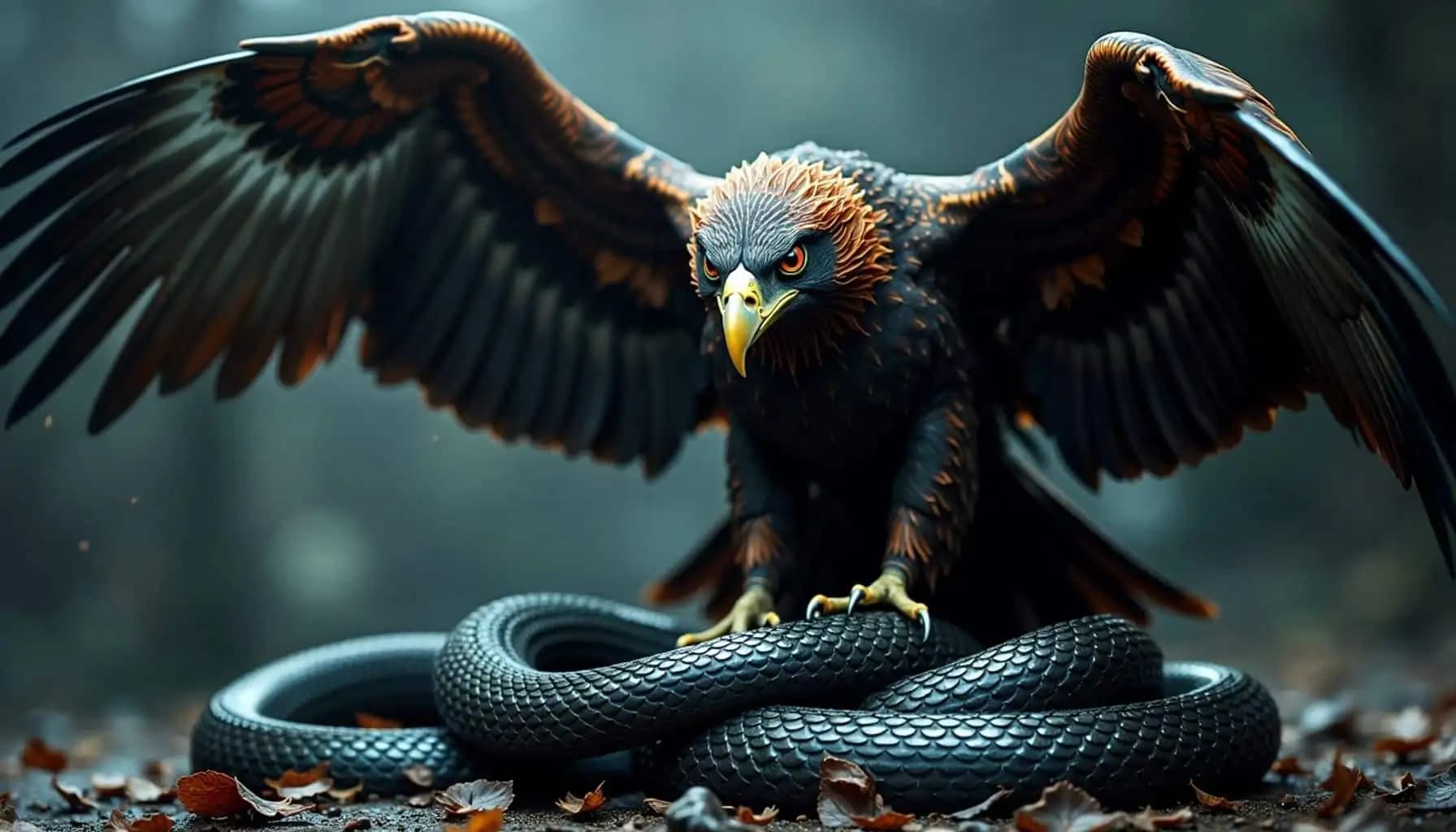

In the ancient Sumerian myth, the tale of the Eagle and the Serpent unfolds, revealing a complex narrative filled with themes of vengeance, justice, and divine intervention. This story, rich in symbolism, intertwines the fates of these two powerful creatures, shedding light on the deeper meanings behind their actions.
Key Takeaways
- The Eagle symbolizes power and divine authority.
- The Serpent represents cunning and the quest for justice.
- Shamash, the god of justice, plays a pivotal role in the narrative.
- The myth may have connections to other ancient stories, such as the Gilgamesh Epic.
The Symbolism of The Eagle
The Sumerian word for Eagle is An, while Anzo can mean either Eagle or Vulture. In this myth, the Eagle is depicted in the form of a vulture, hinting at its dual nature. The Eagle is often seen as a symbol of the Sun God, embodying strength and authority.
The Conflict Begins
The tale begins with a quarrel between the Eagle and the Serpent. Feeling hungry, the Eagle decides to devour the Serpent’s young. Despite warnings from his offspring about the potential wrath of Shamash, the god of justice, the Eagle ignores their advice and attacks the Serpent’s nest.
The Serpent’s Plea for Justice
Upon discovering the loss of its young, the Serpent seeks out Shamash, appealing for justice. The Serpent’s plea highlights the theme of divine retribution. It describes the devastation caused by the Eagle, emphasizing the vastness of Shamash’s power:
“Thy net is like unto the broad Earth; thy snare a trap is like the distant heaven in wideness. Who can escape thee?”
Shamash’s Vengeful Plan
Shamash listens to the Serpent’s appeal and devises a plan for vengeance. He instructs the Serpent to hide within the carcass of a wild ox, waiting for the Eagle to come. This clever strategy sets the stage for the Eagle’s downfall.
- Hide in the carcass of a wild ox.
- Wait for the Eagle to swoop down.
- Seize the Eagle by the wing and tear him apart.
The Eagle’s Greed
As the Serpent follows Shamash’s instructions, the Eagle, driven by greed, eventually descends upon the carcass. Despite warnings from his young, who fears a trap, the Eagle dismisses the advice and begins to feast. This moment illustrates the consequences of hubris.
The Serpent’s Revenge
Just as the Eagle begins to indulge, the Serpent strikes. The Eagle begs for mercy, but the Serpent, fueled by rage and the promise of justice from Shamash, retaliates. The Eagle’s fate is sealed as the Serpent tears off his wings and casts him into a pit, symbolizing the ultimate punishment for his actions.
The Deeper Meaning
This myth serves as a cautionary tale about the balance of power and the consequences of one’s actions. The Eagle, representing authority, falls victim to his own greed and disregard for warnings. The Serpent, often seen as a symbol of cunning, ultimately seeks justice, showcasing the complexity of their roles.
Connections to Other Myths
The story of the Eagle and the Serpent may resonate with other ancient tales, such as the Gilgamesh Epic and the myth of Etana and the Eagle. These narratives often explore similar themes of power, justice, and the interplay between divine beings and mortals.
Conclusion
The Anunnaki myth of the Eagle and the Serpent is a rich tapestry of symbolism and moral lessons. It reminds us of the importance of heeding warnings and the inevitable consequences of our actions. As we delve into these ancient stories, we uncover timeless truths that continue to resonate today.