Bob Lazar on Joe Rogan: What Luigi Vendittelli’s New…
UFO & Aliens
Bob Lazar on Joe Rogan: What Luigi Vendittelli’s New Documentary Adds to the S4 Story
The latest Bob Lazar on Joe Rogan conversation isn’t just another retelling of the Area 51 legend. This time, filmmaker Luigi Vendittelli brings a new angle: a documentary reconstruction of the alleged S4 facility built…
Art Grindstone is the hard-nosed storyteller behind Unexplained.co, a veteran investigator whose life’s work sits at the crossroads of the paranormal, fringe science, and the shadows most people try not to look into. With decades spent chasing impossible stories — black-budget psychic programs, vanished Cold War experiments, desert rituals that sparked UFO waves, and the strange phenomena buried in America’s forgotten backroads — Art brings a rare combination of skepticism, awe, and journalistic precision. He’s not here to debunk. He’s not here to blindly believe. He follows the evidence wherever it leads — even when it leads someplace deeply uncomfortable. Known for his immersive, cinematic style and his ability to turn obscure research into gripping narrative, Art has built a devoted following across podcasts, long-form features, documentaries, and serialized investigations. His interviews are direct. His analysis is unflinching. His voice has become a staple in the modern paranormal renaissance — the guy people turn to when a story is too strange, too complex, or too dangerous for anyone else to touch. Off-mic, Art works with a distributed network of researchers, archivists, and field operatives who help surface the stories mainstream media ignores. On-mic, he transforms their findings into meticulous, high-impact reporting that refuses to insult the intelligence of true believers. His philosophy is simple: Take the phenomenon seriously. Treat the audience with respect. Tell the story as if the world depends on it — because sometimes it does. When Art Grindstone digs into a case, he isn’t just chasing a mystery. He’s tracing the fault lines of reality itself.
7 min · 1,535 words
In This Report(15)
The latest Bob Lazar on Joe Rogan conversation isn’t just another retelling of the Area 51 legend. This time, filmmaker Luigi Vendittelli brings a new angle: a documentary reconstruction of the alleged S4 facility built using mostly handmade CGI, detailed location research, and visual recreations designed to match Lazar’s decades-old account. For longtime UFO followers, that makes this appearance more than nostalgia. It reframes Bob Lazar’s story as something being actively re-investigated, re-visualized, and re-packaged for a modern audience that now expects both technical detail and cinematic proof.
What makes this interview so compelling is the tension at its core. Bob Lazar still presents his story as an account of direct experience inside a compartmentalized black project studying non-human technology. Luigi Vendittelli, meanwhile, explains how his team tried to reconstruct that world visually and geographically. Together on Joe Rogan, they turn an old UFO case into a new media event.
Why “Bob Lazar on Joe Rogan” Still Pulls So Much Attention
Few names in UFO culture still generate as much immediate attention as Bob Lazar. Decades after first claiming he worked on reverse-engineering alien craft at a hidden site called S4 near Area 51, Lazar remains one of the most divisive and durable figures in the entire disclosure landscape.
Advertisement
That is why every major appearance matters. The phrase Bob Lazar on Joe Rogan performs so well because it fuses two powerful audiences: long-time UFO believers and mass-culture podcast listeners. Rogan’s platform gives Lazar mainstream reach, while Lazar brings Rogan’s audience one of the most iconic hidden-tech stories in American conspiracy history.
This newer appearance is especially interesting because it is not just Lazar telling the same story again. Vendittelli’s involvement changes the framing from pure testimony to visual reconstruction and documentary investigation.
Luigi Vendittelli’s Documentary Approach Changes the Conversation
One of the most important revelations from the interview is Vendittelli’s explanation of how the documentary was built. According to him, the production used roughly 90% handmade CGI in Blender and 10% AI to recreate the S4 facility and even generate a de-aged version of Lazar.
That matters because UFO storytelling is entering a new era. It is no longer enough to simply recount extraordinary claims. Audiences now expect immersive visual reconstruction, simulated environments, and a more forensic style of presentation. Vendittelli’s process reflects that shift perfectly.
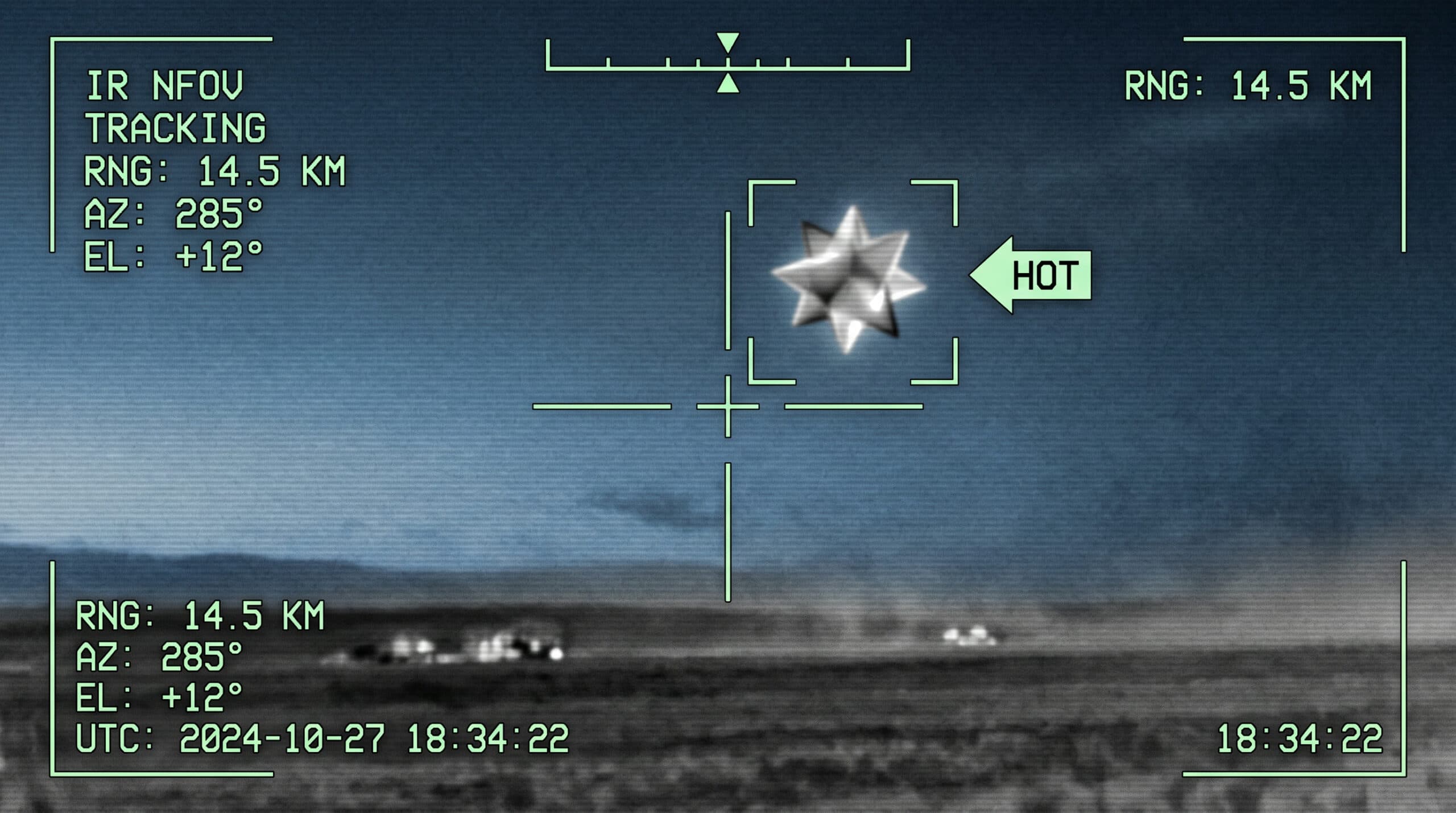
Ukrainian Defense Ministry Advisor Posts Star-Shaped UAP Video — and the Close-Ups Look Nothing Like a Drone
Serhii ‘Flash’ Beskrestnov released footage of a structured, star-shaped craft over Ukraine that has UFO researchers examining every frame for proof.
May 14, 2026 • 6 min read
UFO & Aliens
Europe Has Been Quietly Tracking UAP Reports Since 2023
Documents reveal how the European Commission handled UAP images, what it promised to improve, and why Europe still lacks a public investigation office.
Aug 17, 2026 • 8 min read
Conspiracy Theories
Japan Just Confirmed It Has UAP Footage, and Is Analyzing Pentagon Files Near Its Borders
Japan’s formal entry into the UAP transparency wave signals an international domino effect. What the country knows about UAP encounters near Japanese territory and why it matters now.
May 14, 2026 • 5 min read
In the interview, Lazar says seeing the facility recreated so closely felt almost like downloading old memories directly from his mind. That is a striking phrase, because it reveals how emotionally powerful visual reconstruction can be when tied to a long-running personal narrative. Whether you believe Lazar or not, the documentary’s imagery appears to have given the story a new psychological charge.
What Bob Lazar Says About Working at S4
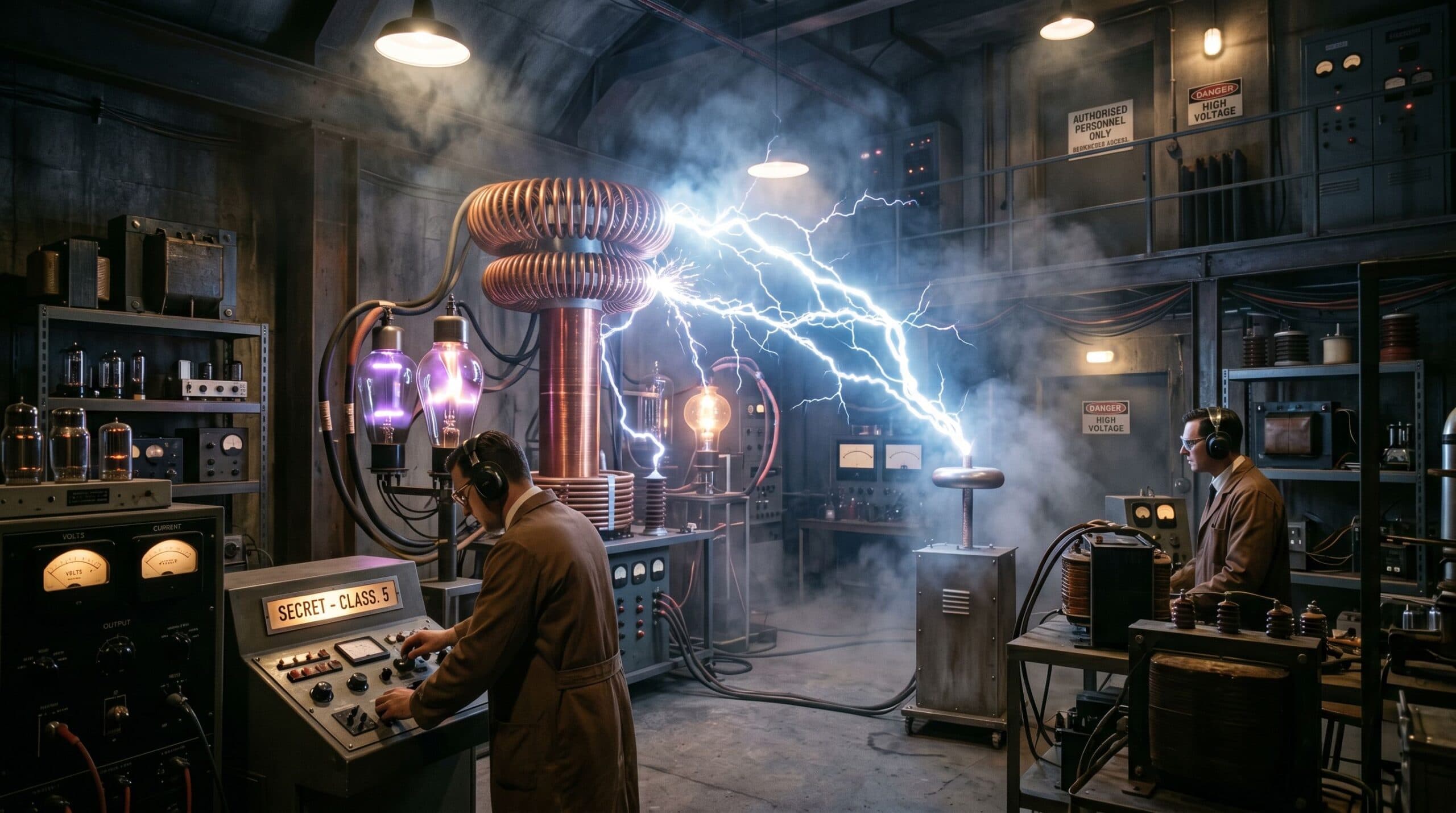
A core part of the Bob Lazar on Joe Rogan discussion is Lazar’s continued description of the work environment at S4. He portrays it as intensely compartmentalized, high-pressure, and intentionally isolating. According to Lazar, scientific groups were separated, communication was restricted, and personnel were denied enough context to understand the full scope of the program.
That level of compartmentalization has always been central to Lazar’s credibility with believers. To them, it sounds exactly like how a real black project involving advanced non-human technology would operate. To skeptics, it also conveniently explains why so much of the story cannot be independently verified.
In the interview, Lazar again discusses specific craft design elements, including the waveguide and the alleged element 115 reactor. Those details are important because Lazar’s long-term reputation has always rested partly on the consistency of his technical language. Even critics often acknowledge that part of what makes his story so sticky is how confidently and repeatedly he returns to these same structural claims.
Intimidation, Surveillance, and the Cost of Going Public
Another major section of the interview focuses on the intimidation Lazar says he faced after going public. He reflects on decades of pressure, surveillance, and what he describes as unauthorized access to personal property.
This theme is crucial because it is one of the main reasons Lazar remains so compelling to UFO audiences. For believers, the intimidation narrative functions as a kind of supporting evidence. If powerful people were trying to silence him, then the logic goes, he must have been close to something real.
That does not prove the claims themselves. But it does explain why the emotional structure of Lazar’s story remains powerful. His narrative is not just about alien technology. It is about the cost of revealing it.
The “Soul Catcher,” Zeta Reticuli, and Why UFO Lore Keeps Expanding
Rogan and Lazar also move into broader UFO mythology during the conversation, including discussion of the so-called “soul catcher” concept and the recurring reference to the Zeta Reticuli star system. These are important moments because they show how Lazar’s story does not exist in isolation. It lives inside a much larger ecosystem of UFO lore, abduction theory, cosmic speculation, and spiritualized interpretations of non-human intelligence.
This is one reason the interview resonates beyond pure nuts-and-bolts UFO fans. Lazar’s core story is about propulsion, secrecy, and reverse engineering, but the surrounding discourse increasingly includes consciousness, metaphysics, and interstellar mythology. Joe Rogan’s format encourages exactly that expansion, letting the discussion move fluidly between technical claims and much more speculative territory.
For some listeners, that makes the story richer. For others, it makes it harder to separate strong claims from accumulating folklore.
Vendittelli’s Investigative Research Gives the Story a New Layer
One of the strongest contributions from Luigi Vendittelli is his explanation of the research process behind the documentary. He describes using Department of the Interior maps, outside researchers, and site-layout analysis — including work connected to researchers like Scott Mitchell — to locate the alleged hangar bay doors and match the layout of the facility to Lazar’s long-standing descriptions.
This matters because it turns the documentary into more than pure dramatization. Even if the underlying claims remain disputed, the reconstruction effort is being presented as a kind of investigative visual journalism. That gives the material a stronger hook for modern viewers, especially those who are less interested in oral history and more interested in geospatial or architectural confirmation attempts.
In practical terms, Vendittelli’s work does not prove Lazar’s story. But it does make the story feel more legible, more mappable, and more researchable than earlier retellings did.
Why This Joe Rogan Appearance Matters More Than Older Lazar Interviews
The reason this interview matters is not just because Lazar appeared on a huge platform. It matters because the story is being updated for a new media environment.
Advertisement
In the past, Bob Lazar was mostly a testimony figure — someone you believed or rejected based on interviews, snippets, and decades of repeated claims. In this appearance, the story becomes a multi-layered media product:
Lazar provides continuity and emotional authenticity
Vendittelli provides cinematic reconstruction and research framing
Rogan provides cultural scale and a mass audience
Together, that combination gives the Lazar myth fresh life.
Watch the Interview
If you want to watch the interview yourself, here is the episode discussed in this article:
Final Assessment: What “Bob Lazar on Joe Rogan” Means in 2026
The latest Bob Lazar on Joe Rogan appearance works because it gives audiences two things at once: the familiar weight of an iconic UFO testimony and the freshness of a technically ambitious documentary reconstruction. Lazar still tells the same essential story — secret work at S4, alien craft, element 115, intimidation, compartmentalized science. But Vendittelli adds a new layer by trying to visualize the world Lazar has described for decades.
That does not settle the argument. Skeptics will still say the story remains unproven, and believers will still say the consistency itself is evidence. But this interview makes one thing clear: Bob Lazar’s story is not fading. It is evolving.
And in a media culture increasingly obsessed with disclosure, reconstruction, and hidden-history narratives, that evolution may be exactly why Lazar still matters.
Frequently Asked Questions
Who was with Bob Lazar on Joe Rogan?
Bob Lazar appeared with filmmaker Luigi Vendittelli, who discussed the documentary reconstruction of Lazar’s alleged S4 experiences.
What did Luigi Vendittelli say about the documentary?
Vendittelli explained that the film used mostly handmade CGI in Blender, plus a smaller amount of AI, to recreate the S4 facility and a younger version of Lazar.
What does Bob Lazar say he worked on at S4?
Lazar says he worked on reverse-engineering non-human craft at a secret facility near Area 51, including studying propulsion systems and a reactor tied to element 115.
Why is Bob Lazar still controversial?
Because his story remains one of the most famous and detailed UFO claims ever made, but it has never been definitively proven and is still heavily disputed by skeptics.
Art Grindstone is the hard-nosed storyteller behind Unexplained.co, a veteran investigator whose life’s work sits at the crossroads of the paranormal, fringe science, and the shadows most people try not to look into. With decades spent chasing impossible stories — black-budget psychic programs, vanished Cold War experiments, desert rituals that sparked UFO waves, and the strange phenomena buried in America’s forgotten backroads — Art brings a rare combination of skepticism, awe, and journalistic precision. He’s not here to debunk. He’s not here to blindly believe. He follows the evidence wherever it leads — even when it leads someplace deeply uncomfortable. Known for his immersive, cinematic style and his ability to turn obscure research into gripping narrative, Art has built a devoted following across podcasts, long-form features, documentaries, and serialized investigations. His interviews are direct. His analysis is unflinching. His voice has become a staple in the modern paranormal renaissance — the guy people turn to when a story is too strange, too complex, or too dangerous for anyone else to touch. Off-mic, Art works with a distributed network of researchers, archivists, and field operatives who help surface the stories mainstream media ignores. On-mic, he transforms their findings into meticulous, high-impact reporting that refuses to insult the intelligence of true believers. His philosophy is simple: Take the phenomenon seriously. Treat the audience with respect. Tell the story as if the world depends on it — because sometimes it does. When Art Grindstone digs into a case, he isn’t just chasing a mystery. He’s tracing the fault lines of reality itself.