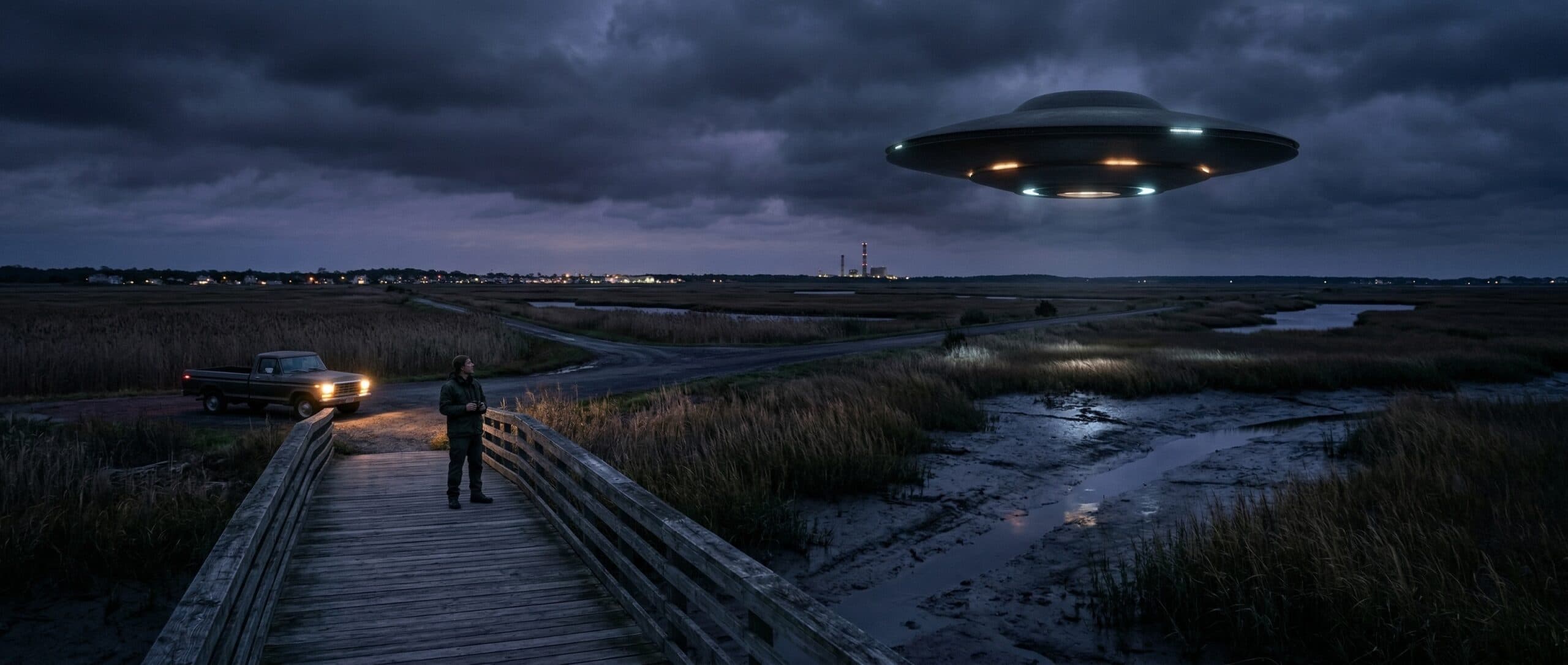

A new 2026 UFO ranking is getting traction because it flips a familiar script: Delaware, not Nevada or Washington, is now being framed as America’s top UFO hotspot on a per-capita basis. According to paranormal-media reporting, the small East Coast state now leads the country in sightings density, beating out places with far stronger built-in UFO mythology.
That matters because this is exactly the kind of story the unexplained ecosystem loves: a surprising map, a data-looking methodology, and a headline that feels weird enough to click but grounded enough to repeat. It also raises a deeper question that goes beyond the ranking itself — are UFO hotspots real places, or do they emerge when reporting culture, audience attention, and mythic expectation all collide?
What the Delaware Ranking Actually Claims
The current buzz comes from a ranking highlighted by ParaRational, which says Delaware has moved into first place in a fresh per-capita UFO analysis built from National UFO Reporting Center data and additional social-signal context. In the framing pushed by the story, Delaware sits at roughly one sighting per 928 residents, edging out Washington and New York.
Advertisement
Even if the methodology is not strong enough to satisfy hard skeptics, it is strong enough to travel. That is the real function of a list like this. It turns UFO reporting into something that looks empirical, sortable, and competitive.
This is why rankings perform so well in paranormal media. A list feels like proof even when it is partly a storytelling device.
Why Delaware Is Such a Surprising Winner
Delaware does not dominate the public imagination the way Nevada, Arizona, or Washington do. It does not come preloaded with Area 51 mythology, military-range mystique, or cinematic desert strangeness. That makes its rise more interesting. The lack of built-in lore gives the ranking novelty.
And novelty is powerful. A UFO list where Nevada wins is expected. A UFO list where Delaware wins feels like hidden information surfacing from an ordinary place. For believers, that is exciting. For skeptics, it is still enough to provoke a closer look.
The bigger cultural effect is that it subtly reframes what a UFO hotspot can be. It does not have to be a famous desert or a long-haunted military corridor. It can be a small state that suddenly begins accumulating enough reports to demand attention.
Reporting Culture vs Reality
This is where the story becomes more valuable than a simple “Top 10 UFO states” post. Rankings like this always raise the same core tension: are more anomalous events actually happening there, or are people simply more willing to report them?