Eight Experts Dead or Missing, Inside the UFO Secrecy Narrative Built Around Real Cases | Unexplained
Conspiracy Theories
Eight Experts Dead or Missing, Inside the UFO Secrecy Narrative Built Around Real Cases
A deep investigation into the viral claim that eight scientists, military figures, and experts died or vanished amid UFO speculation, including what is documented, what is alleged, and why the story spread.
Art Grindstone is the hard-nosed storyteller behind Unexplained.co, a veteran investigator whose life’s work sits at the crossroads of the paranormal, fringe science, and the shadows most people try not to look into. With decades spent chasing impossible stories — black-budget psychic programs, vanished Cold War experiments, desert rituals that sparked UFO waves, and the strange phenomena buried in America’s forgotten backroads — Art brings a rare combination of skepticism, awe, and journalistic precision. He’s not here to debunk. He’s not here to blindly believe. He follows the evidence wherever it leads — even when it leads someplace deeply uncomfortable. Known for his immersive, cinematic style and his ability to turn obscure research into gripping narrative, Art has built a devoted following across podcasts, long-form features, documentaries, and serialized investigations. His interviews are direct. His analysis is unflinching. His voice has become a staple in the modern paranormal renaissance — the guy people turn to when a story is too strange, too complex, or too dangerous for anyone else to touch. Off-mic, Art works with a distributed network of researchers, archivists, and field operatives who help surface the stories mainstream media ignores. On-mic, he transforms their findings into meticulous, high-impact reporting that refuses to insult the intelligence of true believers. His philosophy is simple: Take the phenomenon seriously. Treat the audience with respect. Tell the story as if the world depends on it — because sometimes it does. When Art Grindstone digs into a case, he isn’t just chasing a mystery. He’s tracing the fault lines of reality itself.
12 min · 2,767 words
In This Report(17)
It is exactly the kind of story the internet knows how to weaponize. A retired Air Force general disappears. A fusion scientist is killed. A NASA-connected name circulates in social posts. A handful of researchers, lab workers, and technical professionals are pulled into the same thread. Then the framing hardens almost overnight: eight experts dead or missing, all somehow tied to UFO secrecy.
The problem is that this narrative sits in the most dangerous zone of modern mystery culture, where some of the underlying events appear to be real, but the larger theory built around them is far less certain. That matters because once a list like this starts circulating, it stops behaving like reporting and starts behaving like myth. Names get repeated. Timelines get compressed. Professional backgrounds get exaggerated. Unverified links become implied facts. Before long, readers are no longer asking what happened in each case. They are asking whether someone is silencing people connected to UFO disclosure.
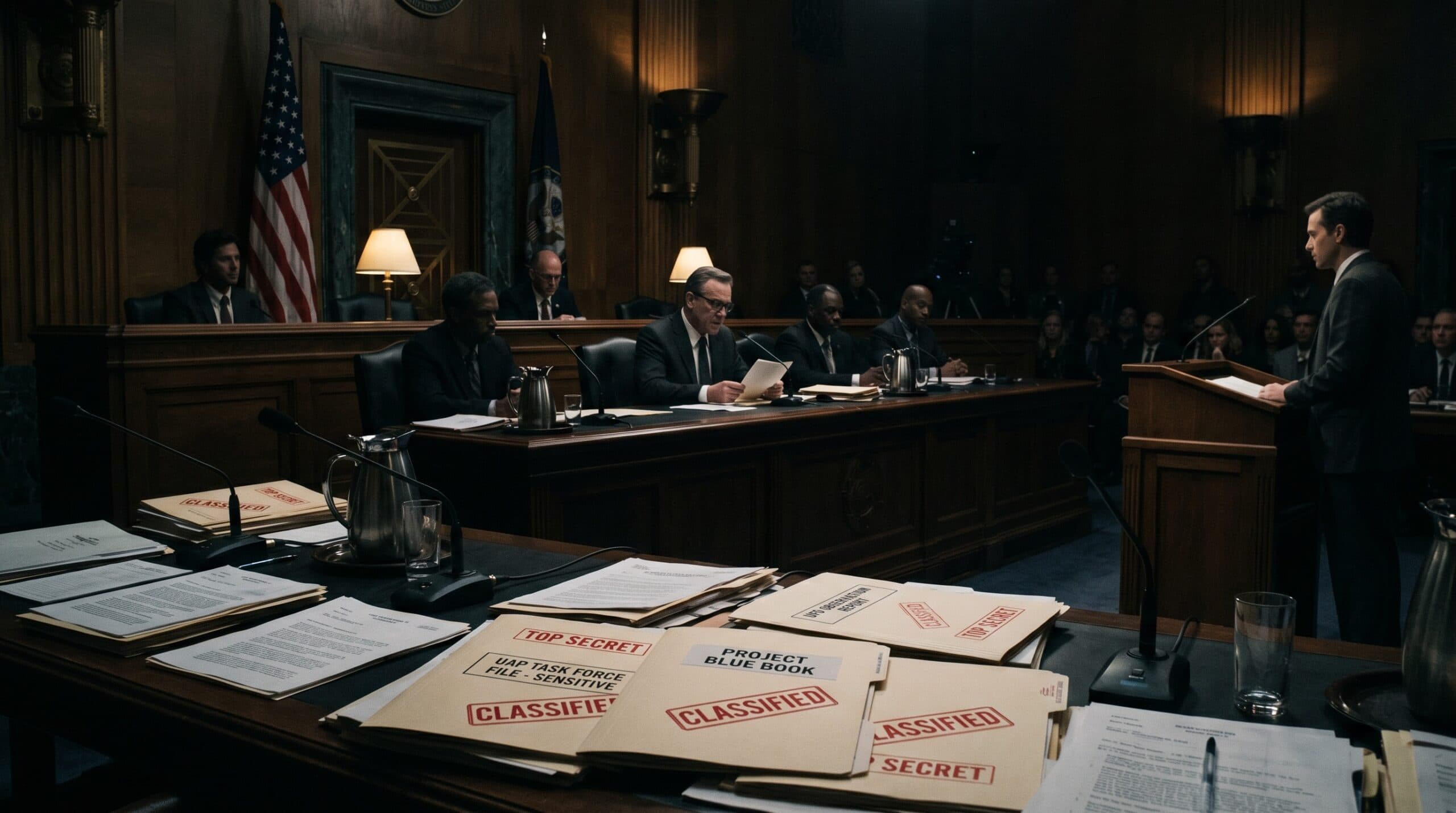
This article takes that claim seriously enough to examine it carefully. Not because the theory is proven, but because the story has already entered public circulation and is clearly resonating with readers who follow defense secrecy, UAP disclosure, unexplained deaths, and institutional mistrust. Readers who have followed the long culture of disclosure talk will recognize how quickly stories like this can take on a life of their own. The core question is not just whether these incidents are connected. It is how a partially documented chain of deaths and disappearances became a single conspiracy narrative, and why so many people were ready to believe it in the first place.
Japan Just Confirmed It Has UAP Footage — and Is Analyzing Pentagon Files Near Its Borders
Japan’s formal entry into the UAP transparency wave signals an international domino effect. What the country knows about UAP encounters near Japanese territory and why it matters now.
May 13, 2026 • 5 min read
UFO & Aliens
The Pentagon Released More UAP Files—but Not the Data Needed to Solve Them
The Pentagon’s fifth UAP release reveals cold orbs and a giant triangle—but missing sensor data keeps its strangest cases unresolved and untested.
Aug 17, 2026 • 10 min read
Ancient Civilizations
1957 Electrogravitics Secret: The Classified Research Program Whose Watchers Have All ‘Gone’
A viral essay claims that classified electrogravitics research made real progress in the 1950s — and that everyone who knew the truth about it has since disappeared from the public record. The story is spreading through high-strangeness forums.
The eight-experts claim says a hidden force may be targeting people linked to UFO knowledge
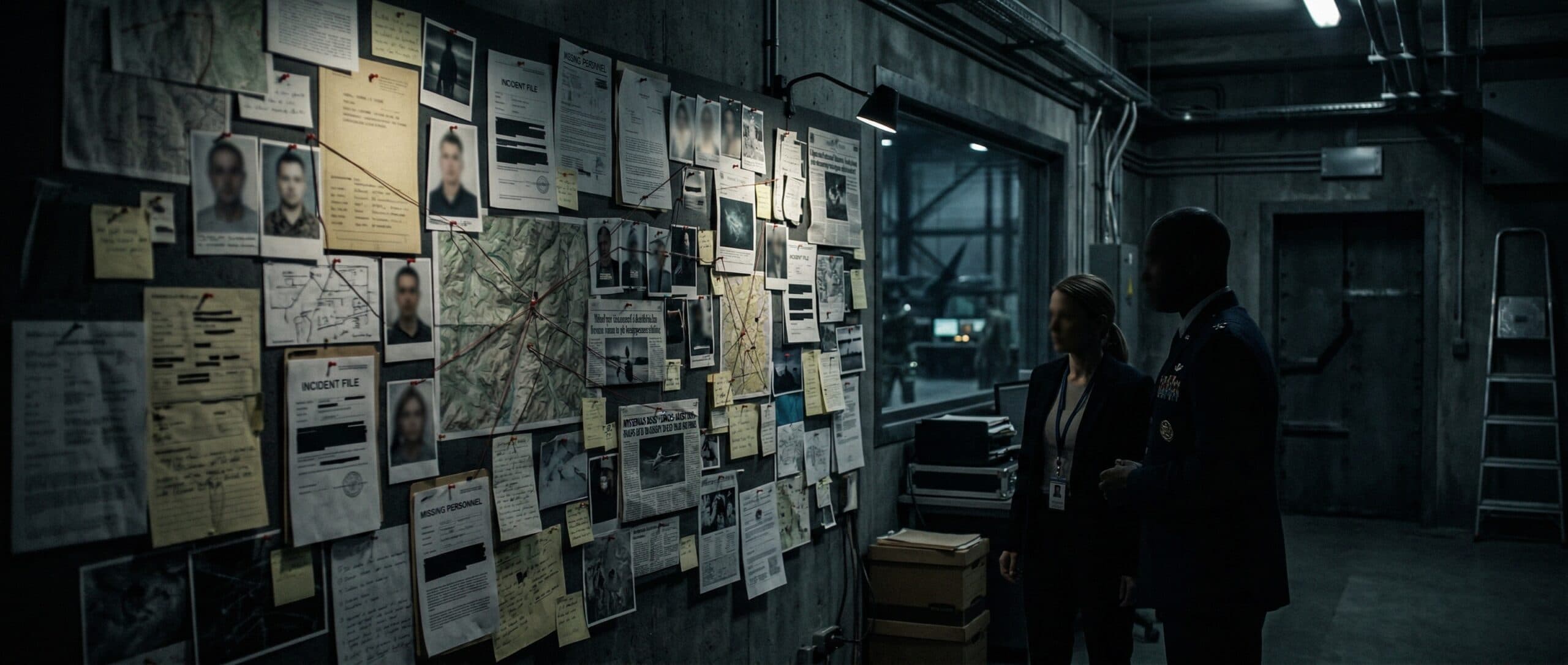
The version now circulating online is fairly consistent. It claims that eight people connected in some way to military, aerospace, national security, or scientific research have died or disappeared over a short period, and that the pattern may point to suppression tied to UFO or UAP information. In its most dramatic form, the theory suggests an intimidation campaign, a cleanup operation, or a covert effort to keep sensitive knowledge from surfacing.
That is a much larger claim than the raw facts alone can support. At least some of the cited incidents involve real people and real tragedies. But the leap from “these incidents happened” to “these incidents form a covert UFO pattern” is precisely where the article needs to slow down. A conspiracy theory becomes persuasive when it combines emotionally powerful facts with interpretive gaps. That appears to be exactly what happened here.
The right place to begin is with a simple distinction. There is a difference between a chain of strange or tragic events and a demonstrated coordinated campaign. The first can be true without the second being true. In this case, that distinction is the whole story.
This story spread because it fused real fear, elite secrecy, and a familiar disclosure narrative
The internet does not need certainty to create momentum. It needs a hook, a list, and just enough official ambiguity to leave people unsettled. This narrative had all three. A missing retired major general with a history in classified aerospace work is already a compelling headline. Add a murdered MIT fusion scientist, a handful of other names, and comments from UFO-interested politicians, and the result feels bigger than any one case. That dynamic has already shaped coverage around figures like Eric Burlison and Anna Paulina Luna, where suspicion and disclosure politics feed each other.
There is also a deeper reason the story took hold. For years, UAP discussion in the United States has moved out of the fringe and into congressional hearings, defense reporting, inspector-general complaints, and whistleblower language about hidden programs. Readers primed by that environment are already prepared to assume that official silence may hide something larger. In that climate, a disappearance does not stay a disappearance for long. It becomes possible evidence in a story many people were already waiting to tell.
That does not mean the pattern is real. It means the cultural ground was ready for it. The eight-experts narrative is less surprising when viewed as the product of a disclosure-era mindset, one in which secrecy itself is treated as an active clue. That same mindset also fuels reaction to stories like the Pentagon’s century-long UFO study review, where official denials often deepen curiosity instead of reducing it.
The timeline behind the narrative combines real cases, uneven reporting, and unresolved claims
The most-circulated versions of the story usually cite a rough sequence of incidents across 2024, 2025, and early 2026. They include the reported death of NASA Jet Propulsion Laboratory researcher Frank Maiwald on July 4, 2024; the disappearance of a Los Alamos-connected figure named Anthony Chavez on May 4, 2025; the disappearance of Monica Reza during a June 22, 2025 hike in Angeles National Forest; the June 26, 2025 disappearance of Melissa Casias from her home; the later disappearance and recovery of Jason Thomas; the December 15, 2025 fatal shooting of MIT Plasma Science and Fusion Center director Nuno Loureiro; the February 16, 2026 killing of astrophysicist Carl Grillmair; and the February 27, 2026 disappearance of retired Air Force Major General William Neil McCasland.
Presented as a list, it looks chilling. But lists can create an illusion of evidentiary unity that the underlying cases do not actually possess. Some cases in this chain appear to be grounded in public reporting. Others are difficult to verify through primary or institutional sources. Some involve homicide. Others involve missing-person circumstances. Some are linked to elite scientific institutions, while others are tied more loosely through job history, rumor, or social amplification.
That mixed quality is important. Once names are grouped together under a single ominous headline, weakly supported entries borrow credibility from stronger ones. That is how a speculative chain becomes persuasive even when several links remain unclear.
Some events appear documented, but the larger UFO link remains unproven
At least two names in the circulating narrative are tied to events that appear clearly documented through credible reporting. MIT publicly confirmed that Nuno Loureiro, the director of its Plasma Science and Fusion Center, died in December 2025 after sustaining gunshot wounds. Carl Grillmair’s killing in February 2026 has also been widely reported, including accounts that point toward a local criminal context rather than anything obviously connected to UAP secrecy.
William Neil McCasland’s disappearance is also being treated as a real case in current news coverage, though much of the strongest UFO framing around him appears in tabloid and commentary ecosystems rather than in hard official disclosure. The disappearance itself is one thing. The claim that it is connected to hidden UFO knowledge is another, and those two ideas are often being blended together in coverage, reposts, and speculation threads.
Other names in the chain are harder to pin down with the same confidence. That does not prove they were fabricated, but it does mean the total narrative is being built on uneven ground. When a story claims a coordinated pattern, the burden of proof rises, not falls. Every name in the chain matters. Every biography matters. Every timeline detail matters. A pillar article on this subject has to be honest about the difference between a documented tragedy and a socially amplified inference.
William Neil McCasland became the narrative anchor because his background invites maximum speculation
If there is a gravitational center to this whole theory, it is William Neil McCasland. A retired Air Force major general connected to advanced aerospace and classified environments fits perfectly into the public imagination of hidden-program secrecy. Once his disappearance entered public view, it almost guaranteed that UFO communities would treat it as more than a missing-person case.
According to recent reporting, McCasland disappeared in Albuquerque, New Mexico, on February 27, 2026. Accounts say he left behind trackable personal devices, and a piece of clothing was later found away from his home. Those details are naturally unsettling and have fed intense online discussion. But unsettling facts are not the same as confirming motive. The same details that make a case feel covert can also fit non-conspiratorial explanations, including mental-health crisis, disorientation, or intentional disappearance.
What transformed the McCasland case from a serious disappearance into a UFO lightning rod was not just the mystery itself. It was the surrounding mythology. Wright-Patterson associations, classified research language, and the long cultural shadow of Roswell-style secrecy all made him an ideal symbolic figure in disclosure discourse. In practice, McCasland became the kind of name onto which a much bigger story could be projected. The same projection effect can be seen in witness-driven narratives like The Triangle Above the Pines, where atmosphere and uncertainty do as much work as hard evidence.
Congressional concern helped legitimize the conversation, but not the strongest conspiracy claims
One reason the story has not stayed confined to fringe corners is that some members of Congress have publicly shown interest in UAP secrecy and have spoken about the broader climate of fear surrounding disclosure. That matters because once elected officials start discussing chilling effects, disappearances, or suppression in adjacent contexts, online audiences often treat that as validation for a much larger hidden pattern.
But even here, the distinction matters. Concern is not confirmation. A politician saying a case is troubling does not establish that it is tied to a covert UFO campaign. In politically charged information environments, officials often amplify suspicion without resolving it. That can push public attention toward the mystery while leaving the evidentiary core just as unsettled as before.
In other words, congressional attention may help explain why this story feels newly serious, but it does not by itself prove that the underlying theory is correct. If anything, it shows how easily open questions about transparency can become magnets for much stronger claims than the public record can currently support.
UFO communities are especially prone to building pattern from fragmented evidence
That is not an insult. It is one of the defining features of the subject. UFO history is full of scattered testimony, partial documentation, buried programs, contradictory statements, and delayed revelations. Anyone who spends years in this topic becomes conditioned to read around the edges of official stories. They learn to look for omissions, coincidences, suppressed names, and institutional inconsistencies.
Advertisement
That pattern-seeking habit can sometimes be useful. It helps explain why certain documents mattered, why certain whistleblower accounts gained traction, and why government denials no longer carry the authority they once did. It also overlaps with broader suspicion around stories like the Suchir Balaji whistleblower case, where public reaction quickly moves beyond the official frame. But the same habit can also turn tragedy into theory too quickly. When multiple unexplained cases appear close together, the human mind starts connecting them almost automatically, especially if the people involved seem elite, technical, or adjacent to secrecy.
The eight-experts narrative is a textbook example of that process. It gathers isolated events, arranges them into apparent structure, then treats the structure itself as evidence. Once that happens, coincidence begins to feel insufficient, and uncertainty begins to look intentional.
A skeptical reading does not dismiss the mystery, it protects the investigation from becoming fiction
The strongest skeptical response to this story is not that nothing strange is happening. It is that the public chain of evidence does not yet justify the broadest claim being made. A cluster of deaths and disappearances involving technically accomplished people can be frightening without automatically being coordinated. Murders can emerge from local circumstances. Missing-person cases can involve mental-health, family, environmental, or personal factors. Institutional affiliations can create emotional pattern even where causal links do not exist.
There is also a media-discipline problem here. The more dramatic the framing becomes, the more careful source verification needs to be. Were all eight individuals actually connected in meaningful ways to UFO knowledge? Were all of them in positions that would plausibly involve sensitive UAP information? Were all the case details reported accurately before they were woven into the larger theory? Those are not hostile questions. They are the necessary questions.
Without that discipline, the story risks becoming self-sealing. Every ambiguity becomes suspicious. Every missing detail becomes evidence of suppression. Every correction becomes proof of cleanup. At that point, a real investigation stops being possible because the narrative has become too emotionally efficient to falsify.
This story still matters because it reveals how little trust remains around secrecy, science, and national security
Even if the strongest version of the conspiracy theory proves wrong, the narrative itself tells us something important. Large parts of the public now view elite institutions through a lens of concealed knowledge. In that environment, missing people and unexplained deaths involving scientists, military officials, or defense-adjacent professionals do not remain ordinary news. They become symbolic flashpoints in a broader collapse of trust.
That is why this topic belongs on unexplained.co. It sits at the crossroads of mystery, information warfare, psychological pattern-building, and modern disclosure politics. The question is not only whether these eight cases are linked. The question is what kind of social reality makes so many readers immediately assume they might be.
There is also a hard emotional truth behind stories like this. Lists of the dead and missing are never just theories. They involve real people, real families, and real grief. If a conspiracy frame is going to be used at all, it needs to be used carefully. The unexplained world loses credibility when it treats tragedy as raw material instead of evidence to be weighed.
This story fits a deeper pattern of witness fear, classified silence, and elite institutions under suspicion
The reason this narrative keeps spreading is not just that the names involved sound important. It is that the story sits inside a larger modern fear that the most consequential truths are always being managed somewhere offstage. When a retired general vanishes, when a scientist is murdered, when a research figure disappears, many readers no longer treat those events as isolated by default. They interpret them through a framework of withheld knowledge, bureaucratic opacity, and systems that only reveal themselves in fragments.
That is also why this article lands differently from a standard conspiracy roundup. It is not only about whether these eight cases connect. It is about what happens when public trust in institutions falls so low that every unexplained event involving defense, aerospace, or science begins to feel like part of the same concealed architecture. The deeper mystery is not just the incidents themselves. It is the atmosphere that now surrounds them, where suspicion has become the default language of interpretation.
Seen that way, the eight-experts story becomes a mirror of the disclosure era itself. It shows how quickly uncertainty turns into pattern, how quickly pattern turns into narrative, and how hard it has become for official silence to mean anything other than concealment in the public imagination.
Frequently Asked Questions
Is there proof that eight experts were killed or disappeared because of UFO knowledge?
No public proof currently establishes that the reported deaths and disappearances were part of a coordinated UFO-related campaign. Some underlying incidents appear real, but the larger connection remains speculative.
Why is William Neil McCasland central to this theory?
McCasland’s Air Force background and association with classified aerospace work make his disappearance especially provocative to UFO-focused audiences. His case became the symbolic center of the larger narrative.
Were all eight people definitely connected to UFO programs?
That has not been demonstrated publicly. In many retellings, professional backgrounds in science, defense, or aerospace are treated as implied UFO relevance even where no direct UAP connection has been verified.
What makes the story persuasive even without proof?
The narrative combines real tragedy, elite institutions, official ambiguity, and preexisting public suspicion about disclosure secrecy. That mix is powerful even when the evidence for a coordinated pattern is weak.
How should readers approach stories like this?
Readers should separate confirmed facts from social-media inference, verify names and timelines carefully, and treat large pattern claims with extra caution. A good mystery article preserves uncertainty instead of pretending to solve it too quickly.
Art Grindstone is the hard-nosed storyteller behind Unexplained.co, a veteran investigator whose life’s work sits at the crossroads of the paranormal, fringe science, and the shadows most people try not to look into. With decades spent chasing impossible stories — black-budget psychic programs, vanished Cold War experiments, desert rituals that sparked UFO waves, and the strange phenomena buried in America’s forgotten backroads — Art brings a rare combination of skepticism, awe, and journalistic precision. He’s not here to debunk. He’s not here to blindly believe. He follows the evidence wherever it leads — even when it leads someplace deeply uncomfortable. Known for his immersive, cinematic style and his ability to turn obscure research into gripping narrative, Art has built a devoted following across podcasts, long-form features, documentaries, and serialized investigations. His interviews are direct. His analysis is unflinching. His voice has become a staple in the modern paranormal renaissance — the guy people turn to when a story is too strange, too complex, or too dangerous for anyone else to touch. Off-mic, Art works with a distributed network of researchers, archivists, and field operatives who help surface the stories mainstream media ignores. On-mic, he transforms their findings into meticulous, high-impact reporting that refuses to insult the intelligence of true believers. His philosophy is simple: Take the phenomenon seriously. Treat the audience with respect. Tell the story as if the world depends on it — because sometimes it does. When Art Grindstone digs into a case, he isn’t just chasing a mystery. He’s tracing the fault lines of reality itself.