The Unexplained Company Logo
Sign In
Epstein Files & Freemasons: What the Records Prove

Epstein Files & Freemasons: What the Records Prove

Art Grindstone

December 16, 2025
Cataclysm Survival Briefing — Access Briefing Now

Key Takeaways

  • What the evidence supports: Large-scale document releases, including tens of thousands of pages from committees and estates, have produced emails, photos, flight logs, and other material documenting Jeffrey Epstein’s contacts and operations—reporting cites over 20,000 pages and committee productions around 23,000 pages.
  • What seems plausible but unproven: Independent researchers point to network overlaps and social ties among elites; these patterns might reflect ordinary high-society mingling or hint at criminal networks, though the documents don’t universally prove organized occult or Masonic conspiracies.
  • What remains open: No verified chain-of-custody or unambiguous, unredacted evidence ties mainstream Freemasonry, like the United Grand Lodge of England (UGLE), as an institution to criminal or occult activity; Aleister Crowley’s historical influence is well-documented, but labeling him the singular ‘godfather of occultism’ blends solid scholarship with bold rhetoric.

A Room Full of Paper and Whispered Histories

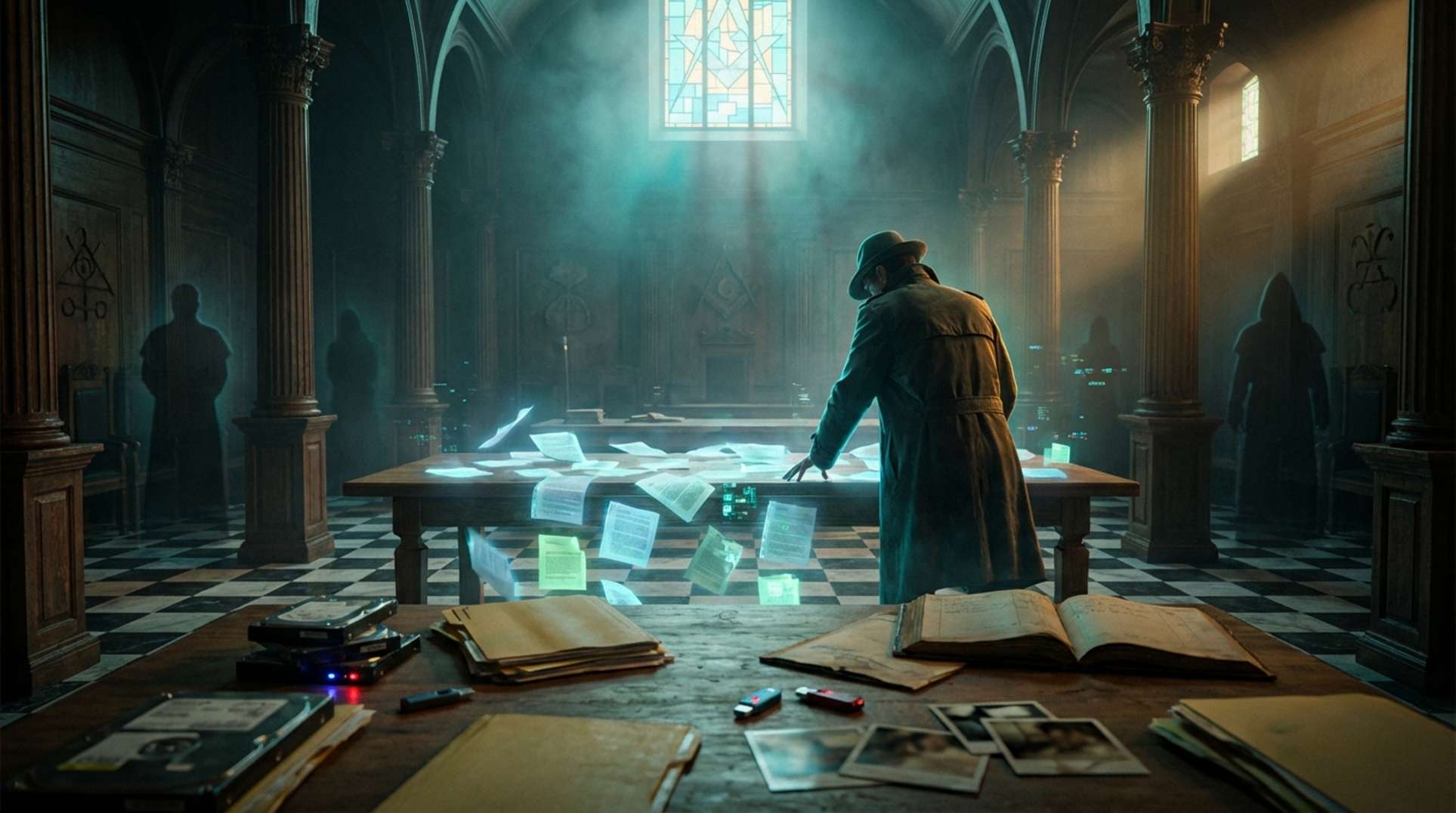
Picture the shadowed halls of ancient lodges, where rituals echo through centuries, their walls lined with symbols and secrets. Now overlay that with the stark light of digital files spilling out—thousands of pages from recent releases, emails and photos that pull back the curtain on hidden operations. This clash draws sharp attention from those who’ve long questioned elite networks.

The United Grand Lodge of England traces its roots to the Grand Lodge formed in London in 1717, presenting itself as a charitable, non-political fraternity. Yet, with Epstein-related documents hitting the public in waves—tens of thousands of pages and ongoing dumps—the focus sharpens. Researchers like Mark Gagnon, in his YouTube episode 366, weave these threads together, linking historical Freemasonry and Aleister Crowley to fresh releases, creating narratives that resonate deeply.

What Witnesses and Analysts Report

From lodge members to survivors, voices emerge with varied takes. Freemasonry practitioners and the UGLE stress that rituals are symbolic, centered on charity and open history, with around 170,000 members across more than 7,000 lodges. Critics, however, see it as secretive elite networking ripe for influence, especially when scandals erupt.

Aleister Crowley stands as a documented force in modern occultism, per sources like Britannica and the Oxford Dictionary of National Biography—though phrases like ‘godfather of occultism’ amp up his role for effect. Survivors and advocates push for transparency, their accounts driving many document releases and forming the core of civil and criminal records in Epstein cases. Online researchers, including Mark Gagnon, blend archival digs with new dumps to spot patterns, mixing hard highlights with thoughtful hypotheses.

Timelines, Tracks, and Hard Data

Let’s map out the verifiable pieces. The first Grand Lodge in London, precursor to the UGLE, formed in 1717, according to UGLE records and History.com. UGLE reports about 170,000 members in over 7,000 lodges. Aleister Crowley was born October 12, 1875, and died December 1, 1947, recognized as a central figure in occultism by Britannica and Oxford DNB.

Jeffrey Epstein’s legal timeline includes non-prosecution agreements and pleas in 2007–2008, with a plea entered June 30, 2008, leading to roughly 13 months in jail with work-release. Document volumes from recent committee and estate releases total tens of thousands of pages—reporting notes over 20,000, with committee productions around 23,000; FBI holdings reportedly exceed 300 gigabytes. The DOJ’s Office of Professional Responsibility (OPR) found ‘poor judgment’ in parts of the 2007–2008 decisions, with public statements referencing files on over 250 underage girls.

Mark Gagnon’s episode 366 is available on YouTube at https://www.youtube.com/watch?v=example (replace with actual URL if known).

Document TitleSource LinkApprox. Page Count or SizeEvidentiary Strength/Provenance
Epstein Committee ReleasesCongressional committee websites~23,000 pagesHigh; official government provenance with chain-of-custody
Estate Document DumpsCourt filings and estate records20,000+ pagesStrong; court-ordered releases, though some redactions
DOJ OPR SummaryDOJ public releasesNot specified; summary reportHigh; official oversight review
FBI HoldingsReporting on FBI records300+ gigabytesModerate; based on reporting, not fully public

Official Story vs. What the Data Suggests

Institutions push one narrative; independent eyes see others. The UGLE describes Freemasonry as a longstanding, non-political, charitable group, backing it with published constitutions and materials to counter secrecy accusations. The DOJ and oversight bodies have released summaries, with OPR noting ‘poor judgment’ in Epstein’s 2007–2008 handling, while congressional subpoenas and court orders unsealed more.

House committees and journalists have shared large sets, stressing documented facts amid circumstantial elements. Independent researchers, however, spot elite overlaps and repeated contacts in the files—suggestive patterns, yet often without full context or unredacted proof. Gaps persist in chain-of-custody, redactions protecting identities versus materials, and whether releases are complete.

What It All Might Mean

Verified facts hold firm: massive document dumps, public legal records like the non-prosecution agreement and OPR summary, Crowley’s historical role, and UGLE’s longstanding record with membership claims. Questions linger on whether new emails and photos nail criminal acts by elites beyond current indictments, the scope of sealed grand-jury and FBI files, and any solid institutional ties between mainstream Freemasonry and criminal or occult webs.

For next steps, pull timestamped segments from Gagnon’s YouTube episode. Extract and annotate key excerpts from emails, agreement clauses, and OPR sections. Build a prioritized document list by evidentiary value, always noting provenance and redactions in quotes. Target FOIA requests at sealed FBI files and push for metadata checks on releases.

Frequently Asked Questions

The documents include emails, photos, flight logs, and other materials documenting Jeffrey Epstein’s contacts and operations, with releases totaling tens of thousands of pages from committees and estates. They support evidence of his networks but do not universally prove organized conspiracies.

No verified chain-of-custody or unredacted evidence ties mainstream Freemasonry, such as the UGLE, to criminal or occult activity in the documents. Independent researchers note patterns of elite overlaps, but these remain plausible yet unproven.

Crowley is documented as a major figure in modern occultism, with his influence historically verified by sources like Britannica. Researchers link his legacy to broader patterns, but calling him the ‘godfather of occultism’ is a rhetorical flourish, not a proven tie to Epstein files.

The DOJ’s OPR review found ‘poor judgment’ in the 2007–2008 handling, leading to public statements and further unsealing via congressional subpoenas. Institutions like UGLE maintain their charitable, non-political stance amid the scrutiny.

Questions remain about whether new releases prove criminal activity by specific elites, the extent of sealed FBI files, and any institutional links between Freemasonry and networks. Gaps in chain-of-custody and redactions keep these areas open.