The Unexplained Company Logo
Sign In
Is Syracuse University Haunted? Why the Campus Ghost Story Keeps Growing

Is Syracuse University Haunted? Why the Campus Ghost Story Keeps Growing

Art Grindstone

March 29, 2026

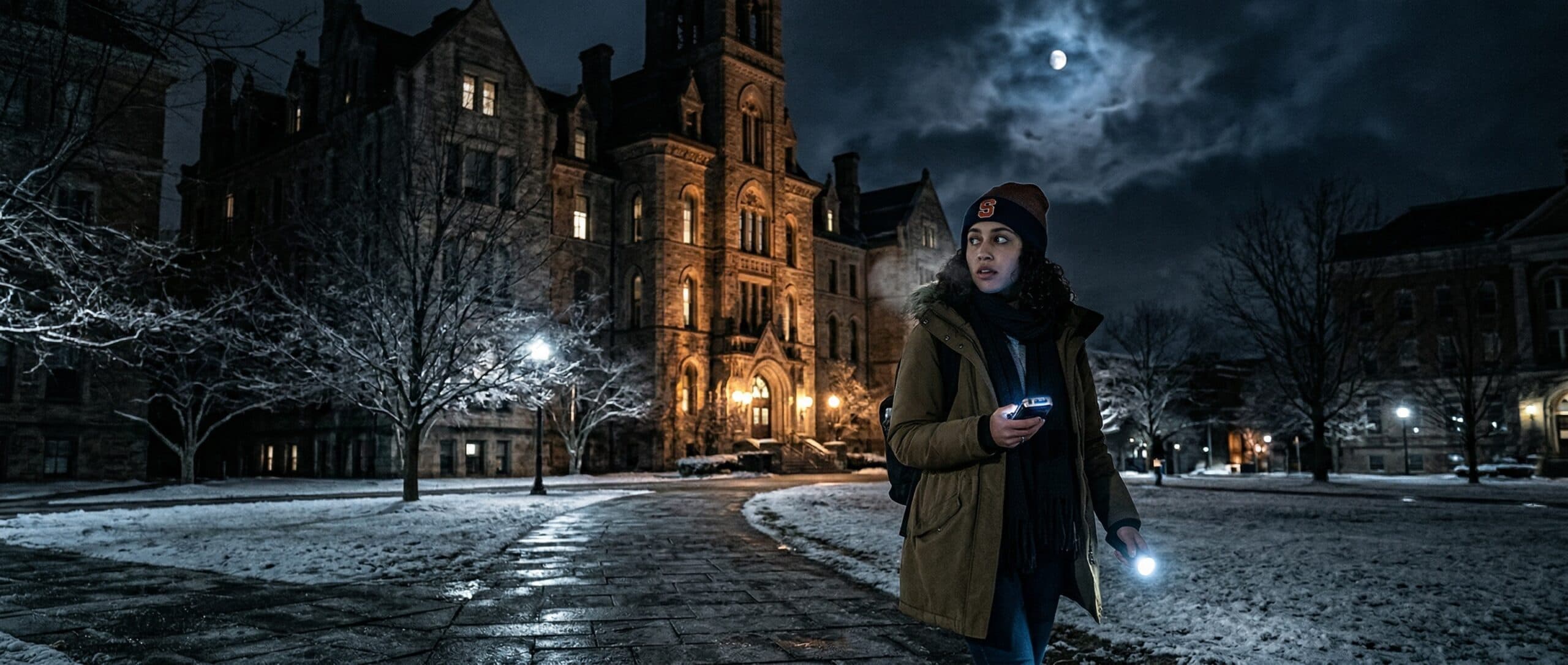
Syracuse University does not trade on a single defining ghost story in the way some older campuses do. What gives the school its reputation is something more durable: a steady accumulation of eerie claims, historic buildings, cemetery lore and student testimony that keeps the question alive from one class year to the next. A recent Daily Orange feature gave that conversation fresh momentum by treating the campus as neither a joke nor a proven paranormal hotspot, but as a place where enough unsettling stories circulate to make the label stick.

That framing matters. The modern internet loves a haunting that feels close at hand. A ruined asylum is atmospheric, but a working university is more relatable: late nights, old stone buildings, half-believed rumors, and the kind of emotional intensity that makes every odd sound feel loaded. Syracuse fits that pattern unusually well.

Why Syracuse keeps attracting ghost lore

Part of the answer is physical. Syracuse University has the kind of architecture that naturally collects legend. The Hall of Languages, the first building constructed on campus, dates to the early 1870s and still anchors the university with its Second Empire silhouette, towers and long institutional memory. Crouse College, with its dramatic Victorian Gothic look and castle-like presence, only deepens that atmosphere. Even before any ghost story is told, the setting does some of the work.

Then there is proximity. Syracuse students are not walking through a sealed-off academic museum. They move through a living city with its own folklore, and one of the most persistent local touchpoints is Oakwood Cemetery, the historic cemetery bordering the university area. It has long been part of the city’s haunted reputation, which means campus lore never stays confined to lecture halls and dorms. The edge between university life and local legend is thin.

That is why Syracuse ghost talk tends to spread as a network rather than a single headline mystery. A sound heard in one residence hall, a figure glimpsed near an older building, a strange feeling during a walk by the cemetery, an upperclassman retelling an old story to a first-year student — this is how campus mythology survives. It moves socially before it moves journalistically.
A campus haunting built on repetition, not proof

The most interesting thing about Syracuse’s paranormal reputation is that it does not depend on a definitive case file. It grows through repetition. Students arrive, hear that certain places are “known” for activity, test the claim for themselves and then add new details, skeptical or not. That cycle is more powerful than one dramatic incident because it keeps the story current.

The Daily Orange piece captured that well by approaching the subject as a ghost-hunt question rather than a solved mystery. That tone mirrors how many people now engage with paranormal claims online. They do not necessarily need to believe in a full supernatural explanation. They just need enough uncertainty for the story to remain entertaining, discussable and a little unnerving.

Universities are perfect environments for that kind of folklore. Students are sleep-deprived, stressed, socially primed for suggestion and constantly occupying spaces with layered histories. A creaking stairwell or an unexplained noise in a high-rise dorm can become a shared narrative almost instantly. Once that narrative sticks, every new class inherits it.

Why haunted-college stories resonate now

Syracuse is part of a broader shift in how paranormal stories circulate. Haunted places are no longer just isolated tourist attractions with ticket booths and velvet ropes. Increasingly, ordinary institutions with enough age, symbolism and rumor density are treated as active mystery zones. Colleges are especially suited to that because they combine youth culture with ritual, tradition and architecture built to outlast generations.

That makes the Syracuse story more than a local curiosity. It is also a case study in how belief and atmosphere work online. The question “Is Syracuse University haunted?” invites endless low-stakes participation. Alumni can add memories. Current students can compare rumors. Skeptics can argue that old buildings and suggestion explain everything. Believers can point to the sheer number of recurring claims. Everyone has a lane into the conversation.

And that is exactly why the story keeps growing. A haunting does not need universal proof to become culturally real. It only needs a setting that feels charged, a body of stories that refuses to disappear, and a community willing to keep asking whether something strange is going on after dark.

At Syracuse, that formula is already in place.

Related Articles

This article was created using Media Blaster – Your content production specialist. Visit www.mediablaster.io for more information.

Daily briefing

The Unexplained Daily Briefing

A fast, free email with the best new episodes, investigations, and strange developments from the world of the unexplained—curated so you don't have to watch the site.

Free • Quick to read • Unsubscribe anytime

Keep listening

Continue with the latest audio