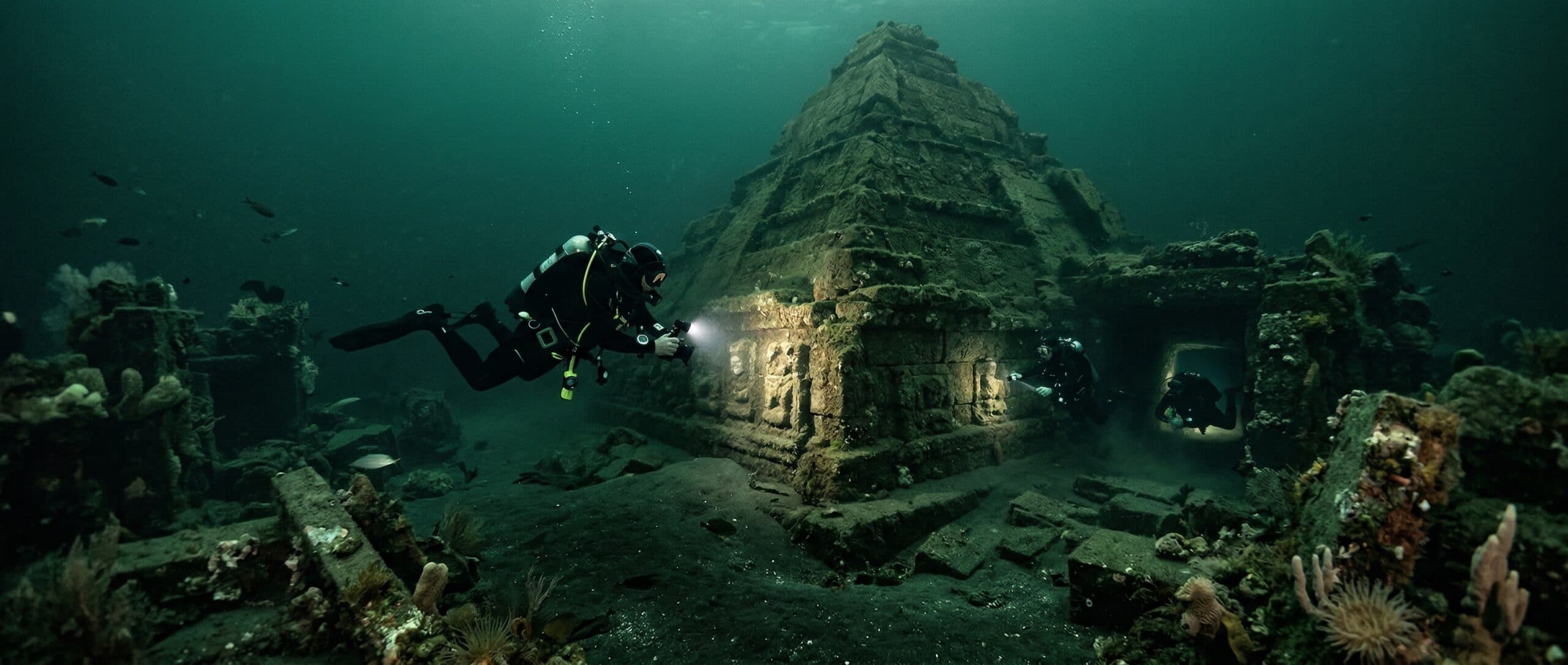

A resurfaced claim about a possible lost city off the Louisiana coast is getting fresh traction in late March 2026. Retired architect and amateur researcher George Gelé says sonar images collected over decades show submerged structures near the Chandeleur Islands, including a pyramid-like formation roughly 280 feet tall, potentially dating back more than 12,000 years.
The most sensational details are exactly why the story is spreading: an underwater metropolis, a pyramid allegedly tied geographically to Giza, and local reports that compasses and electronics behave strangely near the site.
What’s Happening
- Coverage from AOL/New York Post and The Daily Beast pushed the long-running claim back into the 2026 news cycle.
- Gelé says the site sits roughly 50 miles east of New Orleans, with structures around 30 feet below the water surface and buried under additional sediment.
- He has reportedly argued that granite blocks appear present in a region where granite does not naturally occur.
- A local fisherman cited in coverage claimed instrument problems near the site, including spinning compasses and electronics cutting out.
- The major caveat: the claims have not been validated in peer-reviewed literature, and no mainstream archaeological confirmation has been published.
Why It Matters
1. It is basically an American Atlantis story
Advertisement
Lost civilization narratives always travel, and this one adds Gulf Coast mystery, pyramid symbolism, and magnetic anomalies.
2. It blends archaeology with classic paranormal motifs
Once compasses start spinning, the story stops being just archaeology and becomes an anomaly narrative.
3. It is highly debatable, which makes it sticky
Skeptics can point to exaggeration, sonar over-interpretation, and lack of peer review. Believers can point to repeat local lore, site persistence, and the emotional power of a hidden ancient city.
4. It taps directly into prehistory revisionism
Any claim of advanced structures dating to 12,000 years ago immediately plugs into bigger debates about lost civilizations, cataclysms, and suppressed history.
Related Articles: