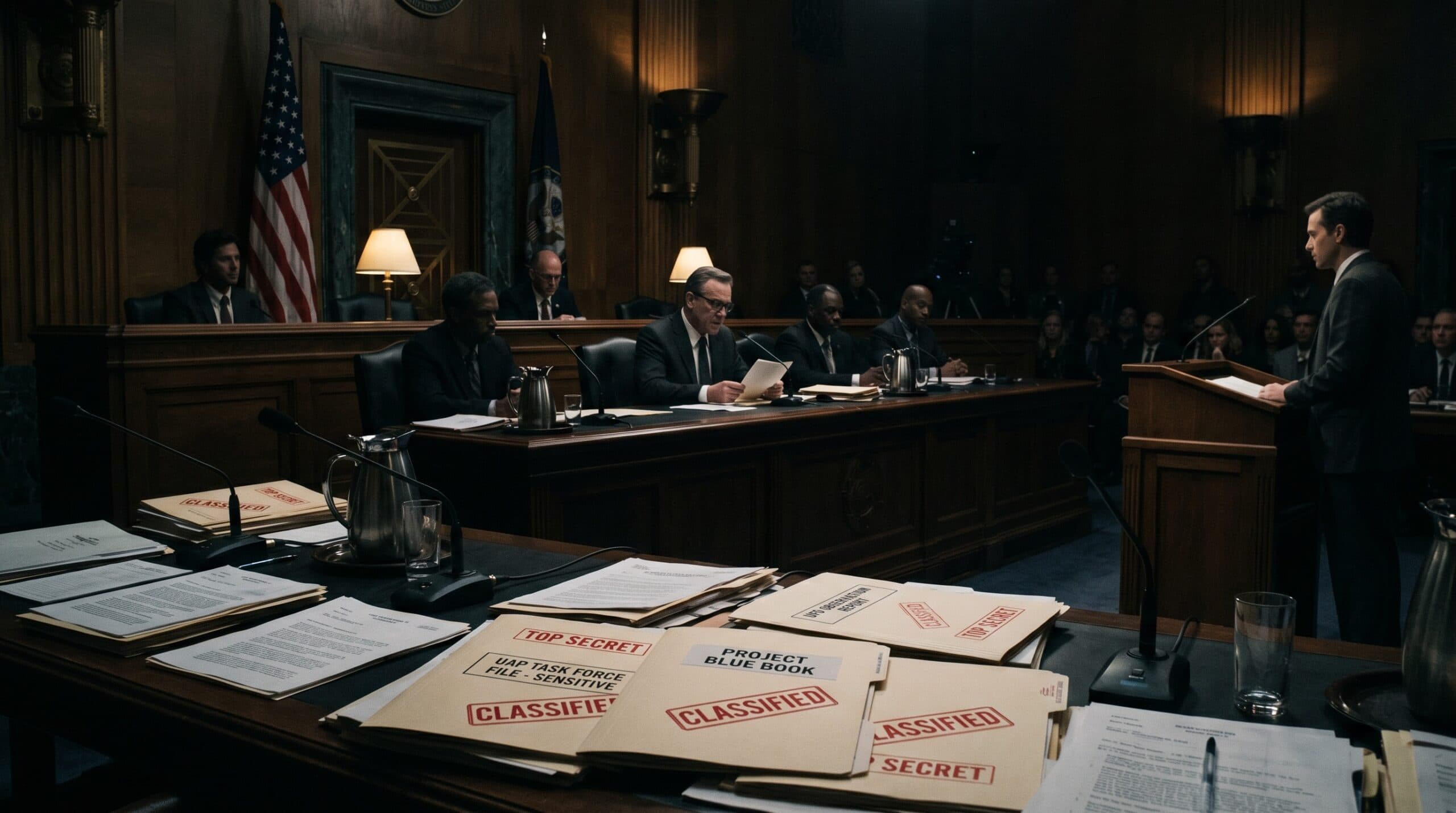

In July 1947, a mysterious object crashed in the New Mexico desert. Before the debris cooled, President Truman, as the story goes, summoned twelve of America’s top scientists, military leaders, and intelligence experts. Their mission: analyze, contain, and exploit the biggest secret in history. Or so claimed the infamous Majestic 12 documents. For decades, rumors of MJ-12 echoed from intelligence circles to late-night AM radio. When the documents spread among ufologists in the 1980s, they seemed to provide undeniable proof: we were not alone, and the government had known—and concealed this—since the beginning.
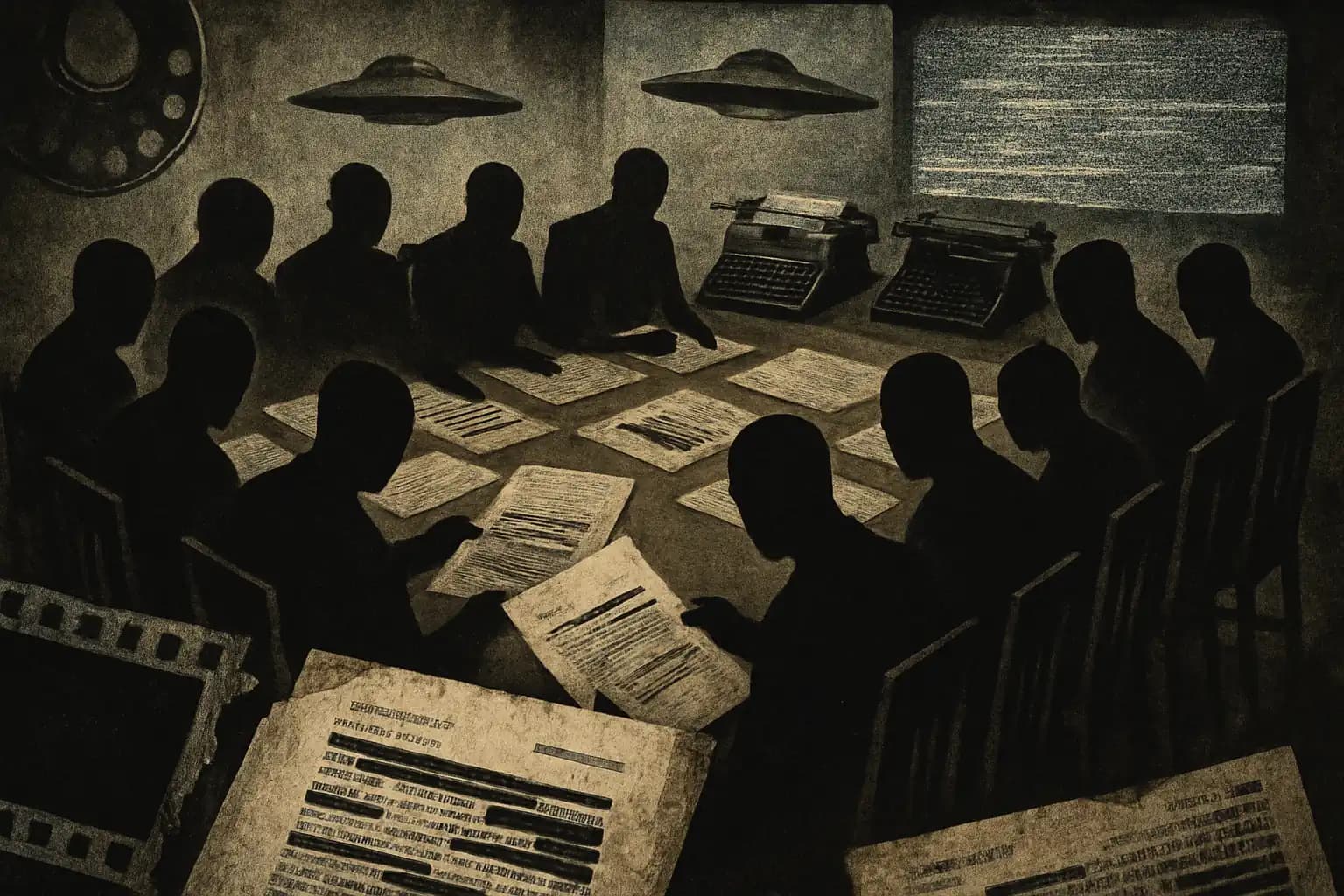
But truth lies buried under layers of cover stories, counter-stories, and psychological operations. Majestic 12, confirmed by the Federal Bureau of Investigation (FBI records), was a fabrication—intricate and designed to exploit fears of secrecy and otherness in Cold War America. Wikipedia details how the documents first arrived with TV producer Jaime Shandera on a mysterious film roll, filled with government memos and references to extraterrestrial technology and recovery teams. However, scrutiny soon unraveled those records, and successors like the Eisenhower Briefing. Linguistic inconsistencies, cut-and-paste signatures, and a complete absence of corroboration from authentic government records exposed their fraudulent nature. Yet, an entire subculture thrived around these alleged secrets.
Psychological Warfare and the Birth of Disinformation in Ufology
The story doesn’t conclude with debunking a simple hoax. As explained in the exposé by Ralph Steiner, Majestic 12 emerged alongside sophisticated psychological operations that weaponized uncertainty itself. “Control groups”—real or imagined—utilized forged documents not only to fuel UFO myths but also to undermine researchers, sow paranoia, and cultivate a culture of doubt. In their efforts, these groups created a playbook for manipulating whole information ecosystems, a strategy that far exceeded any single alien encounter. Similar methods, blending leaks with intricate rumors, echoed decades later in discussions about black-budget aerospace projects at Lockheed Martin’s Skunk Works or Soviet test ranges chronicled in Soviet archives.
Advertisement