Menga Dolmen Medieval Reuse Mystery: Why Ancient Sacred Sites Keep Refusing to Stay in the Past | Unexplained
Ancient Civilizations
Menga Dolmen Medieval Reuse Mystery: Why Ancient Sacred Sites Keep Refusing to Stay in the Past
A new archaeology story out of southern Spain is drawing attention because it carries the precise kind of symbolic charge that mystery audiences instantly recognize: a 5,000-year-old megalithic monument appears to have…
Art Grindstone is the hard-nosed storyteller behind Unexplained.co, a veteran investigator whose life’s work sits at the crossroads of the paranormal, fringe science, and the shadows most people try not to look into. With decades spent chasing impossible stories — black-budget psychic programs, vanished Cold War experiments, desert rituals that sparked UFO waves, and the strange phenomena buried in America’s forgotten backroads — Art brings a rare combination of skepticism, awe, and journalistic precision. He’s not here to debunk. He’s not here to blindly believe. He follows the evidence wherever it leads — even when it leads someplace deeply uncomfortable. Known for his immersive, cinematic style and his ability to turn obscure research into gripping narrative, Art has built a devoted following across podcasts, long-form features, documentaries, and serialized investigations. His interviews are direct. His analysis is unflinching. His voice has become a staple in the modern paranormal renaissance — the guy people turn to when a story is too strange, too complex, or too dangerous for anyone else to touch. Off-mic, Art works with a distributed network of researchers, archivists, and field operatives who help surface the stories mainstream media ignores. On-mic, he transforms their findings into meticulous, high-impact reporting that refuses to insult the intelligence of true believers. His philosophy is simple: Take the phenomenon seriously. Treat the audience with respect. Tell the story as if the world depends on it — because sometimes it does. When Art Grindstone digs into a case, he isn’t just chasing a mystery. He’s tracing the fault lines of reality itself.
5 min · 1,190 words
In This Report(13)
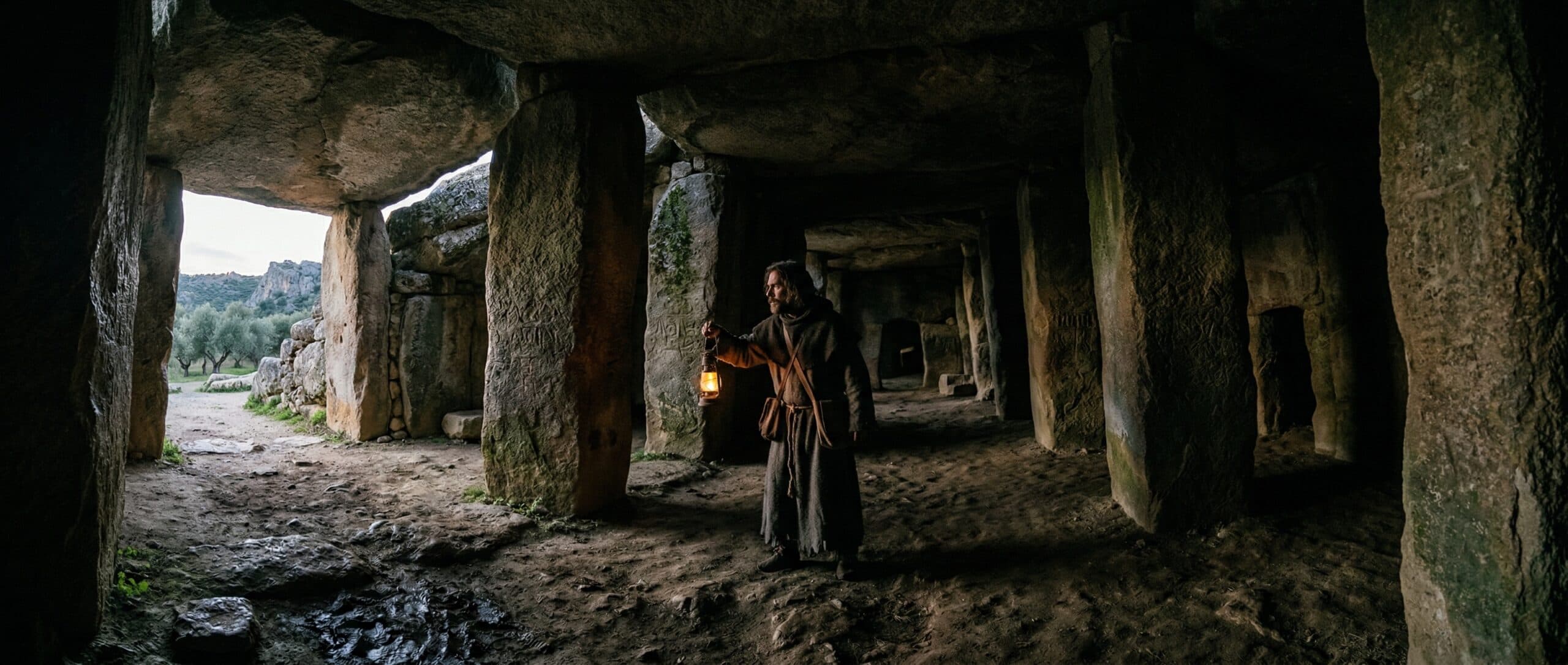
A new archaeology story out of southern Spain is drawing attention because it carries the precise kind of symbolic charge that mystery audiences instantly recognize: a 5,000-year-old megalithic monument appears to have been reused for burial in the medieval period. The site is the Menga dolmen in Antequera, one of Europe’s most significant prehistoric structures. What is newly energizing the story is the discovery that people were still placing bodies in relation to this monument thousands of years after its original construction.
That matters because the Menga dolmen was never just an old tomb. It was a monumental sacred structure embedded in landscape, memory, and symbolism. When later communities deliberately reuse a place like that, the act raises a larger question: what kind of meaning can survive across millennia?
What the Menga Dolmen Story Actually Says
The current wave of coverage centers on research showing that two individuals were buried at the entrance of the Menga dolmen during the medieval era, long after the monument’s Neolithic origins. The burial positions reportedly align with the monument’s internal axis, which suggests intentionality rather than random intrusion or simple convenience.
Advertisement
That detail is the key to why the story matters. It implies not merely that the monument remained physically accessible, but that it may still have carried symbolic or ritual significance many centuries after the culture that built it had vanished.
This kind of long-duration sacred reuse is archaeologically fascinating because it reveals how monumental places can remain active in human imagination even when their original meanings are no longer fully known.
Why Ancient Monuments Keep Being Reused
There is a strong tendency in modern audiences to think of prehistoric monuments as sealed-off relics belonging entirely to the distant past. In reality, many ancient sites have long afterlives. They get revisited, repurposed, reinterpreted, Christianized, mythologized, feared, protected, or absorbed into later ritual systems.
The Menga dolmen fits that wider pattern. A monument this large and symbolically charged does not simply disappear from cultural memory. Even if the original builders’ intentions are forgotten, the site itself keeps exerting gravity.
That is one reason stories like this feel so potent. They hint that landscapes remember, even when societies change.
Why the Medieval Burials Matter So Much
The burials are important because they suggest a relationship rather than an accident. When bodies are placed in meaningful alignment with a monument’s architecture, archaeologists naturally begin asking whether the people involved saw the site as sacred, ancestral, protective, prestigious, or spiritually powerful in some transformed way.
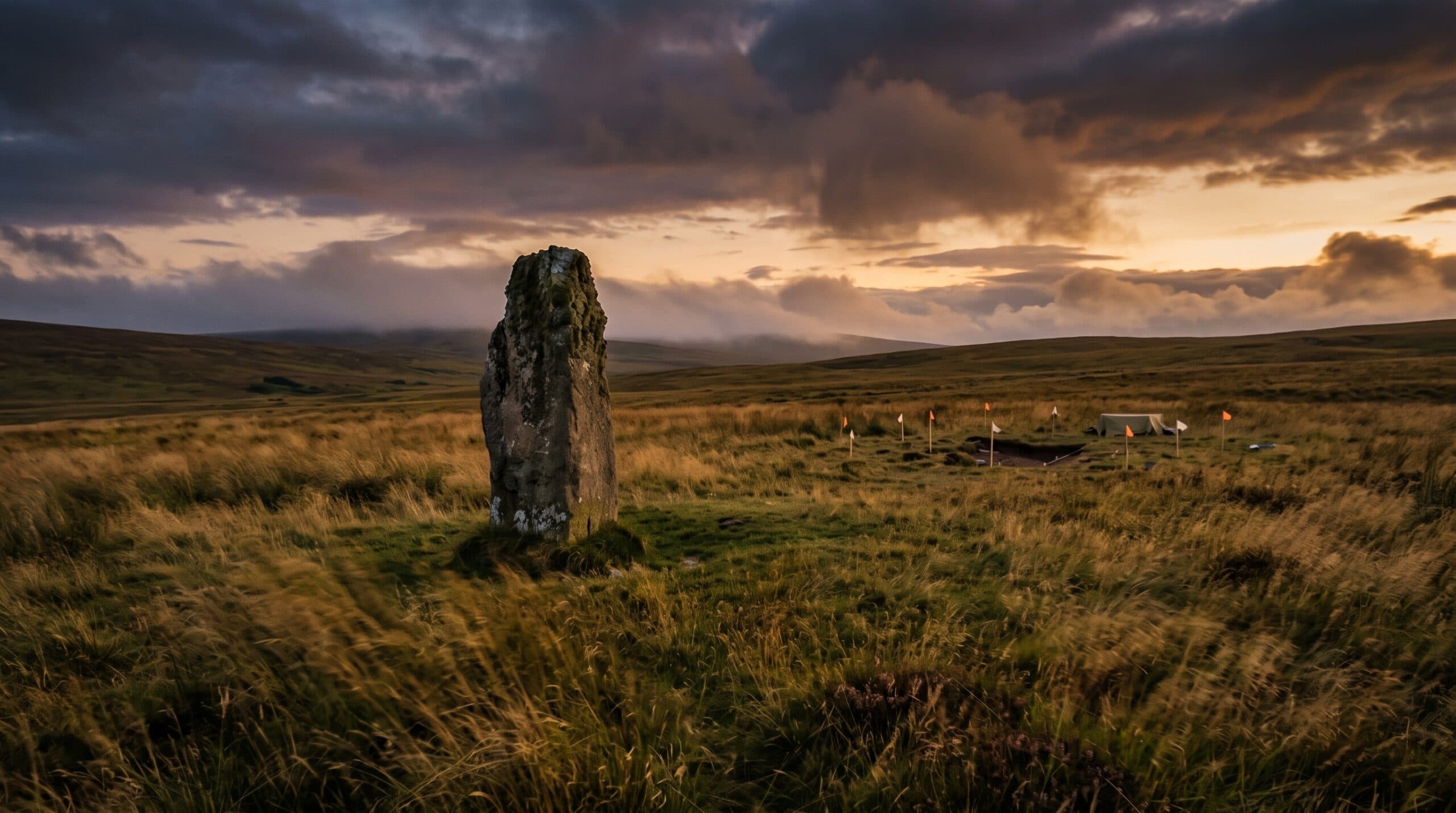
The Lonely Rock That Led Archaeologists to a 3,700-Year-Old Ritual Site
A single stone spotted by a student led archaeologists to a 3,700-year-old ritual site—and raised new questions about how ancient landscapes were read.
Aug 17, 2026 • 4 min read
Strange History
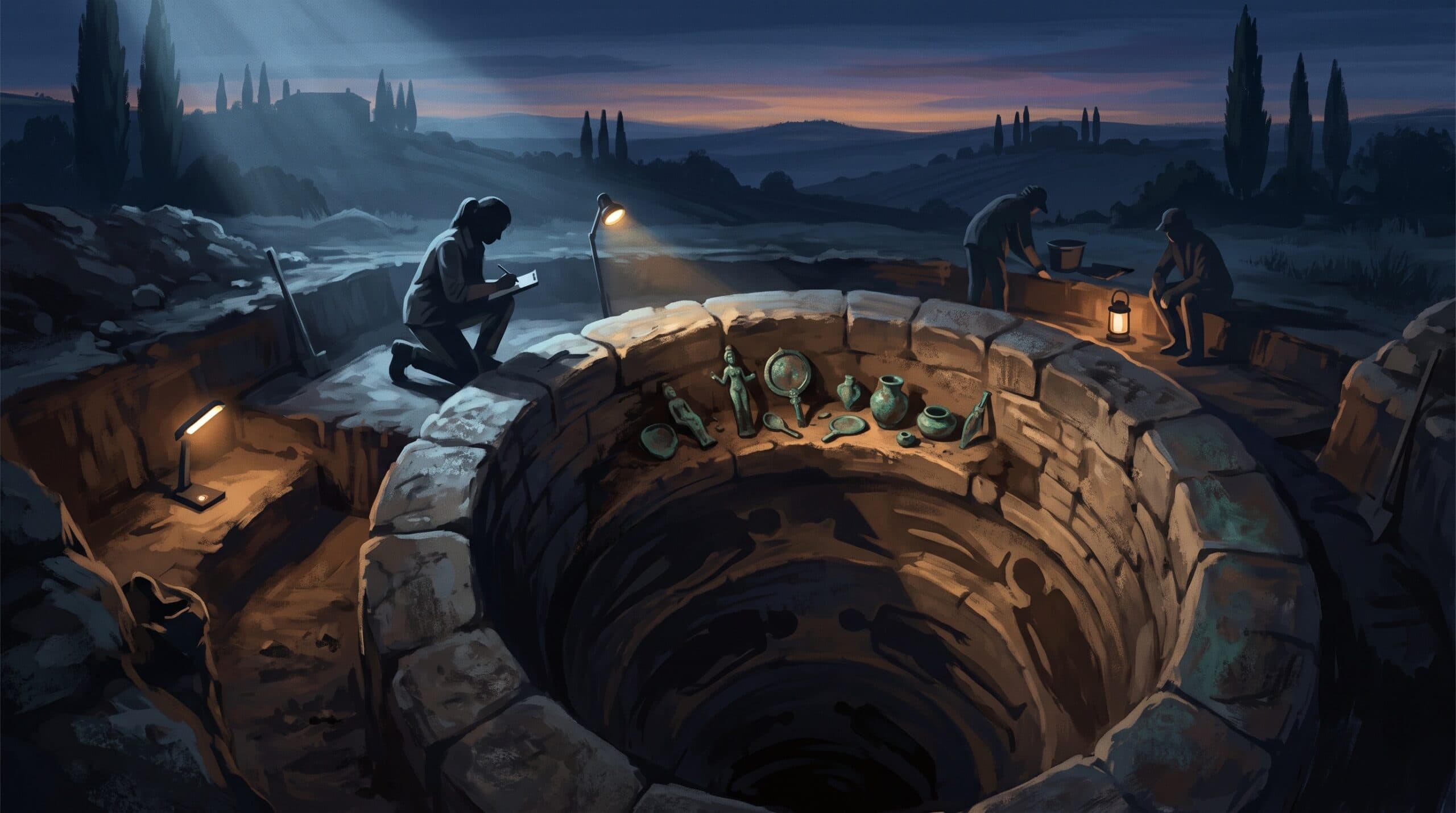
The Etruscan Well Sealed With Human Remains Is Stranger Than a Sacrifice Story
A newly reported Etruscan well in Italy was opened with offerings and sealed with human remains. The evidence reveals a ritual mystery, not a simple sacrifice tale.
Aug 18, 2026 • 7 min read
UFO & Aliens
The Pentagon Released More UAP Files—but Not the Data Needed to Solve Them
The Pentagon’s fifth UAP release reveals cold orbs and a giant triangle—but missing sensor data keeps its strangest cases unresolved and untested.
Aug 17, 2026 • 10 min read
The answer may not be fully recoverable. But the act itself still tells us something profound: later communities did not treat the dolmen as irrelevant stone. They treated it as a place that still mattered.
That is where mystery culture immediately leans in. If meaning survived, what kind of meaning was it?
What the Genetic and Chronological Details Add
Reporting around the new study also highlights radiocarbon dating that places the burials between roughly the 8th and 11th centuries CE, along with degraded DNA evidence from one individual suggesting a complex ancestry profile with European, North African, and Levantine connections.
Those details matter because they anchor the story in the real historical complexity of medieval Iberia. This was not an isolated cultural zone. It was a region shaped by movement, layered identities, religious transitions, and political contestation. In that context, the reuse of a prehistoric monument becomes even more interesting, because it may reflect a society already comfortable inhabiting multiple historical and symbolic worlds at once.
The monument’s second life, in other words, is happening inside a period of cultural mixing rather than cultural simplicity.
What Skeptics and Archaeologists Would Say
Serious archaeologists would caution against turning every act of monument reuse into mystical continuity. A later burial at an ancient site does not automatically prove that specific Neolithic beliefs survived intact into the medieval period. Symbolic reuse can happen for many reasons: territorial prestige, local legend, perceived sanctity, practical landmarking, social status, or transformed spiritual meaning.
That caution matters. The most responsible interpretation is not that medieval people secretly preserved the exact original cult of the dolmen, but that they recognized the place as meaningful enough to reuse deliberately.
Even that more restrained conclusion is still extraordinary in cultural terms.
Why This Story Resonates Beyond Archaeology
For The Unexplained Company, the power of the Menga dolmen story lies in what it reveals about sacred persistence. Some places do not stop mattering simply because the civilization that built them is gone. They remain active as containers for new meanings, new rites, and new identities.
Advertisement
This is one of the deepest recurring themes in ancient-mystery culture. Monuments are not inert. They accumulate symbolic afterlives.
That is also why stories like this spread beyond archaeology into hidden-history and mystery audiences. People are less interested in the technical fact of reuse than in the emotional implication that a place can stay spiritually alive across thousands of years.
That durability changes how people relate to them. Each era does not encounter the monument fresh. It encounters it already heavy with previous interpretation.
Final Assessment
The Menga dolmen medieval reuse mystery is compelling because it shows how ancient monuments can remain culturally active long after their original builders are gone. The medieval burials do not prove supernatural continuity or preserved Neolithic doctrine, but they do suggest that the dolmen retained enough symbolic power to shape human behavior across an astonishing span of time.
That is more than an archaeological footnote. It is a reminder that some places never fully become “the past.”
Frequently Asked Questions
What is the Menga dolmen?
The Menga dolmen is a major Neolithic megalithic monument in Antequera, Spain, known for its size, age, and ritual significance.
What is new about the current research?
The key finding is that two medieval-era burials were placed at the monument in a way that appears deliberate, suggesting symbolic reuse of the site thousands of years after it was built.
Does this prove ancient beliefs survived unchanged?
No. It shows that the monument likely retained meaning, but it does not prove medieval communities preserved the exact original Neolithic religious system.
Why does this story attract mystery audiences?
Because it suggests that certain ancient monuments remain symbolically alive across vast stretches of time, which feeds questions about sacred continuity, memory, and lost meanings.
Art Grindstone is the hard-nosed storyteller behind Unexplained.co, a veteran investigator whose life’s work sits at the crossroads of the paranormal, fringe science, and the shadows most people try not to look into. With decades spent chasing impossible stories — black-budget psychic programs, vanished Cold War experiments, desert rituals that sparked UFO waves, and the strange phenomena buried in America’s forgotten backroads — Art brings a rare combination of skepticism, awe, and journalistic precision. He’s not here to debunk. He’s not here to blindly believe. He follows the evidence wherever it leads — even when it leads someplace deeply uncomfortable. Known for his immersive, cinematic style and his ability to turn obscure research into gripping narrative, Art has built a devoted following across podcasts, long-form features, documentaries, and serialized investigations. His interviews are direct. His analysis is unflinching. His voice has become a staple in the modern paranormal renaissance — the guy people turn to when a story is too strange, too complex, or too dangerous for anyone else to touch. Off-mic, Art works with a distributed network of researchers, archivists, and field operatives who help surface the stories mainstream media ignores. On-mic, he transforms their findings into meticulous, high-impact reporting that refuses to insult the intelligence of true believers. His philosophy is simple: Take the phenomenon seriously. Treat the audience with respect. Tell the story as if the world depends on it — because sometimes it does. When Art Grindstone digs into a case, he isn’t just chasing a mystery. He’s tracing the fault lines of reality itself.