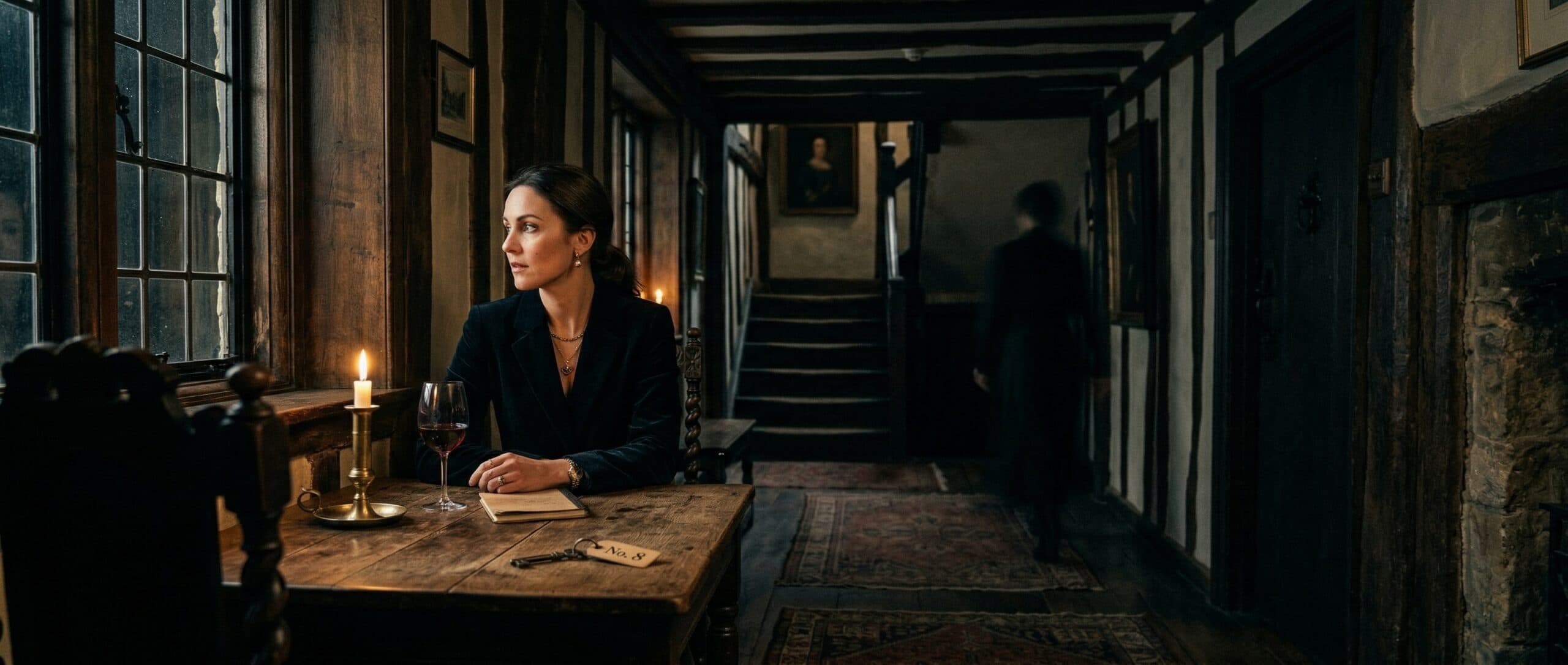
The Mermaid Inn in Rye, East Sussex is back in the headlines, and that alone is enough to reignite one of Britain’s most durable paranormal-travel stories. Fresh mainstream coverage has revived interest in the inn’s long-running haunted reputation, with familiar elements returning to center stage: Room 17, secret passages, a lady in white, moving furniture, and the lingering sense that this is one of those rare old buildings whose ghost stories feel inseparable from the walls themselves.
That is why this story matters. The Mermaid Inn is not just another allegedly haunted hotel. It is one of the UK’s most mythologized paranormal hospitality sites, and every time a major outlet reintroduces it through a present-day stay or first-person feature, the legend gets refreshed for a new audience.
Why the Mermaid Inn Keeps Coming Back
One reason the Mermaid Inn stays culturally alive is that it sits at the perfect intersection of ghost lore, heritage tourism, and old-English atmosphere. Haunted-hotel stories do not spread only because people believe in ghosts. They spread because they offer a complete experience package: history, architecture, folklore, suspense, and the possibility that an overnight stay could turn an ordinary trip into a personal encounter with the unexplained.
The Mermaid Inn has that formula in abundance. It is old, visually distinctive, tied to local smuggling mythology, and dense with retellable details. That makes it ideal for modern paranormal travel media.
What the Current Mermaid Inn Buzz Is Based On
The latest surge appears to come from a new mainstream feature revisiting the inn’s haunted reputation through a contemporary visitor experience. The shareable details are exactly the ones you would expect to perform well online: the supposedly active Room 17, a rocking chair said to move on its own, the recurring “lady in white” motif, and stories of ghostly figures connected to the building’s long history.
None of these are truly new claims in the strict evidentiary sense. What is new is the media framing. When a legacy haunting is reintroduced through fresh travel coverage, it becomes newly searchable, newly clickable, and newly discussable.
That matters because old hauntings often survive not through continuous evidence, but through periodic reinjection into public attention.
Why Haunted Inns Work So Well in the Public Imagination
Hotels and inns are especially powerful in paranormal culture because they combine transience with intimacy. Guests sleep there. They are physically vulnerable there. They spend the night in unfamiliar rooms and often in old buildings full of sound, shadow, and suggestive architecture.
That makes haunted-inn narratives unusually sticky. A ghost story in an old field is one thing. A ghost story in a room where you can spend the night is another.
The Mermaid Inn benefits from this perfectly. Its appeal is not just “there may be ghosts here.” It is “you can personally enter the setting of the legend.”
The Smuggling-Lore Advantage
Part of what makes the Mermaid Inn so enduring is that it is not built on ghost stories alone. It is also attached to criminal folklore, especially old smuggling narratives tied to the Hawkhurst Gang and the broader romance of hidden routes, secret dealings, and violent history along the English coast.
That historical texture matters because it gives the haunting lore a stronger dramatic foundation. Ghost stories rooted in smuggling, betrayal, violence, and concealed passageways feel more narratively complete than generic haunting tales. The past already sounds dangerous, so the supernatural overlay feels easier to accept.
This is one reason haunted heritage sites with criminal backstories tend to perform so well in media. They have built-in narrative scaffolding.
What Skeptics Would Say About the Mermaid Inn
Skeptics would point out that famous haunted hotels often become self-reinforcing suggestion environments. People arrive expecting to feel something. They notice creaks, shadows, old furniture movement, drafts, and sleep-disrupted sensations more intensely than they would in an ordinary building. Once a location’s reputation becomes fixed, every ambiguous moment starts arriving pre-interpreted.
That does not mean guests are inventing what they experienced. It means expectation and environment can work together in powerful ways.
Old inns are especially vulnerable to this because they naturally contain uneven floors, aged wood, shifting temperatures, odd acoustics, and architectural quirks that can feel uncanny even without any paranormal explanation.
Why This Story Still Matters
For The Unexplained Company, the Mermaid Inn story matters because it shows how paranormal tourism sustains itself in 2026. The strongest haunted-location stories are no longer only local folklore. They are media loops. A place becomes famous, gets periodically rediscovered by mainstream outlets, and then re-enters digital circulation as both a travel destination and a supernatural narrative object.
That process keeps legacy hauntings alive far beyond their original context. It also means that haunted hospitality stories now function as both folklore and lifestyle content.
This overlaps with the same event-and-experience culture we explored in our article on paranormal event culture, our piece on the Oregon ghost conference story, and our coverage of the Oregon Ghost Conference’s wider cultural significance. The form changes, but the mechanism is similar: people want to experience the unexplained, not just read about it.
Why the Mermaid Inn Is More Than a Simple Ghost Story
The most interesting thing about the Mermaid Inn is that it works on multiple levels at once. For believers, it is an active haunted location. For tourists, it is an atmospheric heritage destination. For skeptics, it is a fascinating example of how suggestion, architecture, folklore, and media reinforcement create an unusually durable legend.
That layered quality is exactly why it keeps resurfacing. The inn can satisfy almost every audience without needing definitive proof.
Final Assessment
The latest Mermaid Inn haunted-hotel buzz is less about new evidence than about the enduring power of a near-perfect paranormal setting. An old inn, secret passages, smuggling lore, ghost stories, and a modern media revival are more than enough to keep the legend alive.
Whether the Mermaid Inn is truly haunted or simply one of Britain’s most effective folklore environments, it remains one of the strongest examples of how paranormal myth and tourism continue to reinforce one another.
Frequently Asked Questions
Why is the Mermaid Inn famous in paranormal culture?
Because it combines a long-standing haunted reputation with historic architecture, smuggling lore, and repeated ghost stories tied to specific rooms and apparitions.
Is there new evidence the Mermaid Inn is haunted?
Not in any strong evidentiary sense. The current buzz is driven more by renewed media coverage and first-person travel storytelling than by newly verified paranormal proof.
Why do haunted hotels attract so much attention?
Because they offer a direct experience. People can physically stay in the location, which makes the haunting feel more personal and more emotionally real.
What would skeptics say about reports from the Mermaid Inn?
Skeptics would say the inn’s age, atmosphere, architecture, and powerful reputation create a strong suggestion environment where normal sensations can feel paranormal.
Related Articles:
- Strange & Extraordinary Fest Shows How the Paranormal Is Becoming Event Culture
- The Haunted House That Built Oregon’s Largest Ghost Conference
- Oregon Ghost Conference 2026: Why Seaside Has Become a Paranormal Gathering Point
This article was created using Media Blaster – Your content production specialist. Visit www.mediablaster.io for more information.