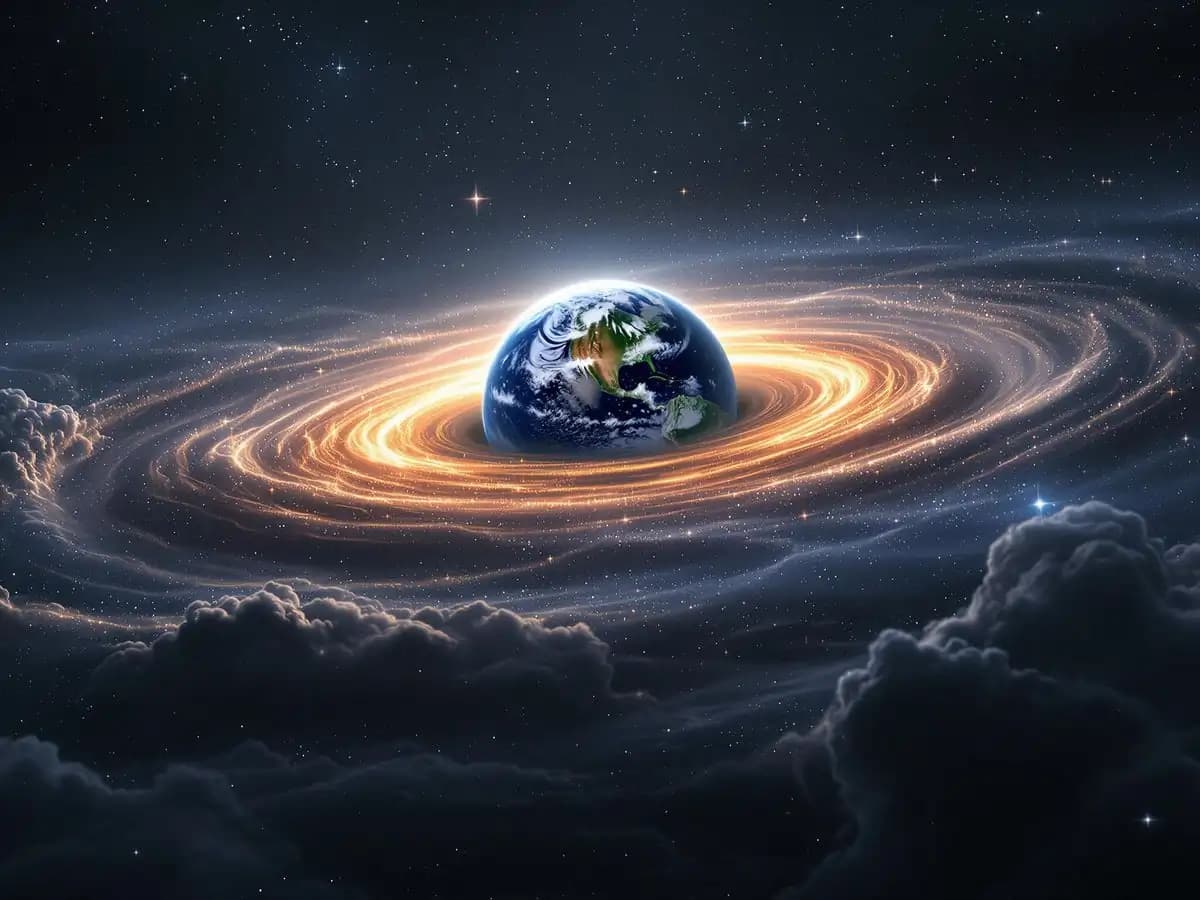

Every 30 to 34 million years, our solar system passes through the dense galactic plane of the Milky Way. This cosmic journey coincides with significant ecological upheavals on Earth, leading to mass extinction events. Fossil records suggest a connection between these galactic crossings and catastrophic changes in Earth’s biodiversity.
Key Takeaways
- The solar system’s passage through the galactic plane occurs every 30 to 34 million years.
- This event has been linked to major ecological disasters and mass extinctions on Earth.
- The last significant extinction event, which wiped out the dinosaurs, occurred around 66 million years ago.
- The gravitational forces during these crossings may dislodge comets, increasing the likelihood of Earth collisions.
- Some scientists propose that these impacts could have contributed to the spread of life across the universe.
The Cretaceous Period: A World of Giants
66 million years ago, as our solar system approached the galactic plane, the Earth was a vastly different place. The Cretaceous period was nearing its end, characterized by a world filled with extraordinary life forms. The continents were still drifting apart from the ancient supercontinent Pangea, creating a unique environment.
During this time, tropical temperatures extended to the poles, resulting in lush, green landscapes even in the coldest regions. Dinosaurs dominated the land, with massive sauropods reaching lengths of over 100 feet. In the skies, pterosaurs soared with wingspans rivaling modern airplanes. Meanwhile, the oceans teemed with life, from giant marine reptiles to bizarre sea creatures.
The Catastrophic Impact
However, this vibrant world faced a catastrophic event. An asteroid, larger than Mount Everest, hurtled towards Earth at an astonishing speed of 43,000 km/h. Upon impact, it unleashed chaos on an unprecedented scale. The force of the collision sent shockwaves rippling through the planet, flattening forests and obliterating landscapes.
The aftermath was apocalyptic. Intense heat waves incinerated vast areas, while acid rain poisoned the oceans. More than 90% of marine phytoplankton went extinct, and half of all plant species vanished. The food chain collapsed, leading to the extinction of the mighty dinosaurs and paving the way for mammals to rise.
The Cosmic Connection
But where did this asteroid come from? Scientists at the Cardiff Centre for Astrobiology suggest that the gravitational forces during our solar system’s passage through the galactic plane may dislodge comets, sending them hurtling towards Earth. This phenomenon, dubbed the “bounce effect,” could explain the increased likelihood of collisions during these cosmic crossings.
Their computer models indicate that the chances of an asteroid or comet collision increase tenfold every 35 to 40 million years. This correlation is supported by evidence from Earth’s crater records, highlighting a pattern of increased impacts approximately every 36 million years.
Volcanic Activity and Life’s Spread
In addition to asteroid impacts, some scientists propose that the solar system’s galactic crossings may superheat the Earth’s core, leading to massive volcanic eruptions. The Deccan Traps, one of the largest volcanic provinces, may have been influenced by these cosmic events.
Interestingly, while these impacts may have spelled doom for the dinosaurs, they could also have facilitated the spread of life. The debris thrown into space during these collisions might have contained microorganisms, supporting the Panspermia hypothesis, which suggests that life can be distributed throughout the universe via space debris.
A Cautionary Note
As we approach another passage through the galactic plane, some scientists urge caution. Astrophysicist Coryn Bailer-Jones emphasizes that the models predicting catastrophic outcomes are uncertain. The chances of a significant event occurring in our lifetimes remain incredibly low. However, he stresses the importance of becoming a multiplanetary species to ensure humanity’s long-term survival.
Conclusion
The cosmic dance of our solar system through the galactic plane serves as a reminder of the dynamic and often perilous nature of our universe. While the past may hold tales of destruction, it also hints at the resilience and adaptability of life. As we continue to explore the cosmos, understanding these patterns may help us navigate the future and safeguard our place in the universe.