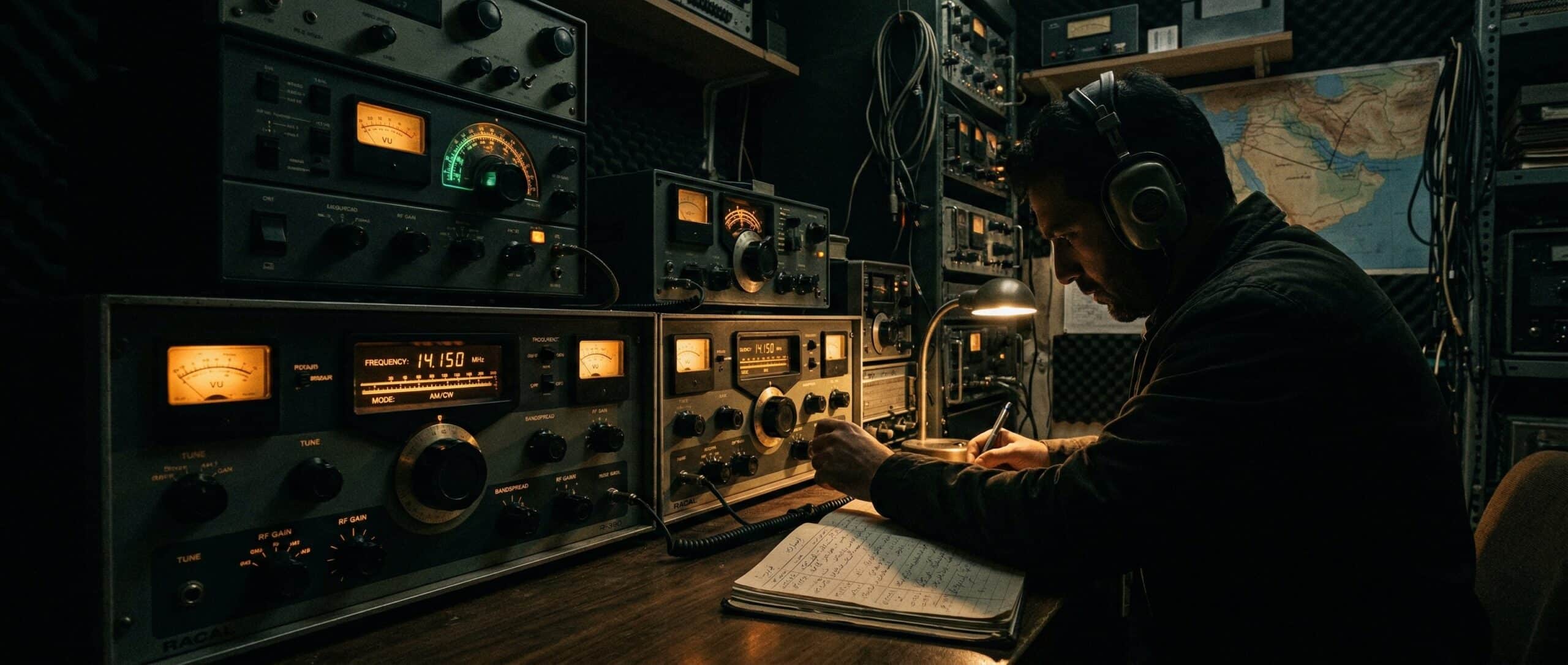

A fresh Cold War-style mystery is crackling across the unexplained internet: a Persian-language numbers station reportedly appeared on shortwave frequency 7910 kHz shortly after the first U.S. and Israeli strikes on Iran on February 28, 2026. The signal features a male voice reading grouped numbers in Persian, with the word tavajjoh — meaning “attention” — repeated before message blocks.
For conspiracy audiences, it feels like real-time spy fiction. For radio hobbyists and intelligence watchers, it feels even stranger: because numbers stations are one of those rare pieces of real-world weirdness that are simultaneously documented, historically linked to espionage, and almost never publicly explained.
Advertisement
What Is Happening on 7910 kHz?
According to Priyom’s tracking page for V32, the Persian-language numbers station was first logged on February 28, 2026, roughly 12 hours after the opening strikes in the Iran conflict. Hobbyists say the station uses the classic five-digit group format strongly associated with espionage numbers stations.
As Weird Darkness summarized, the signal consists of a male Persian-speaking voice reading coded number groups, creating an unnerving effect that sounds like something preserved from the Cold War rather than a live broadcast tied to a modern conflict.
Other reported details circulating through monitoring communities include:
- the signal appears to air twice daily
- later transmissions reportedly repeated earlier message sets
- listeners noted format changes during the first week, including shifts in voice and message structure
- at one point, hobbyists claimed to hear stray Windows computer sounds leaking into the broadcast
That last detail only deepened the fascination: a shadowy wartime signal carrying five-digit codes is creepy enough, but hearing accidental computer noises behind the transmission makes it feel less like folklore and more like someone, somewhere, is running a very real clandestine system.
Why Numbers Stations Still Fascinate People
Numbers stations occupy a rare liminal category. They are not urban legends. They are real broadcasts, documented by shortwave listeners for decades. Yet their function remains mostly opaque to the public.
Historically, numbers stations have been linked to intelligence services using one-way encrypted messages for field operatives. The logic is brutally simple: if an agent has the right key, a seemingly meaningless broadcast can carry specific instructions. If they do not, the message is practically useless.