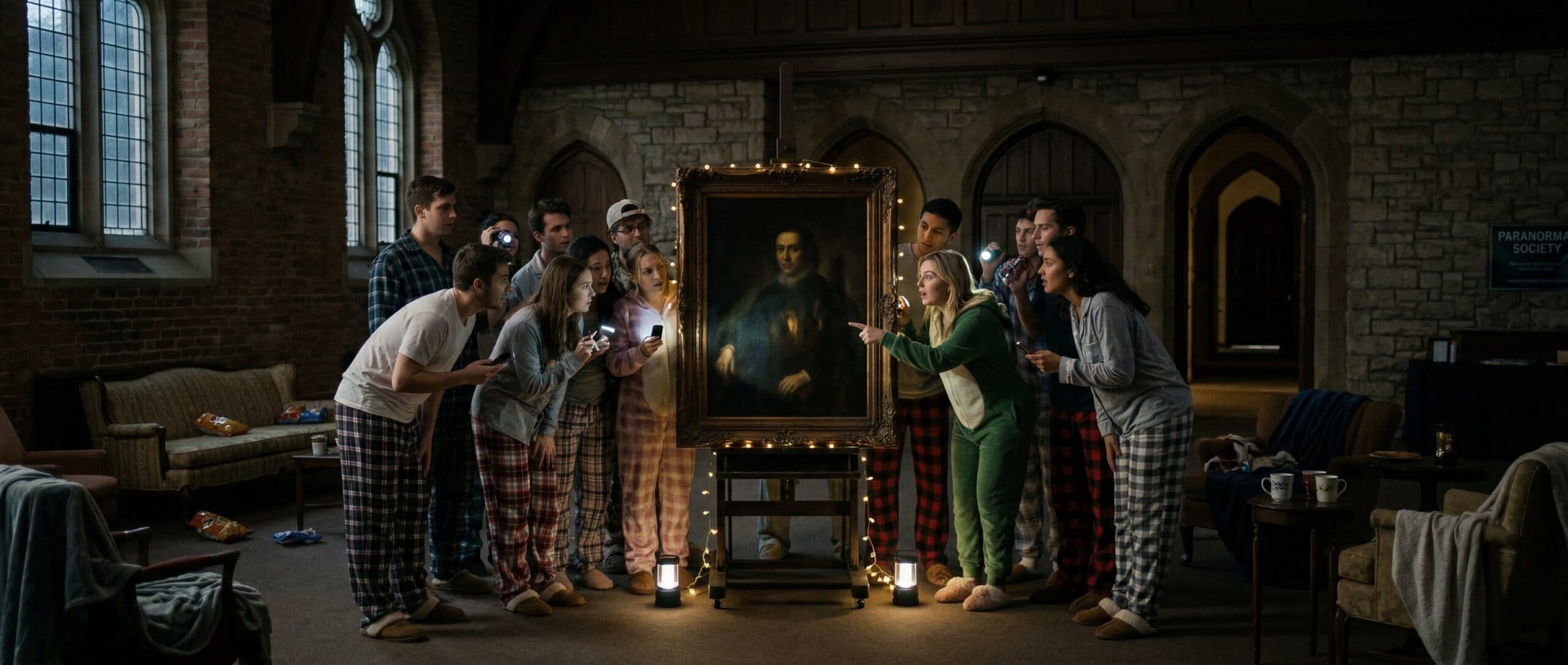
There was a time when haunted tourism mostly meant walking through an old building, hearing a few stories, and leaving with a souvenir. Events like the Paranormal Painting Pajama Party at St. Mary’s Art Center in Virginia City, Nevada show how much that formula has changed. This is no longer just about listening to ghost lore. It is about staying overnight, participating in an investigation, making art from the experience, and turning the entire evening into a personal story.
According to The Comstock Chronicle, St. Mary’s Art Center partnered with Women Investigating Ghost Sightings for the March 27–29 event. Guests were invited into the historic building after hours for structured paranormal investigation and an overnight stay, then encouraged to create artwork inspired by the mood of the building and whatever they believed they experienced there. It sounds playful on the surface, but it says a great deal about where paranormal culture is heading.
A haunted experience built around participation
St. Mary’s is unusually well suited to this kind of event. The center operates inside a former 1876 hospital, which gives it emotional weight before any ghost story is told. Old hospitals naturally attract narratives of unfinished business, loss, and residual presence. They feel different from ordinary historic homes because their original purpose was already bound up with vulnerability and crisis.
The building’s present identity adds another layer. St. Mary’s Art Center is both a preservation site and a creative space, which makes the pajama-party format more than a gimmick. The event combines investigation with artistic response, turning the night into something part ghost hunt, part sleepover, part workshop. Guests are not just being shown a haunting. They are being asked to interpret it.
Why haunted tourism is changing
This matters because it reflects a broader transformation in the paranormal economy. Audiences increasingly want more than passive consumption. They do not just want to hear that a place is haunted; they want to enter it after dark, test the claim for themselves, compare impressions with strangers, and leave with evidence, artwork, or at least a memorable story. The experience itself becomes the product.
That model fits perfectly with contemporary digital culture. An ordinary ghost tour may be enjoyable, but an overnight paranormal painting event inside a historic hospital is highly shareable. It gives visitors a narrative arc, visual texture, and social-media-friendly details from the moment they arrive. Pajamas soften the tone, ghost hunting adds suspense, and the art-making component gives attendees something tangible to carry home beyond photos or video clips.
It also shows how operators are broadening the audience for paranormal events. Traditional ghost tourism often targets dedicated believers, history buffs, or Halloween-season visitors. An event like this reaches all of them while also appealing to people who like immersive experiences, creative workshops, and destination travel with an offbeat edge. Haunted tourism is becoming less siloed and more hybrid.
The business of atmosphere
Virginia City has long understood how to market its mining-era history, and St. Mary’s fits neatly into that larger landscape. The town’s appeal is built on a mixture of preserved architecture, Old West identity, and persistent legends of hauntings. What the Paranormal Painting Pajama Party adds is a newer kind of event design: not simply presenting a haunted location, but packaging it as an interactive themed environment. That is a different business strategy from the older museum-or-walking-tour model.
The concept also reflects the growth of what can fairly be called the paranormal experience economy. Across the United States, historic buildings and folklore-rich destinations are increasingly being monetized through immersive overnight events, paranormal investigations, themed dinners, and niche retreats. What once lived at the edges of tourism now behaves like an adaptable event category.
That does not make the supernatural claims any more or less true. What it does change is the way audiences relate to them. The visitor is no longer a spectator watching a ghost story from the outside. They are placed inside the story and encouraged to participate in producing its meaning.
Why this format appeals right now
The St. Mary’s event works because it understands a modern audience’s appetite for mood, novelty, and self-directed mystery. It offers fear without overwhelming darkness, creativity without abandoning the paranormal hook, and enough intimacy to make the night feel personal. That combination is powerful. It turns haunting from a fixed tale into a social experience people can narrate afterward as their own.
In that sense, the Paranormal Painting Pajama Party is not just a quirky local event. It is a sign of how haunted culture is evolving. The future of paranormal tourism may not belong only to the loudest ghost tours or the scariest haunted houses. It may belong to places that can create more layered, participatory, emotionally textured experiences around the same old question: what, if anything, is still here?
Related Articles
- Annabelle in Salem? Why the Warren Museum Story Is Exploding Online
- Is Syracuse University Haunted? Why the Campus Ghost Story Keeps Growing
- Blood Moon Prophecy Keeps Returning in Times of Fear
This article was created using Media Blaster – Your content production specialist. Visit www.mediablaster.io for more information.