The Unexplained Company Logo
Sign In
The CIA’s Psychic Spy Program: Inside Project Stargate

The CIA’s Psychic Spy Program: Inside Project Stargate

Art Grindstone

March 24, 2026

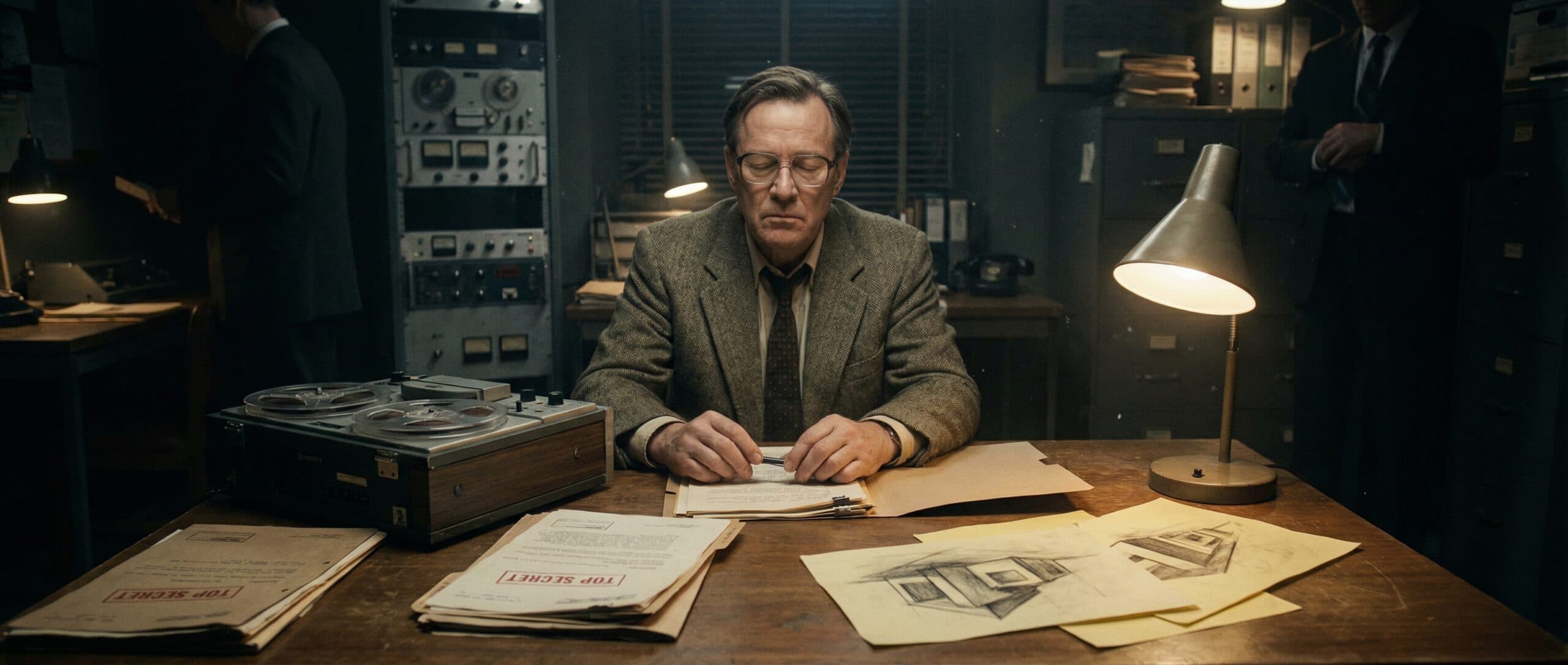
In the realm of government secrets, few programs are as bizarre as the U.S. military investigation into psychic spying. For over two decades, American intelligence agencies funded research into remote viewingthe alleged ability to perceive distant, hidden, or inaccessible locations using only the mind.

Known as Project Stargate (or simply Star Gate), this classified program operated from the 1970s through the 1990s, employing psychics to attempt to describe enemy installations, locate missing persons, and gather intelligence on foreign operations.

How It Started

The story begins in the early 1970s at Stanford Research Institute (SRI), where researchers were exploring claims of extrasensory perception (ESP). The U.S. government, always looking for intelligence advantages during the Cold War, took notice.

As Wikipedia reports, the term “remote viewing” was first suggested by Ingo Swann in December 1971 during an experiment at the American Society for Psychical Research in New York City.

The Program in Action

Key elements of the program included:

  • Remote viewers (often individuals claiming psychic abilities) were tasked with describing targets they had no physical access to
  • A “sender” would sometimes be positioned at the target location, allegedly to “beam” information to the viewer
  • Sessions were strictly controlled, with viewers working blind (not knowing the target location)
  • Results were recorded and evaluated by judges who compared descriptions to actual targets

The Defense Intelligence Agency (DIA) ultimately took over the program, which continued until the mid-1990s.

As Federation of American Scientists reports, the initial research program called SCANATE was funded by the CIA beginning in 1970.

The Famous Remote Viewers

Famous viewers included:

Ingo Swann: One of the first remote viewers, credited with developing protocols. A New York artist and Scientologist who possessed claimed psychic abilities.


Pat Price: A former police officer who claimed to view Soviet facilities. His sessions were some of the most detailed in the program.

Joe McMoneagle: Claimed to have provided useful intelligence to the CIA, including information about a Soviet facility that was later confirmed by satellite imagery.

As Wikipedia notes, these individuals became central to one of the most unusual programs in American intelligence history.

Did It Work?

The question of whether remote viewing actually worked remains controversial. In 1995, the American Institutes for Research conducted an evaluation of the program and concluded it found no evidence that remote viewing had any actual intelligence value.

Skeptics argue that:

  • Results were no better than chance when properly controlled
  • Confirmation bias affected how results were interpreted
  • Many of the most impressive results came from poorly designed experiments
  • The entire program may have been a cover for other intelligence activities

Believers counter that:

  • Some viewers achieved statistically significant results
  • The government continued funding for over 20 years, suggesting some success
  • Classified information about the programs successes may never be released
  • The nature of consciousness is not fully understood by science

Why It Matters

Government Takes Paranormal Seriously: The existence of Stargate proves that at various points, U.S. intelligence agencies took psychic phenomena seriously enough to spend taxpayer money researching it.

Declassification and Documentation: Thousands of pages of documents have been released, creating a paper trail that allows researchers to examine the programs claims and conclusions.

Scientific Controversy: The programs existence raises questions about the nature of consciousness and whether human perception can extend beyond normal sensory boundaries.

Pop Culture Impact: The program inspired countless movies, TV shows, and books, including The Men Who Stare at Goats and various X-Files episodes.

The Legacy

While officially deemed “non-productive” by government reviewers, Project Stargate left behind a legacy that continues to fascinate. The declassified documents provide a unique window into a Cold War program that venture into the fringes of human consciousness.

Whether remote viewing was genuine psychic ability, elaborate self-deception, or something else entirely, the story of Project Stargate reminds us that governments have always been willing to explore unconventional methods in pursuit of intelligence.

Explore more about remote viewing from Wikipedia and the Federation of American Scientists.

Related Articles: