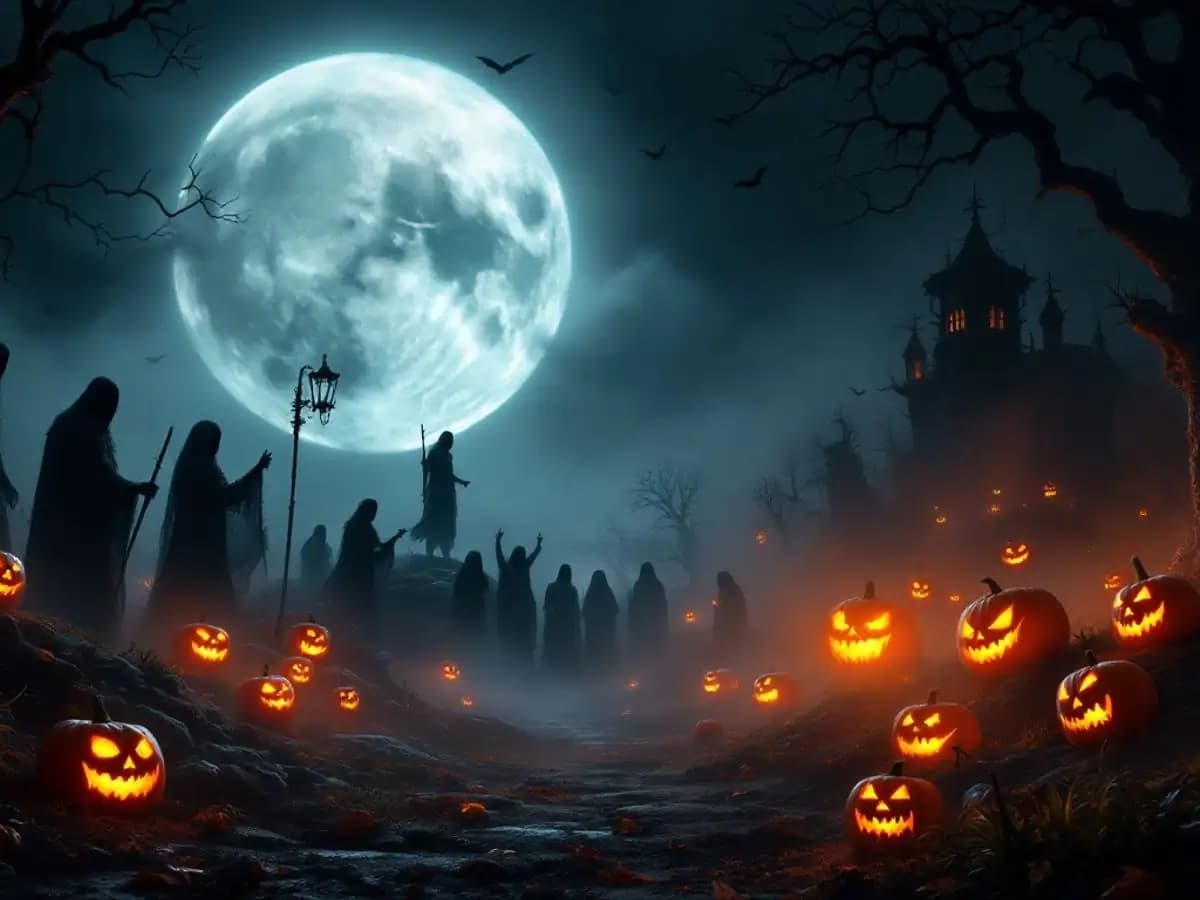

Halloween is a night steeped in history, where the boundary between the living and the dead blurs. Originating from ancient Celtic traditions, this festival has transformed over centuries into a celebration filled with costumes, candy, and community spirit. Let’s explore the eerie origins and the evolution of Halloween.
Key Takeaways
- Halloween’s roots trace back to the ancient Celtic festival of Samhain.
- The festival evolved through Roman and Christian influences.
- Modern Halloween traditions include trick-or-treating and costume parties.
The Ancient Origins of Halloween
Halloween, or Samhain, was a significant festival for the ancient Celts. It marked the end of the harvest and the onset of winter. During this time, the veil between the living and the dead was believed to be at its thinnest. The Celts honored their ancestors and warded off malevolent spirits with bonfires and offerings.
- Bonfires: Massive fires were lit on hilltops to guide lost souls and keep darker forces at bay.
- Costumes: People donned animal skins and masks to confuse wandering spirits.
- Offerings: Food and drink were left out to appease the restless dead.
The Roman Influence
As the Romans conquered Celtic lands, they integrated their own customs with those of the Celts. This blending of traditions enriched the festival.
- Pomona: The Roman goddess of fruit and harvest influenced the incorporation of apples into Samhain rituals, symbolizing divination and the future.
- Felia: A Roman festival honoring the dead mirrored the customs of Samhain, reinforcing the connection between life and death.
The Christianization of Samhain
In the 7th century, the Christian Church sought to transform Samhain into a Christian observance. Pope Boniface IV established All Saints’ Day on November 1st, aligning it with Samhain.
- All Hallows’ Eve: The night before All Saints’ Day became known as All Hallows’ Eve, later shortened to Halloween.
- All Souls’ Day: Following All Saints’ Day, this day was dedicated to praying for souls in purgatory, further intertwining Christian beliefs with ancient customs.
The Medieval Era and Folk Customs
During medieval times, Halloween evolved into a night of dualities, where sacred and profane traditions coexisted.
- Souling: The practice of wandering door-to-door for soul cakes in exchange for prayers for the dead emerged, echoing older customs.
- Guising: Children dressed in costumes, reciting verses for treats, a precursor to modern trick-or-treating.
The American Transformation
In the 19th century, Irish and Scottish immigrants brought Halloween traditions to America, where they began to evolve.
- Community Celebrations: Halloween shifted from solemn remembrance to a festive community event, focusing on fun and mischief.
- Trick-or-Treating: The practice of trick-or-treating emerged, allowing children to collect candy instead of performing tricks.
The 20th Century: Mischief to Family Fun
By the early 20th century, Halloween had gained a reputation for mischief, leading communities to seek safer celebrations.
- Organized Events: Schools and organizations began hosting parades, parties, and contests to channel youthful energy into creative outlets.
- Trick-or-Treating: This practice became a structured way for children to enjoy Halloween, focusing on treats rather than tricks.
The Influence of Media
As Halloween continued to evolve, the influence of media played a significant role in shaping its modern identity.
- Hollywood Horror: Films and television shows introduced iconic characters and stories, intertwining Halloween with popular culture.
- Jack-o’-Lanterns: The tradition of carving pumpkins became a staple, rooted in ancient folklore but popularized in America.
Conclusion: A Night of Transformation
Halloween has journeyed from ancient rituals to a modern celebration filled with laughter and light. Yet, beneath the surface, the echoes of its dark origins remain. As you celebrate this Halloween, remember the rich history that shapes this night of fun and fright. Embrace the shadows and the light, for they are intertwined in the dance of Halloween.