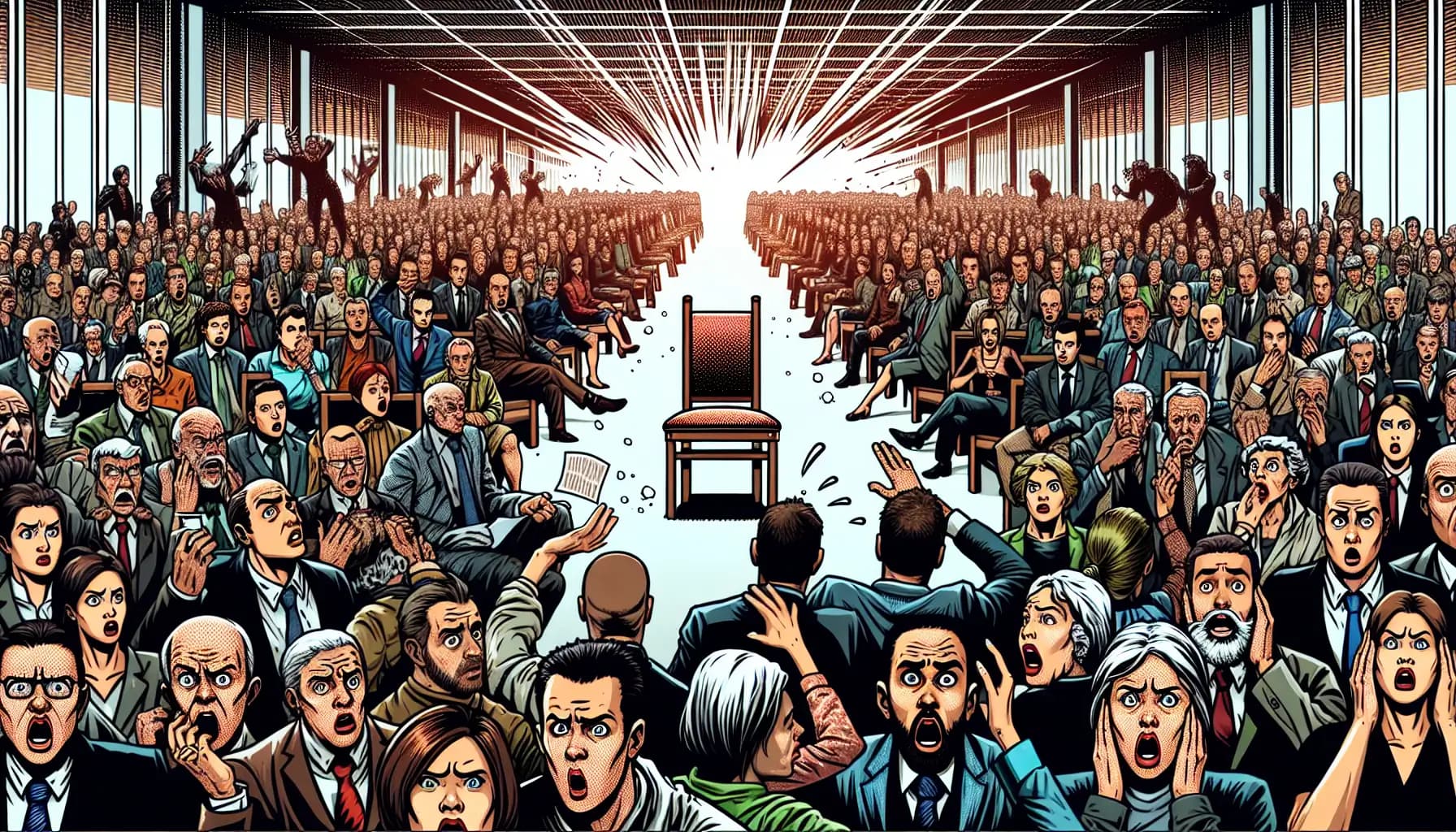

The recent congressional hearing featuring Secret Service Director Kim Cheel was nothing short of a spectacle. The hearing, which lasted five hours, was convened to address the monumental security failure that nearly led to the assassination of former President Donald Trump. The event was a mix of evasion, arrogance, and political opportunism, leaving many questions unanswered and raising new concerns about the state of national security and political discourse in the United States.
Key Takeaways
- The hearing was convened to address a significant security lapse that almost resulted in the assassination of former President Donald Trump.
- Secret Service Director Kim Cheel was evasive and uncooperative, leading to bipartisan frustration.
- The hearing quickly devolved into a debate on gun control, overshadowing the primary issue of security failure.
- The incident has far-reaching implications, potentially affecting future political events and national security protocols.
The Hearing: A Display of Evasion and Arrogance
Director Kim Cheel was subpoenaed to testify before Congress after initially refusing to comply voluntarily. Her testimony was marked by evasiveness, arrogance, and a lack of concrete answers. For five hours, Cheel dodged questions, citing ongoing investigations and refusing to provide specific details. This behavior only fueled bipartisan frustration, as both Democrats and Republicans sought to understand how such a catastrophic security failure could occur.
The Bipartisan Moment That Wasn’t
For a brief moment, it seemed like the hearing would be a bipartisan effort to get to the bottom of the security lapse. Both sides appeared united in their concern over the near-assassination of a former president. However, this unity was short-lived. Democrats quickly shifted the focus to gun control, arguing that the incident highlighted the need for stricter firearm regulations. This pivot frustrated Republicans, who felt that the primary issue of Secret Service incompetence was being overshadowed.
Advertisement
The Gun Control Debate
Democrats, led by Jamie Raskin, used the hearing as a platform to push for more stringent gun control measures. They argued that the ease with which the would-be assassin obtained an AR-15 was a significant part of the problem. This shift in focus led to heated exchanges and further polarized the hearing. Republicans countered that the issue was not the availability of guns but the failure of the Secret Service to establish a secure perimeter.