The Sixth Extinction: Are Humans the Next to Disappear? | Unexplained
Ancient Civilizations
The Sixth Extinction: Are Humans the Next to Disappear?
The article ‘The Sixth Extinction: Are Humans the Next to Disappear?’ explores the pressing issue of the ongoing sixth mass extinction event, which is unique in Earth’s history due to its primary cause: human…
Art Grindstone is the hard-nosed storyteller behind Unexplained.co, a veteran investigator whose life’s work sits at the crossroads of the paranormal, fringe science, and the shadows most people try not to look into. With decades spent chasing impossible stories — black-budget psychic programs, vanished Cold War experiments, desert rituals that sparked UFO waves, and the strange phenomena buried in America’s forgotten backroads — Art brings a rare combination of skepticism, awe, and journalistic precision. He’s not here to debunk. He’s not here to blindly believe. He follows the evidence wherever it leads — even when it leads someplace deeply uncomfortable. Known for his immersive, cinematic style and his ability to turn obscure research into gripping narrative, Art has built a devoted following across podcasts, long-form features, documentaries, and serialized investigations. His interviews are direct. His analysis is unflinching. His voice has become a staple in the modern paranormal renaissance — the guy people turn to when a story is too strange, too complex, or too dangerous for anyone else to touch. Off-mic, Art works with a distributed network of researchers, archivists, and field operatives who help surface the stories mainstream media ignores. On-mic, he transforms their findings into meticulous, high-impact reporting that refuses to insult the intelligence of true believers. His philosophy is simple: Take the phenomenon seriously. Treat the audience with respect. Tell the story as if the world depends on it — because sometimes it does. When Art Grindstone digs into a case, he isn’t just chasing a mystery. He’s tracing the fault lines of reality itself.
9 min · 2,014 words
In This Report(14)
The article ‘The Sixth Extinction: Are Humans the Next to Disappear?’ explores the pressing issue of the ongoing sixth mass extinction event, which is unique in Earth’s history due to its primary cause: human activities. As we delve into the causes and consequences of this biodiversity crisis, we also examine the potential of technology, conservation efforts, and individual actions to prevent further damage and possibly reverse some of the current negative trends. The article aims to highlight the stakes of this extinction event, not only for countless species around the globe but also for humanity itself, which is deeply intertwined with the natural world.
Key Takeaways
The sixth mass extinction is primarily driven by human activities, distinguishing it from the previous five natural events.
The loss of biodiversity and the extinction of species could have catastrophic global impacts, including on human societies.
Combating this crisis requires a multifaceted approach, including technological innovation, conservation efforts, and individual responsibility.
The Looming Shadow of the Sixth Extinction
Understanding the Past to Predict the Future
We’ve always been fascinated by The Secret Teachings of history. They whisper tales of epochs long gone and the creatures that once roamed Earth. Now, we’re piecing together these ancient puzzles, trying to foresee our own fate. Are we writing the final chapter of humanity?
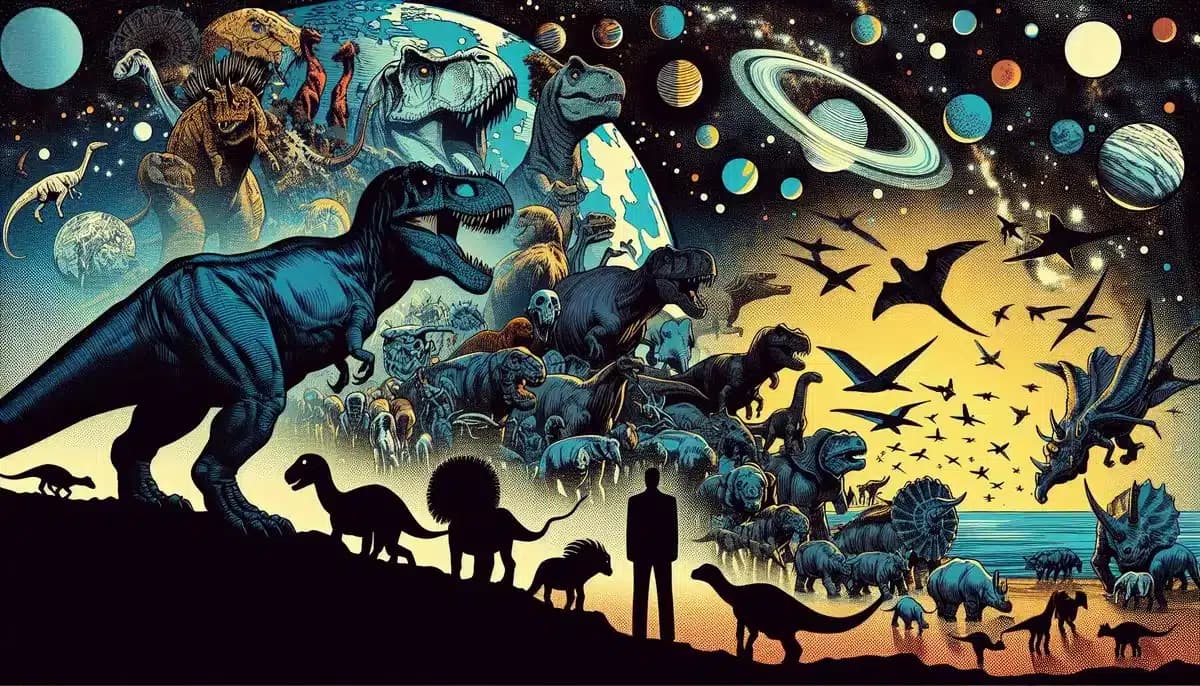
Looking back, we’ve learned that life on Earth has been punctuated by mass extinctions. Five major ones, to be exact. Each brought about by cataclysmic events that reshaped the very fabric of existence. Today, we stand on the precipice of the sixth. But this time, it’s not an asteroid or volcanic eruptions; it’s us. Our fingerprints are all over this impending doom.
Advertisement
We’re not just passive observers in this unfolding drama. We’re the lead actors, and the stage is set for a tragedy of our own making.
Everything Out There is changing, and it’s changing fast. Species are vanishing at an alarming rate, ecosystems are collapsing, and the delicate balance of nature is teetering on the brink. We’re not just losing animals and plants; we’re losing the intricate web of life that sustains us all.
The Permian Extinction wiped out 96% of marine species.
The Cretaceous-Paleogene Extinction claimed the mighty dinosaurs.
Baba Vanga’s 2026 Alien Prophecy: The Blind Mystic Who Predicted Mass Alien Contact and Why People Are Taking It Seriously Again
Bulgarian mystic Baba Vanga reportedly predicted that non-human contact would occur in 2026. With UFO disclosure accelerating in real-time, the timing has prophecy watchers locked in.
May 12, 2026 • 5 min read
Strange History
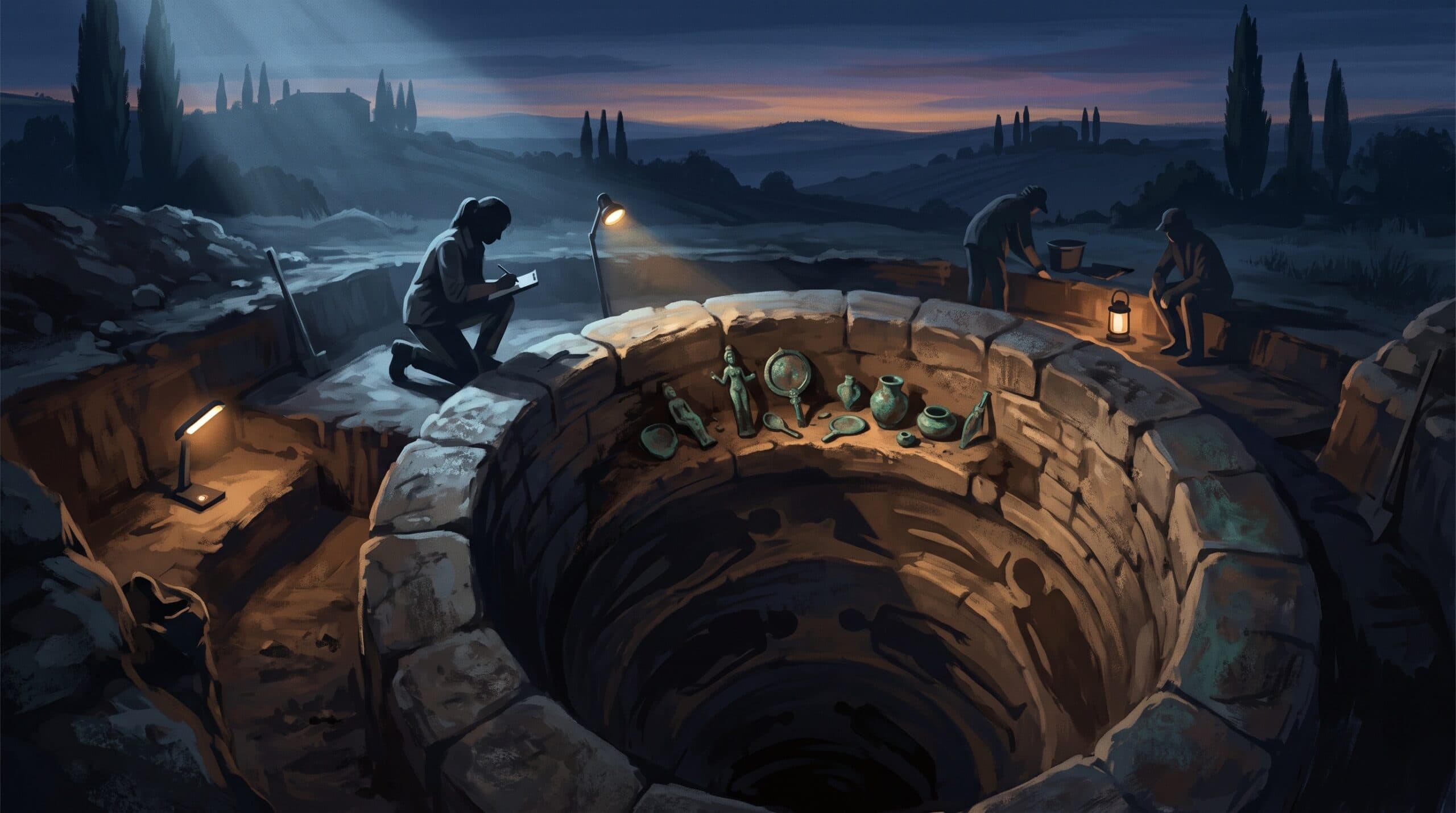
The Etruscan Well Sealed With Human Remains Is Stranger Than a Sacrifice Story
A newly reported Etruscan well in Italy was opened with offerings and sealed with human remains. The evidence reveals a ritual mystery, not a simple sacrifice tale.
Aug 18, 2026 • 7 min read
Articles
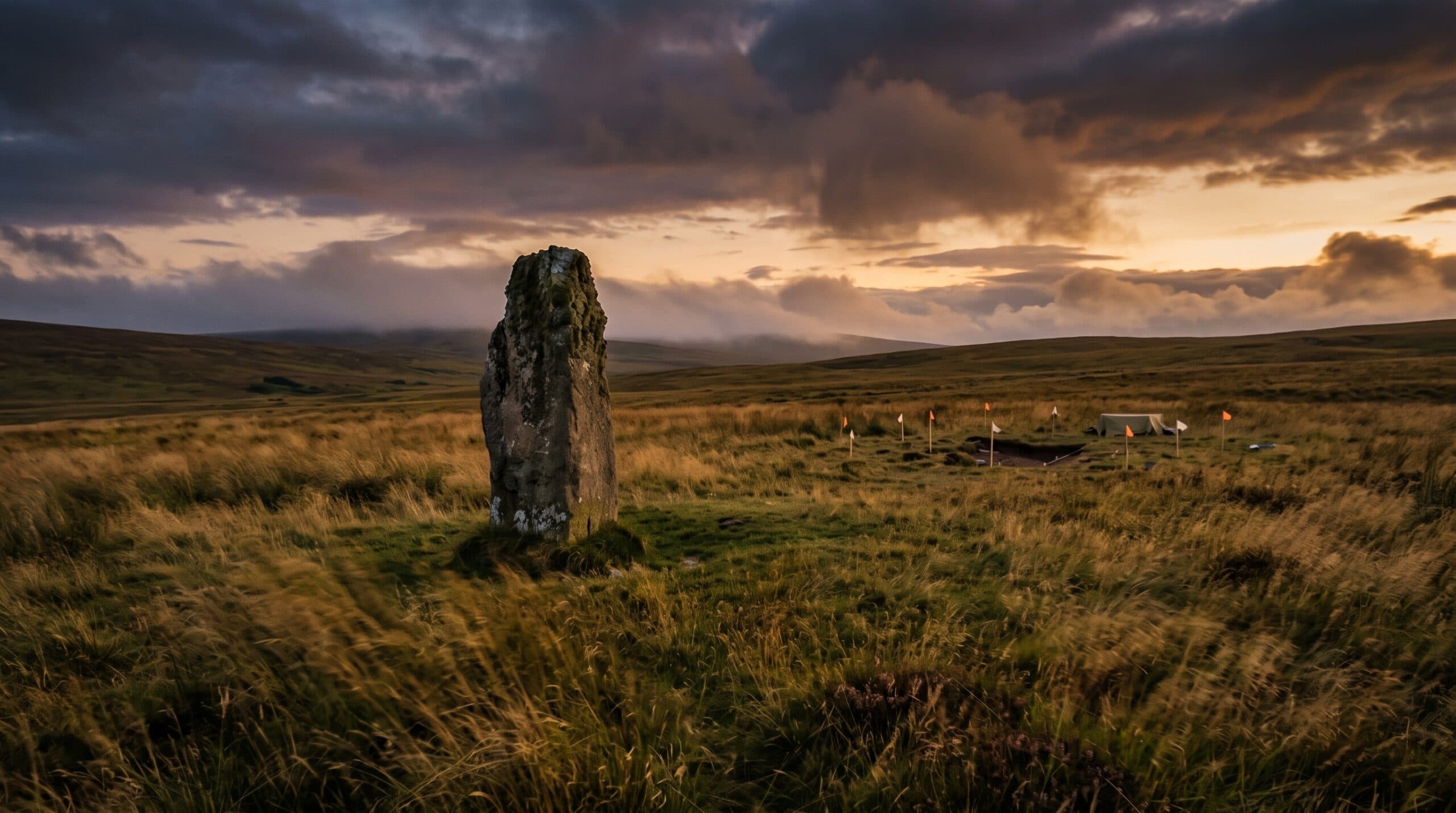
The Lonely Rock That Led Archaeologists to a 3,700-Year-Old Ritual Site
A single stone spotted by a student led archaeologists to a 3,700-year-old ritual site—and raised new questions about how ancient landscapes were read.
Aug 17, 2026 • 4 min read
The past is a mirror reflecting our potential future. If we’re smart, we’ll take a long, hard look. Will we learn from it, or will we become a mere footnote in Earth’s extensive history?
Human Activities: The Catalyst for Catastrophe
We’ve set the stage for a disaster of our own making. Climate change, deforestation, pollution – these are not just buzzwords. They are the grim reality of our impact on the planet. Our fingerprints are all over this impending sixth extinction. We are at Ground Zero, and it’s not just a figure of speech. It’s a literal hotspot where the consequences of our actions are most acutely felt.
Ground Zero with Clyde Lewis isn’t just a show; it’s a reflection of our times. On Ground Zero Radio, discussions about the paranormal and the unexplained often mirror the chaos we’ve unleashed on the natural world. The biodiversity crisis isn’t a distant threat; it’s unfolding before our eyes, and Ground Zero with Clyde Lewis is where these critical conversations happen.
Our actions have set off a cascade effect, where one species’ loss spirals into another’s. We’re not just losing animals; we’re losing the intricate web of life that sustains us all.
Here’s a snapshot of the damage:
Climate change
Biodiversity loss
Habitat destruction
These aren’t isolated issues; they’re interconnected, each exacerbating the other. It’s a complex puzzle where every missing piece puts the entire picture at risk. And the most tragic part? We hold the missing pieces. It’s time we put them back before it’s too late.
The Biodiversity Crisis and Its Global Impacts
We’re in the thick of it now, folks. The biodiversity crisis isn’t just a buzzword; it’s the harsh reality we’re facing. Our planet’s health is waning, and it’s not just about saving the polar bears or the bees. It’s about us, too. Every species lost is a thread pulled from the web of life that sustains us all.
Let’s break it down. The ‘Big Three’ culprits of biodiversity loss are habitat destruction, invasive species, and overexploitation. These aren’t just random acts of nature; they’re the consequences of our actions. We’ve turned forests into parking lots, introduced predators into fragile ecosystems, and fished the oceans dry. And the effects? They’re catastrophic.
Habitat Destruction: Our relentless expansion consumes the natural world.
Invasive Species: Unchecked, they decimate native populations.
Overexploitation: We take more than the Earth can replenish.
We’re at a crossroads. The path we choose now will determine the legacy we leave for future generations.
The stakes are sky-high. We’re not just talking about the loss of cute animals or scenic landscapes. We’re talking about the collapse of ecosystems, food insecurity, and the spread of diseases. It’s a domino effect that could topple the very pillars of our survival. And yet, amidst the doom and gloom, there’s a glimmer of hope. Awareness is growing, and with it, the potential for change. We can’t turn back time, but we can steer the ship in a new direction. It’s on us to join the conversation and take action before it’s too late.
Humanity on the Brink: What’s at Stake?
The Domino Effect of Losing Species
We’re in the thick of it now, folks. The domino effect of losing species is not just a theory; it’s happening before our eyes. When one species vanishes, it’s not an isolated event. It triggers a chain reaction that can topple ecosystems and shake the very foundations of life as we know it. The extinction of species can disrupt the food chain, leading to loss of biodiversity and loss of ecosystem services. This is the harsh reality we’re facing, and it’s time for a The Paradigm Shift in how we view our role in nature.
Advertisement
Consider the American Bison: once a keystone species, its near disappearance had profound effects on humans who depended on it. Now, we’re seeing similar patterns globally, with predators and prey alike. The loss of a predator, for instance, can lead to a trophic cascade, an ecological phenomenon that ripples through the food web, causing unforeseen consequences. We’re stepping Into the Parabnormal, where the rules we thought governed nature are being rewritten by our own hands.
Our health, our survival, it’s all interconnected with the fate of other species. As they disappear, so too does a piece of our world, a piece of us.
It’s not just about the animals; it’s about us too. Infectious diseases rise, our food sources dwindle, and our livelihoods are threatened. We’re not just observers; we’re participants, and it’s time to act. The stakes couldn’t be higher.
Can Technology and Conservation Save Us?
We’re in a race against time, and technology might just be our best bet. Bioengineering is emerging as a conservation tool, potentially turning the tide against extinction. RealClearScience tells us that as the sixth mass extinction accelerates, bioengineering could be key. But it’s not just about the high-tech stuff. Conservation efforts, though currently falling short, have made a dent. E.O. Wilson noted a 20% reduction in extinction rates for land-dwelling vertebrates, thanks to these efforts.
We’ve got a four-pronged strategy to combat species loss, but we need to ramp it up. Conservationists are working tirelessly, restoring ecosystems and communicating the urgency. It’s a collective push, from grassroots to global initiatives. Here’s what’s happening on the ground:
Better communication in the conservation sector
Nature-based solutions to climate change
Boosting biomass without sacrificing diversity
Community-led river corridor restoration
We’re making strides, but we’re not there yet. The biodiversity crisis demands more from us—more innovation, more action, more commitment.
The question remains: Can we harness technology and conservation to save ourselves? It’s a daunting task, but we’re not short on heroes. Activists, scientists, and everyday folks are stepping up. It’s on us to support these efforts and drive change. After all, if we can’t save the myriad of species we share this planet with, what hope do we have for ourselves?
The Role of Individual Action in Preventing Extinction
We’ve got a planet to save, and it’s not just the job of governments or big organizations. It’s on us, too. Every action counts, and it’s the collective efforts of individuals that can make a real difference. We’re talking about simple, everyday choices that add up. Choices like reducing waste, supporting conservation efforts, and spreading awareness. It’s about making conscious decisions that favor sustainability over convenience.
Reduce: Cut down on single-use plastics and unnecessary consumption.
Reuse: Opt for products that can be used multiple times.
Recycle: Properly sort and recycle to minimize waste.
Educate: Learn and inform others about the importance of biodiversity.
Support: Back conservation groups and sustainable practices.
We’re in this together, and it’s the small steps we take that pave the way for a brighter future. Let’s not wait for someone else to lead the charge. It’s our home, our responsibility.
Remember, extinction doesn’t happen overnight. It’s a gradual process, often accelerated by our own actions. But just as we have the power to harm, we also have the power to heal. By choosing to live more mindfully, we can help protect endangered species and their habitats. It’s not just about the animals and plants; it’s about preserving the intricate web of life that sustains us all.
As we stand at a pivotal moment in history, the choices we make today will shape the future of our planet and humanity itself. It’s time to engage, to learn, and to act. Dive into the depths of knowledge with Ground Zero: Aftermath, where unlimited podcasts, radio, movies, and more await to challenge your perceptions and inspire action. Don’t let this moment pass you by. Visit our website now to start your free trial and join a community committed to making a difference. The future is in our hands; let’s shape it together.
Conclusion
As we stand on the precipice of the Anthropocene era, the evidence of a sixth mass extinction is both compelling and alarming. Unlike the five previous extinction events Earth has weathered, this crisis is largely of our own making. Human activities have accelerated the loss of species at a rate that is unprecedented in Earth’s history. Studies, such as those published in Science Advances and Biological Reviews, underscore the severity of the situation, indicating that we are witnessing a ‘biological annihilation’ of wildlife. The gravity of this loss extends beyond the natural world; it threatens the very fabric of human civilization, as the irreversible nature of extinction means we are eroding the biodiversity that sustains us. However, this is not just a tale of doom. It is a call to action. The power of storytelling, as seen in works like ‘The Sixth Extinction,’ can galvanize social change and motivate us to take urgent steps to preserve the remaining threads of life on our planet. As we confront this existential challenge, the question remains: will we heed the warnings and act in time, or will humans be the authors of not just the sixth extinction, but potentially our own?
Frequently Asked Questions
What is the Sixth Extinction?
The Sixth Extinction refers to the ongoing mass extinction event caused primarily by human activities. It is characterized by the unprecedented rate at which species are disappearing due to habitat destruction, climate change, pollution, and overexploitation.
How is the Sixth Extinction different from previous extinctions?
Unlike the five previous mass extinctions that were natural in their causes, the Sixth Extinction is largely driven by humans. It’s happening at a much faster rate and could have more devastating consequences for both biodiversity and humanity.
Can we prevent the Sixth Extinction?
While the situation is dire, many scientists believe that immediate and concerted conservation efforts, changes in consumption patterns, and sustainable development can mitigate the effects of the Sixth Extinction and preserve Earth’s biodiversity.
Art Grindstone is the hard-nosed storyteller behind Unexplained.co, a veteran investigator whose life’s work sits at the crossroads of the paranormal, fringe science, and the shadows most people try not to look into. With decades spent chasing impossible stories — black-budget psychic programs, vanished Cold War experiments, desert rituals that sparked UFO waves, and the strange phenomena buried in America’s forgotten backroads — Art brings a rare combination of skepticism, awe, and journalistic precision. He’s not here to debunk. He’s not here to blindly believe. He follows the evidence wherever it leads — even when it leads someplace deeply uncomfortable. Known for his immersive, cinematic style and his ability to turn obscure research into gripping narrative, Art has built a devoted following across podcasts, long-form features, documentaries, and serialized investigations. His interviews are direct. His analysis is unflinching. His voice has become a staple in the modern paranormal renaissance — the guy people turn to when a story is too strange, too complex, or too dangerous for anyone else to touch. Off-mic, Art works with a distributed network of researchers, archivists, and field operatives who help surface the stories mainstream media ignores. On-mic, he transforms their findings into meticulous, high-impact reporting that refuses to insult the intelligence of true believers. His philosophy is simple: Take the phenomenon seriously. Treat the audience with respect. Tell the story as if the world depends on it — because sometimes it does. When Art Grindstone digs into a case, he isn’t just chasing a mystery. He’s tracing the fault lines of reality itself.