TikTok Deepfake Ghost Videos Are Getting Harder to Spot: Why Paranormal Footage Faces a New Credibility Crisis | Unexplained
Articles
TikTok Deepfake Ghost Videos Are Getting Harder to Spot: Why Paranormal Footage Faces a New Credibility Crisis
TikTok’s deepfake ghost trend matters because it attacks the weakest point in paranormal media at exactly the wrong time: trust in visual evidence. Once AI tools can produce convincing hauntings on demand, the old…
Art Grindstone is the hard-nosed storyteller behind Unexplained.co, a veteran investigator whose life’s work sits at the crossroads of the paranormal, fringe science, and the shadows most people try not to look into. With decades spent chasing impossible stories — black-budget psychic programs, vanished Cold War experiments, desert rituals that sparked UFO waves, and the strange phenomena buried in America’s forgotten backroads — Art brings a rare combination of skepticism, awe, and journalistic precision. He’s not here to debunk. He’s not here to blindly believe. He follows the evidence wherever it leads — even when it leads someplace deeply uncomfortable. Known for his immersive, cinematic style and his ability to turn obscure research into gripping narrative, Art has built a devoted following across podcasts, long-form features, documentaries, and serialized investigations. His interviews are direct. His analysis is unflinching. His voice has become a staple in the modern paranormal renaissance — the guy people turn to when a story is too strange, too complex, or too dangerous for anyone else to touch. Off-mic, Art works with a distributed network of researchers, archivists, and field operatives who help surface the stories mainstream media ignores. On-mic, he transforms their findings into meticulous, high-impact reporting that refuses to insult the intelligence of true believers. His philosophy is simple: Take the phenomenon seriously. Treat the audience with respect. Tell the story as if the world depends on it — because sometimes it does. When Art Grindstone digs into a case, he isn’t just chasing a mystery. He’s tracing the fault lines of reality itself.
5 min · 1,215 words
In This Report(13)
TikTok’s deepfake ghost trend matters because it attacks the weakest point in paranormal media at exactly the wrong time: trust in visual evidence. Once AI tools can produce convincing hauntings on demand, the old social contract around “caught on camera” footage begins to collapse. That does not just create better hoaxes. It changes how every future ghost clip will be judged.
The direct answer is this: the current wave of TikTok ghost videos is being fueled by AI-assisted visual tools that can convincingly fabricate paranormal-looking footage. These clips are not simply cheap filter jokes. In many cases, they are sophisticated enough to blur the line between performance, deception, and viral storytelling.
That makes the trend bigger than a platform fad. It signals a new phase in paranormal culture where the burden of proof around ghost footage becomes dramatically higher, and where audiences may start distrusting even sincere submissions because fabricated clips are now easier to make, harder to spot, and more algorithmically rewarding. That broader credibility problem connects directly to ongoing work around AI-generated content standards at NIST and provenance efforts such as the Content Authenticity Initiative.
Advertisement
What This Story Actually Says
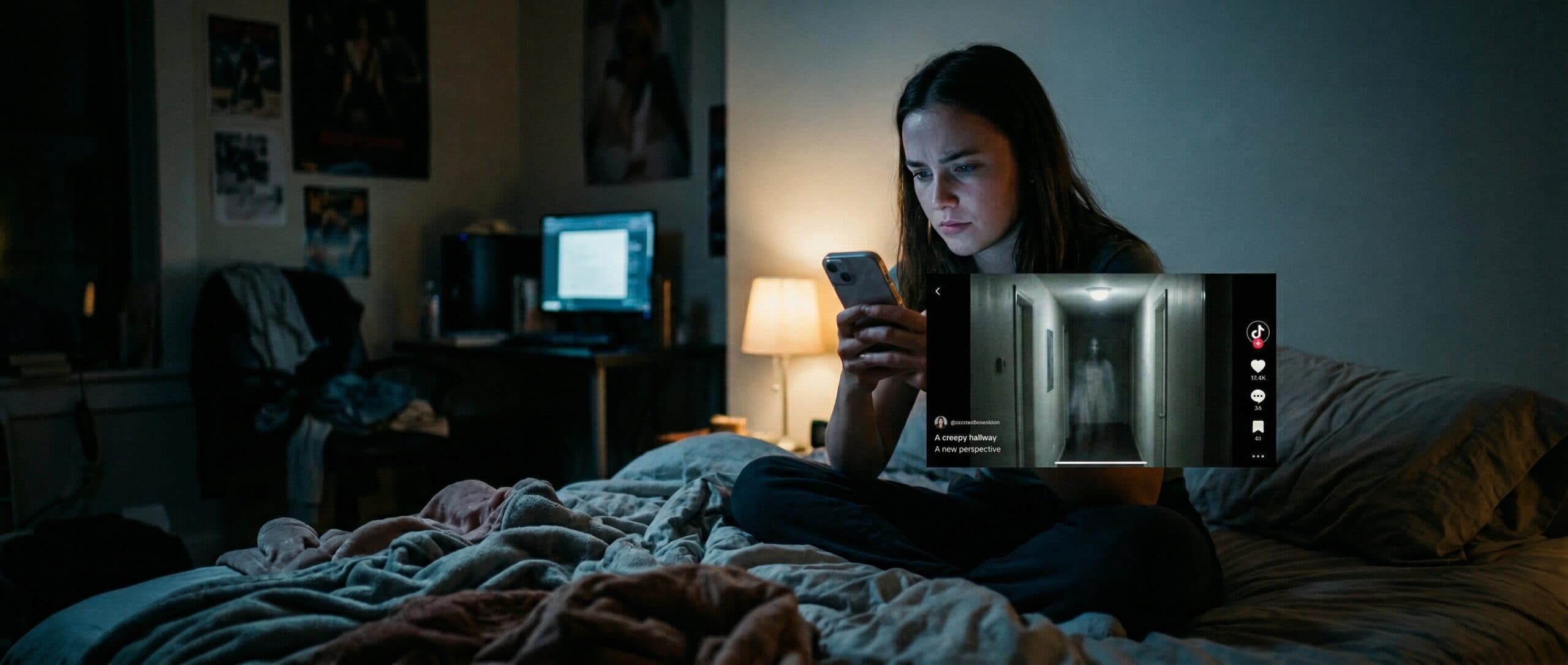
Over late March and early April 2026, creators began circulating a new class of ghost-themed TikTok content built around advanced AI filters, face tracking, motion overlays, and deepfake-style compositing. Instead of obviously cartoonish effects, many of these tools can produce photorealistic apparitions integrated into a real environment.
That shift matters. Older ghost filters were usually visible as novelty effects. The new generation aims for plausibility. A translucent figure in the background, a movement at the end of a hallway, or a spectral face captured through a phone camera can now be generated with enough realism to trigger genuine uncertainty among viewers.
This is why the issue has moved beyond prank culture. Once the tools become good enough, the distinction between entertainment and evidentiary contamination starts to break down.
Why This Trend Is Spreading So Quickly
Paranormal content already performs well because it offers fear, ambiguity, and shareability in a compact visual form. AI tools supercharge that formula by lowering the skill barrier. A creator no longer needs advanced editing knowledge to produce something eerie and convincing enough to go viral.
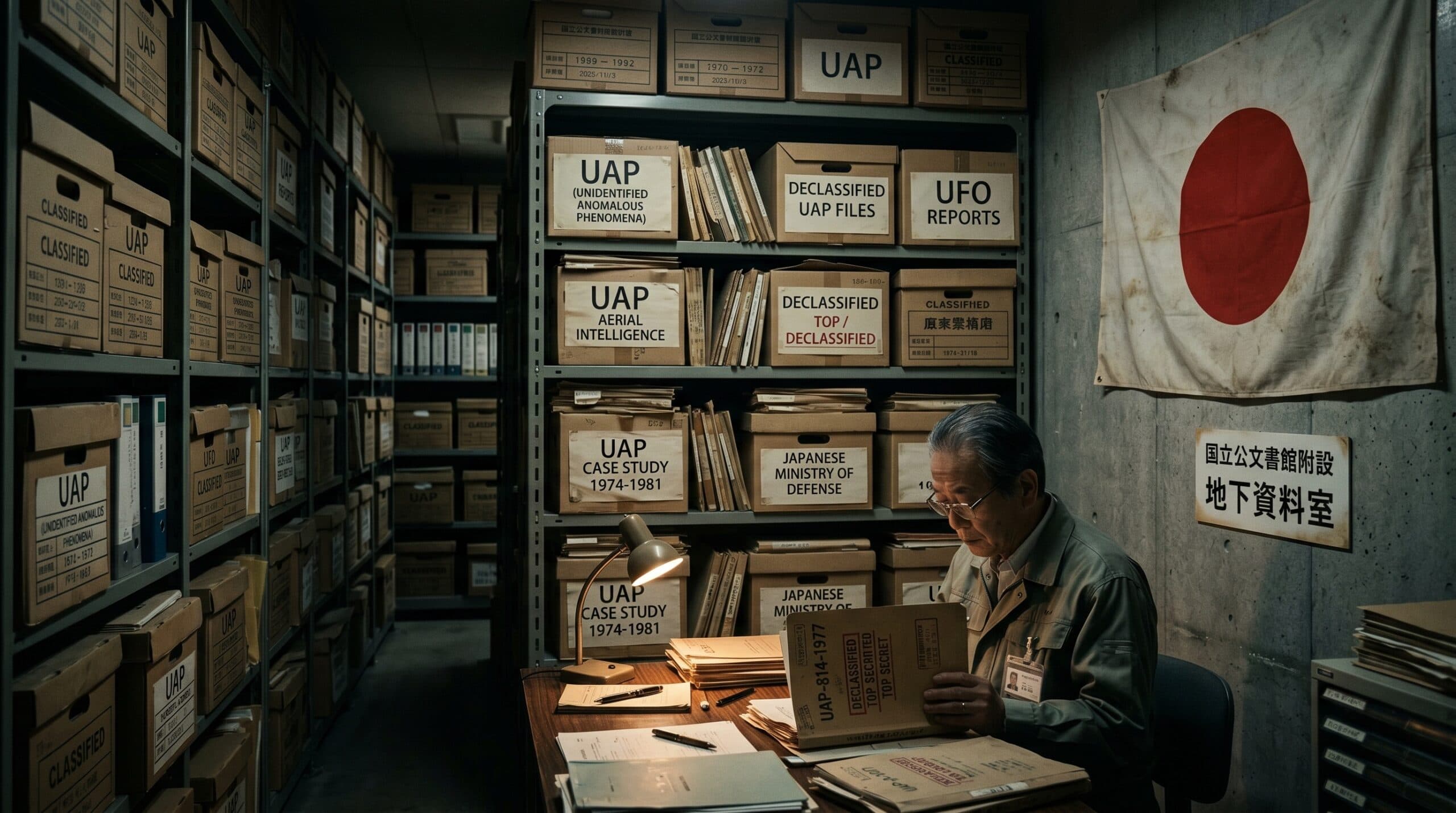
Japan Just Confirmed It Has UAP Footage, and Is Analyzing Pentagon Files Near Its Borders
Japan’s formal entry into the UAP transparency wave signals an international domino effect. What the country knows about UAP encounters near Japanese territory and why it matters now.
May 14, 2026 • 5 min read
Conspiracy Theories
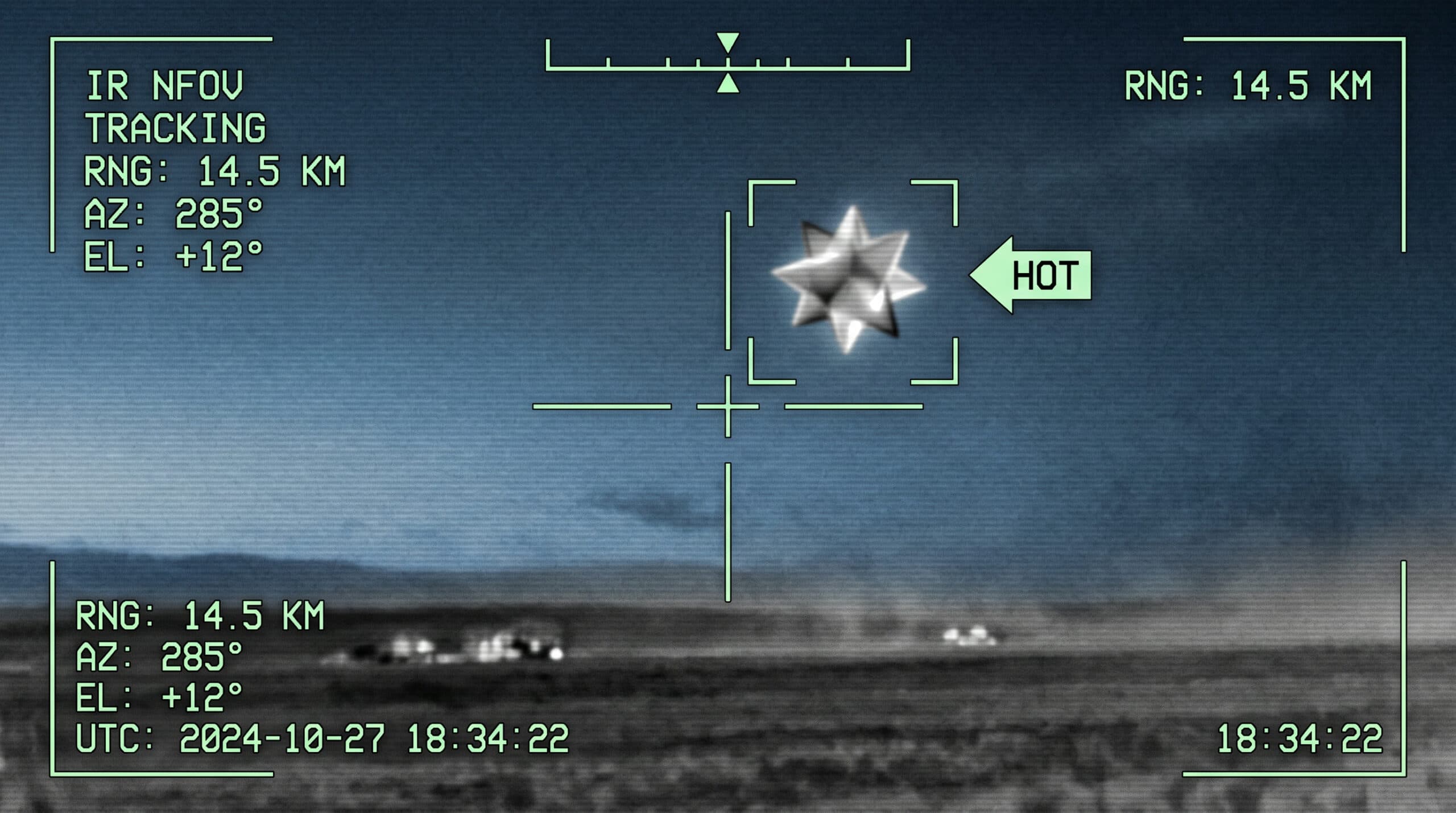
Ukrainian Defense Ministry Advisor Posts Star-Shaped UAP Video — and the Close-Ups Look Nothing Like a Drone
Serhii ‘Flash’ Beskrestnov released footage of a structured, star-shaped craft over Ukraine that has UFO researchers examining every frame for proof.
May 14, 2026 • 6 min read
Conspiracy Theories
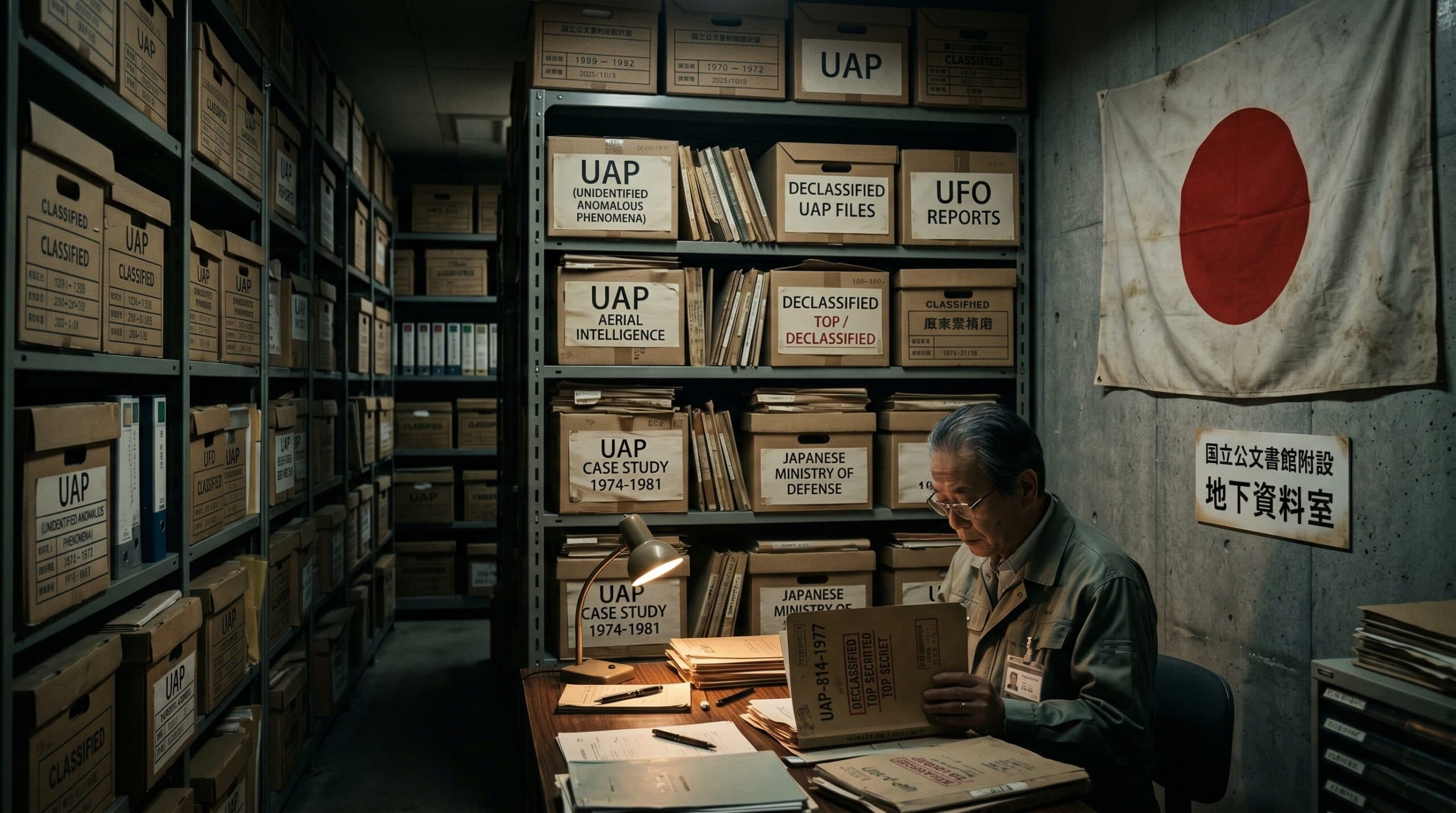
Japan Just Confirmed It Has UAP Footage — and Is Analyzing Pentagon Files Near Its Borders
Japan’s formal entry into the UAP transparency wave signals an international domino effect. What the country knows about UAP encounters near Japanese territory and why it matters now.
May 13, 2026 • 5 min read
Platforms reward this kind of content because it generates comments, dueling interpretations, and repeat viewing. “Is this real?” is one of the most engagement-rich questions a clip can provoke. Deepfake ghost footage is built to trigger exactly that response.
There is also a cultural timing issue. Audiences are already primed for anxiety about AI deception. So when a ghost video looks just plausible enough, it enters a space where viewers are suspicious, fascinated, and emotionally available all at once. That combination helps the content spread faster than clear debunks can keep up.
What the Evidence Actually Supports
The strongest evidence supports the claim that AI-generated and AI-enhanced ghost footage is becoming a serious authenticity problem. It does not support the claim that the current trend has revealed genuine paranormal proof. What has been demonstrated is the capability to fabricate compelling visual experiences at scale.
That is especially significant in the paranormal niche because witness footage has long been one of its most persuasive currencies. Once AI contamination becomes common, every clip inherits a new default question: was this captured, or was this manufactured?
For investigators and audiences alike, provenance now matters as much as the image itself. Original file access, metadata, recording context, device history, and corroboration all become more important when the visual alone can no longer carry the claim. Readers interested in the bigger verification fight should also look at guidance from CISA and media-literacy work around synthetic content published by the Anti-Defamation League.
What Skeptics and Digital Forensics Experts Would Say
Skeptics would say the trend proves a point they have been making for years: visual evidence without chain of custody is weak evidence. Digital forensics researchers would add that the issue is not just detecting obvious fakes, but dealing with increasingly polished synthetic media that may leave few visible clues to casual viewers.
Experts focused on provenance and watermarking would likely argue that this is exactly why platforms need better standards for AI-generated media. Without clear labeling, users are left navigating a space where the most emotionally effective deception often wins before correction catches up.
And in the paranormal context, that can create a particularly corrosive effect. Communities built around testimonies and footage may become harder to trust even when contributors are acting in good faith.
Why This Story Still Matters
This trend matters because it changes the conditions under which future paranormal stories will be interpreted. The issue is no longer just whether a given clip is real. It is whether audiences can maintain any shared standard of authenticity once visually convincing fabrications become commonplace.
Advertisement
It also matters because ghost content is only the low-stakes frontier of a broader synthetic media problem. If creators can make believable hauntings for engagement, the same techniques can be used in political, social, and crisis-driven contexts with much higher stakes.
In that sense, the deepfake ghost trend is a cultural rehearsal. It teaches audiences what synthetic uncertainty feels like before the same tools are turned more aggressively toward truth-sensitive domains.
The Bigger Pattern Behind the Deepfake Ghost Boom
The bigger pattern is that paranormal media has become an early test bed for AI ambiguity. Ghost clips are ideal because they are supposed to be unclear, fleeting, and emotionally loaded. That makes them one of the easiest genres in which synthetic media can flourish without immediate collapse.
As a result, paranormal communities may be among the first to feel the full credibility shock of generative media. Not because they are uniquely gullible, but because their evidence style was already built around ambiguity. AI simply industrializes that ambiguity.
Final Assessment
TikTok’s deepfake ghost wave is not just another social-media gimmick. It is a warning shot for paranormal media as a whole. The more realistic synthetic hauntings become, the less any single clip can stand on its own. The real story is not that AI has proven ghosts fake. It is that AI may force the entire paranormal ecosystem to rebuild how it thinks about evidence, authenticity, and belief.
Frequently Asked Questions
Are TikTok ghost videos now being made with AI?
Yes. Many recent clips use AI-assisted tools, filters, and compositing techniques that can create far more convincing ghost imagery than older novelty effects.
Why is this a problem for paranormal investigations?
Because visual evidence becomes much harder to trust when believable fabrications can be created quickly and widely shared without clear provenance.
Can viewers still tell what is fake?
Sometimes, but not reliably. That is why metadata, source files, context, and digital forensics matter more than ever.
Why does this matter beyond ghost videos?
Because the same synthetic media techniques can be applied far beyond paranormal content, making this trend a preview of wider trust problems online.
Art Grindstone is the hard-nosed storyteller behind Unexplained.co, a veteran investigator whose life’s work sits at the crossroads of the paranormal, fringe science, and the shadows most people try not to look into. With decades spent chasing impossible stories — black-budget psychic programs, vanished Cold War experiments, desert rituals that sparked UFO waves, and the strange phenomena buried in America’s forgotten backroads — Art brings a rare combination of skepticism, awe, and journalistic precision. He’s not here to debunk. He’s not here to blindly believe. He follows the evidence wherever it leads — even when it leads someplace deeply uncomfortable. Known for his immersive, cinematic style and his ability to turn obscure research into gripping narrative, Art has built a devoted following across podcasts, long-form features, documentaries, and serialized investigations. His interviews are direct. His analysis is unflinching. His voice has become a staple in the modern paranormal renaissance — the guy people turn to when a story is too strange, too complex, or too dangerous for anyone else to touch. Off-mic, Art works with a distributed network of researchers, archivists, and field operatives who help surface the stories mainstream media ignores. On-mic, he transforms their findings into meticulous, high-impact reporting that refuses to insult the intelligence of true believers. His philosophy is simple: Take the phenomenon seriously. Treat the audience with respect. Tell the story as if the world depends on it — because sometimes it does. When Art Grindstone digs into a case, he isn’t just chasing a mystery. He’s tracing the fault lines of reality itself.