
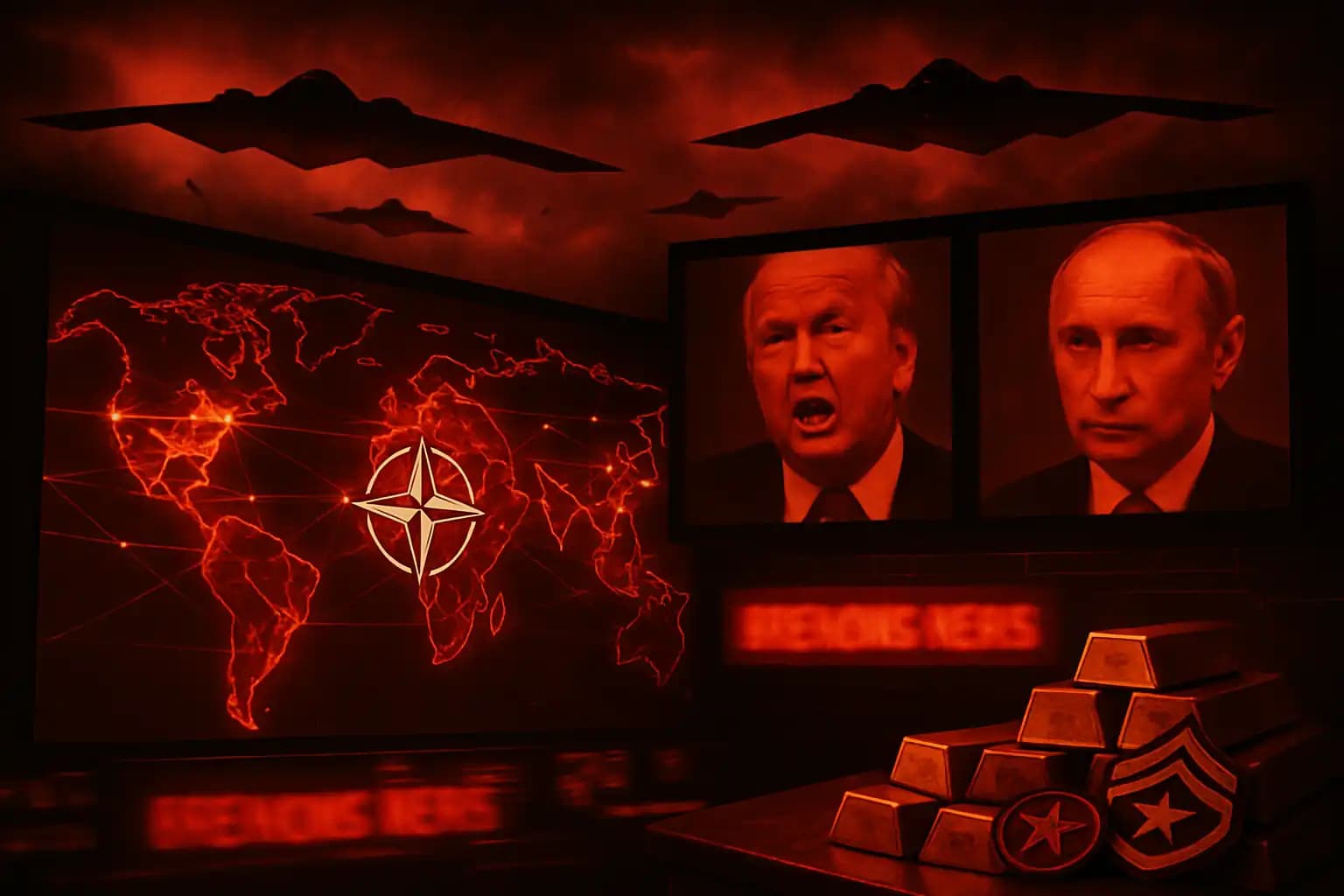

Buckle in for another ride through the wild world of power politics, where headlines scream of war, airborne B-2 bombers, and market chaos. Recent days featured Donald Trump threatening to “bomb the s*** out of Moscow and Beijing,” targeting Putin due to Chinese aggression. His words rattled enough cages to trigger an emergency NATO meeting. As gold soars in international markets and headlines fuel anxiety, are we on the verge of global escalation, or just witnessing another act of brinkmanship unfold?
Alarmism is nothing new, but the combination of rising military readiness, economic volatility, and leadership bravado has many analysts—and doomsday preppers—watching closely. As noted in this Newsweek report, Trump claimed he warned both Xi Jinping and Putin that any incursion—into Taiwan or Ukraine—would face devastating force. Meanwhile, fact-checkers contextualized these threats as rhetorical flourishes, similar to his administration’s negotiation style (see the Snopes breakdown).
NATO’s Emergency Summit and the New Era of High-Stakes Diplomacy
Trump’s bombast led to a flurry of diplomatic phone calls and reportedly, an emergency NATO meeting to recalibrate the alliance’s posture amid fears of escalation. Analyses of past NATO flashpoints provide somber context: deterrent shows of force are effective—until they aren’t. The B-2 Spirit, detailed in this Wikipedia entry, is central to that strategy, embodying both American technological prowess and a serious threat should open conflict arise.
Advertisement
Before you dig out the fallout shelter, note that NATO’s real strength lies in its ability to balance preparedness with de-escalation. Emergency meetings strive to cool tensions, reminding allies and adversaries alike of the costs of miscalculation, keeping tactical responses proportionate—even if headlines (and certain gold speculators) suggest otherwise.
Military Maneuvers and the Power of Airborne Signals
Nothing signals “don’t mess with us” quite like the B-2 Spirit skimming hostile airspace. As detailed in coverage of American urban military prep, these bomber flyovers serve less as literal threats and more as potent signals rooted in Cold War DNA. With its ability to deliver conventional or nuclear payloads globally while remaining nearly invisible to radar, any mention of a B-2 flight significantly impacts markets and acts as a global risk indicator.