

Once upon a time, about 7,000 years ago, the land we now call Mesopotamia was struck by an epic flood. This catastrophic event reshaped the region, leading to the emergence of the Sumerians, a civilization that would lay the foundations of modern society through remarkable advancements in agriculture, writing, and astronomy.
Key Takeaways
- The Sumerians emerged after a massive flood, transforming Mesopotamia into a cradle of civilization.
- They developed advanced irrigation systems, writing, and mathematical concepts.
- Their architectural achievements included ziggurats, which served as temples and possibly landing platforms for deities.
- The Sumerians’ origins remain a mystery, with theories suggesting connections to Atlantis and other ancient civilizations.
The Aftermath of the Great Flood
The flood that swept through Mesopotamia left the land uninhabitable for years. However, when the waters receded, the Sumerians arrived, bringing with them the seeds of civilization. They quickly established new communities, constructing impressive irrigation systems that included canals, dikes, and reservoirs. These waterworks were essential for agriculture in the fertile yet challenging landscape.
Innovations in Writing and Mathematics
The Sumerians were pioneers in many fields. They developed a sophisticated system of writing known as cuneiform, which evolved from pictographs. This writing system allowed them to record everything from business transactions to epic poems, ensuring that their culture and knowledge were preserved for future generations.
In mathematics, they were the first to divide a circle into 360 degrees and an hour into 60 minutes, concepts that are still in use today. Their understanding of geometry and numbers was advanced, as evidenced by their formulas for calculating square and cube roots.
Architectural Marvels: The Ziggurats
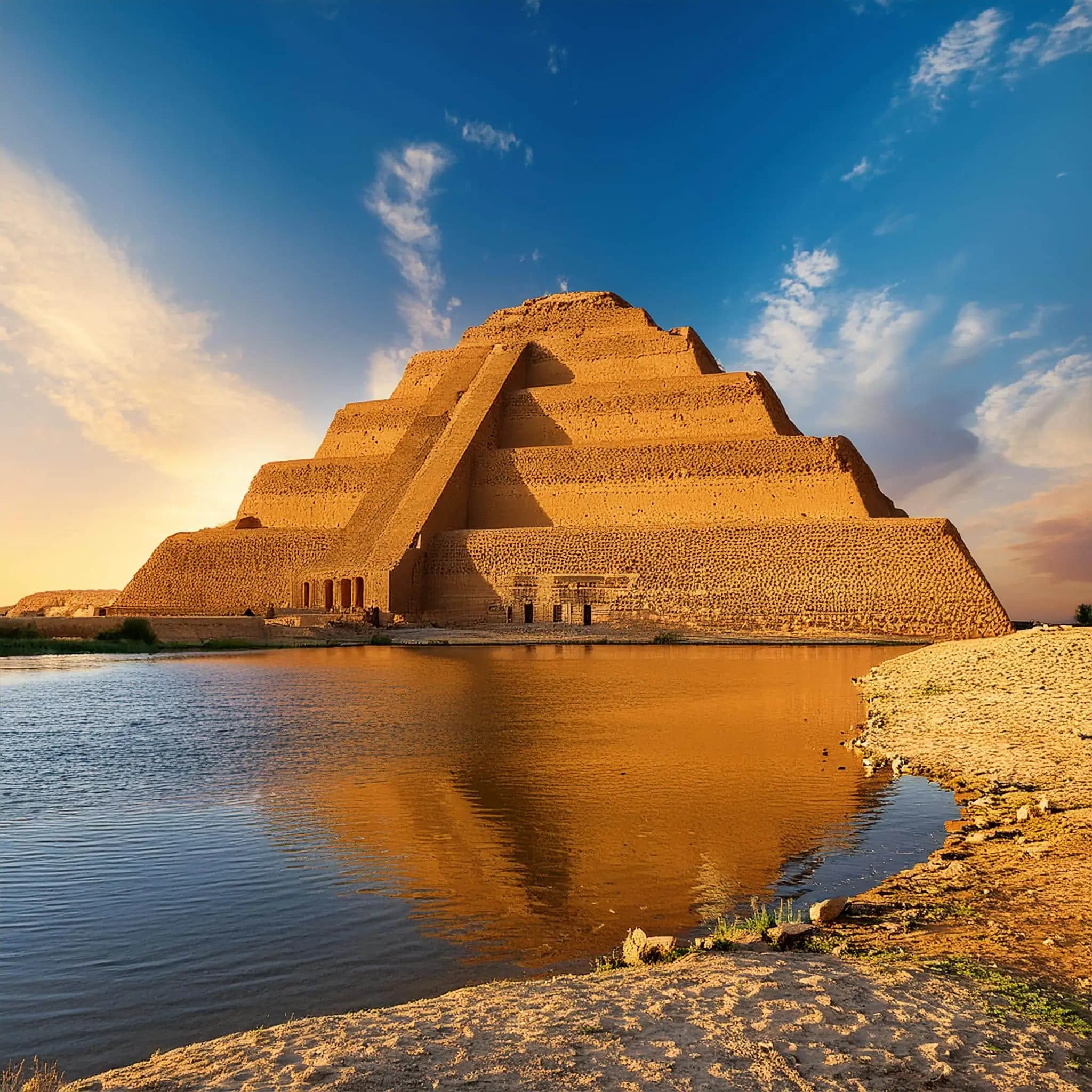
Among the Sumerians’ most impressive achievements were their architectural feats, particularly the ziggurats. These multi-level temple structures were built in terraces, with the highest level serving as a sacred space for the gods. The ziggurats symbolized the connection between heaven and earth, and some theories even suggest they could have been landing platforms for extraterrestrial beings.
The Role of Priests in Sumerian Society
In ancient Sumer, priests held immense power, acting as intermediaries between the gods and the people. They oversaw religious ceremonies and interpreted divine will, ensuring that every significant event aligned with the desires of the gods. This close relationship with the divine granted them authority over various aspects of daily life.
The Epic of Gilgamesh
One of the most significant literary works from Sumer is the Epic of Gilgamesh, which tells the story of a king who embarks on a quest for immortality after the death of his friend. This epic not only reflects the Sumerians’ beliefs about life and death but also showcases their advanced storytelling and literary skills.
Theories of Sumerian Origins
The origins of the Sumerians remain a topic of intrigue. Some scholars suggest they may have come from the Eastern Highlands, while others propose they arrived by sea, bringing with them their rich culture and maritime skills. The Sumerian language itself is unique and has not been definitively linked to any other known language, adding to the mystery of their origins.
Connections to Atlantis
Intriguingly, some theories propose that the Sumerians could be survivors of the lost civilization of Atlantis. This idea is supported by the timing of a massive flood that aligns with the disappearance of Atlantis, suggesting that the Sumerians may have inherited advanced knowledge and technology from this legendary civilization.
Conclusion
The Sumerians were a remarkable civilization that laid the groundwork for many aspects of modern society. Their innovations in writing, mathematics, and architecture, along with their complex social structures, continue to fascinate scholars and enthusiasts alike. As we explore the mysteries of their origins and achievements, we uncover not only the story of the Sumerians but also the broader narrative of human civilization itself.