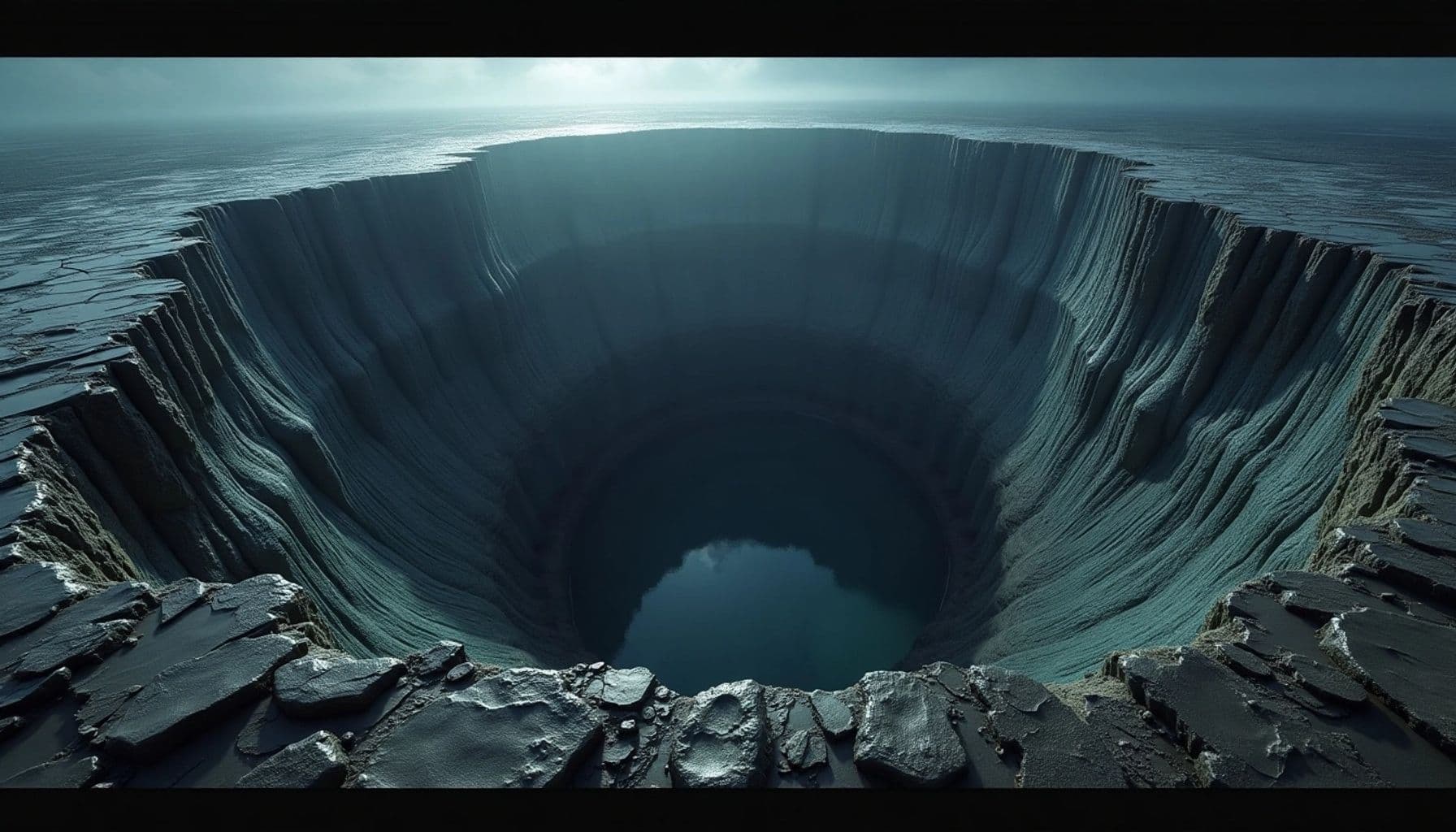

The Kola Superdeep Borehole remains one of the most fascinating scientific endeavors in history. Initiated by the Soviet Union in the 1970s, this ambitious project aimed to drill as deep as possible into the Earth’s crust, uncovering secrets that lie beneath our feet. What they found was both astonishing and perplexing, leading to a mix of scientific discovery and urban legend.
Key Takeaways
- The Kola Superdeep Borehole is deeper than Mount Everest and the Mariana Trench.
- Unexpected geological findings challenged existing scientific theories.
- Urban legends emerged, claiming the discovery of hellish sounds and entities.
The Ambitious Beginning
In 1958, the United States launched Project Mohole, aiming to sample the Earth’s mantle by drilling into the ocean floor. However, funding issues halted the project in 1966. Inspired by American efforts, the Soviets initiated their own drilling project in 1970, known as the Kola Superdeep Borehole, located in Murmansk, Russia.
The Drilling Process
The Kola project aimed to reach a depth of 15 kilometers. The drilling rig was designed to extract core samples along the entire length of the drill shaft, allowing scientists to analyze the Earth’s composition in real-time. Initial drilling went smoothly, but as they reached deeper layers, challenges arose:
Advertisement
- Increased Density: At around 6.9 kilometers, the rock became denser, causing drill bits to break.
- High Temperatures: Scientists expected temperatures to reach about 100°C, but they encountered temperatures of 180°C at 12 kilometers, which was far beyond their predictions.
- Unexpected Findings: Instead of the anticipated basalt layers, they found granite deeper than expected, along with a surprising discovery of water at depths of 3 to 6 kilometers.
The Mysteries Unveiled
As drilling continued, the team faced numerous accidents and setbacks. One of the most significant incidents occurred in 1984 when a section of the borehole collapsed, erasing five years of work. Despite these challenges, the discoveries made were groundbreaking:
Advertisement
- Porous Rock: The rock became more plastic-like at high temperatures, complicating drilling efforts.
- Ancient Life: Tiny remains of plankton were found, dating back 2 billion years, indicating life existed at those depths.