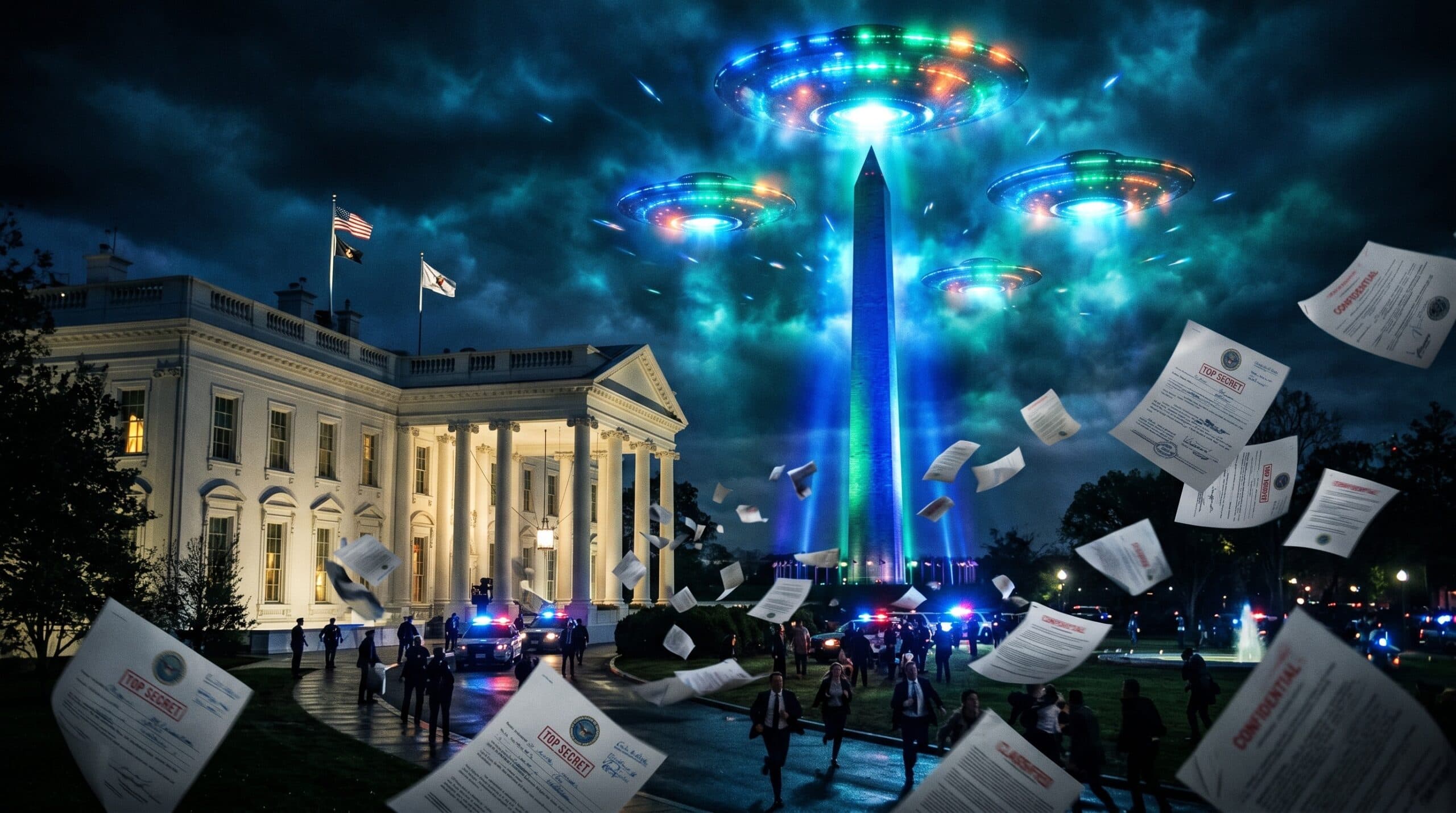
The files landed at midnight, and by dawn the Internet was on fire.
On April 14, 2026, the White House Office of Science and Technology Policy released a tranche of previously classified UAP-related documents under the expanded provisions of the 2023 National Defense Authorization Act. The release was not announced by the President. It was not accompanied by a press conference. It appeared as a quiet update to an obscure .gov portal, a digital dead drop that researchers and journalists discovered hours later. What they found inside has already shifted the architecture of the disclosure debate—not because it proves extraterrestrial contact, but because it proves the government has been lying about how much it knows.
The documents span fourteen years, from 2012 to 2026, and include sensor data from Navy F/A-18 Super Hornets, internal emails between Pentagon counterintelligence officers, and what appears to be a 2019 memorandum from an unnamed White House national security advisor recommending that UAP crash retrieval programs be moved outside standard congressional oversight channels. That memo, barely three pages long, has become the most scrutinized document in modern ufology. Its language is bureaucratic, its implications are explosive, and its authenticity—verified against metadata and signatures by independent forensic analysts—has held up under every test applied so far.
The Memo That Changed Everything
The 2019 memorandum references a program code-named “Kestrel,” described as an “asset recovery and materials analysis initiative” operating under the Office of the Under Secretary of Defense for Intelligence. What makes the document extraordinary is not the existence of such a program—whistleblowers like David Grusch had already testified under oath that crash retrieval programs were real—but the explicit admission that these programs were deliberately insulated from congressional appropriations committees to avoid “information spillage to foreign adversaries and unauthorized legislative staff.”
In plain language: the executive branch had decided that elected representatives could not be trusted with knowledge of UAP retrieval operations. The justification offered in the memo is national security. The implication, read by researchers and conspiracy analysts alike, is that the materials being recovered were of such sensitivity that standard democratic oversight was considered a liability.
Accompanying the memo are chains of emails between Pentagon officials discussing the 2004 Nimitz incident and the 2015 Roosevelt encounters. One thread, dated January 2020, contains a candid assessment from an unnamed aerospace engineer: “The performance characteristics observed in the Gimbal and GoFast videos remain inconsistent with any known domestic or foreign platform, including developmental prototypes. The acceleration profiles would require energy densities we do not currently possess.” The email was marked UNCLASSIFIED but was never included in any public hearing.
Sensor Data and the Missing Context
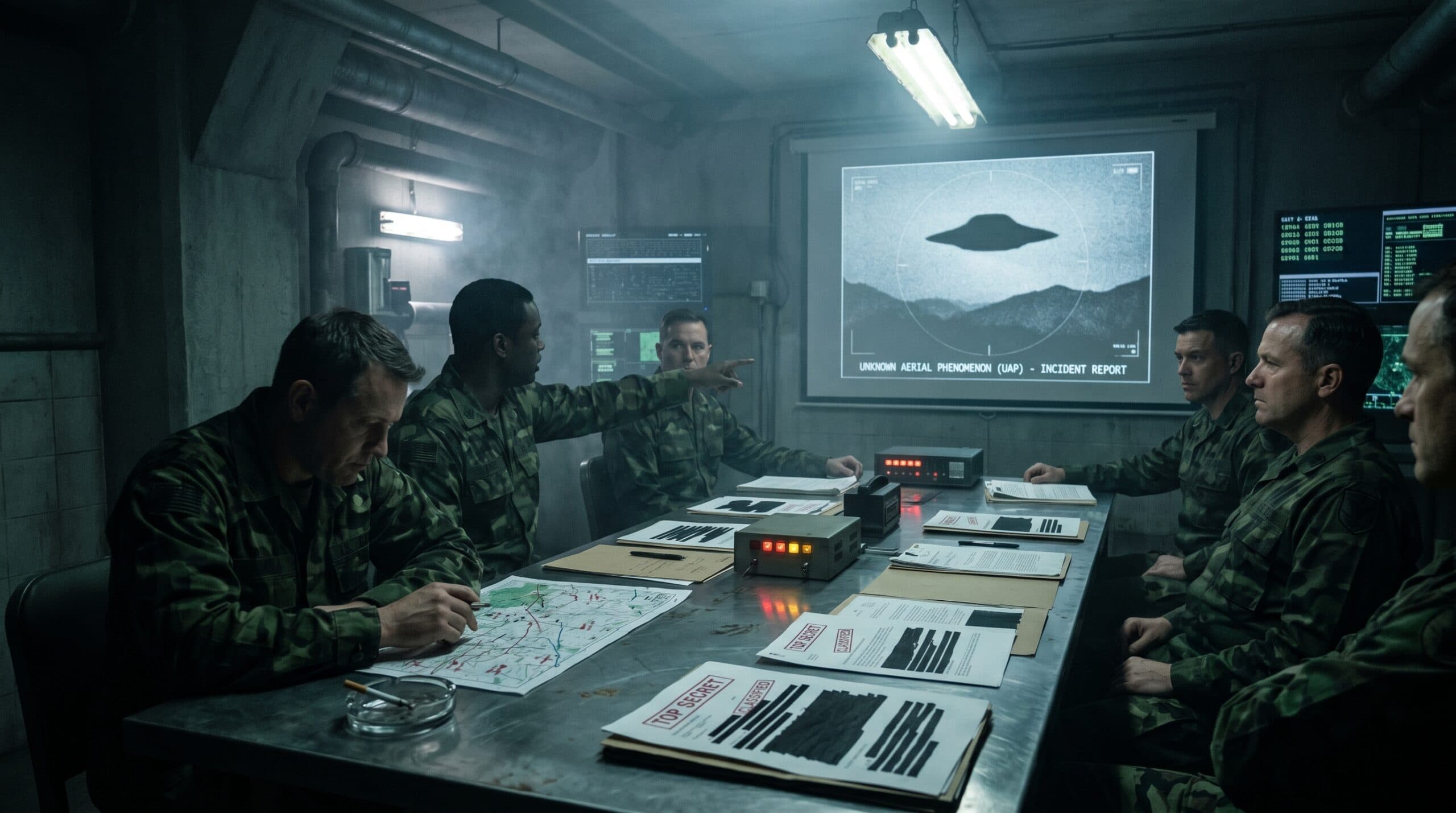
The April release includes raw radar and infrared data from multiple encounters, some of which correlate with publicly leaked videos and others that have never been seen before. One dataset, recorded in 2018 off the coast of Virginia, tracks an object descending from 80,000 feet to sea level in 0.8 seconds without creating a sonic boom or showing conventional propulsion signatures. The data was captured by the USS Portland’s AN/SPY-1 radar and independently confirmed by a nearby Coast Guard cutter.
What the files do not include is equally significant. The release contains no photographs of recovered materials. No biological analysis. No reference to non-human bodies. The absence has fueled two competing interpretations. Skeptics argue that the omission confirms there is no smoking gun—only anomalous sensor artifacts and bureaucratic overclassification. Believers counter that the release is carefully curated, a controlled demolition of partial truth designed to satisfy disclosure mandates while protecting the most sensitive compartments.
A third interpretation, increasingly popular among intelligence analysts, suggests the release is strategic. By confirming the existence of retrieval programs and unexplained sensor data while withholding physical evidence, the government may be attempting to shape public perception without triggering the geopolitical and theological destabilization that full disclosure might cause.
Congressional Reactions
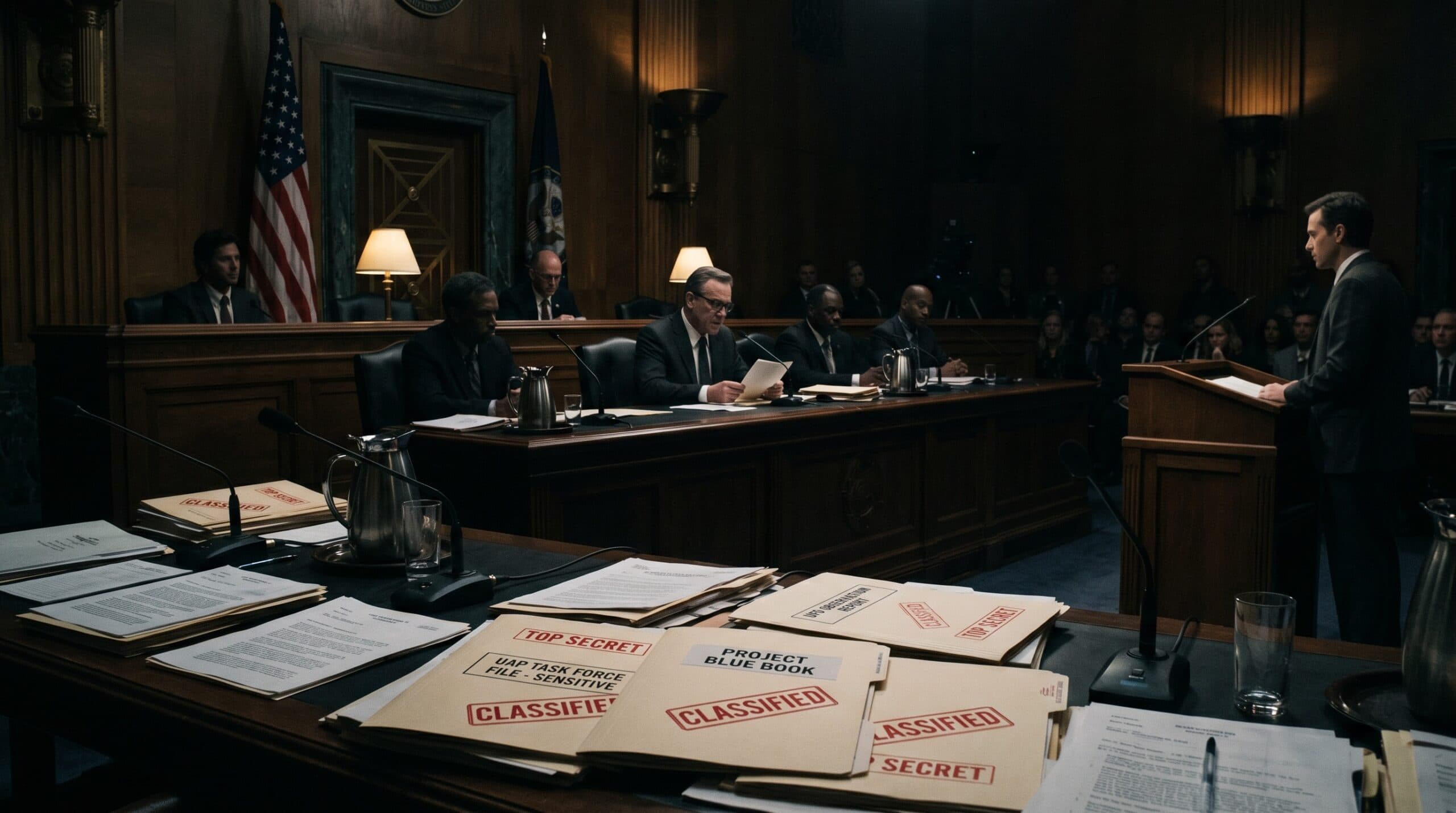
The reaction on Capitol Hill was immediate and fractured. Senator Kirsten Gillibrand, a leading advocate for UAP transparency, issued a statement calling the memo evidence of “deliberate circumvention of congressional authority” and demanded closed-door hearings with the officials named in the email chains. Representative Tim Burchett went further, claiming on a podcast that “this is the tip of the iceberg” and that he had been briefed on programs “ten levels deeper than Kestrel.”
Conversely, the House Intelligence Committee’s ranking member dismissed the release as “old news dressed in new file names,” arguing that the memo described standard SAP compartmentalization practices and that the sensor data remained explainable as instrument error or adversarial drones. The Pentagon’s official press guidance, released forty-eight hours after the document dump, walked a careful line: acknowledging the release as authentic while declining to confirm or deny ongoing retrieval activities. Popular Mechanics traced the history of official UFO investigation and noted that similar partial releases have preceded broader disclosures in the past.
The Broader Implications
For the disclosure community, the April 2026 release represents a turning point not because it resolves the UFO question, but because it validates the architecture of suspicion. For decades, believers argued that the government possessed physical evidence, managed secret programs, and deliberately misled the public and Congress. The Kestrel memo does not confirm non-human intelligence, but it confirms the conspiracy was real: programs existed, Congress was bypassed, and information was suppressed by design. NASA’s own UAP independent study had previously acknowledged that stigma and insufficient data prevent rigorous scientific analysis.
This distinction matters. Proof of government secrecy is not proof of extraterrestrial visitation. The objects tracked by Navy sensors may still represent classified human technology, foreign adversarial platforms, or natural phenomena not yet understood by physics. What the release establishes is that the people tasked with investigating these phenomena treated them with lethal seriousness while publicly ridiculing civilians who asked the same questions.
The psychological impact of validated secrecy cannot be underestimated. When official narratives collapse, the vacuum does not fill with skepticism—it fills with speculation. In the weeks following the release, online discourse has shifted from “Are UAPs real?” to “What else are they hiding?” That reframing, intentional or not, may prove more consequential than any individual radar track.
What Happens Next
The White House has indicated that additional releases will follow on a quarterly basis, mandated by the 2025 UAP Transparency Act. Legal scholars note that the act contains loopholes allowing the executive branch to withhold material deemed critical to national security, suggesting that future dumps may be equally curated. Researchers are already filing FOIA requests for the programs referenced in the Kestrel memo, though experience suggests such requests face years of delay and heavy redaction.
What remains unresolved is the central question. The documents prove that unidentified objects operate in restricted airspace with capabilities beyond known technology. They prove that the government recovered materials it did not understand. They do not prove origin. The gap between “unidentified” and “extraterrestrial” is where the next phase of this story will unfold, and that gap is where both the most rigorous science and the most profound belief now live.
The files landed at midnight. The truth, whatever it is, is still arriving.