A groundbreaking collaboration between archaeologists and artificial intelligence has led to the discovery of 303 new geoglyphs in Peru’s Nazca Desert — effectively doubling the previously known total in just six months. For a mystery that has fascinated researchers, tourists, and ancient-alien enthusiasts for generations, the find is one of the most important Nazca breakthroughs in decades.
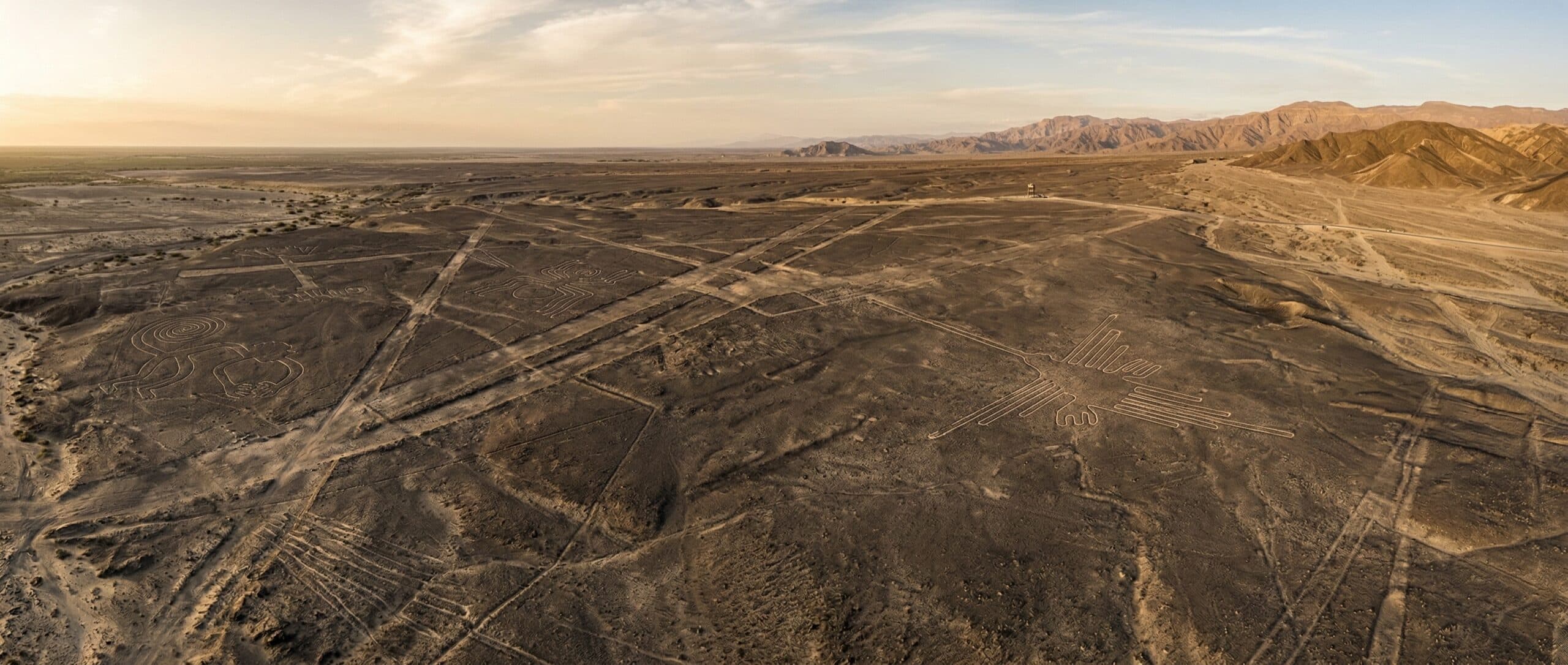
The Nazca Lines have puzzled researchers for over a century. These enormous geoglyphs, created by the Nazca civilization between roughly 200 BC and 650 AD, depict animals, plants, humanoid figures, and tools scratched into the desert surface. Visible best from the air, they have inspired theories ranging from ritual pathways to astronomical calendars to alien landing markers. Now, AI has revealed hundreds more — and forced archaeologists to rethink the scale of what the Nazca people were building.
How 303 New Nazca Geoglyphs Were Found
The discovery came through a collaboration led by Prof. Masato Sakai of Yamagata University’s Institute of Nazca in Peru, working with researchers and AI-assisted image analysis tools. Instead of relying only on slow, manual review of aerial images, the team trained artificial intelligence to scan vast amounts of visual data and flag likely geoglyph candidates for human verification.
According to Yamagata University, the AI-assisted survey identified 1,309 likely candidates, and field investigation of roughly a quarter of them led to the confirmation of 303 previously unknown figurative geoglyphs in only six months.
As The Guardian reported, the new figures include parrots, cats, monkeys, killer whales, and even decapitated heads — images that deepen the symbolic complexity of the Nazca landscape.
Why This Discovery Matters
This isn’t just a numbers story. The 303 new Nazca geoglyphs change how archaeologists think about the purpose, density, and social function of the lines.
- Scale reconsidered: The Nazca people created far more geoglyphs than previously documented.
- Purpose redefined: The sheer volume suggests these were not isolated ceremonial artworks, but part of a much broader cultural system.
- Technology transformation: AI is now proving it can accelerate archaeological fieldwork in ways humans alone cannot.

- Global implications: Similar machine-learning methods could soon be used to uncover hidden sites across deserts, forests, and buried ancient cities worldwide.
As The Asahi Shimbun explained, the speed of the survey was possible because AI dramatically reduced the time needed to review aerial imagery and identify likely targets for on-site confirmation.
Ancient Mystery, Modern Tools
The Nazca Lines occupy a unique space in the unexplained world because they sit at the intersection of established archaeology and popular speculation. Mainstream researchers tend to interpret them as part of ritual, social, or territorial practices. But in pop culture, the lines became globally famous through fringe theories — especially the claim that they were designed for beings viewing Earth from the sky.
This new discovery does not support ancient-alien claims. But it does make the mystery richer. If the Nazca civilization created this many geoglyphs across the desert, then the site may have functioned less like a singular masterpiece and more like a sprawling symbolic network encoded into the landscape.
That matters because every new figure adds context. Some geoglyphs are large and geometric. Others are smaller and figurative. Together, they may reflect shifting social practices, pilgrimage routes, ceremonial zones, or messages intended for deities rather than human viewers.
What AI Is Changing in Archaeology
The Nazca breakthrough is also part of a larger story: artificial intelligence is rapidly becoming one of archaeology’s most powerful tools.
AI can:
- Analyze huge image archives faster than human teams
- Spot faint patterns invisible to the naked eye
- Prioritize likely discovery zones for field researchers
- Help preserve fragile sites by reducing unnecessary disturbance
As methods improve, archaeologists may use the same approach to detect buried cities, forgotten roads, ceremonial complexes, and damaged heritage sites across the world. In that sense, the new Nazca discoveries are not just about Peru — they may represent the early stages of a global shift in how we find the ancient past.
The Nazca Mystery Deepens
For decades, the Nazca Lines have been treated as one of the world’s most tantalizing ancient mysteries. This discovery doesn’t solve the riddle. It expands it.
The more geoglyphs researchers find, the harder it becomes to reduce the site to a single explanation. Were these sacred pathways? Ceremonial signals? Community markers? Cosmic symbols? A mix of all of the above? The answer may be more complicated than anyone hoped.
What is clear is this: the Nazca people were working on a scale and with an intention that modern researchers are only now beginning to grasp. And ironically, it took artificial intelligence — a technology of the future — to expose how much of the ancient world was still hidden in plain sight.
For more on ancient mysteries and unexplained archaeology, see our coverage of Bronze Age treasure made from metal that fell from space, Piltdown Man and history’s greatest scientific hoax, and the latest government UFO disclosure claims.