April Prophecy Panic: Why Psychic Predictions Are…
Prophecy
April Prophecy Panic: Why Psychic Predictions Are Spreading So Fast in 2026
A new wave of April Prophecy content is spreading across social media after tabloid coverage amplified psychic Jill M. Jackson’s latest warnings for April 2026. The predictions touch nearly every high-anxiety trigger…
Art Grindstone is the hard-nosed storyteller behind Unexplained.co, a veteran investigator whose life’s work sits at the crossroads of the paranormal, fringe science, and the shadows most people try not to look into. With decades spent chasing impossible stories — black-budget psychic programs, vanished Cold War experiments, desert rituals that sparked UFO waves, and the strange phenomena buried in America’s forgotten backroads — Art brings a rare combination of skepticism, awe, and journalistic precision. He’s not here to debunk. He’s not here to blindly believe. He follows the evidence wherever it leads — even when it leads someplace deeply uncomfortable. Known for his immersive, cinematic style and his ability to turn obscure research into gripping narrative, Art has built a devoted following across podcasts, long-form features, documentaries, and serialized investigations. His interviews are direct. His analysis is unflinching. His voice has become a staple in the modern paranormal renaissance — the guy people turn to when a story is too strange, too complex, or too dangerous for anyone else to touch. Off-mic, Art works with a distributed network of researchers, archivists, and field operatives who help surface the stories mainstream media ignores. On-mic, he transforms their findings into meticulous, high-impact reporting that refuses to insult the intelligence of true believers. His philosophy is simple: Take the phenomenon seriously. Treat the audience with respect. Tell the story as if the world depends on it — because sometimes it does. When Art Grindstone digs into a case, he isn’t just chasing a mystery. He’s tracing the fault lines of reality itself.
6 min · 1,297 words
In This Report(13)
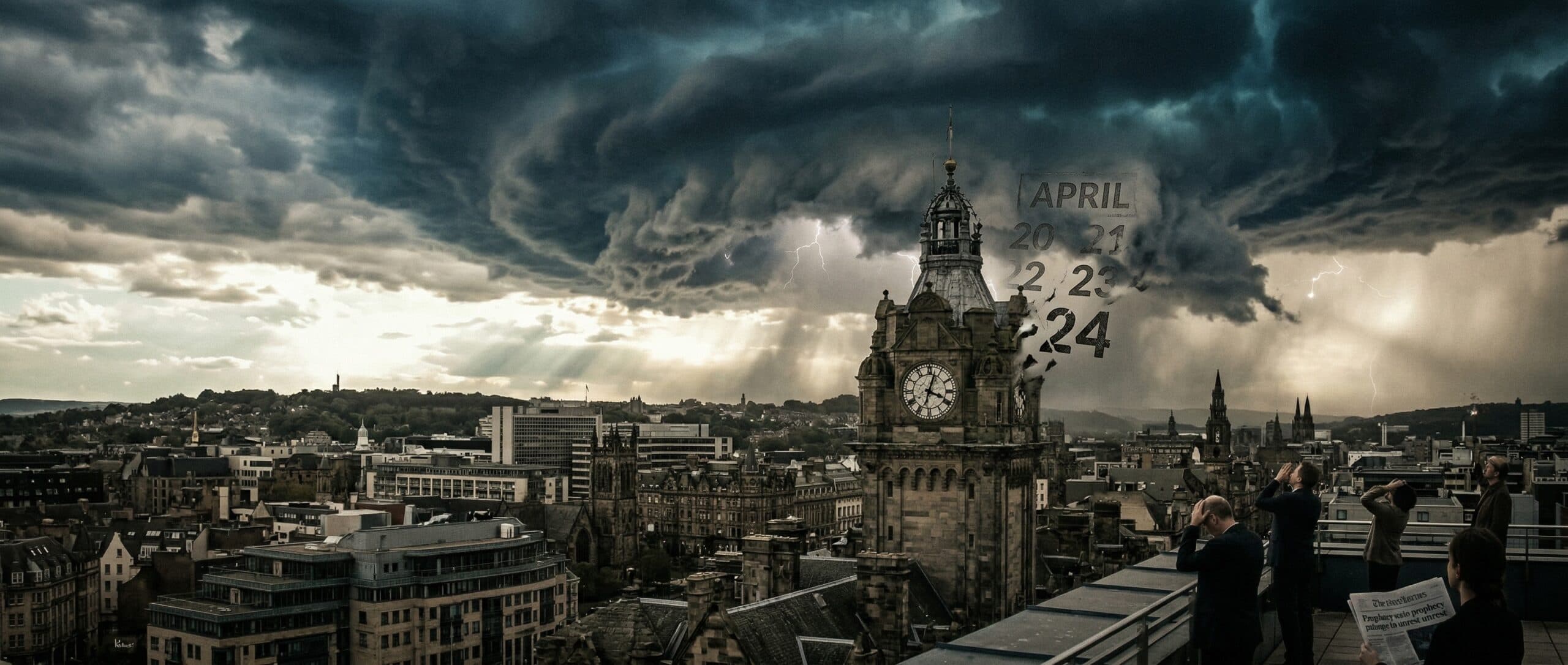
A new wave of April Prophecy content is spreading across social media after tabloid coverage amplified psychic Jill M. Jackson’s latest warnings for April 2026. The predictions touch nearly every high-anxiety trigger modern audiences are primed to fear: political instability, attacks on U.S. infrastructure, airline disasters, food shortages, and the early signs of banking collapse. On the surface, it looks like another monthly psychic cycle. Underneath, it is a much bigger media story about how prophecy, panic, and pattern-matching now merge online.
Here is the clearest answer: the current April Prophecy wave matters not because any prediction has been verified in advance, but because these stories spread most effectively when real-world uncertainty is already high. A prophecy list becomes a container for fear. Once people are anxious enough, almost any headline can be folded into it as proof.
What Is the April Prophecy Story?
The latest April Prophecy surge appears to have been accelerated by a Daily Star article published on April 1, 2026, summarizing psychic Jill M. Jackson’s warnings for the month ahead. According to that reporting, Jackson predicted a possible attempt on Donald Trump, conflict involving Iran, Israel, and the United States, pressure on food supplies, more airline disasters, attacks involving the power grid or water systems, and the beginning of a banking-collapse sequence.
Advertisement
That combination is exactly why the story took off. It does not focus on one event. It offers a whole package of crisis possibilities. That makes it ideal for algorithmic anxiety culture, where people are already scanning the news for signs that systems are fraying.
This is one reason prophecy content survives so well online. It does not need to be precise to feel relevant. It only needs to sound broad enough that later events can be interpreted as confirmation.
Why April Prophecy Content Goes Viral
Stories like this travel fast because they intersect with several communities at once:
prophecy and apocalypse audiences looking for signs of historic turning points
prepper and collapse communities focused on grid failure, shortages, and instability
political content creators who frame world events as part of a larger hidden script
spiritual and wellness spaces that elevate intuitive authority over institutional analysis
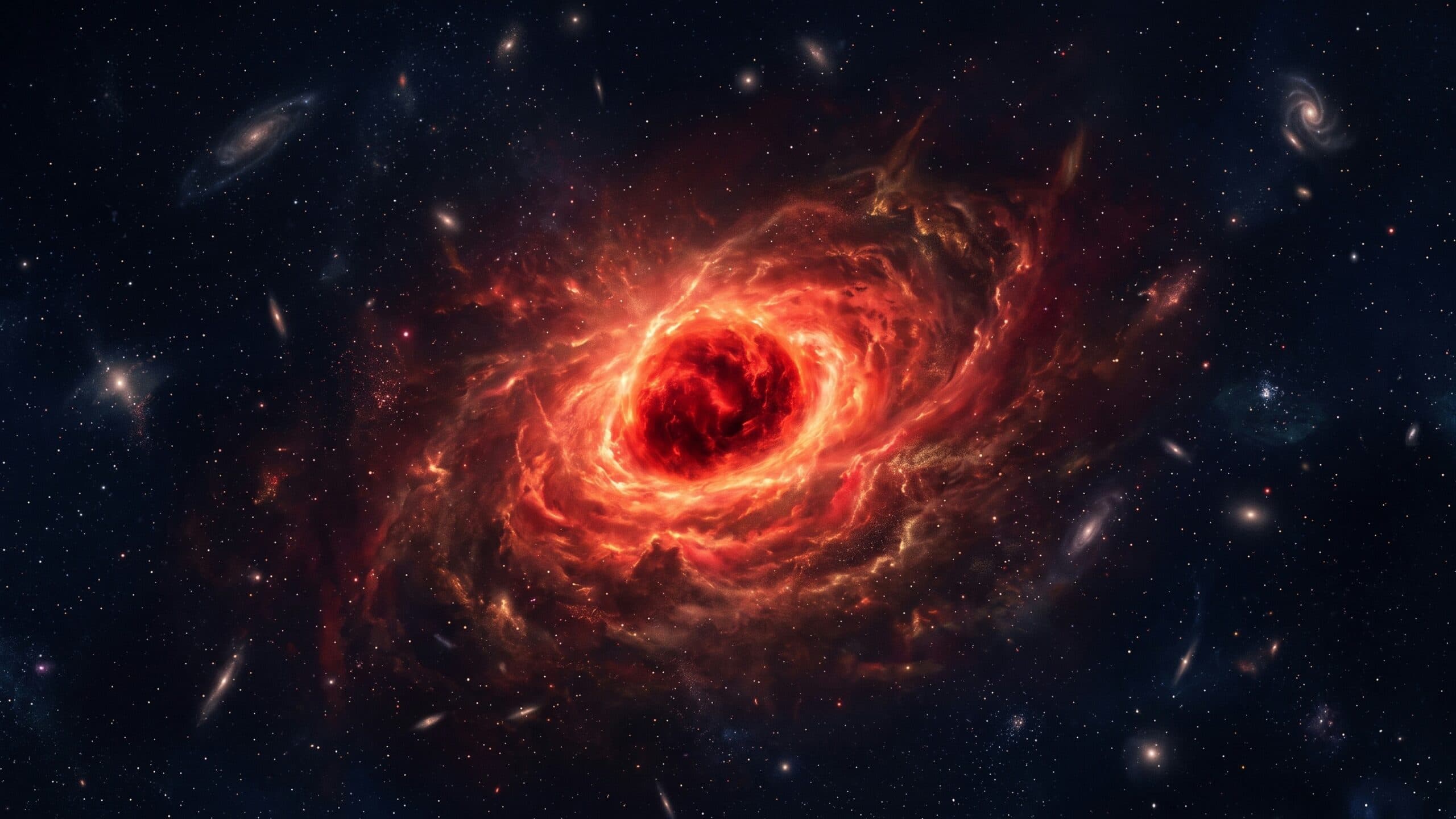
A ‘Black Hole Star’ May Be Hiding Inside the Early Universe’s Red Dots
One crimson point in the infant universe is so bright that ordinary starlight cannot explain it. A new Nature study argues it may be a dense gas envelope powered from within by a growing black hole.
Aug 20, 2026 • 8 min read
Strange History
The 4,000-Year-Old Tablet Nobody Can Explain
An intact 4,000-year-old tablet from northern Italy carries geometric signs no one can read. Its real mystery may be the network behind it.
Aug 18, 2026 • 7 min read
Conspiracy Theories
The Sandia Quantum Scientist Who Vanished: Ingrid Lane’s Double Life and the Mystery No One Solves
Ingrid Lane lived a double life — bipolar musician to the world, Sandia National Laboratories quantum computing scientist underneath. Then she disappeared. The story is a fixation in high-strangeness communities.
May 14, 2026 • 7 min read
general doomscrolling audiences already primed for fear-based headlines
That convergence matters. Prophecy stories are no longer siloed inside paranormal subcultures. They now plug directly into geopolitics, economics, survivalism, aviation fear, and online outrage. A modern April Prophecy cycle is not just mysticism. It is cross-platform anxiety content.
Why One Claimed “Hit” Can Change Everything
One of the most important parts of this story is the claim that Jackson supposedly called elevated earthquake activity earlier in the year. Whether that earlier forecast was actually specific enough to count as a serious prediction is a separate question. In prophecy culture, what matters is not always precision. What matters is perceived legitimacy.
Once a psychic is believed to have been right once, even loosely, audiences often begin treating later warnings as upgraded intelligence. A single “hit” becomes reputational fuel. It gives the next round of predictions more emotional authority, even when the new claims are far broader or less verifiable.
This is how monthly psychic media often scales. One apparent success becomes the marketing engine for a longer chain of future warnings.
Prediction or Pattern-Matching?
This is the core question at the center of any April Prophecy wave. Are people watching a genuine forecasting phenomenon — or are they watching a large-scale pattern-matching machine in action?
Skeptics would argue that broad psychic predictions function less like precise forecasts and more like narrative frameworks. If a politician faces turmoil, believers say the prophecy landed. If a market dips, the banking-warning narrative is activated. If a power outage happens anywhere, it can be folded into infrastructure fear. If none of it happens cleanly, the timeline can be stretched or the symbolism reinterpreted.
That is why these stories are so durable. They are built to absorb ambiguity.
Why April 2026 Feels Especially Fertile for Prophecy Culture
The current media environment is unusually favorable to prophecy content. Economic uncertainty, geopolitical tension, polarization, viral fear loops, and declining trust in institutions all create ideal conditions for psychic narratives to flourish. People do not just want information in times like these. They want orientation. They want a frame that makes chaos feel connected.
That is where an April Prophecy story becomes useful to believers. It does not reduce fear. It organizes fear.
There is also a media-economics angle here. Prophecy content is highly clickable because it offers urgency, mystery, and emotional stakes. A psychic who appears to have predicted one event gains a stronger hook for every story that follows. Tabs, clips, reaction videos, and repost chains all benefit from that dynamic.
Advertisement
That means April Prophecy stories are not just belief objects. They are content products.
For publishers, influencers, and creators, a fear-based prediction list is extremely efficient. It is specific enough to grab attention but broad enough to remain reusable. If one item seems to line up with the news, the whole package gets renewed.
What Responsible Readers Should Watch For
Readers should pay attention to several things when evaluating a story like this:
Was the prediction specific before events happened, or only persuasive after reinterpretation?
Are followers crediting the psychic for things that were already widely feared in public discourse?
Is the prediction being repeated by outlets that benefit from panic-driven engagement?
Are unrelated headlines being stitched together into one prophecy narrative after the fact?
These questions matter because prophecy stories often feel strongest when anxiety is already elevated. In those moments, the human brain becomes more willing to perceive pattern, destiny, and hidden warning structures.
Final Assessment
The April Prophecy panic now circulating around Jill M. Jackson’s predictions is important not because it proves clairvoyance, but because it shows how modern fear ecosystems work. A psychic warning list becomes viral when it aligns with the emotions audiences are already carrying: instability, scarcity, violence, collapse, and uncertainty about who to trust.
That is why April Prophecy content keeps spreading. It offers not verified foresight, but a dramatic framework for interpreting unstable times. And in the attention economy, that can be more powerful than proof.
Frequently Asked Questions
What is the April Prophecy story about?
It refers to a wave of viral coverage around psychic Jill M. Jackson’s April 2026 predictions, which include warnings about political turmoil, infrastructure attacks, shortages, airline incidents, and banking instability.
Why is April Prophecy content spreading so fast?
Because it overlaps with existing fear communities including prophecy audiences, preppers, political influencers, spiritual communities, and general doomscrolling users.
Did the psychic already predict something correctly?
Believers say Jill M. Jackson accurately warned about increased earthquake activity earlier in the year. Whether that counts as a precise predictive hit depends on how specific the original claim was.
What do skeptics say about April Prophecy claims?
Skeptics argue that broad psychic predictions are easily reinterpreted after the fact, allowing followers to connect unrelated events and treat them as confirmation.
Art Grindstone is the hard-nosed storyteller behind Unexplained.co, a veteran investigator whose life’s work sits at the crossroads of the paranormal, fringe science, and the shadows most people try not to look into. With decades spent chasing impossible stories — black-budget psychic programs, vanished Cold War experiments, desert rituals that sparked UFO waves, and the strange phenomena buried in America’s forgotten backroads — Art brings a rare combination of skepticism, awe, and journalistic precision. He’s not here to debunk. He’s not here to blindly believe. He follows the evidence wherever it leads — even when it leads someplace deeply uncomfortable. Known for his immersive, cinematic style and his ability to turn obscure research into gripping narrative, Art has built a devoted following across podcasts, long-form features, documentaries, and serialized investigations. His interviews are direct. His analysis is unflinching. His voice has become a staple in the modern paranormal renaissance — the guy people turn to when a story is too strange, too complex, or too dangerous for anyone else to touch. Off-mic, Art works with a distributed network of researchers, archivists, and field operatives who help surface the stories mainstream media ignores. On-mic, he transforms their findings into meticulous, high-impact reporting that refuses to insult the intelligence of true believers. His philosophy is simple: Take the phenomenon seriously. Treat the audience with respect. Tell the story as if the world depends on it — because sometimes it does. When Art Grindstone digs into a case, he isn’t just chasing a mystery. He’s tracing the fault lines of reality itself.