Artemis II Live Feed UFO Chatter: Why NASA Glitches Keep Turning Into Conspiracy Stories | Unexplained
Space
Artemis II Live Feed UFO Chatter: Why NASA Glitches Keep Turning Into Conspiracy Stories
The UFO chatter around NASA’s Artemis II live coverage is a perfect example of how modern anomaly culture works. A mission experiences routine communication issues, viewers clip an ambiguous moment, social platforms…
Art Grindstone is the hard-nosed storyteller behind Unexplained.co, a veteran investigator whose life’s work sits at the crossroads of the paranormal, fringe science, and the shadows most people try not to look into. With decades spent chasing impossible stories — black-budget psychic programs, vanished Cold War experiments, desert rituals that sparked UFO waves, and the strange phenomena buried in America’s forgotten backroads — Art brings a rare combination of skepticism, awe, and journalistic precision. He’s not here to debunk. He’s not here to blindly believe. He follows the evidence wherever it leads — even when it leads someplace deeply uncomfortable. Known for his immersive, cinematic style and his ability to turn obscure research into gripping narrative, Art has built a devoted following across podcasts, long-form features, documentaries, and serialized investigations. His interviews are direct. His analysis is unflinching. His voice has become a staple in the modern paranormal renaissance — the guy people turn to when a story is too strange, too complex, or too dangerous for anyone else to touch. Off-mic, Art works with a distributed network of researchers, archivists, and field operatives who help surface the stories mainstream media ignores. On-mic, he transforms their findings into meticulous, high-impact reporting that refuses to insult the intelligence of true believers. His philosophy is simple: Take the phenomenon seriously. Treat the audience with respect. Tell the story as if the world depends on it — because sometimes it does. When Art Grindstone digs into a case, he isn’t just chasing a mystery. He’s tracing the fault lines of reality itself.
6 min · 1,259 words
In This Report(13)
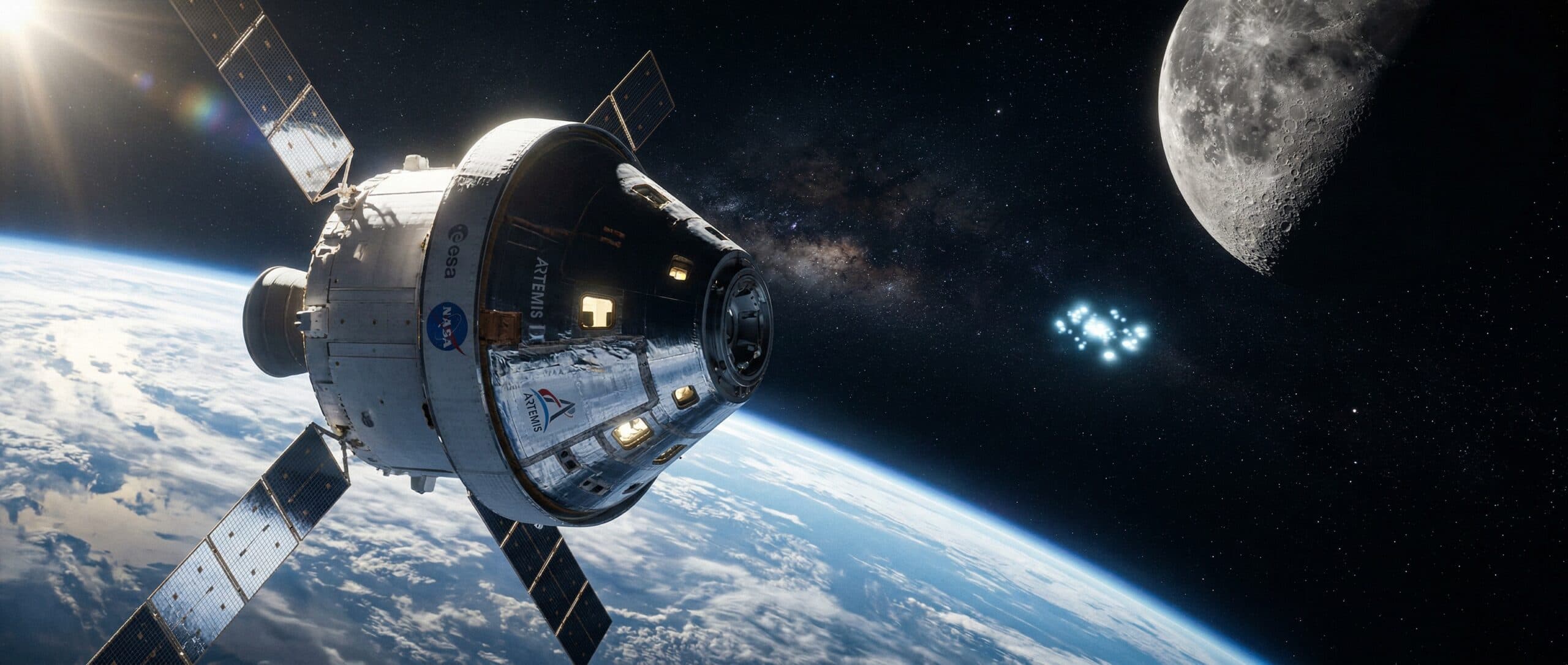
The UFO chatter around NASA’s Artemis II live coverage is a perfect example of how modern anomaly culture works. A mission experiences routine communication issues, viewers clip an ambiguous moment, social platforms pull it out of context, and suddenly a technical hiccup begins mutating into a cover-up story. That is exactly what happened with the latest burst of claims around the Artemis II live feed UFO discussion now circulating across Reddit, YouTube, and conspiracy-leaning communities.
Here is the clearest answer: there is currently no verified evidence that NASA captured a genuine UFO during the Artemis II live feed. What exists is a fast-moving online interpretation cycle built on partial clips, viewer suspicion, space-program mystique, and the long-standing belief that NASA is one of the institutions most likely to hide something extraordinary if it ever appeared on camera.
What Happened on the Artemis II Live Feed?
The current wave of discussion appears to have been sparked by online posts claiming that something strange showed up during Artemis II mission coverage. Some of the conversation has centered on short clips and archived references shared across Reddit and other social platforms, where viewers argued that a visual anomaly or awkward feed shift looked suspicious enough to deserve closer inspection.
Advertisement
At the same time, separate mission reporting documented multiple real technical issues and troubleshooting moments during the early mission period. That matters because real technical disruptions create the perfect environment for conspiracy interpretation. If a feed stutters, a signal drops, audio changes, or the presentation shifts unexpectedly, some viewers immediately begin asking whether they just witnessed censorship rather than routine engineering friction.
This is why the story spread so quickly. It wasn’t just “something odd in space.” It was “something odd in space during a stream people already half-expect NASA to sanitize.”
Why NASA Live Feeds Always Attract UFO Claims
NASA has occupied a special place in UFO culture for decades. To believers, it sits at the intersection of elite scientific authority, secretive space operations, classified aerospace history, and global public trust. That combination makes the agency a magnet for anomaly claims.
Whenever something unusual appears in NASA footage — even briefly — the event tends to trigger a familiar script:
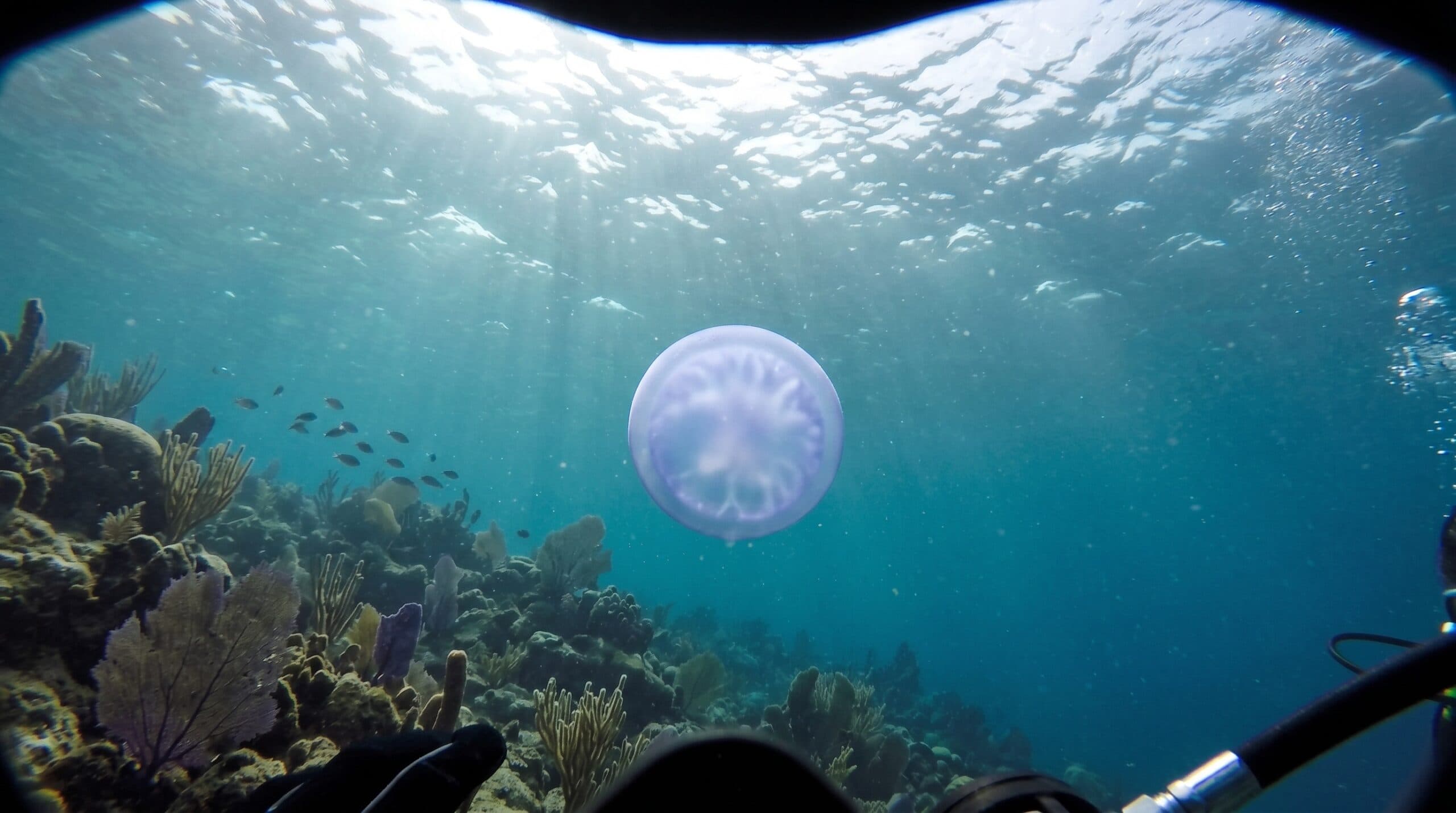
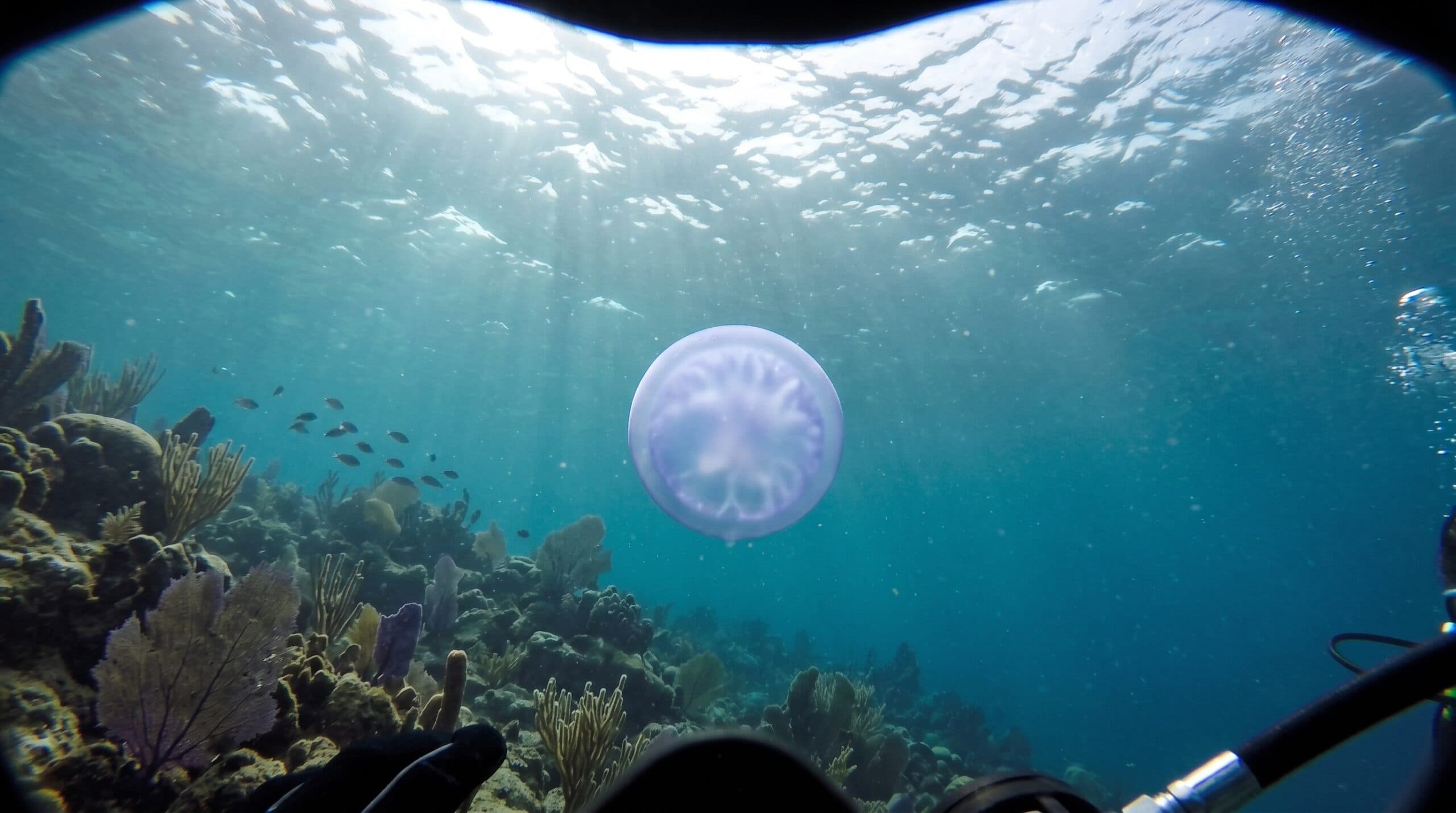
The Deep Sea Sphere: 1990s SCUBA Divers Filmed Something in the Bahamas That Still Defies Classification
A clip from the 1990s shows SCUBA divers encountering a strange, perfectly spherical creature in the Bahamas. Decades later, the footage is resurfacing — and cryptid researchers, marine biologists, and UAP watchers all have different theories about what it is.
May 13, 2026 • 6 min read
UFO & Aliens
The Pentagon Released More UAP Files—but Not the Data Needed to Solve Them
The Pentagon’s fifth UAP release reveals cold orbs and a giant triangle—but missing sensor data keeps its strangest cases unresolved and untested.
Aug 17, 2026 • 10 min read
UFO & Aliens
Europe Has Been Quietly Tracking UAP Reports Since 2023
Documents reveal how the European Commission handled UAP images, what it promised to improve, and why Europe still lacks a public investigation office.
Aug 17, 2026 • 8 min read
viewers begin narrating intent into technical changes
the absence of proof becomes proof of concealment
That pattern is one reason Artemis II was almost guaranteed to generate at least one UFO rumor cycle. Space missions produce high attention, high uncertainty, and lots of technically confusing visuals. Those are ideal conditions for anomaly culture.
What the Strongest Skeptical Explanation Looks Like
The most grounded interpretation is that the Artemis II UFO chatter reflects a mix of ordinary live-feed ambiguity, mission troubleshooting, and pattern recognition amplified by social media. Space footage is notoriously easy to misread. Reflections, lens flares, signal artifacts, compression oddities, drifting debris, camera movement, lighting changes, and partial context can all create the impression of something more exotic than what is actually on screen.
That does not mean every viewer is acting in bad faith. It means live technical environments naturally produce moments that look uncanny when isolated.
And once those moments are clipped and stripped of surrounding mission context, they become much easier to mythologize.
Why This Story Still Matters Even Without Proof
For The Unexplained Company, the real value of this story is not whether a UFO was captured on camera. It is what the reaction tells us about the current state of public trust, media consumption, and conspiracy psychology.
People increasingly do not wait for institutions to interpret events for them. They watch, clip, speculate, remix, and distribute their own competing realities in real time. That means a NASA live feed is no longer just a technical broadcast. It is a battlefield of interpretation the moment anything unclear appears on screen.
This also helps explain why even weak anomaly stories can perform so well online. They let audiences feel participatory. Viewers are not just watching a mission. They are hunting for hidden truths inside it.
The Artemis II UFO Story in the Bigger Disclosure Context
Another reason this micro-story gained traction is that it landed inside a broader disclosure-era environment already shaped by Pentagon UAP stories, congressional testimony, and years of public debate over whether official institutions are withholding the best evidence.
That wider climate changes how viewers process ambiguity. In another era, a glitchy moment on a live space feed might simply have been dismissed as noise. Now, many audiences interpret ambiguity through a secrecy lens first.
Space missions occupy a near-perfect symbolic zone. They involve advanced technology, restricted environments, difficult visuals, and institutions most people cannot independently check. Add the emotional weight of exploration and the mystery of the cosmos, and even a brief anomaly can feel loaded with cosmic significance.
Advertisement
That is why stories like this linger even when no hard evidence appears. They live in a symbolic ecosystem where uncertainty already feels meaningful.
For many viewers, the possibility matters more than the proof.
What Responsible Readers Should Do With Stories Like This
The best way to approach an Artemis II live feed UFO claim is to ask a few simple questions:
Is the clip complete, or was it extracted from a longer technical sequence?
Are there mission-log explanations for any feed changes or glitches?
Does the anomaly still look unusual when viewed in full context?
Is the claim being strengthened by evidence, or by audience suspicion alone?
Those questions do not kill the mystery. They simply separate curiosity from automatic escalation.
Final Assessment
The current Artemis II live feed UFO chatter is best understood as a modern media event rather than a confirmed space anomaly. The story spread because it had everything UFO audiences respond to: NASA, live video, technical confusion, rapid clipping, and an institution already surrounded by secrecy narratives.
That combination is enough to create a viral mystery even when the evidence remains weak. And in 2026, that may be the real story: not whether a UFO crossed the frame, but how quickly the public is now prepared to believe that it might have.
Frequently Asked Questions
Was a UFO confirmed on the Artemis II live feed?
No. There is currently no verified evidence showing that a genuine UFO appeared on the Artemis II live feed.
Why are people talking about an Artemis II live feed UFO?
Because viewers circulated clips and claims suggesting something unusual appeared during mission coverage, and those claims were amplified by real technical issues and online speculation.
Why do NASA streams attract so many anomaly claims?
NASA footage combines difficult visuals, institutional mystique, and public suspicion, making it easy for ambiguous moments to be reinterpreted as possible cover-up material.
What is the most likely explanation?
The most likely explanation is a combination of normal live-feed ambiguity, technical hiccups, and social-media amplification rather than a confirmed extraterrestrial event.
Art Grindstone is the hard-nosed storyteller behind Unexplained.co, a veteran investigator whose life’s work sits at the crossroads of the paranormal, fringe science, and the shadows most people try not to look into. With decades spent chasing impossible stories — black-budget psychic programs, vanished Cold War experiments, desert rituals that sparked UFO waves, and the strange phenomena buried in America’s forgotten backroads — Art brings a rare combination of skepticism, awe, and journalistic precision. He’s not here to debunk. He’s not here to blindly believe. He follows the evidence wherever it leads — even when it leads someplace deeply uncomfortable. Known for his immersive, cinematic style and his ability to turn obscure research into gripping narrative, Art has built a devoted following across podcasts, long-form features, documentaries, and serialized investigations. His interviews are direct. His analysis is unflinching. His voice has become a staple in the modern paranormal renaissance — the guy people turn to when a story is too strange, too complex, or too dangerous for anyone else to touch. Off-mic, Art works with a distributed network of researchers, archivists, and field operatives who help surface the stories mainstream media ignores. On-mic, he transforms their findings into meticulous, high-impact reporting that refuses to insult the intelligence of true believers. His philosophy is simple: Take the phenomenon seriously. Treat the audience with respect. Tell the story as if the world depends on it — because sometimes it does. When Art Grindstone digs into a case, he isn’t just chasing a mystery. He’s tracing the fault lines of reality itself.