Art Grindstone is the hard-nosed storyteller behind Unexplained.co, a veteran investigator whose life’s work sits at the crossroads of the paranormal, fringe science, and the shadows most people try not to look into. With decades spent chasing impossible stories — black-budget psychic programs, vanished Cold War experiments, desert rituals that sparked UFO waves, and the strange phenomena buried in America’s forgotten backroads — Art brings a rare combination of skepticism, awe, and journalistic precision. He’s not here to debunk. He’s not here to blindly believe. He follows the evidence wherever it leads — even when it leads someplace deeply uncomfortable. Known for his immersive, cinematic style and his ability to turn obscure research into gripping narrative, Art has built a devoted following across podcasts, long-form features, documentaries, and serialized investigations. His interviews are direct. His analysis is unflinching. His voice has become a staple in the modern paranormal renaissance — the guy people turn to when a story is too strange, too complex, or too dangerous for anyone else to touch. Off-mic, Art works with a distributed network of researchers, archivists, and field operatives who help surface the stories mainstream media ignores. On-mic, he transforms their findings into meticulous, high-impact reporting that refuses to insult the intelligence of true believers. His philosophy is simple: Take the phenomenon seriously. Treat the audience with respect. Tell the story as if the world depends on it — because sometimes it does. When Art Grindstone digs into a case, he isn’t just chasing a mystery. He’s tracing the fault lines of reality itself.
8 min · 1,853 words
In This Report(7)
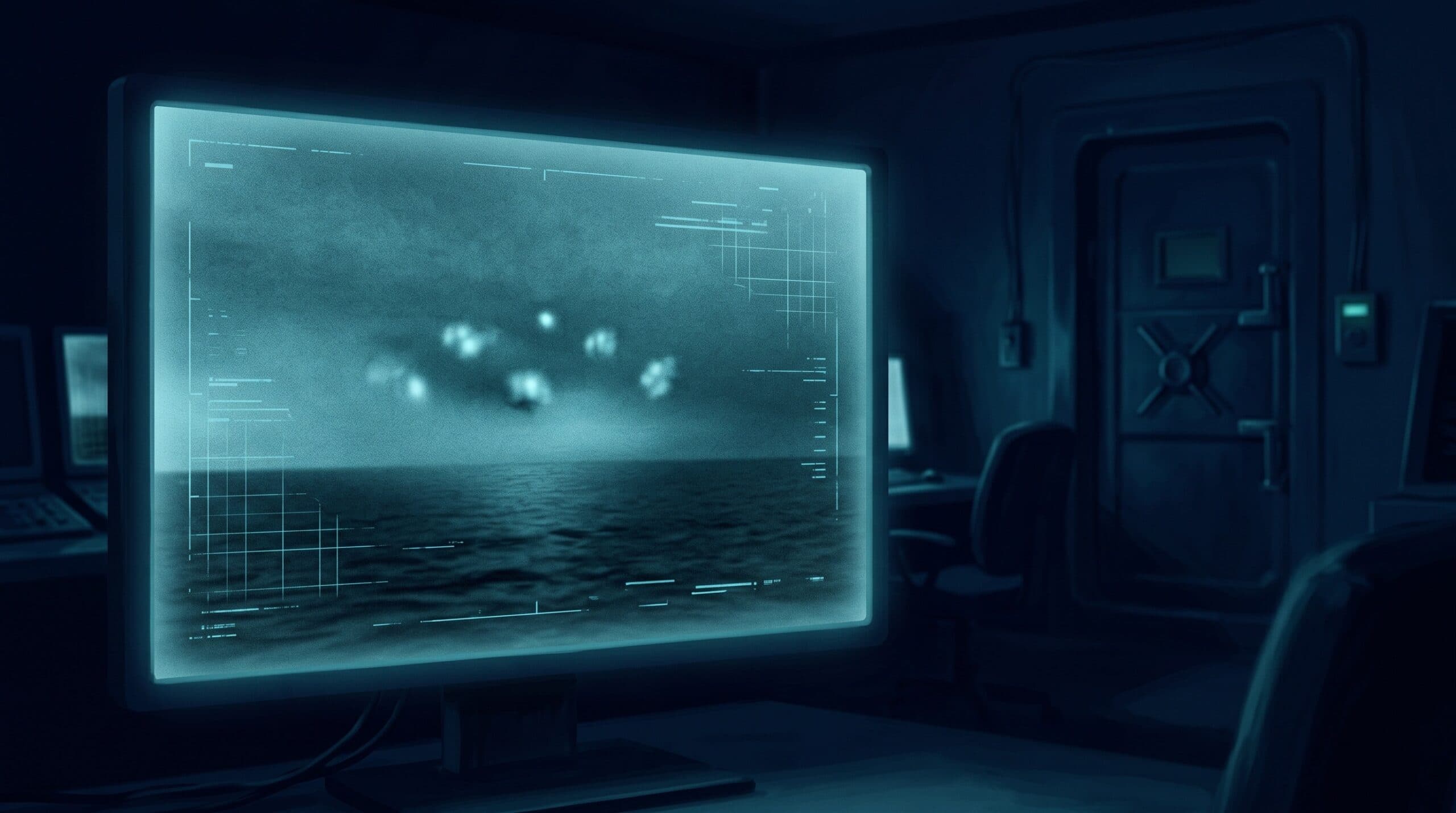
There is a moment in the Pentagon’s newest UAP files that feels torn from a classified encounter no one expected to see. A U.S. Special Operations gunship is flying over the Gulf of Oman during a live-fire exercise when its crew detects two roughly four-foot “cold orbs” hovering above a flare. The aircraft fires. The objects appear to scatter beyond the sensor’s view without losing altitude.
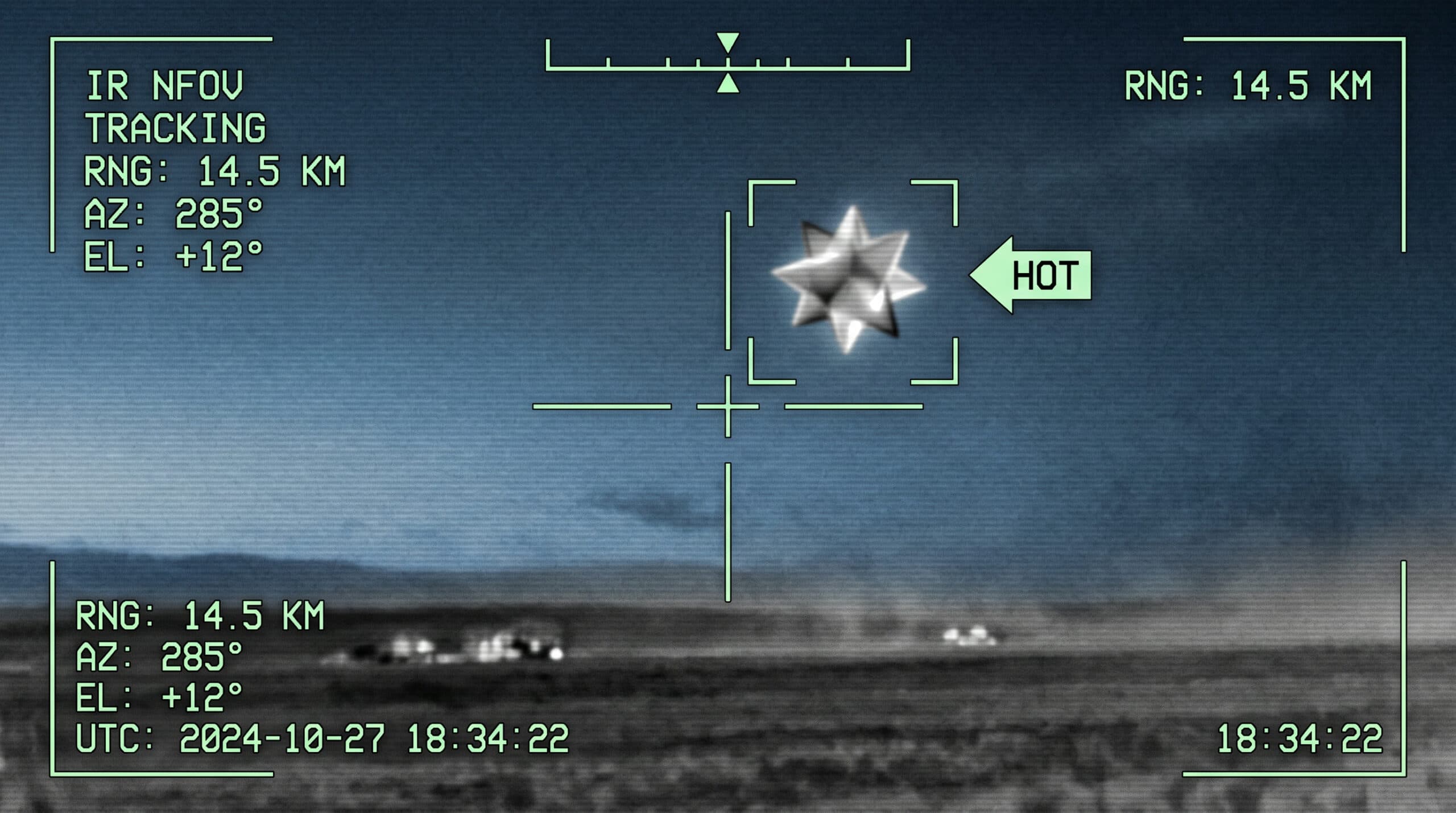
That is the mystery now moving through disclosure circles. But the deeper revelation is hidden one layer beneath it: the public has been shown recordings of a sensor display, not the original sensor data. We can watch the lights move. We still cannot independently determine exactly how far away they were, how fast they traveled, what temperature they registered, or whether their apparent reaction to gunfire was causation or coincidence.
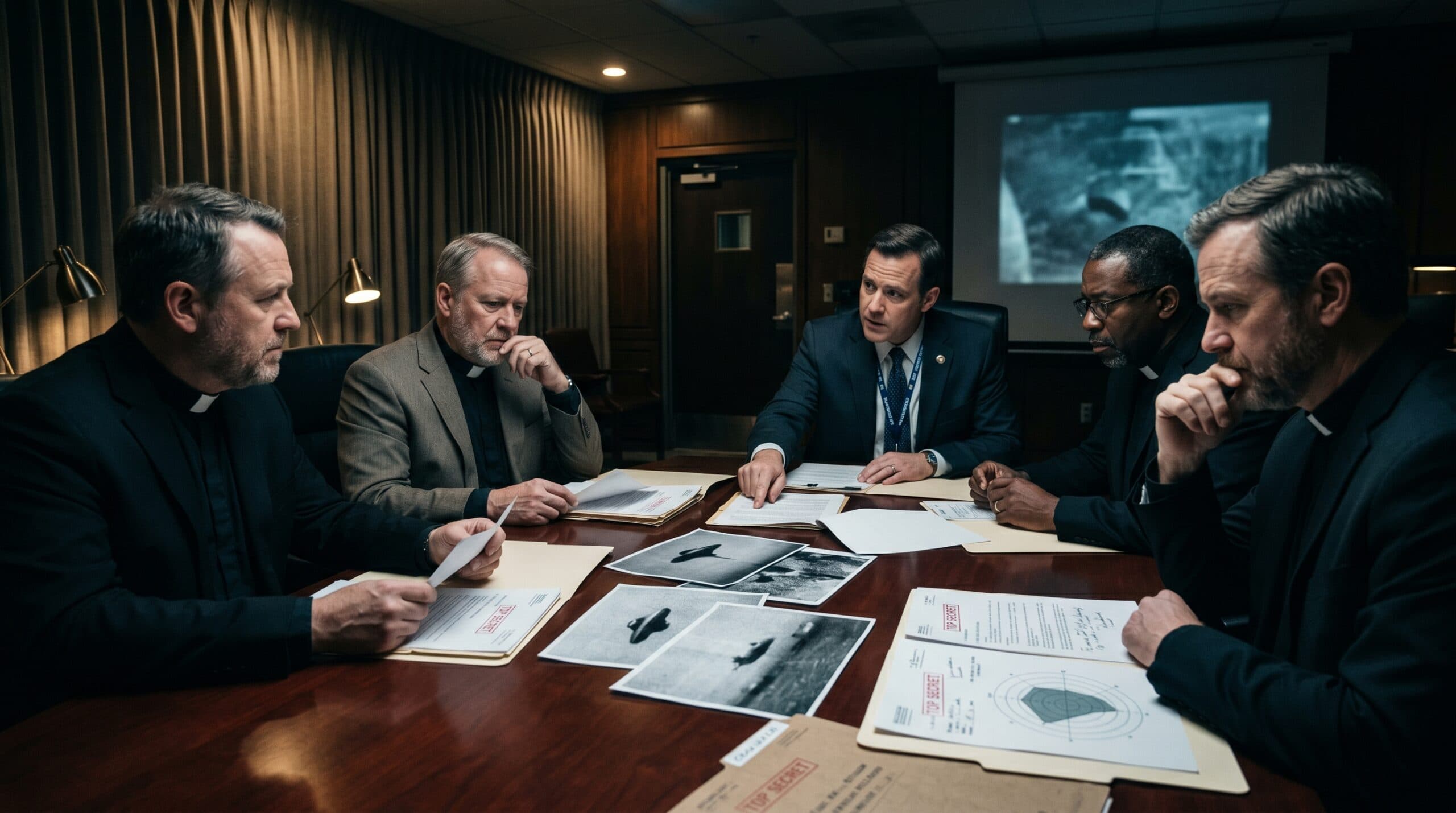
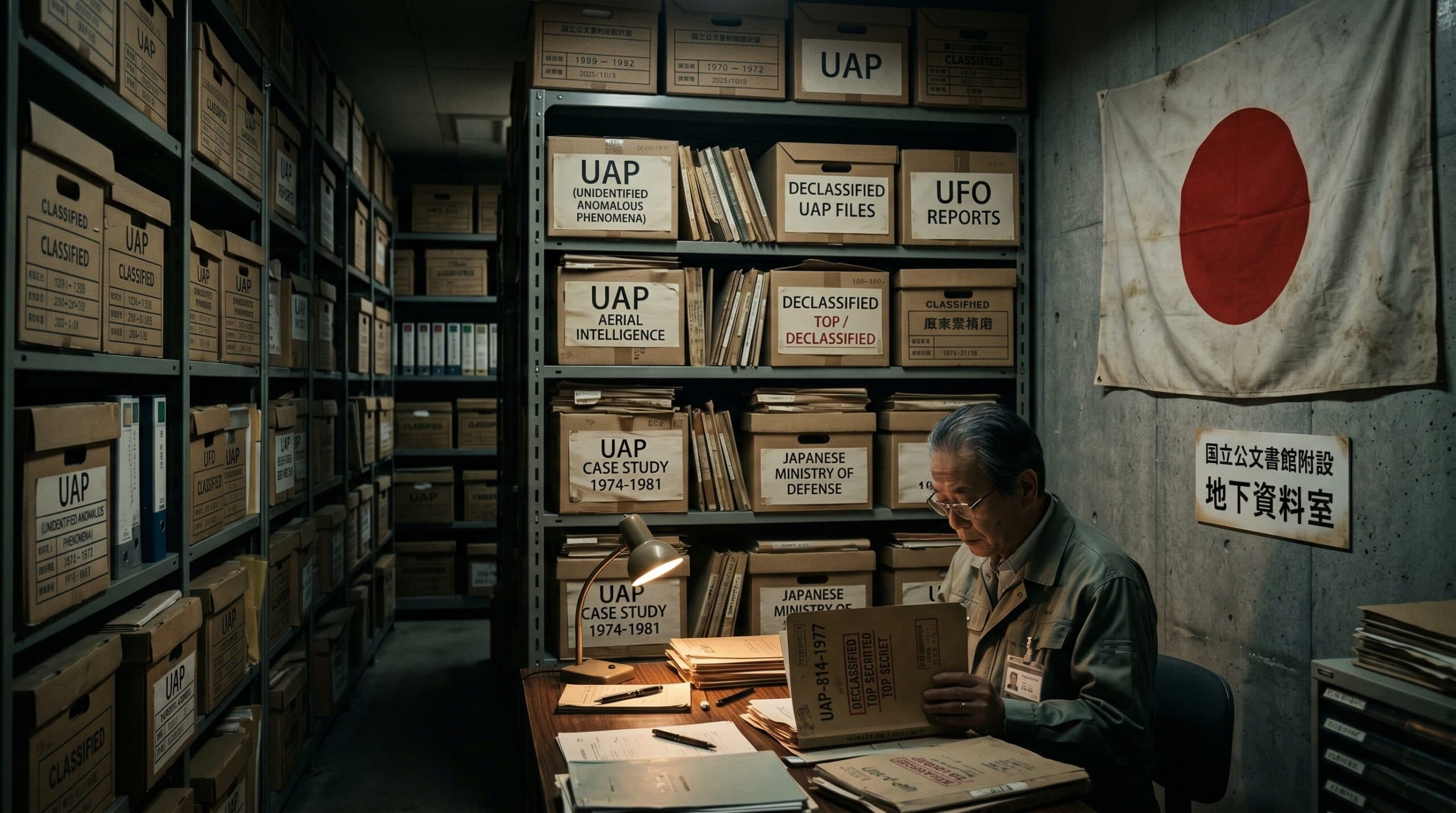
The fifth release in the Pentagon’s PURSUE disclosure program contains 41 files drawn from the Pentagon, FBI, CIA, State Department and Executive Office of the President. It includes unresolved military encounters, witness interviews, artist renderings and material stretching from the early Cold War to 2026. It is real disclosure, and more substantial than the brief, context-poor clips that once defined official UFO releases.
Advertisement
Yet it also exposes the line separating a remarkable record from testable evidence. The Pentagon has opened the door—but it has not yet opened the evidence room.
What Is Inside the Fifth UAP Release?
The most technically provocative case occurred in September 2021 over the Gulf of Oman. According to an intelligence report described by CBS News, personnel aboard an AC-130J gunship observed approximately 25 UAP instances during a live-fire exercise. The report describes objects moving in formation at lower altitudes, with estimated speeds ranging from 250 to 1,300 miles per hour.
The account says two cold orbs initially appeared about 20 feet above a water-activated flare. When the aircraft’s cannon fired, one or more objects seemed to accelerate away. The report compared their group movement to dolphins swimming in a pod. The Pentagon’s All-domain Anomaly Resolution Office, or AARO, has not resolved the encounter.
Other files widen the mystery:
A 2025 military-sensor video shows a round object crossing over a populated area in the Middle East. That case also remains unresolved.
An FBI report records a special agent’s 2026 observation of two slow-moving “black-hot” objects through a handheld infrared device in the western United States.
FBI interview forms describe repeated lights seen by an airline pilot on transatlantic routes beginning in 2023.
Multiple Pastors Say They Were Secretly Briefed to Prepare Churches for UFO Disclosure
Evangelists Perry Stone, Greg Locke, and Tony Merkel have all reported being privately briefed by US officials or military intelligence to prepare congregations for UFO disclosure. Here is what they say was discussed.
May 7, 2026 • 5 min read
Conspiracy Theories
Obama Says UFO Disclosure Won’t Happen — ‘Government Is Terrible at Keeping Secrets’
Former President Obama’s unexpected remarks on UFO disclosure and government secrecy are spreading across Reddit and UAP forums. Is it an off-hand joke or a genuine signal from a former commander-in-chief?
May 12, 2026 • 5 min read
Conspiracy Theories
Ukrainian Defense Ministry Advisor Posts Star-Shaped UAP Video — and the Close-Ups Look Nothing Like a Drone
Serhii ‘Flash’ Beskrestnov released footage of a structured, star-shaped craft over Ukraine that has UFO researchers examining every frame for proof.
May 14, 2026 • 6 min read
The same pilot recalled a silent, enormous triangular shape blocking out stars above Bagram, Afghanistan, in 2002. He estimated it at roughly 500 feet across, although he could not see a sharply defined structure.
A 1953 Navy analysis of older Montana and Utah footage reportedly described luminous objects with characteristics inconsistent with the natural phenomena then considered.
The BBC’s inventory of the release also notes footage of a dark sphere over the Pacific that appears to vanish and return. The Pentagon cautions that the display itself was recorded with a handheld device, which could explain some visible flickering.
That distinction—between what a sensor captured and what a phone captured from the sensor’s screen—is crucial.
Forty-One Files Do Not Mean Forty-One Independent Cases
A large document count creates an impression of accumulating proof. But this release demonstrates why file count and evidence count are not the same thing.
Six videos concern versions of the same Gulf of Oman encounter. Multiple clips can preserve different moments or displays, but they do not become six independent witnesses merely because the portal lists six files. Likewise, several striking images are FBI artist renderings based on testimony. They may accurately communicate what a witness described, but they are visualizations—not photographs of the alleged objects.
This is not a reason to dismiss the release. It is a reason to classify its contents correctly.
The package contains at least four different evidentiary types: native or derivative sensor imagery, recordings of display screens, written incident reports, and retrospective witness accounts. Each can be valuable. Each answers a different question. Combining them into a single dramatic montage risks making the archive look more conclusive than it is.
The same problem has followed the modern UAP debate for years. A compelling story, an official seal and a strange image can establish that a serious report exists. They do not automatically establish what produced it.
That is why the debate over what counts as usable UFO evidence remains so intense. The dispute is no longer simply between believers and skeptics. It is between what witnesses and sensors apparently observed and what outside investigators can reproduce from the public record.
What Does “Cold Orb” Actually Tell Us?
“Cold orb” may be the most haunting phrase in the release. It sounds like a physical diagnosis: a spherical object colder than the surrounding air, moving without visible propulsion.
But infrared displays do not always speak that plainly. “Black hot” and “white hot” can be display palettes. The appearance of an object depends on sensor mode, gain, contrast, atmospheric conditions, range and the temperature difference the instrument records. A dark object on a screen may indicate a lower apparent infrared intensity relative to its background; it does not, by itself, reveal the object’s material or absolute temperature.
Speed presents a similar problem. To calculate a true velocity from angular movement across a display, analysts need reliable range, line-of-sight geometry, aircraft position, aircraft motion, sensor orientation and time data. If the distance is assumed rather than measured, a modest change in that assumption can radically alter the speed estimate.
The public report’s 250-to-1,300-mph range is therefore significant because trained personnel recorded it, not because an outside viewer can verify it from the released phone footage. Scientific American’s account confirms that the public clips show a cellular recording of the AC-130J’s infrared display. The official PURSUE UAP records portal preserves the government’s presentation of the case, but that public artifact is still one generation removed from the native feed before compression, web processing and replay are even considered.
The missing layer is where the case may live or die: native sensor files, embedded timestamps, calibration state, aircraft telemetry, slant range, weather data, track history and the analysts’ calculation method.
Without those, the most extraordinary descriptors cannot be independently tested. With them, the encounter could become one of the most valuable public UAP datasets ever released.
“Unresolved” Is a Status, Not an Origin
AARO’s inability to resolve the Gulf of Oman case matters. It means the Pentagon’s designated anomaly office did not publicly reduce the event to a balloon, bird, aircraft, satellite, sensor artifact or another identified cause.
Advertisement
It does not mean AARO concluded that the objects used exotic technology, came from a nonhuman intelligence or violated known physics.
“Unresolved” can describe two very different situations. One is an incident supported by excellent data that resists conventional explanation. The other is an incident for which the decisive data never existed, was not retained, remains classified or cannot be released. Both end with the same label, but they carry radically different implications.
Former AARO director Sean Kirkpatrick warned after the first release that documents without analysis or context could fuel speculation rather than settle cases. His criticism should not erase the value of disclosure. It identifies the standard the next phase must meet: release not just the mystery, but the reasoning used to evaluate it.
The Pentagon portal is not the only federal UAP collection taking shape.
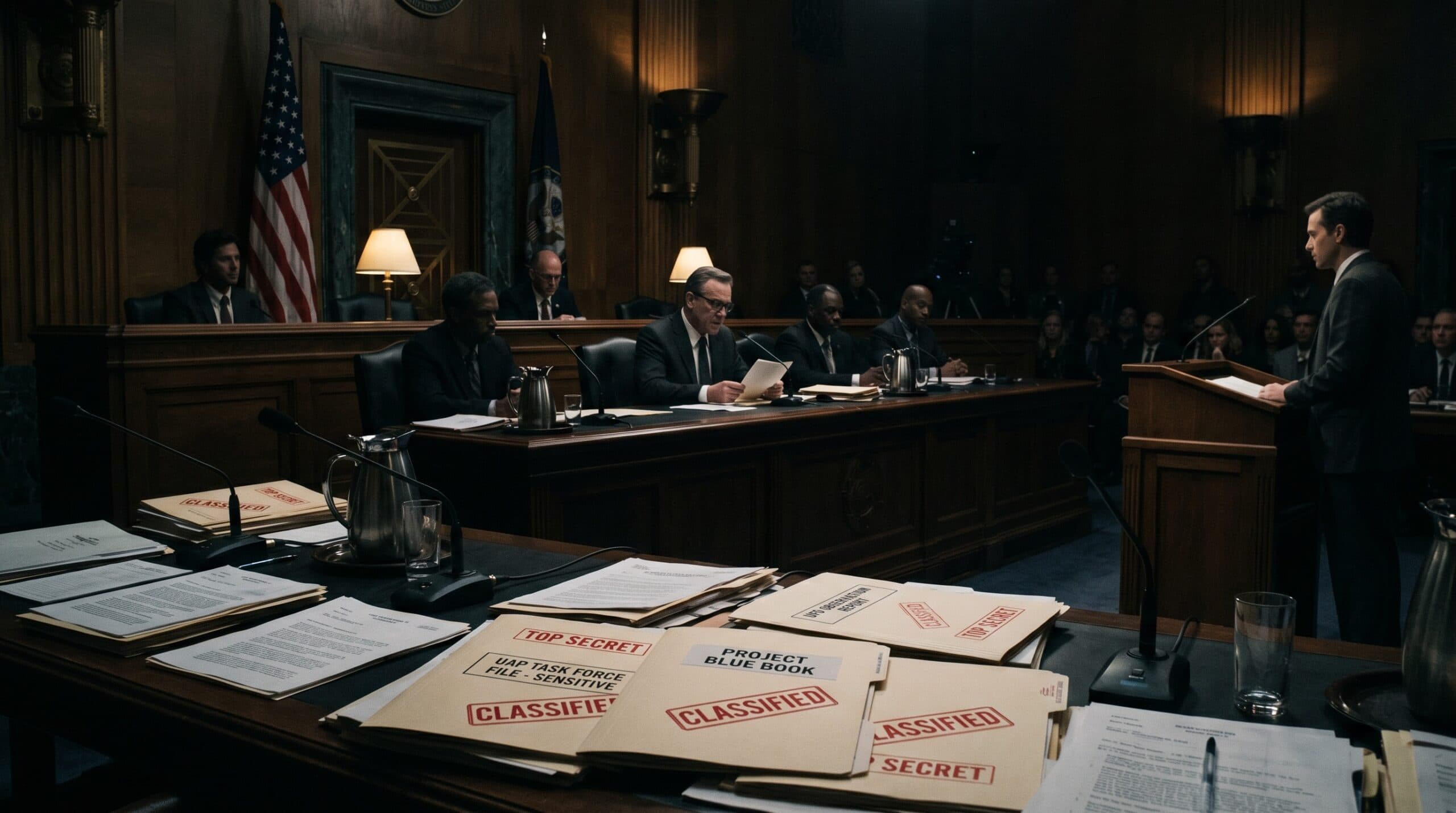
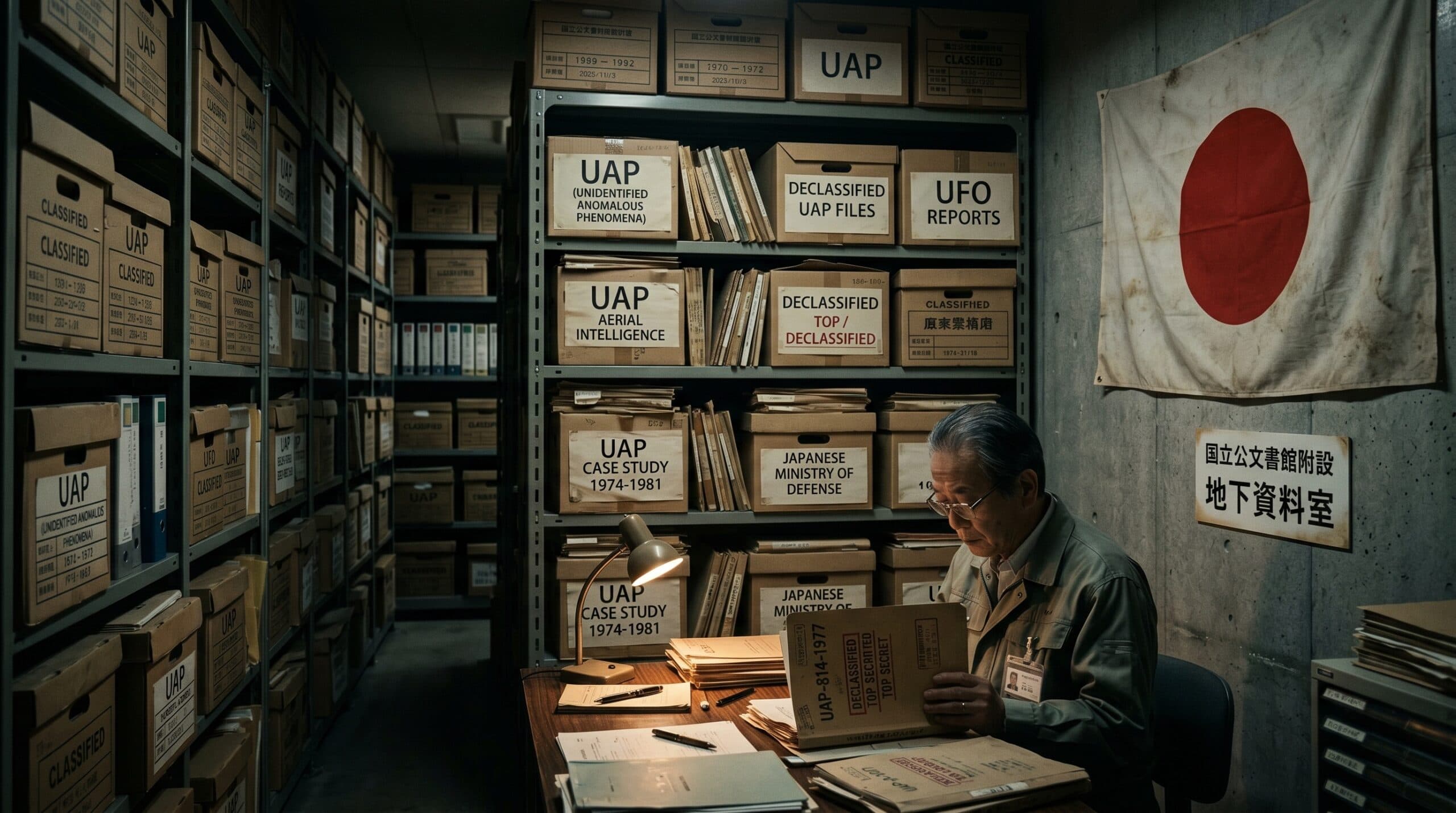
The National Archives has established Record Group 615, the Unidentified Anomalous Phenomena Records Collection, under the 2024 National Defense Authorization Act. NARA says it will add records on a rolling basis as federal agencies transfer them.
That creates two parallel disclosure systems.
The PURSUE portal is a curated public presentation. It is designed to make selected files, videos and images immediately accessible. Record Group 615 is an archival structure created by law, potentially preserving broader provenance, agency transfers and catalog relationships over time.
The comparison between those systems could become more important than any single orb video. Do both collections eventually contain the same incidents? Does one preserve fuller metadata? Are source files transferred to NARA while compressed derivatives appear on the Pentagon site? Do catalog gaps reveal which agencies have not yet completed their transfers?
Europe’s own quiet struggle to build a UAP reporting structure shows why this matters. As recent European Commission documents revealed, institutions can acknowledge reports while still lacking a transparent investigative pathway. The United States now has a pathway—but its usefulness will depend on whether the records are complete enough to audit.
What Real UAP Transparency Should Release Next
The Pentagon says more files are coming on a rolling basis. Volume alone should not be the measure of progress. A smaller release with complete technical context could do more for the truth than hundreds of disconnected clips.
For the Gulf of Oman case, meaningful transparency would include:
the original sensor files rather than only phone recordings of displays;
synchronized aircraft telemetry and sensor orientation;
known or estimated range, with the method used to derive it;
calibration, palette and gain settings;
precise timestamps and weather conditions;
a chain-of-custody history showing how each file was preserved and processed;
the analytic worksheets behind the reported speed and size estimates;
an explanation of which data remain classified and why.
NASA’s UAP study emphasized a data-first approach because unidentified events cannot become science without standardized collection. The Pentagon’s release has now shown the public what that principle means in practice. The mystery is visible. The measurements that could narrow it remain mostly out of reach.
The Disclosure Is Real. The Proof Is Still Incomplete
It would be easy to flatten this story into one of two headlines: “The Pentagon proved UFOs are extraordinary,” or “The Pentagon released blurry videos that prove nothing.” Neither captures what happened.
The fifth PURSUE release is meaningful because federal agencies have published full case material, witness records and military imagery on a scale that would have seemed unlikely only a few years ago. It confirms that trained personnel reported unusual objects, that some cases survived official review without resolution, and that the government possesses a far richer UAP archive than short public clips once suggested.
It also confirms that disclosure and verification are not the same event. The cold orbs, the silent triangle and the disappearing sphere may point toward unknown technology, misunderstood sensor behavior, classified activity, unusual natural phenomena—or different explanations in different cases. The released material does not yet let independent researchers choose confidently among them.
The next file drop will reveal what kind of disclosure process this is becoming. Will the Pentagon give the public more spectacular images, or the raw data needed to test them?
Which would you rather see next: another unexplained video, or the complete sensor package that could finally tell us what one of these objects was?
Art Grindstone is the hard-nosed storyteller behind Unexplained.co, a veteran investigator whose life’s work sits at the crossroads of the paranormal, fringe science, and the shadows most people try not to look into. With decades spent chasing impossible stories — black-budget psychic programs, vanished Cold War experiments, desert rituals that sparked UFO waves, and the strange phenomena buried in America’s forgotten backroads — Art brings a rare combination of skepticism, awe, and journalistic precision. He’s not here to debunk. He’s not here to blindly believe. He follows the evidence wherever it leads — even when it leads someplace deeply uncomfortable. Known for his immersive, cinematic style and his ability to turn obscure research into gripping narrative, Art has built a devoted following across podcasts, long-form features, documentaries, and serialized investigations. His interviews are direct. His analysis is unflinching. His voice has become a staple in the modern paranormal renaissance — the guy people turn to when a story is too strange, too complex, or too dangerous for anyone else to touch. Off-mic, Art works with a distributed network of researchers, archivists, and field operatives who help surface the stories mainstream media ignores. On-mic, he transforms their findings into meticulous, high-impact reporting that refuses to insult the intelligence of true believers. His philosophy is simple: Take the phenomenon seriously. Treat the audience with respect. Tell the story as if the world depends on it — because sometimes it does. When Art Grindstone digs into a case, he isn’t just chasing a mystery. He’s tracing the fault lines of reality itself.