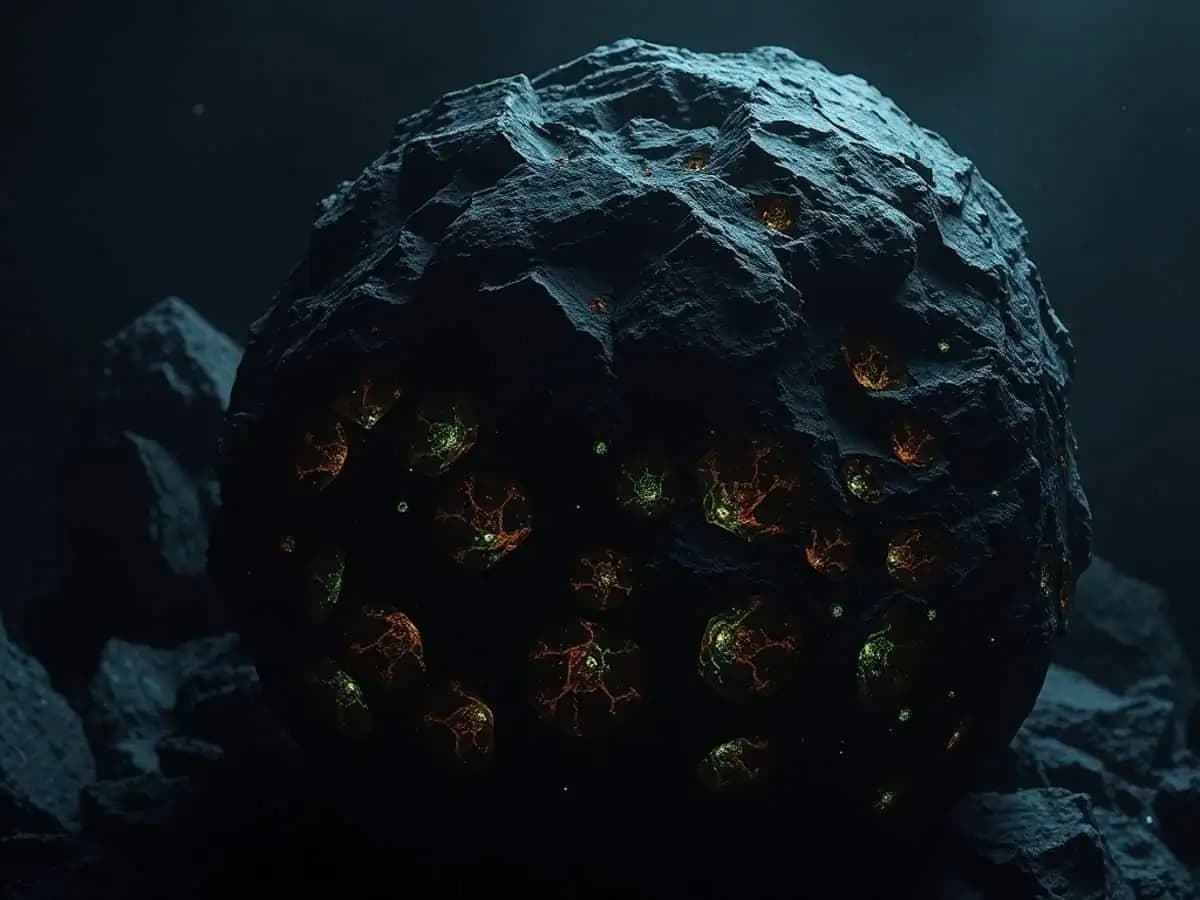

Scientists have made a groundbreaking discovery regarding life on a piece of rock returned from the asteroid Ryugu. However, the twist is that this life appears to originate from Earth, raising questions about contamination and the true nature of extraterrestrial life.
Key Takeaways
- Discovery of microorganisms on Ryugu samples.
- Initial excitement mirrors past claims of extraterrestrial life.
- Importance of contamination control in space sample analysis.
The Discovery of Life on Ryugu
In 2020, the Japanese space agency JAXA returned samples from the near-Earth asteroid Ryugu. These samples were collected during the Hayabusa2 mission and were sealed in gas-tight containers to prevent contamination. Upon opening these containers in a nitrogen-filled clean room, scientists were eager to analyze the samples without the interference of Earth-based microbes.
Historical Context: The Martian Meteorite
This discovery echoes a historical event involving the Martian meteorite ALH84001, found in Antarctica in 1984. Initially thought to contain evidence of extraterrestrial life, the excitement surrounding it quickly waned as scientists proposed alternative explanations for the structures found within the meteorite. The debate over its findings continues to this day, highlighting the challenges in proving extraterrestrial life.
Advertisement
Rigorous Sample Analysis
The Ryugu samples underwent meticulous examination. Researchers utilized scanning electron microscopy to identify organic matter, which are carbon-based compounds essential for life. They found intriguing rods and filaments of organic matter, primarily on the surface of the meteorite.
- Sample Preparation: The samples were polished before analysis, which led to the discovery of these structures.
- Initial Findings: After polishing, the number of observed rods and filaments increased significantly over time.
- Contamination Concerns: Scientists compared these findings to common lab fibers to rule out contamination.
The Implications of Panspermia
If the findings were confirmed as extraterrestrial, it would lend credibility to the theory of panspermia—the idea that life can spread across the universe via asteroids and comets. This would revolutionize our understanding of life’s origins and distribution, suggesting that life could exist beyond Earth.