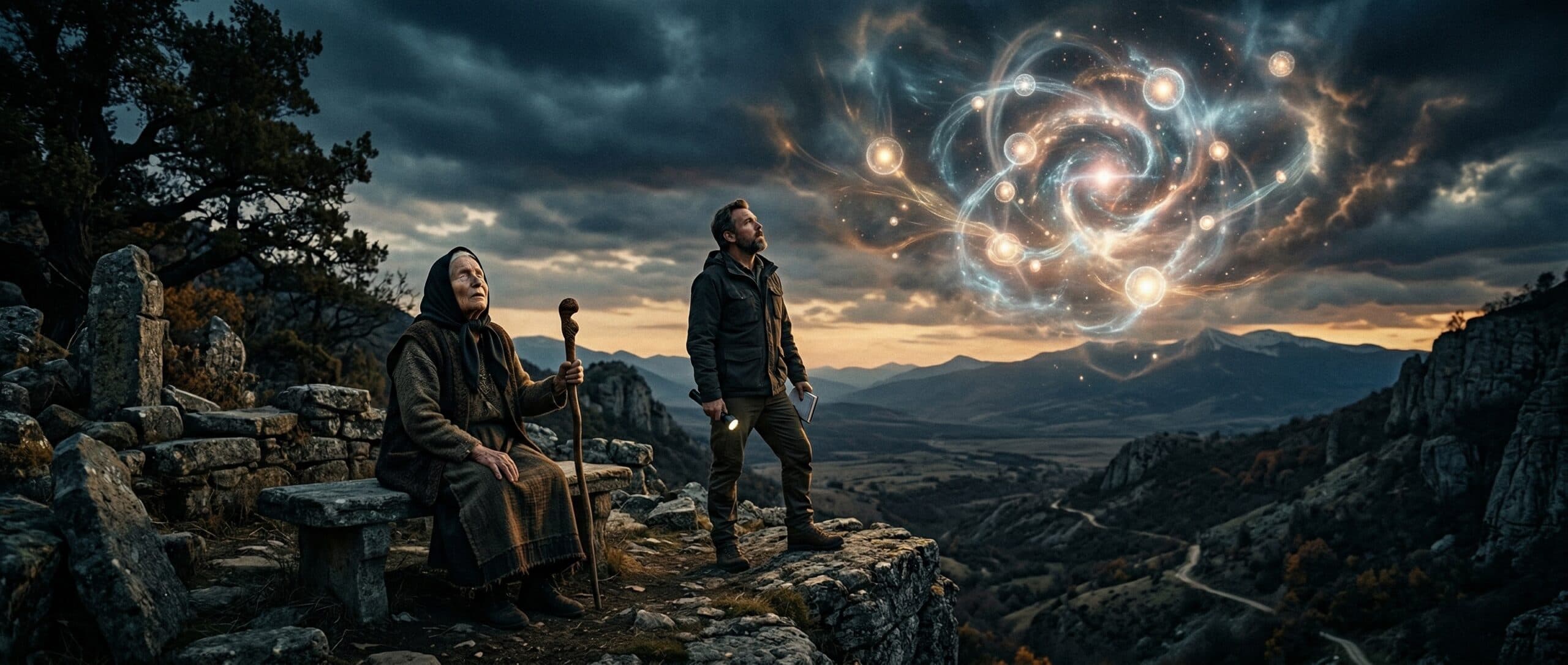
The Baba Vanga 2026 prophecy and the Chris Bledsoe prophecy timeline are beginning to merge in the minds of prophecy watchers, UFO believers, and spiritually conspiratorial audiences for one simple reason: both are increasingly being interpreted as signals that humanity is approaching a visible turning point. The details are not identical, the source traditions are completely different, and there is no evidence that one directly validates the other. But in the online prophecy ecosystem, overlap matters more than authorship. If two separate visionary traditions seem to point toward the same decade, many audiences treat that as confirmation.
This is what makes the comparison worth serious attention. Baba Vanga remains one of the most circulated prophetic figures in modern popular culture, with annual lists of alleged predictions repeatedly resurfacing in tabloids, social feeds, and apocalypse forums. Chris Bledsoe, by contrast, sits at the intersection of UFO contact narratives, religious symbolism, and modern American disclosure culture. One comes from the mythology of the Eastern European seer. The other emerges from a contactee-style experience wrapped in visions, celestial signs, and claims of a coming feminine divine presence. Yet by 2026, they are being drawn into the same speculative orbit.
Here is the clearest answer: there is no verified prophetic mechanism linking Baba Vanga and Chris Bledsoe. The connection is interpretive, not evidentiary. But it is culturally significant because it reveals how modern prophecy culture works. Separate symbolic systems get braided together into one meta-narrative about upheaval, revelation, and historical transition.
Who Was Baba Vanga, and Why Does 2026 Matter in Her Mythology?
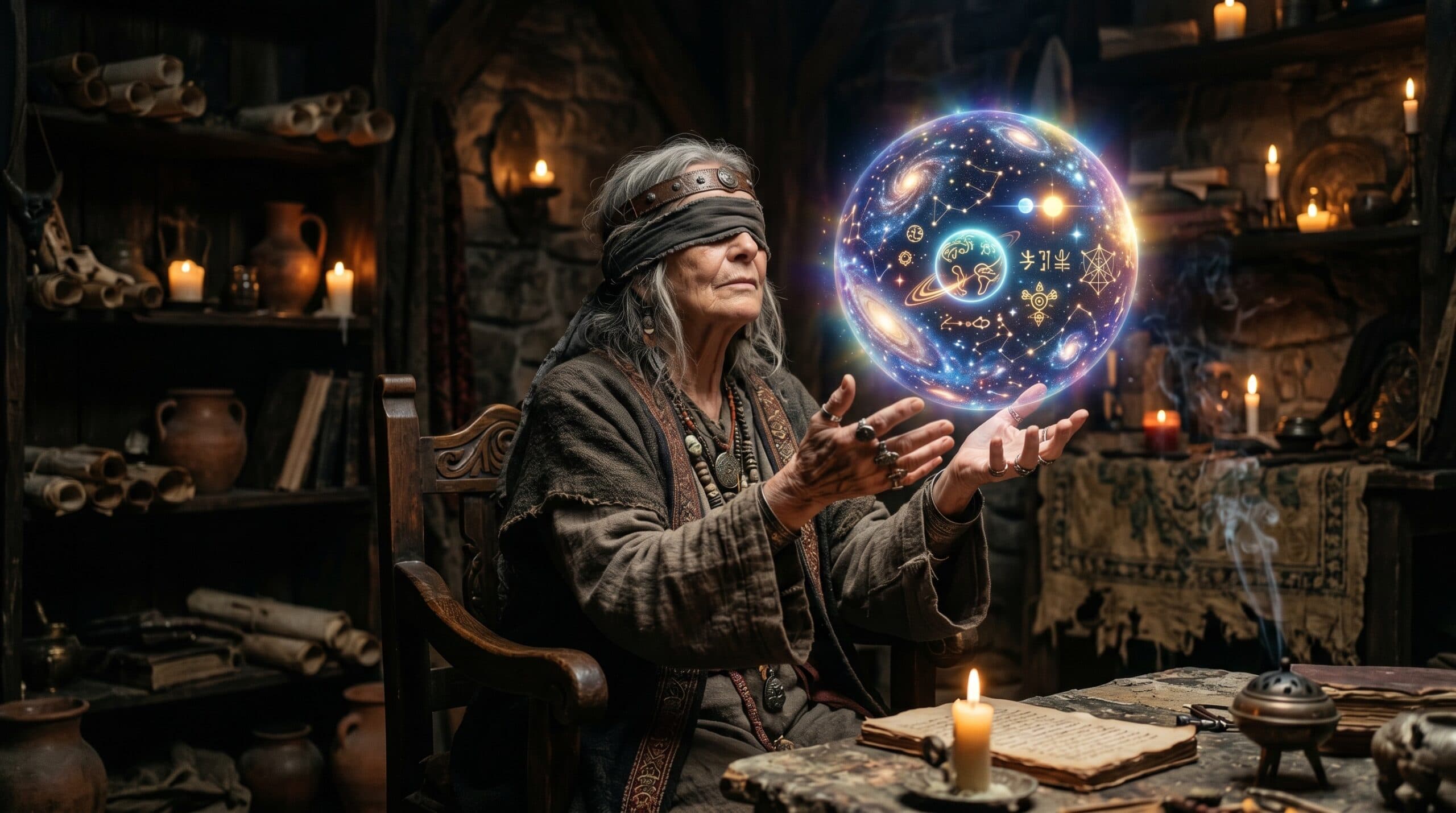
Baba Vanga, the blind Bulgarian mystic often compared to Nostradamus in popular media, has become one of the internet’s most reusable prophetic figures. Her reputation rests on a combination of folklore, retrospective attribution, tabloid repetition, and the strange durability of lists claiming she predicted major events far into the future. Whether those lists are authentic, distorted, or partly fabricated is a constant subject of debate.
That uncertainty has not weakened her influence. If anything, it has helped. A prophetic tradition with fuzzy sourcing is easier to repurpose than one tied to a rigid text.
The 2026 material attributed to Baba Vanga varies depending on the source, but it is often folded into a larger timeline of coming global instability, major shifts in human civilization, and episodes of fear, conflict, or transformation. Some retellings emphasize disaster. Others emphasize revelation or epochal change. As with many prophecy cycles, the exact wording is less important than the emotional impression it creates: something big is supposed to be approaching.
That impression is why Baba Vanga keeps getting pulled back into annual prophecy coverage by outlets that know her name still generates attention. A reader does not have to fully believe the prophecy to feel compelled by it.
For broader context on how prophecy stories resurface and mutate, mainstream explainers from sources like Britannica and recurring prophecy-cycle coverage in outlets such as Newsweek help show how these mythic figures remain active in public discourse even when their documented record is murky.
What Is the Chris Bledsoe Prophecy Timeline?
Chris Bledsoe’s prophetic significance comes from a very different place. He is not primarily discussed as a classic end-times seer. Instead, his reputation comes from a long-running UFO and contact narrative in which spiritual encounters, glowing orbs, religious symbolism, and apocalyptic or transformational expectations all begin to blur together.
Bledsoe has described experiences involving a feminine presence often referred to by followers as “The Lady,” and many who study his case believe his visions point toward a major turning point in the mid-2020s. In online communities, that timeline has become especially associated with 2026 and 2027, with some readers interpreting his story as a prophecy of disclosure, spiritual awakening, celestial signs, or a civilizational threshold event.
What makes Bledsoe unusual is that his case does not fit neatly inside one category. It is not purely religious, not purely ufological, and not purely apocalyptic. It occupies a hybrid zone where Marian symbolism, UFO experiencer language, divine feminine themes, and disclosure-era anxiety all coexist.
This hybrid quality is a major reason his timeline keeps being pulled into wider prophecy discourse. He offers a bridge figure between communities that normally would not fully overlap.
We have already explored this more deeply in our Chris Bledsoe prophecy investigation, which lays out why his timeline has become so magnetic for both spiritual audiences and UFO-followers looking for a date-based turning point.
Why People Are Linking Baba Vanga and Chris Bledsoe
The most important thing to understand is that prophecy culture is comparative by nature. Once people believe one visionary tradition might be pointing toward upheaval, they begin scanning other traditions for alignment. If another seer, contactee, mystic, or fringe religious figure appears to point toward the same era, the overlap gets treated as corroboration.
That is exactly what is happening here.
Believers are linking Baba Vanga and Chris Bledsoe because both can be interpreted as pointing toward:
- a near-future turning point
- global instability or civilizational stress
- spiritual or cosmic significance
- a change in what humanity understands about itself
Notice what is missing from that list: precision. The convergence is not based on exact matching phrases or provable shared origin. It is based on thematic resonance.
In prophecy discourse, resonance is often enough.
The Role of 2026 in Modern Prophecy Culture
The year 2026 has become a strangely crowded symbolic point across conspiracy spirituality, disclosure speculation, and apocalypse-adjacent online culture. That does not mean something will happen in that year. It means the year has accumulated enough expectation to function as a narrative magnet.
Once that happens, many unrelated predictions begin getting pulled toward it. Old prophecies are reinterpreted. New theories are timed to it. Social-media creators build countdown cultures around it. A year becomes less a calendar marker than a stage set.
That is one reason the Baba Vanga and Bledsoe timelines now get discussed together. The internet does not just preserve prophecies. It synchronizes them.
This same pattern appeared in our investigation into the March 22, 2026 rapture panic and in our featured article on World War 3, Iran, and prophecy convergence. In both cases, multiple symbolic systems began collapsing into one looming future timeline, not because they were truly the same, but because audiences wanted a coherent map.
Where the Narratives Overlap — and Where They Don’t
The strongest overlap between Baba Vanga and Chris Bledsoe is emotional rather than textual. Both can be read as warning that humanity is approaching a threshold. Both are interpreted through language of disruption, transformation, and revelation. Both attract followers who feel mainstream institutions are missing the deeper significance of current events.
But the differences matter.
Baba Vanga’s mythology is built around broad future prediction, retrospective attribution, and the authority of the mysterious seer. Chris Bledsoe’s authority comes from personal encounter, testimony, spiritual imagery, and a disclosure-era audience already primed for the fusion of UFOs and religion.
That means the connection between them is real only at the level of interpretive culture. One does not prove the other. They simply become more powerful when placed side by side.
What Skeptics Would Say About the Connection
Skeptics would argue that this is a classic case of pattern stitching. When prophecies are vague, symbolic, and open to reinterpretation, people naturally find overlap after the fact or build convergence around broad themes that could fit almost any anxious era.
They would also point out that Baba Vanga prediction lists are notoriously unstable, with many claims about her future prophecies circulating without strong documentation. Likewise, Bledsoe’s prophetic significance depends heavily on follower interpretation rather than a single universally agreed prophetic text.
That skeptical critique is important because it reminds us that narrative convergence is not the same as predictive validation.
At the same time, skepticism alone does not explain why these stories matter so much to their audiences. For many believers, the point is not statistical precision. The point is symbolic recognition. They feel the world is entering a strange phase, and these figures help them name it.
Why This Convergence Matters in the Disclosure Era
The Baba Vanga/Bledsoe overlap matters because it reveals how prophecy has changed in the age of disclosure, algorithmic media, and conspiratorial spirituality. Older prophecy culture often revolved around religion, war, and end-times reading. Newer prophecy culture increasingly mixes those with UFOs, contact experiences, divine feminine symbolism, hidden knowledge, and the suspicion that reality itself is becoming less stable.
This is where Bledsoe becomes especially important. He is one of the few modern figures whose narrative can connect UFO discourse to religious expectation without fully belonging to either. That makes him an ideal convergence point for audiences who want to synthesize Marian visions, prophecy lists, disclosure rumors, and cosmic awakening narratives into one framework.
And once that synthesis starts, Baba Vanga naturally gets pulled in too, because her name already carries apocalyptic authority in mass culture.
For a related example of how spiritual and conspiratorial language are increasingly merging, see our analysis of starseeds and conspiratorial spirituality, which shows how metaphysical belief systems now frequently blend with world-event anxiety and prophetic expectation.
The Most Plausible Interpretation
The most plausible interpretation is not that Baba Vanga and Chris Bledsoe independently confirmed the same literal 2026 event. It is that audiences are constructing a meta-prophecy out of fragments that feel symbolically aligned. That process says less about supernatural verification and more about the psychology of expectation.
When times feel unstable, people search for pattern. When one prophecy tradition is not enough, they stack several together. When dates begin to overlap, those dates harden into cultural countdowns.
That is what seems to be happening here.
The convergence is real as a social phenomenon. Whether it is real as prophecy is another question entirely.
Why the Story Still Fascinates People
The reason this story has traction is not hard to understand. It offers a complete package for modern mystery audiences: ancient-seer mythology, contemporary contact narrative, near-future date fixation, spiritual symbolism, disclosure energy, and the intoxicating possibility that seemingly separate signs are actually pointing toward one hidden design.
That is exactly the kind of narrative the internet amplifies best. It is expansive, interpretable, and emotionally high-voltage.
Even readers who remain skeptical often find themselves drawn in because the story is not really just asking, “Did these prophecies match?” It is asking a bigger and more personal question: “Are we living through the beginning of something that older symbolic systems tried to warn us about?”
That is a much harder question to dismiss casually, even when the evidence remains ambiguous.
Final Assessment
The Baba Vanga 2026 prophecy and the Chris Bledsoe prophecy timeline do not form a proven prophetic pair. There is no solid documented chain linking the two, no verified shared mechanism, and no reason to treat overlap alone as evidence that a specific event is coming.
But the convergence still matters. It tells us how prophecy belief evolves in the modern age. Instead of following one source tradition at a time, audiences now assemble sprawling symbolic frameworks from mystics, UFO experiencers, spiritual influencers, apocalyptic rumors, and viral media fragments. The result is not one prophecy. It is a prophecy ecosystem.
And right now, 2026 sits near the center of it.
Frequently Asked Questions
What is the Baba Vanga 2026 prophecy?
The phrase refers to modern retellings of future predictions attributed to Baba Vanga, often framed around a major turning point, instability, or transformative events associated with the mid-2020s. The exact wording varies widely depending on the source.
What is the Chris Bledsoe prophecy timeline?
It refers to the interpretation of Chris Bledsoe’s visions, encounters, and symbolic experiences as pointing toward a major spiritual or disclosure-related shift around 2026 or 2027.
Are Baba Vanga and Chris Bledsoe predicting the same thing?
Not in any direct, documented sense. The connection is interpretive. Believers link them because both can be read as pointing toward a near-future period of upheaval or transformation.
Why are prophecy audiences combining these narratives now?
Because modern prophecy culture thrives on convergence. If different seers or experiencers seem to point toward the same era, audiences often treat that overlap as a stronger sign.
What would skeptics say about the 2026 overlap?
Skeptics would say this is pattern stitching: vague or symbolic predictions are being grouped together after the fact because people want a coherent future narrative.
Why does this story matter even if the prophecies are not literally true?
It matters because it shows how modern audiences use prophecy, UFO belief, spiritual symbolism, and conspiracy culture to make sense of uncertainty and historical anxiety.
Related Articles:
- Chris Bledsoe Prophecy 2026 Investigation: Predictions, April Timeline, and the Conspiracy Theory Case File
- World War 3, Iran, and Prophecy: The Investigation Into Why Apocalyptic Theories Keep Converging Here
- Rapture 2026 / March 22 Social Media Panic
- Starseeds and the Rise of Conspiratorial Spirituality
This article was created using Media Blaster – Your content production specialist. Visit www.mediablaster.io for more information.