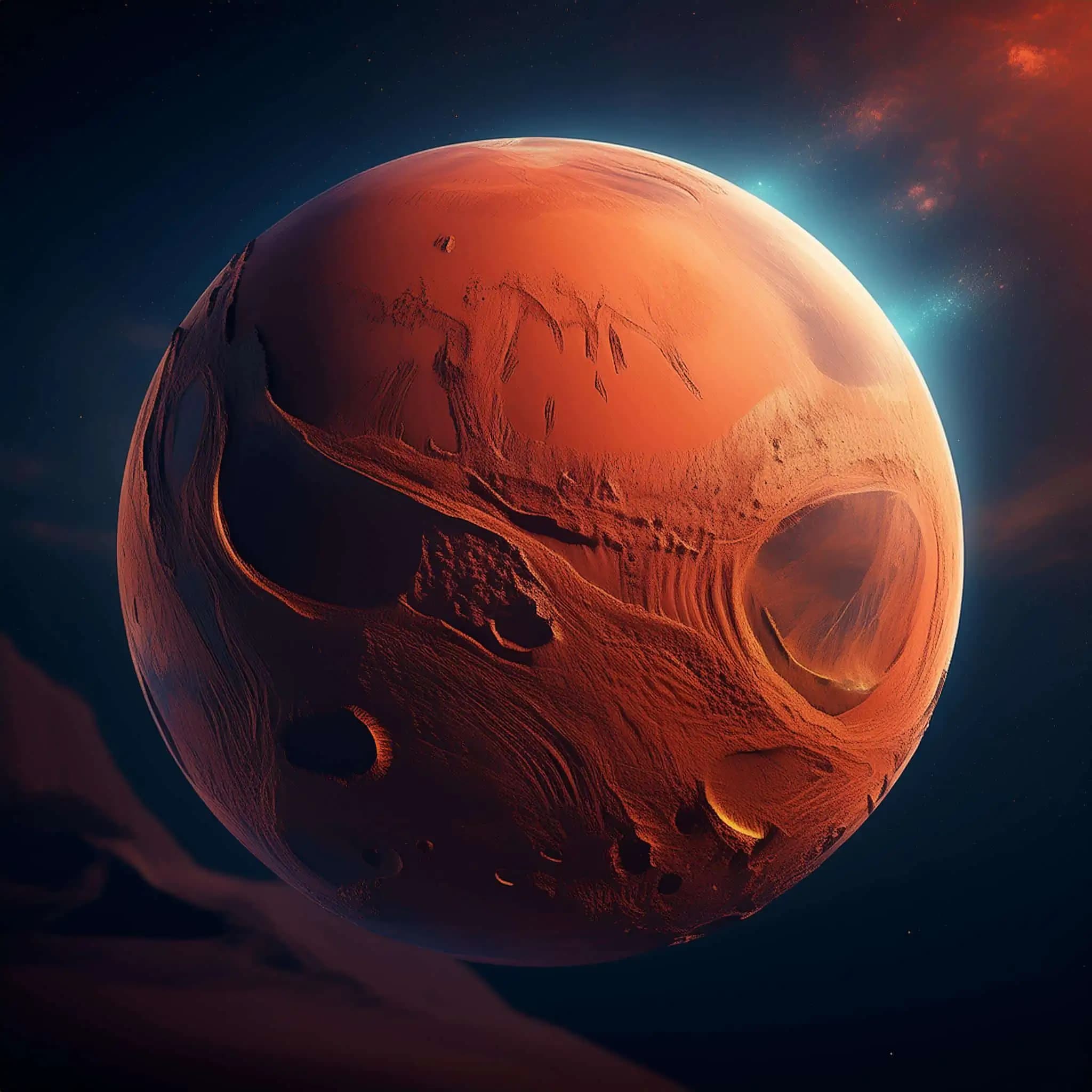

When it comes to the search for life on Mars, we might be looking in the wrong place. While Mars has long been considered a prime candidate for hosting life, recent insights suggest that the most promising locations may lie beneath its surface, where conditions could still be favorable for life to exist.
Key Takeaways
- Mars had conditions similar to early Earth that could have supported life.
- Evidence of methane in Mars’ atmosphere raises questions about potential life.
- Jezero Crater is a key site for exploration, but other locations may be more promising.
- The Deep Biosphere on Earth provides insights into potential life on Mars.
- Volcanic springs and underground environments could harbor Martian life today.
The Early Conditions of Mars
In the first billion years of its existence, Mars was remarkably similar to early Earth. It had a thick atmosphere, a magnetic field, and bodies of liquid water, all of which are essential for life as we know it. These conditions allowed for the possibility of life emerging on its surface before the planet underwent drastic changes that rendered it inhospitable.
The Search for Evidence
NASA’s rovers, particularly Perseverance and Curiosity, are investigating sites like Jezero Crater, which once held a large body of water. The hope is to find signs of ancient life preserved in sediment. As of April 2024, Perseverance has collected 21 rock core samples, drilling just a few centimeters into the Martian surface. The presence of methane detected by Curiosity, which appears at night and is absent during the day, adds to the intrigue, as methane on Earth is primarily produced by living organisms.
Advertisement
Why Mars Might Have Hosted Life
Mars had several key factors that could have supported life:
- Water: Essential for all known life forms.
- Chemical Building Blocks: Volcanic activity and thermal vents could have provided the necessary minerals and chemicals.
- Selective Pressure: A cyclical environment that alternated between wet and dry conditions could have fostered the evolution of early life forms.
These elements suggest that Mars was once habitable, but after 1-2 billion years, the planet’s water dried up, and its atmosphere was stripped away, leading to the barren landscape we see today.
Advertisement