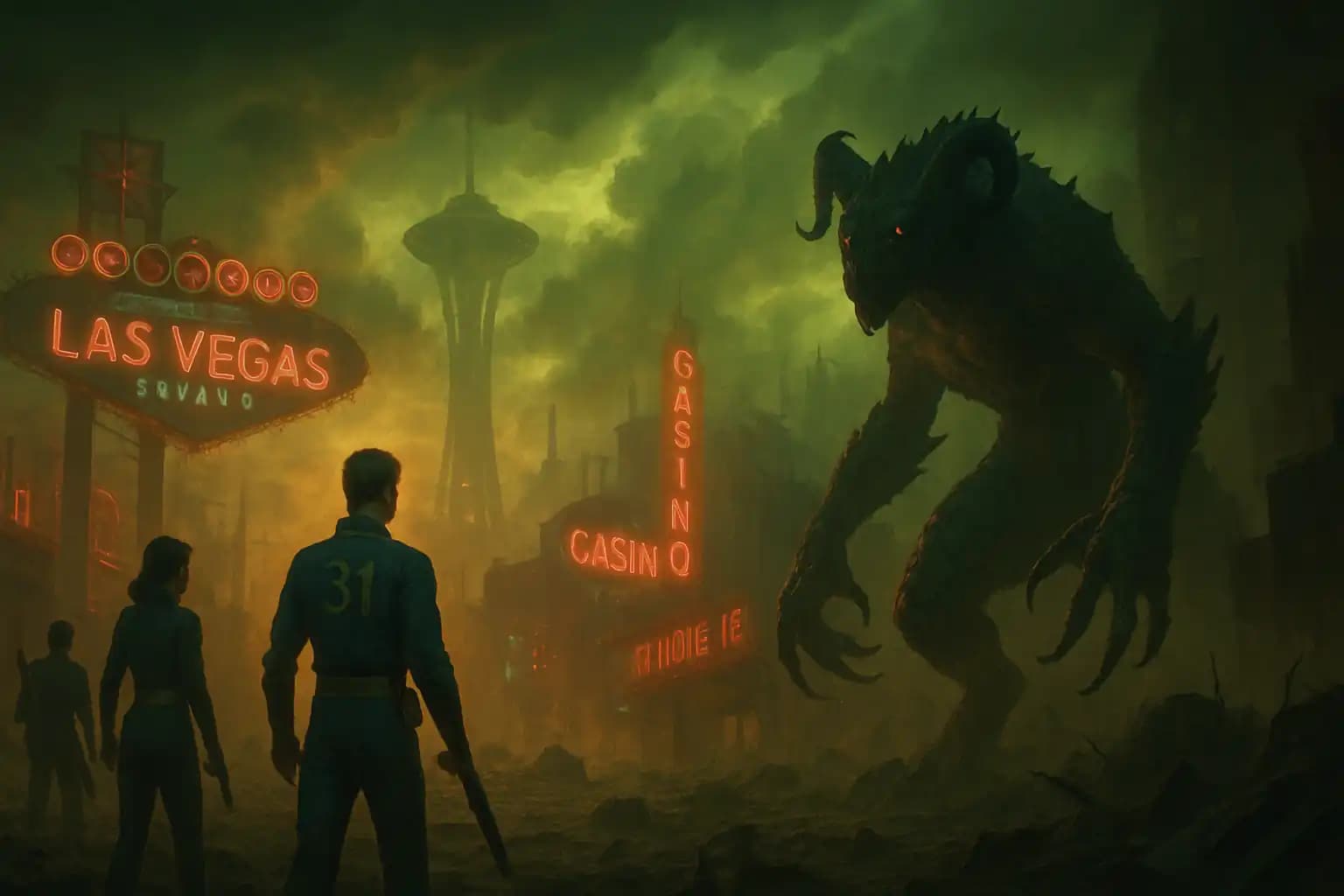

Amazon Prime’s Fallout adaptation returns to electrify our screens. The Season Two teaser trailer promises a thrilling nuclear apocalypse. New episodes arrive December 17, 2025, plunging viewers back into the despair—and dark humor—of the Wasteland. As Prime Video enjoys a surge in post-apocalyptic content, Fallout aims to bridge cult gaming nostalgia with premium television, ensuring no vault dweller catches a breath.
Season Two thrusts Lucy, Cooper the Ghoul, and Maximus into the dazzling, irradiated chaos of New Vegas. This nod excites longtime gamers while adding a fresh layer of disorder. It’s clear from the first-look preview and the official Amazon press release that the creative team is more than producing television—they are constructing a radioactive world.
From Vaults to Vegas: Fallout Season Two’s Fallout Universe Expansion
After the critical and commercial success of Season One—celebrated in mainstream media and analyzed in genre outlets—the stakes for Fallout rise even higher. Season Two, confirmed by Wikipedia’s entry, shows Lucy departing Vault 33’s distorted security for New Vegas. Lore and world-building dominate—the series dives into the fallout of the Vault-Tec corporation and the fracturing Brotherhood of Steel hierarchy. It explores the ethics of mutants and scavengers. Amidst the pandemic-fueled streaming boom, Fallout stands out, transforming existential dread into gripping entertainment, contrasting sharply with the retrofuturism of its source material.
Advertisement
This style of adaptation transcends fan service. It engages in cross-medium world-building, akin to accounts of societal breakdown and wartime scenario simulations. As each new settlement or nuclear landscape appears, Fallout prompts questions about society’s collapse overnight—a theme that feels all too relevant today.
Characters, Conspiracies, and Moral Fallout
Walton Goggins, Ella Purnell, and Aaron Moten return, joined by new characters, including a terrifying Deathclaw, if the trailer holds true. However, the series’ bite extends beyond monsters to fractured morality and psychological horror influenced by vault life. Hidden within the spectacle are themes of control, secrecy, and survivalism, echoing contemporary unease reflected in and .