The Unexplained Company Logo
Sign In
Hellfire Caves: What the Ghost Stories Leave Out

Hellfire Caves: What the Ghost Stories Leave Out

Art Grindstone

January 27, 2026
Cataclysm Survival Briefing — Access Briefing Now

Key Takeaways

  • The Paranormal Files team ventured into the Hellfire Caves to film an attempt at opening a portal, issuing stark on-camera warnings about possible dark repercussions for viewers.
  • Historical records confirm the caves as a man-made network of chalk and flint tunnels excavated around 1748–1752 under Sir Francis Dashwood, featuring chambers like the Banqueting Hall and Judgment’s Pass.
  • Local folklore highlights the Suki apparition and the Paul Whitehead legend involving a stolen heart and the phrase ‘Who has my heart?’, but primary archival evidence for violent rites, the exact heart theft details, or Suki’s death remains incomplete or inconsistent.

A Candlelit Descent into Chalk and Secrets

The clock strikes midnight in Buckinghamshire, and the air turns damp and cool as you step into the Hellfire Caves beneath West Wycombe Hill. Chalk dust hangs in the stillness, the scent of earth and flint sharp against narrow stairways that twist downward. This tourist site, a historic landscape, stretches about a quarter-mile through tunnels, plunging up to 300 feet below the hill’s church-capped summit. The Banqueting Hall looms large, its scale echoing forgotten gatherings.

In the Paranormal Files video, the team sets a tense mood with dim lights flickering off white walls. Guides spin tales of the past, while the crew issues personal warnings about their portal attempt. Shadows play tricks, and every footfall stirs the heavy air. You’re there, feeling the weight of history pressing in, without crossing into outright belief.

What Witnesses and Guides Describe

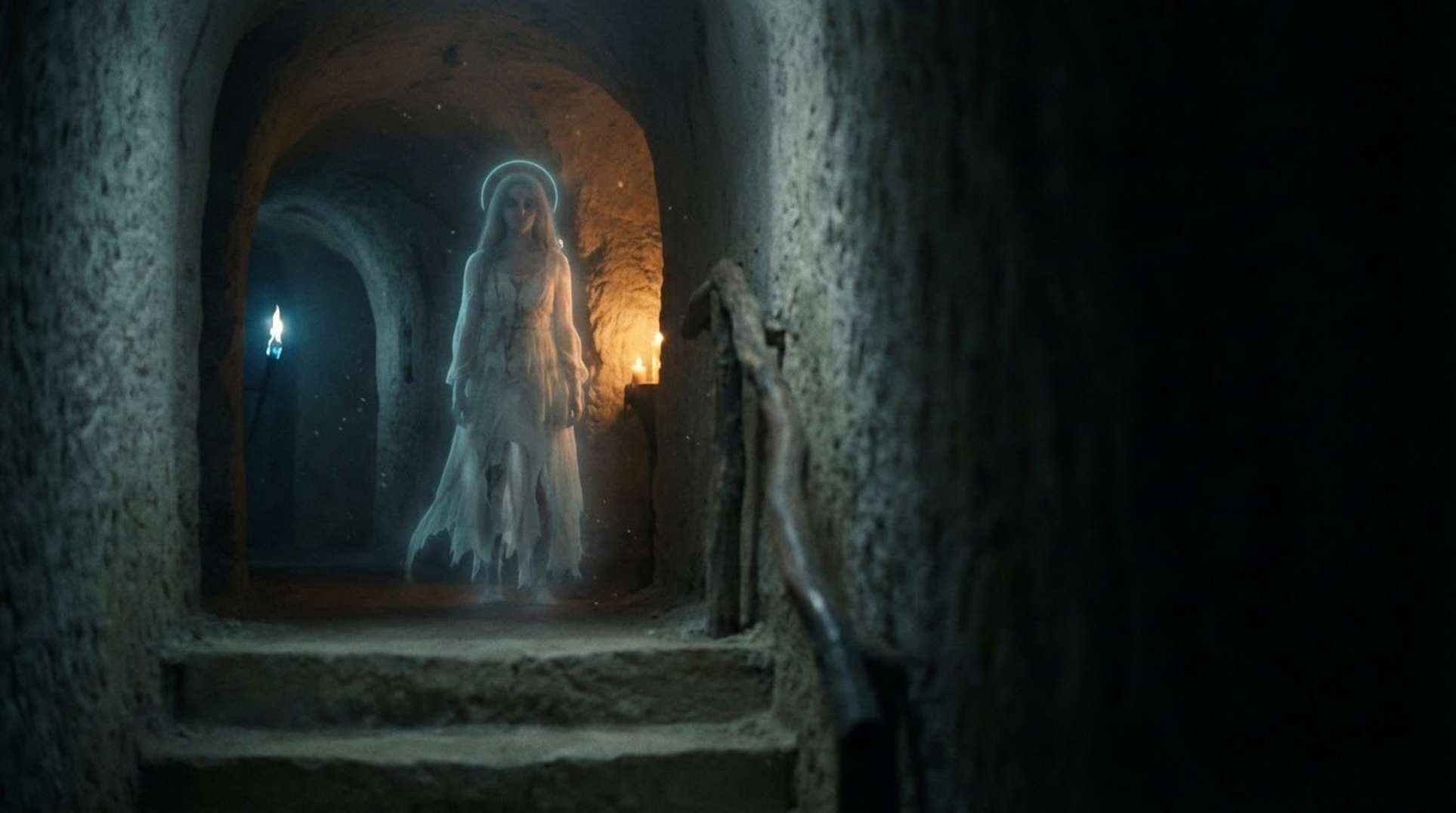
Visitors and guides at the Hellfire Caves share stories that persist across years. Many report seeing a woman in white, known as Suki or Sukie, wandering the passages. Others describe an older man dressed in 18th-century attire, or sudden sensations of being touched in Judgment’s Pass. Thrown rocks, abrupt temperature drops, and fleeting lights or orbs come up often in these accounts.

Guides on tours recount the tale of Paul Whitehead, who burned club records before his death and had his heart placed in an urn at the Dashwood Mausoleum. The legend builds from there: a theft of that heart sparks the ghostly question, ‘Who has my heart?’ Shows like Most Haunted and YouTube channels, including Paranormal Files, keep these motifs alive, sharing them with wider audiences.

In the Paranormal Files episode, the team pushes further, attempting a ritual in the Banqueting Hall. They report unusual experiences, and the guide mentions rocks being hurled and a neon-like outline of a face resembling the Devil. Singular claims, like specific physical attacks, stand out against the more common, repeatable patterns. These narratives come from those who’ve walked the caves themselves, and we listen without judgment.

Timelines, Carvings, and Verifiable Records

Digging into the facts, the Hellfire Caves emerge from solid records. Excavated between 1748 and 1752 under Sir Francis Dashwood, the network includes named chambers like the Banqueting Hall, Steward’s Chamber, Inner Temple, Franklin’s Cave, and the crossing over the so-called River Styx. Passages span roughly 400 meters, with depths reaching about 90 meters beneath the hilltop church.

Paul Whitehead died in 1774, and accounts place his heart in an urn at the Dashwood Mausoleum, later stolen—often dated to 1829, though sources differ. Suki’s story, a barmaid tricked and killed in the caves, thrives in oral tradition and tourism materials but lacks a single, clear archival source. Institutions like the National Trust and Historic England view the site as an 18th-century engineered heritage spot, steering clear of supernatural angles.

ItemCommon ValueSource(s)
Excavation datesc. 1748–1752Hellfire Caves official history, National Trust, Wikipedia
Passage length~0.25 mile (≈400 m)Visitor materials, site guides
Depth~300 ft (~90 m)Visitor materials, site guides
Paul Whitehead death1774Historical records
Heart theftCommonly 1829 (varies)Tourism materials, folklore accounts

Official Story vs. What the Data Suggests

Historians frame the Hellfire Caves as Sir Francis Dashwood’s practical project: an engineered curiosity that provided jobs, tied to the Hellfire Club’s elite, libertine gatherings that poked fun at church rituals. Many tales of crime or Satanism appear as later exaggerations. Heritage groups like the National Trust and Historic England stick to conservation and verified history, avoiding ghostly endorsements.

Yet guides, visitors, and investigators paint a different picture through lived experiences. Recurring stories of Suki, Whitehead, and physical oddities form a community narrative, boosted by tourism and media. TV and YouTube coverage can heighten expectations, potentially shaping what people sense on-site. This doesn’t erase the reports but adds layers to how we interpret them.

Where records thin out, questions linger. No broad contemporary documents confirm human sacrifices or major crimes during club meetings. Details on the Whitehead heart theft and any cave deaths need more primary digging. The tension between official accounts and witness stories keeps the site alive, urging us to weigh both sides carefully.

Follow-Ups Worth Doing

To push beyond stories, targeted steps could sharpen the picture. Start with archives: scour parish registers, old newspapers, and estate papers for solid traces of Suki’s death or the exact Whitehead heart theft details.

On-site, run environmental checks like EM and infrasound surveys, CO2 and mold tests, acoustic mapping, and structural inspections for loose rocks. Add thermal imaging and long-exposure photography to document anomalies.

For human factors, organize blind tours with unaware participants, using questionnaires to gauge how prior knowledge influences reports. Independent filming could help separate expectation from reality. These moves build evidence without promising to settle the debate on demons.

What It All Might Mean

We know the Hellfire Caves as an 18th-century creation linked to Dashwood and his club, now a protected site drawing tourists with its folklore of Suki and Whitehead. Records back the architecture and history, while stories of apparitions and thefts persist in guides and media.

Still, primary sources for violent rites or Suki’s fate aren’t firmly established, and Whitehead’s heart theft varies in accounts. No public forensic studies fully account for the sensory experiences reported.

This blend of hard facts and enduring tales draws investigators seeking rituals. It shows how history, setting, and stories merge to create phenomena—some see spirits, others explanations. Respect the experiences, chase the evidence, and let the unknowns fuel the search.

Frequently Asked Questions

The team filmed an attempt to open a portal in the caves, reporting unusual experiences in the Banqueting Hall. They issued on-camera warnings about potential dark consequences for viewers.

The caves were excavated around 1748–1752 under Sir Francis Dashwood, with chambers like the Banqueting Hall documented. Folklore about Suki’s death and Whitehead’s stolen heart is widespread in local stories and tourism, but primary archival evidence is incomplete or inconsistent.

Institutions like the National Trust and Historic England treat the site as an 18th-century heritage location focused on conservation and documented history. They do not endorse supernatural interpretations, viewing many lurid claims as later rumors.

Archival searches in parish registers and newspapers could verify details on Suki and Whitehead. On-site tests like EM surveys, mold sampling, and blind participant studies might explain reported phenomena without promising to prove or disprove supernatural elements.

The site’s mix of verified 18th-century history and persistent folklore, like apparitions and physical sensations, creates a compelling draw. Media coverage amplifies these motifs, blending narrative and environment in ways that produce experiences open to interpretation.