The Mushroom That Makes People See Tiny People—and the Chemical Nobody Has Found | Unexplained
Paranormal
The Mushroom That Makes People See Tiny People—and the Chemical Nobody Has Found
Reports from China, Papua New Guinea and the Philippines describe the same unnerving vision after eating one mushroom: crowds of tiny people. Researchers have now connected the cases to Lanmaoa asiatica, but the active…
Art Grindstone is the hard-nosed storyteller behind Unexplained.co, a veteran investigator whose life’s work sits at the crossroads of the paranormal, fringe science, and the shadows most people try not to look into. With decades spent chasing impossible stories — black-budget psychic programs, vanished Cold War experiments, desert rituals that sparked UFO waves, and the strange phenomena buried in America’s forgotten backroads — Art brings a rare combination of skepticism, awe, and journalistic precision. He’s not here to debunk. He’s not here to blindly believe. He follows the evidence wherever it leads — even when it leads someplace deeply uncomfortable. Known for his immersive, cinematic style and his ability to turn obscure research into gripping narrative, Art has built a devoted following across podcasts, long-form features, documentaries, and serialized investigations. His interviews are direct. His analysis is unflinching. His voice has become a staple in the modern paranormal renaissance — the guy people turn to when a story is too strange, too complex, or too dangerous for anyone else to touch. Off-mic, Art works with a distributed network of researchers, archivists, and field operatives who help surface the stories mainstream media ignores. On-mic, he transforms their findings into meticulous, high-impact reporting that refuses to insult the intelligence of true believers. His philosophy is simple: Take the phenomenon seriously. Treat the audience with respect. Tell the story as if the world depends on it — because sometimes it does. When Art Grindstone digs into a case, he isn’t just chasing a mystery. He’s tracing the fault lines of reality itself.
7 min · 1,637 words
In This Report(6)
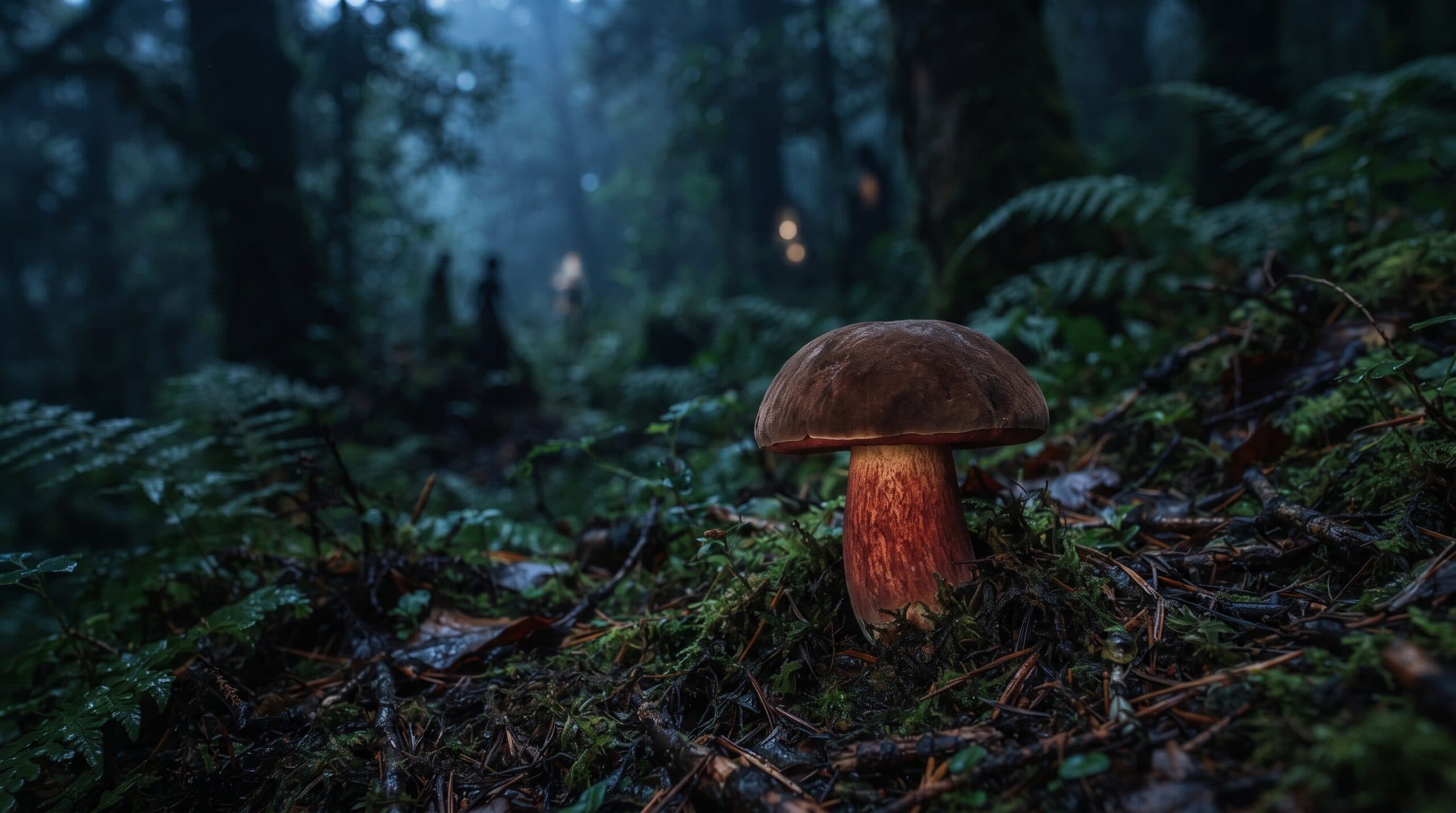
A bowl of mushrooms is supposed to be ordinary: earthy, filling, familiar. But in accounts from very different parts of Asia and the Pacific, one particular meal has led to the same impossible interruption. People say they see crowds of tiny figures—marching, dancing, climbing across dishes, or moving through the room as if the everyday world has suddenly acquired a second, miniature population.
The image sounds like folklore. The current scientific mystery is that it may not be merely folklore at all. Researchers at the University of Utah and the Natural History Museum of Utah have connected reports from Yunnan in southwest China, Papua New Guinea, and the northern Philippines to a mushroom now identified as Lanmaoa asiatica. The mushroom is real, the reports are longstanding, and the laboratory work is real. What remains unresolved is the crucial part: no known psychoactive compound has yet been found that explains the effect.
That makes this a much better mystery than a “fairy mushroom” headline. It is a case where cultural testimony, taxonomy, chemistry, and perception meet—and where none of them alone is sufficient to close the case.
Advertisement
The reports are stranger than a generic bad trip
The phenomenon has a clinical name: lilliputian hallucinations, after the tiny inhabitants of Gulliver’s Travels. It describes visions of many small people or proportionate miniature beings that appear to move autonomously in the person’s real surroundings. It is not simply seeing a distorted object or bright colors. The reported figures behave like a little social world.
In a University of Utah account by mushroom researcher Colin Domnauer, a Yunnan professor recalled looking under a tablecloth after eating stir-fried mushrooms and seeing hundreds of little people “marching like soldiers.” The report is a personal account, not controlled evidence of what was objectively present. But it matters because the same broad motif appears in locations separated by language and geography.
In Yunnan, the mushroom is sold as Jian shou qing. In northern Papua New Guinea, historical accounts referred to a mushroom called nonda. In the northern Philippines, communities use the name Sedesdem for a wild mushroom associated with occasional visions of little people, called ansisit. The local names do not prove that the experiences are identical. They do show that the story did not begin as one viral post copied around the internet.
For readers used to high-strangeness stories, the pattern is immediately compelling. Folklore often describes tiny beings: fairies, elves, household spirits, and trickster figures. Here, though, the central question is more precise. Why would people who consume a particular fungus describe a recognizably similar kind of miniature social vision?
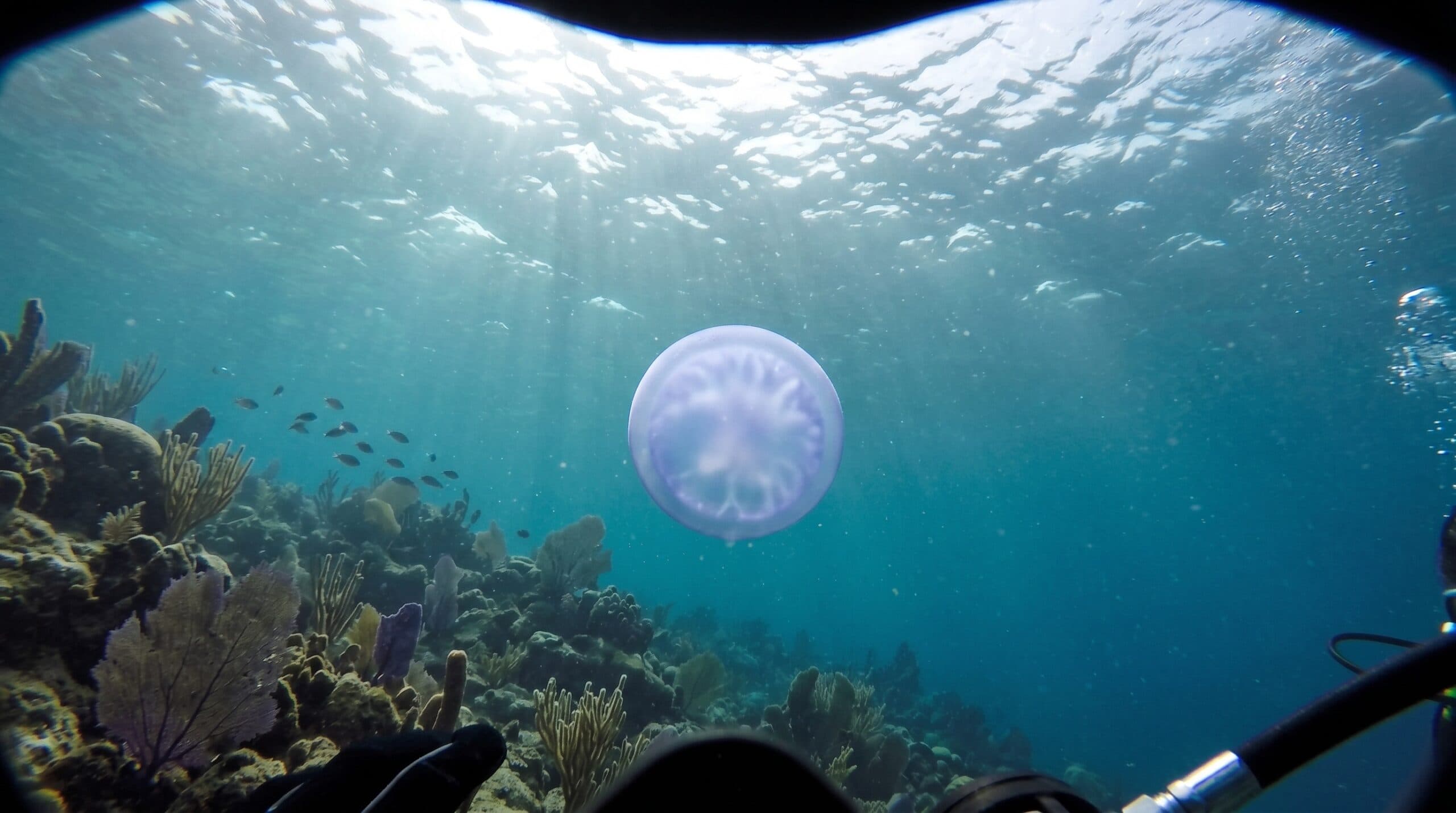
The Deep Sea Sphere: 1990s SCUBA Divers Filmed Something in the Bahamas That Still Defies Classification
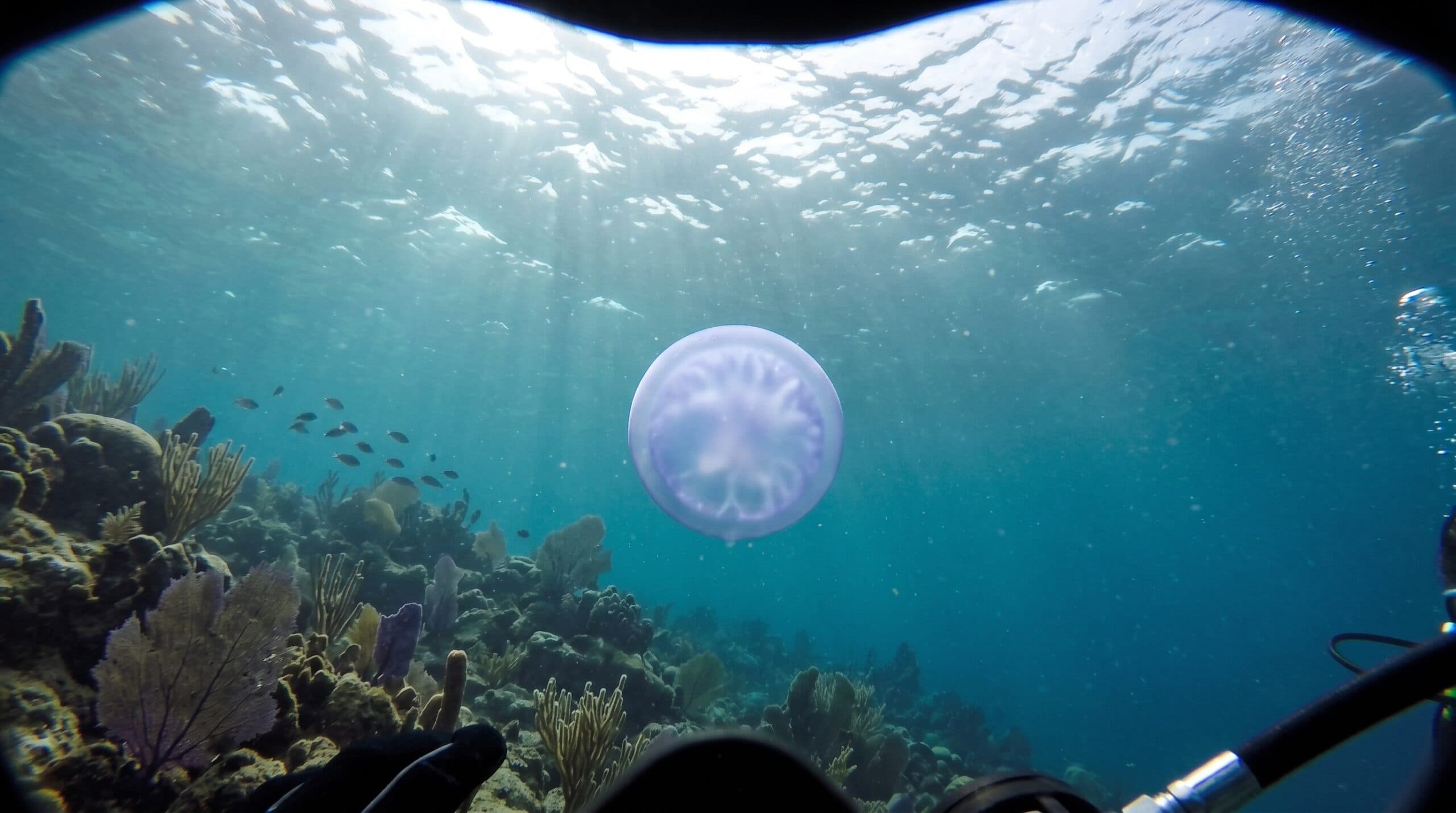
A clip from the 1990s shows SCUBA divers encountering a strange, perfectly spherical creature in the Bahamas. Decades later, the footage is resurfacing — and cryptid researchers, marine biologists, and UAP watchers all have different theories about what it is.
May 14, 2026 • 6 min read
Conspiracy Theories
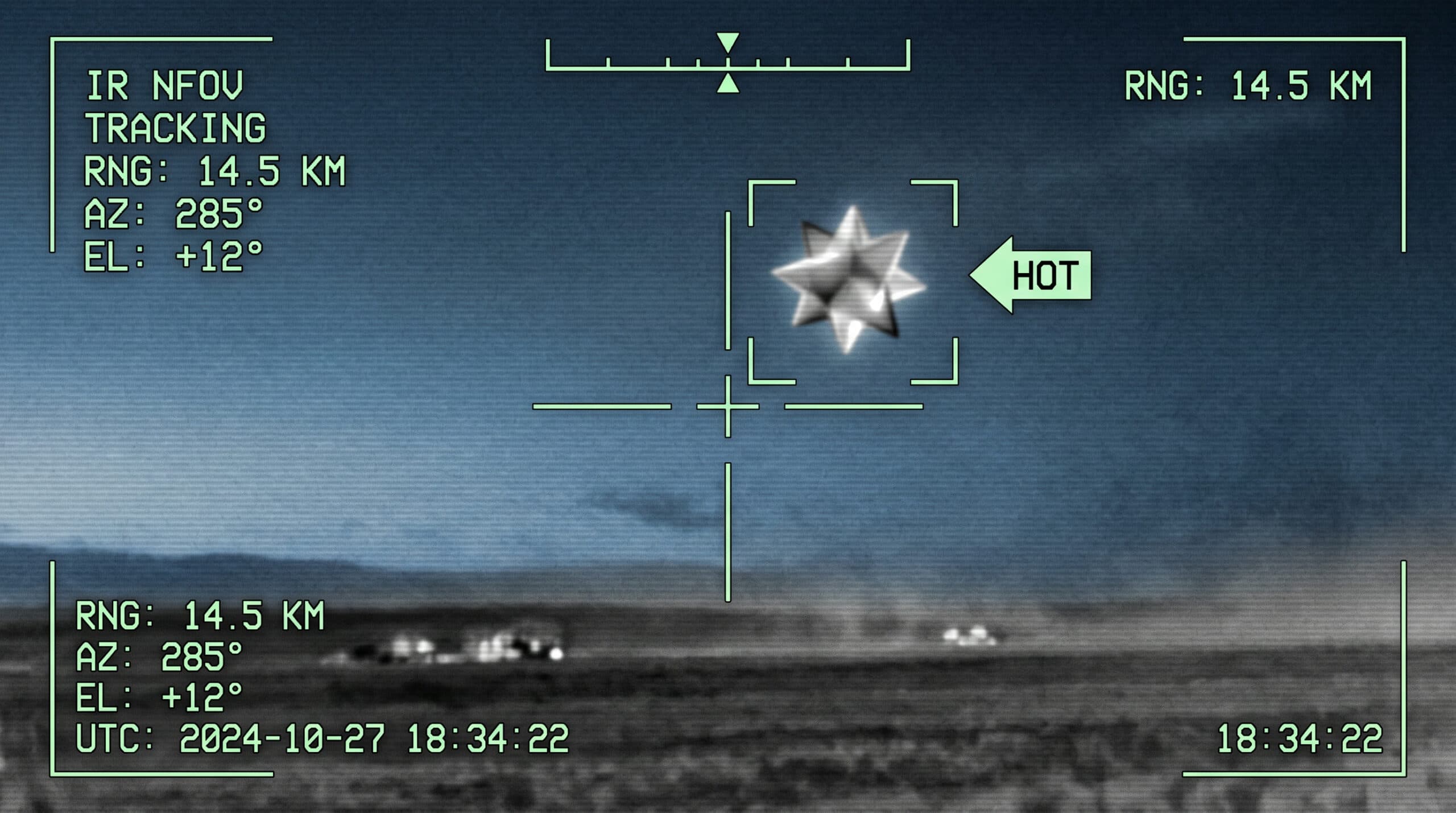
Ukrainian Defense Ministry Advisor Posts Star-Shaped UAP Video — and the Close-Ups Look Nothing Like a Drone
Serhii ‘Flash’ Beskrestnov released footage of a structured, star-shaped craft over Ukraine that has UFO researchers examining every frame for proof.
May 14, 2026 • 6 min read
Cryptozoology
The Deep Sea Sphere: 1990s SCUBA Divers Filmed Something in the Bahamas That Still Defies Classification
A clip from the 1990s shows SCUBA divers encountering a strange, perfectly spherical creature in the Bahamas. Decades later, the footage is resurfacing — and cryptid researchers, marine biologists, and UAP watchers all have different theories about what it is.
May 13, 2026 • 6 min read
What scientists have actually identified
The strongest recent advance is taxonomic, not pharmacological. Domnauer reports that DNA work linked the Philippine Sedesdem samples to Lanmaoa asiatica, the same species identified in Yunnan market samples. The mushroom is a bolete, more closely related to porcini than to the psilocybin-producing mushrooms most people mean when they say “magic mushrooms.”
That distinction is important. Lanmaoa asiatica is not established as a psilocybin mushroom, and the research team says analyses have not found traces of known psychoactive compounds in the samples they studied. A report that calls it a newly solved “magic mushroom” would skip past the central uncertainty.
The University of Utah’s research description says the team is fractionating mushroom extracts and testing them in mice while building a genetic and chemical map of the group. That is early-stage work. A behavioral change in mice is not proof of a particular hallucination in humans, and it cannot show that tiny figures appear in any objective sense. It does, however, support the narrower proposition that the mushroom may contain biologically active material worth isolating.
The information gain here is not that science has confirmed elves. It is that science has narrowed an old, culturally rich mystery from “some unusual mushrooms” to a named species whose chemistry has not yet yielded a familiar answer.
Why the same motif matters—and why it is not proof
The repeated “little people” motif is the part that invites the biggest conclusions. It is tempting to treat similarity across cultures as proof that the vision reveals something external: perhaps the mushroom somehow opens a shared realm already described in folklore. The available evidence does not support that leap.
A more grounded possibility is that a particular neurochemical effect reliably changes scale, motion, attention, or face detection in a way that the human mind turns into agents. Human perception is built to detect animate beings quickly. In ambiguous visual conditions, we readily see faces and intention; that tendency is part of why an odd shadow in a historic dining room can become a possible ghost photograph in the public imagination.
But the mushroom reports are not identical to a photograph’s visual ambiguity. They are experiences occurring after ingestion, sometimes with descriptions of numerous moving characters. That makes the reports more specific, while still leaving several open questions: Does the mushroom produce the effect directly? Does preparation matter? Are there regional look-alike species, contaminants, or dose differences? How much do expectations and local storytelling shape what is remembered and described?
The University of Utah article itself takes a strong interpretive position, saying the cross-cultural pattern points to a shared chemical and neurological basis rather than coincidence. That is a reasonable research hypothesis. It should not be mistaken for a finished demonstration. The active molecule has not been isolated, and the human experiences have not been tested in a controlled clinical study.
The old folklore question has a new scientific form
There is an older tension beneath the laboratory work. Across cultures, small beings are not just decorative characters. They often inhabit thresholds: forests, food, sleep, illness, and the edge between domestic safety and wilderness. A wild edible mushroom that sometimes turns a meal into a crowd of tiny autonomous figures naturally slots into that imaginative territory.
Advertisement
That does not mean the traditions are interchangeable. The Chinese xiao ren ren, Papua New Guinean reports, and Philippine ansisit belong to distinct communities and histories. Folding them into one generic Western “fairy” story would erase that difference. The useful comparison is not that all cultures secretly report the same supernatural race. It is that distinct communities appear to have preserved observations about an unusual mushroom effect long before modern DNA sequencing could test whether the fungi were related.
It also offers a sharper way to think about an earlier Unexplained.co story on the Philip Experiment and the question of whether attention can shape a presence. In both cases, the experience may be profoundly real to the person having it without establishing that a visible being exists independently in the room. The real puzzle is how brain, expectation, social meaning, and stimulus combine to produce a presence that feels active rather than imagined.
Confirmed, suggested, and unknown
**Confirmed:** Lanmaoa asiatica is a described fungal species. Researchers have identified it in Yunnan and linked collected Philippine Sedesdem samples to the same species through DNA work. Reports of unusual small-figure visions associated with mushrooms exist in multiple cultural settings.
**Suggested:** the species, or a substance associated with it, may be responsible for a distinctive psychoactive effect. The recurring descriptions could reflect a shared neurobiological mechanism rather than a purely cultural story.
**Unknown:** the specific active compound; the role of cooking, dose, co-ingested substances, or misidentification; how frequently the effect occurs; and exactly why the content so often involves tiny people. No published identification of a novel compound means the chemical explanation remains an active investigation, not a solved case.
That distinction is worth holding onto because mushroom stories can become dangerous when curiosity becomes imitation. Wild mushrooms can be toxic, and identification by appearance, nickname, or online image is not safe. The scientific interest in Lanmaoa asiatica is not a recommendation to seek it out or experiment with unfamiliar fungi.
A mystery that gets more interesting when it stays open
The most dramatic version of this story says a mushroom lets people see fairies. The most skeptical version says it is all just tall tales. Neither is satisfying, and neither matches the evidence now available.
The documented middle ground is stranger. People in separate places have maintained reports of a particular kind of experience. Researchers have traced at least some of those reports to the same named mushroom. Chemical and genomic work has not located a known hallucinogen that neatly explains the phenomenon. That leaves an honest mystery: not whether tiny people physically occupy the table, but why a natural organism may prompt the mind to populate a table with them so consistently.
There is a useful parallel with the Third Man phenomenon, in which people under extreme stress describe a companion-like presence. The circumstances could hardly be more different—survival stress versus a meal—but both stories press on the same unanswered boundary. Under unusual conditions, the mind can generate experiences of agency so vivid that “I imagined it” feels much too small a description.
The next decisive step is chemical isolation and careful study, not louder claims. If the Utah team identifies a novel molecule, researchers may gain a new tool for studying perception. If the evidence instead points to preparation, contamination, or an interaction with another factor, the mystery will change shape. Either outcome would be more valuable than forcing a premature answer.
For now, Lanmaoa asiatica sits at an unusually fertile intersection: a market mushroom, an old body of local knowledge, a modern DNA result, and a question science has not yet translated into chemistry. Somewhere between the bowl and the little marching figures, an explanation is still missing.
Art Grindstone is the hard-nosed storyteller behind Unexplained.co, a veteran investigator whose life’s work sits at the crossroads of the paranormal, fringe science, and the shadows most people try not to look into. With decades spent chasing impossible stories — black-budget psychic programs, vanished Cold War experiments, desert rituals that sparked UFO waves, and the strange phenomena buried in America’s forgotten backroads — Art brings a rare combination of skepticism, awe, and journalistic precision. He’s not here to debunk. He’s not here to blindly believe. He follows the evidence wherever it leads — even when it leads someplace deeply uncomfortable. Known for his immersive, cinematic style and his ability to turn obscure research into gripping narrative, Art has built a devoted following across podcasts, long-form features, documentaries, and serialized investigations. His interviews are direct. His analysis is unflinching. His voice has become a staple in the modern paranormal renaissance — the guy people turn to when a story is too strange, too complex, or too dangerous for anyone else to touch. Off-mic, Art works with a distributed network of researchers, archivists, and field operatives who help surface the stories mainstream media ignores. On-mic, he transforms their findings into meticulous, high-impact reporting that refuses to insult the intelligence of true believers. His philosophy is simple: Take the phenomenon seriously. Treat the audience with respect. Tell the story as if the world depends on it — because sometimes it does. When Art Grindstone digs into a case, he isn’t just chasing a mystery. He’s tracing the fault lines of reality itself.