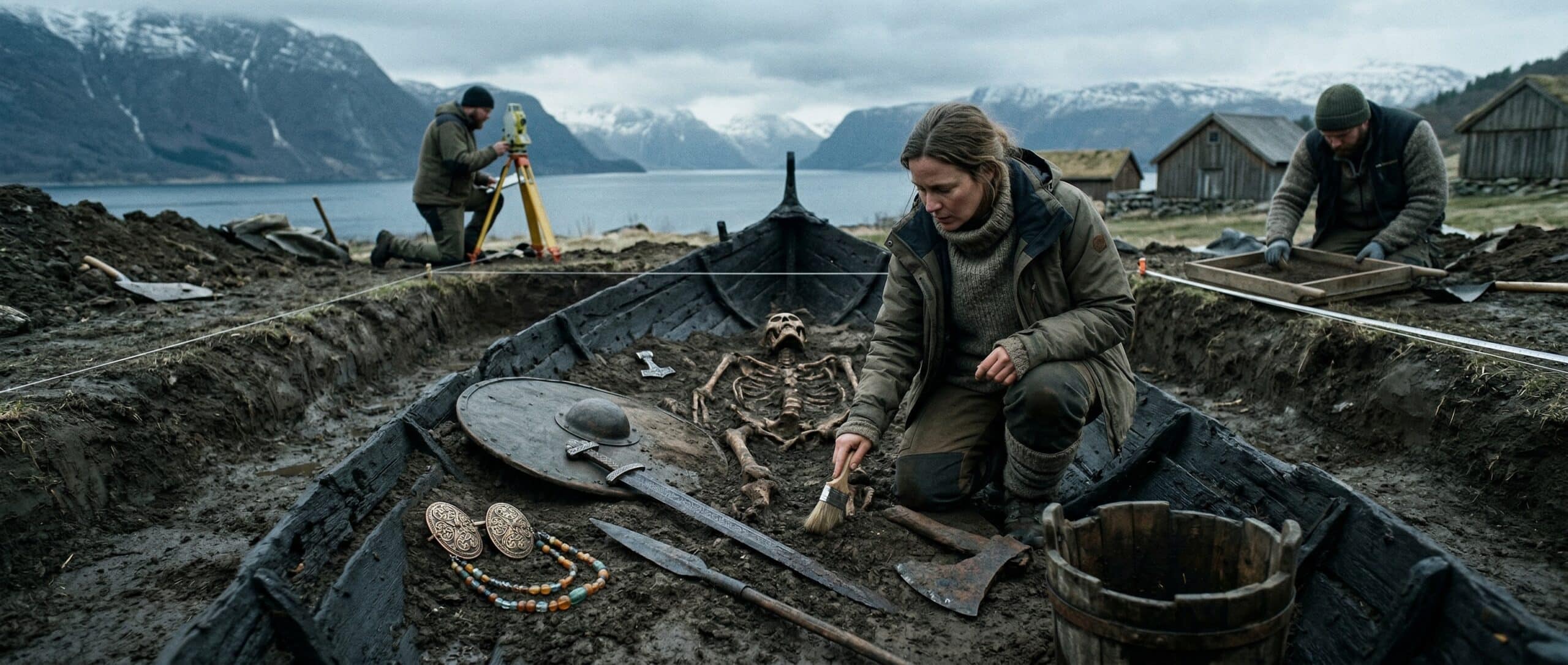
Archaeologists excavating Viking graves have made a striking discovery: artifacts that appear to be physical representations of objects described in Norse mythology and Icelandic sagas. What once looked like ordinary grave goods may actually have been objects the Norse considered powerful, symbolic, and perhaps even mythically real.
The finding adds a new layer to one of the oldest debates in Viking studies: where does legend end and lived belief begin? For centuries, texts like the Poetic Edda, the Prose Edda, and the Icelandic sagas have been treated as mixtures of history, religion, folklore, and literary embellishment. But discoveries like this suggest the Vikings may have carried the world of myth directly into burial ritual.
What Archaeologists Found in Viking Graves
According to Ancient Pages, archaeologists studying grave goods from Viking burials identified objects that may correspond to mythic items known from Norse sources. These were not necessarily the literal weapons of gods, but physical items whose design, placement, or symbolic role closely echoes the legendary objects found in saga literature.
That matters because Viking burials were never random. Grave goods reflected status, identity, social role, and beliefs about the afterlife. If specific objects were intentionally chosen because they resembled items from Norse myth, then the people placing them in graves may have seen saga-world symbolism as materially important.
Why This Discovery Matters
The discovery is significant for several reasons:
- It blurs the line between myth and reality: the Norse may not have treated their myths as distant stories, but as living parts of the world around them.
- It strengthens saga credibility: Icelandic and Norse texts have repeatedly gained support from archaeology, even when scholars first treated them with skepticism.
- It changes how we interpret grave goods: seemingly simple artifacts may carry mythological meaning that has been overlooked.
- It deepens our picture of Viking belief: mythology may have shaped not just storytelling, but burial customs, identity, and ideas of power.
As reference material on Norse mythology makes clear, objects in these traditions were rarely just objects. Weapons, amulets, rings, and crafted items often carried divine association, symbolic force, or links to fate and heroic memory.
When Sagas and Archaeology Overlap
This is far from the first time archaeology has pushed scholars to take saga traditions more seriously. Norse texts once viewed as semi-legendary have gained support through real-world discoveries ranging from settlement patterns to travel routes to the confirmed Viking presence in North America at L’Anse aux Meadows.
In other words, saga literature is not simply fantasy. It preserves cultural memory, worldview, and in some cases historical realities later confirmed by excavation. That does not mean every supernatural claim in Norse literature is literally true — but it does mean archaeologists must be careful not to dismiss symbolic material too quickly.
What the Vikings May Have Believed
The most fascinating part of the new discovery is what it says about the Viking mind. The Norse did not divide religion, myth, and daily life in the same way modern people often do. Gods, omens, fate, magic, heroic ancestors, and sacred objects all existed within one connected worldview.
If an object from a grave echoes an item described in myth, the point may not have been imitation for its own sake. It may have been an attempt to send the dead into the afterlife with power, protection, prestige, or symbolic continuity with heroic and divine models.
This possibility aligns with wider research in Viking archaeology and belief, including studies of ritual burial, amuletic objects, and symbolic grave placement. As Oxford University Press commentary on Viking archaeology has noted, new excavations repeatedly force scholars to revise older, simpler models of the Viking Age.
Buried Myth, Living Tradition
For modern readers, the most provocative implication is this: the Norse may not have seen mythology as separate from reality. Their stories were not just told around fires. They shaped objects, burials, status, memory, and perhaps even the way people prepared for death.
The result is a richer and stranger picture of Viking civilization. These were not people merely remembering legends. They may have been living inside them.
For more unexplained archaeology, read our coverage of Israel’s ‘Stonehenge of the East’ and the newly discovered related sites, AI uncovering 303 new Nazca geoglyphs in Peru, and Bronze Age artifacts made from meteoritic iron.
This article was created using Media Blaster – Your content production specialist. Visit www.mediablaster.io for more information.