
In recent years, significant discoveries in the field of anthropology have reshaped our understanding of human evolution. The Omo 2 skull from Ethiopia and the Solo skulls from Java, Indonesia, are two such finds that challenge previous classifications and assumptions about our ancient ancestors.
Key Takeaways
- Omo 2 skull is dated to around 233,000 years ago, showing a mix of archaic and modern features.
- Solo skulls, believed to be between 117,000 to 108,000 years old, were previously classified as Homo erectus.
- Both skulls exhibit similarities that suggest a complex evolutionary relationship.
- The findings hint at early human migrations and interactions between different hominin species.
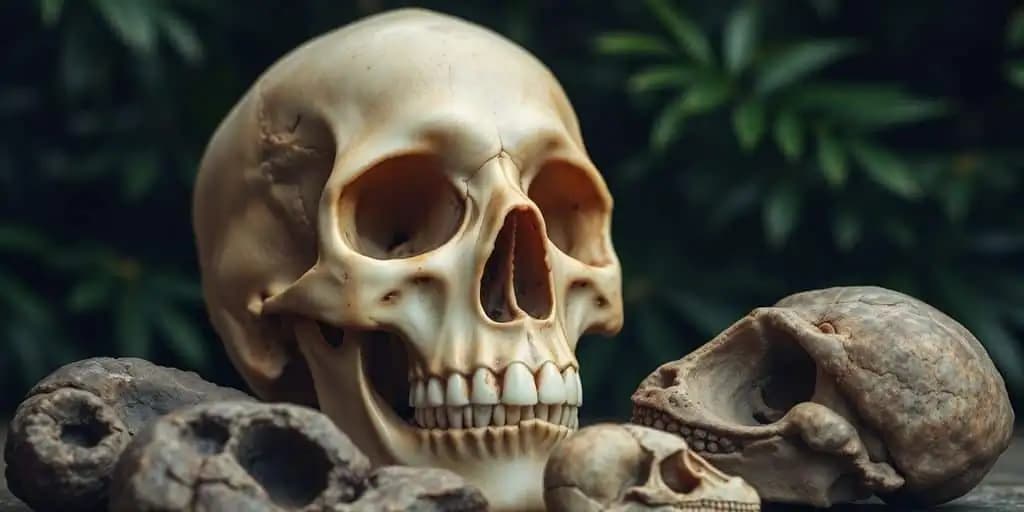
The Omo 2 skull, discovered in Ethiopia, has been a topic of debate regarding its age and classification. Initially thought to be closer to Homo erectus, it is now considered an archaic Homo sapiens. This skull displays a fascinating blend of features, including a rounded cranial shape and reduced facial prognathism, indicating it may represent a transitional form between earlier Homo populations and later Homo sapiens.
On the other side of the world, the Solo skulls from Java have long puzzled researchers. These fossils, attributed to late Homo erectus, show robust features like thick cranial walls and pronounced brow ridges. However, their classification as Homo erectus is increasingly questioned, as comparative analyses reveal notable similarities with the Omo 2 skull.
Advertisement
Similarities Between Omo 2 and Solo Skulls
- Pronounced Brow Ridges: Both skulls exhibit pronounced brow ridges, a characteristic typical of Homo erectus.
- Low Cranial Vault: The low cranial vault is another shared trait, suggesting a connection between these two finds.
- Occipital Region: The angled occipital region of Omo 2 is also observed in the Solo specimens, reinforcing the idea of shared ancestry.
These shared traits suggest that Omo 2 retains several archaic features reminiscent of Homo erectus, while also presenting characteristics aligning it with anatomically modern humans. This combination indicates that Omo 2 may bridge the gap between earlier Homo populations and later Homo sapiens.
The Solo skulls, meanwhile, are believed to bear the hallmark traits of late Homo erectus populations while still retaining features reminiscent of archaic humans. This evolutionary snapshot aligns with the broader narrative of early Homo sapiens venturing into new territories, armed with increasing cognitive sophistication and technological advancements.