Key Takeaways Putin has issued repeated warnings that a direct clash between Russia and NATO would place the world ‘one step away from a full-scale World War Three,’ while maintaining that Russia harbors ‘no aggressive…
Art Grindstone is the hard-nosed storyteller behind Unexplained.co, a veteran investigator whose life’s work sits at the crossroads of the paranormal, fringe science, and the shadows most people try not to look into. With decades spent chasing impossible stories — black-budget psychic programs, vanished Cold War experiments, desert rituals that sparked UFO waves, and the strange phenomena buried in America’s forgotten backroads — Art brings a rare combination of skepticism, awe, and journalistic precision. He’s not here to debunk. He’s not here to blindly believe. He follows the evidence wherever it leads — even when it leads someplace deeply uncomfortable. Known for his immersive, cinematic style and his ability to turn obscure research into gripping narrative, Art has built a devoted following across podcasts, long-form features, documentaries, and serialized investigations. His interviews are direct. His analysis is unflinching. His voice has become a staple in the modern paranormal renaissance — the guy people turn to when a story is too strange, too complex, or too dangerous for anyone else to touch. Off-mic, Art works with a distributed network of researchers, archivists, and field operatives who help surface the stories mainstream media ignores. On-mic, he transforms their findings into meticulous, high-impact reporting that refuses to insult the intelligence of true believers. His philosophy is simple: Take the phenomenon seriously. Treat the audience with respect. Tell the story as if the world depends on it — because sometimes it does. When Art Grindstone digs into a case, he isn’t just chasing a mystery. He’s tracing the fault lines of reality itself.
6 min · 1,330 words
In This Report(8)
Key Takeaways
Putin has issued repeated warnings that a direct clash between Russia and NATO would place the world ‘one step away from a full-scale World War Three,’ while maintaining that Russia harbors ‘no aggressive plans’ toward Europe and would only strike NATO states if attacked first, according to reports from Reuters and Daily Star.
Viral narratives about a ‘huge secret’—such as claims that Europe ‘needs’ WW3 or that Putin revealed some major espionage breakthrough—aren’t found in official transcripts or mainstream coverage; these ideas stem from interpretations in prepper forums and alternative media.
Institutional voices view Putin’s statements as escalatory rhetoric aimed at negotiations, but prepper communities see them as evidence of elite preparations for a societal collapse or SHTF event, creating a divide between official risk evaluations and grassroots concerns that remains wide open.
A Winter of Sirens, Livestreams, and Unanswered Alerts
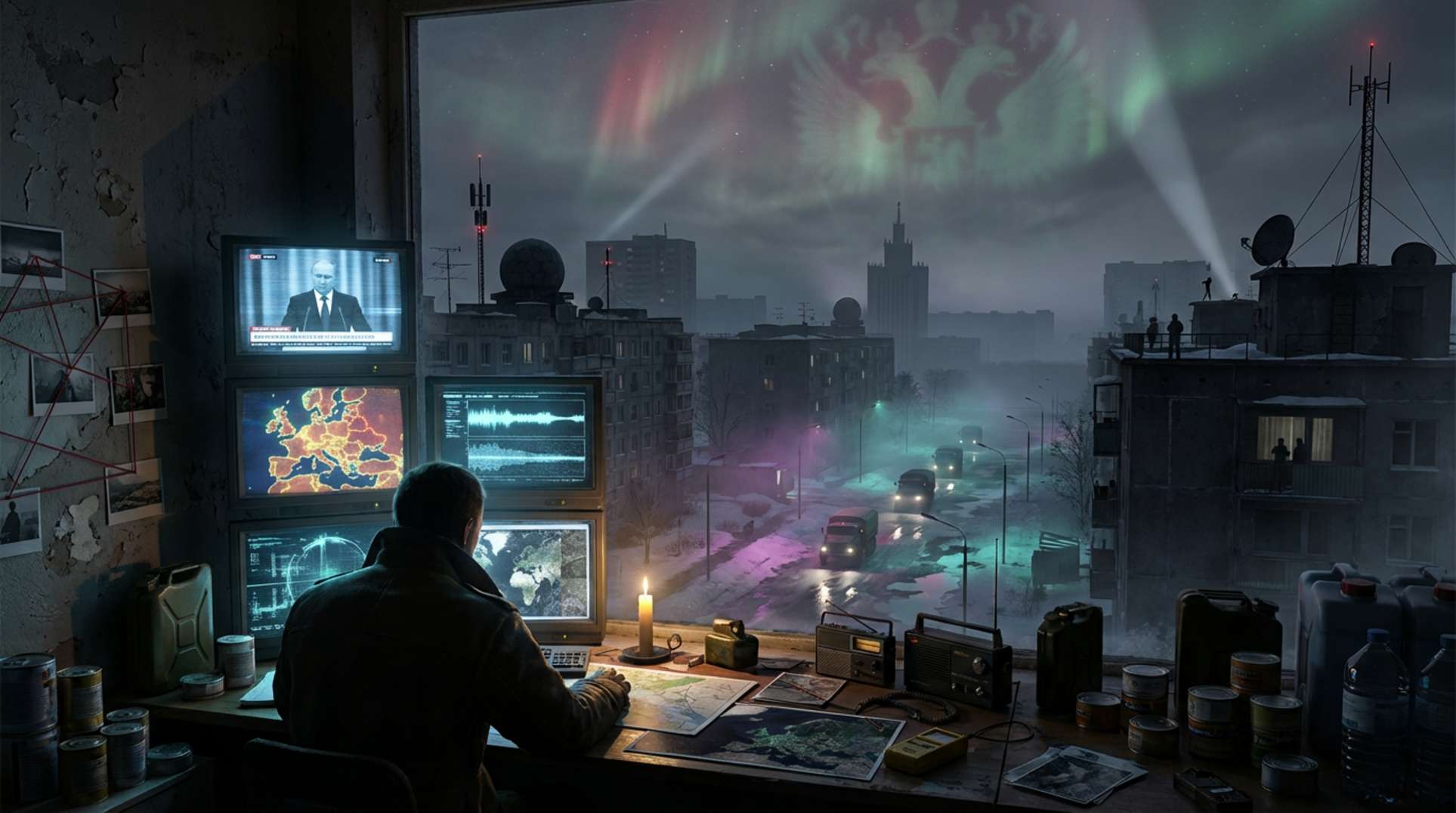
Picture European streets echoing with air-raid drills amid biting cold, while energy shortages force tough choices on heat and light. Telegram channels buzz nonstop, YouTube streams go live at every Putin presser. Preppers scroll through updates on Ukraine fronts, Israel-Iran standoffs, and whispers of mobilizations, their screens a constant glow in the dark.
This builds on years of tension in the Russia-Ukraine war. Back in March 2024, Putin stated that a Russia-NATO conflict would edge the planet toward full-scale WW3. By June 2025, he was pointing to rising global risks and strengthening military ties with allies, per Reuters and Times of India.
Online, channels like Canadian Prepper and NYPrepper deliver urgent breakdowns, comment sections alive with stockpile lists—cans of food, water filters, fuel cans. Draft-age folks in Europe post questions about heading east, sharing Putin quotes like puzzle pieces. Officials speak of deterrence and treaties to contain escalation. But in these digital spaces, many sense a deeper machinery at work, with Putin’s words as the latest confirmation.
Advertisement
What Viewers, Preppers, and Independent Analysts Say Putin Just Admitted
In prepper circles and alternative analysis hubs, Putin’s warnings hit different. They’re not just hypotheticals; they’re seen as signals that Western powers are committed to a path they can’t reverse without crumbling.
Take the ‘huge secret’ idea: some argue Europe ‘needs’ WW3 to reset drowning debts, shore up energy woes, and clamp down on unrest through emergency powers and NATO solidarity. It’s a narrative built from his words, not direct quotes, but it resonates strong.
What exactly has Putin said about WW3?
Is there evidence for the ‘huge secret’ that Europe needs WW3?
How do official sources interpret Putin’s statements?
What are prepper communities saying about this?
Has Putin mentioned NATO personnel in Ukraine?
Advertisement
Frequently Asked Questions
What exactly has Putin said about WW3?
Putin has warned multiple times that a direct Russia-NATO conflict would put the world 'one step away from a full-scale World War Three,' while stating Russia has no aggressive plans toward Europe and would only act if attacked first. These statements appear in reports from Reuters and Daily Star, spanning from February 2024 to November 2025.
Is there evidence for the 'huge secret' that Europe needs WW3?
No official transcripts or mainstream reports include the phrase 'huge secret' or claims that Europe needs WW3; these are interpretations from prepper communities and alternative media. They stem from readings of Putin's warnings as signals of elite plans for economic resets or emergency controls.
How do official sources interpret Putin's statements?
Western governments and arms-control experts see them as escalatory rhetoric to deter NATO involvement in Ukraine and gain negotiating leverage. They emphasize diplomatic paths and view the comments as bargaining positions rather than admissions of inevitable war.
What are prepper communities saying about this?
Many in these spaces interpret Putin's words as confirmation of a covert war already in progress and elite preparations for SHTF scenarios. They connect his statements to patterns like conscription rumors, fuel prices, and new laws, urging stockpiling and vigilance.
Has Putin mentioned NATO personnel in Ukraine?
Yes, in March 2024, Putin alleged that NATO personnel are present in Ukraine, which some interpret as evidence of a de facto covert war. Official sources frame this as part of Russia's escalatory narrative, not a new revelation.
The Sunken Basilica of Iznik: Did a Lake Hide the Council of Nicaea?
A basilica beneath Lake Iznik has revived a 1,700-year-old question: was this the setting of the First Council of Nicaea, or a compelling archaeological near-miss?
Aug 18, 2026 • 6 min read
UFO & Aliens
Europe Has Been Quietly Tracking UAP Reports Since 2023
Documents reveal how the European Commission handled UAP images, what it promised to improve, and why Europe still lacks a public investigation office.
Aug 17, 2026 • 8 min read
Ancient Civilizations
1957 Electrogravitics Secret: The Classified Research Program Whose Watchers Have All ‘Gone’
A viral essay claims that classified electrogravitics research made real progress in the 1950s — and that everyone who knew the truth about it has since disappeared from the public record. The story is spreading through high-strangeness forums.
May 14, 2026 • 7 min read
Then there’s the talk of NATO boots already in Ukraine. When Putin mentions personnel ‘present’ there, many read it as proof of a shadow war—special forces, advisers operating covertly. Future escalation talk? Just spin to them.
Preppers weave this into SHTF planning: ramping up stocks of food, water, fuel, meds. They track fuel spikes, draft rumors, new laws. Some creators call Putin’s ‘no aggressive plans’ line misdirection, echoing leaders who downplayed intents before major moves.
Timelines, Transcripts, and the Pieces We Can Actually Verify
Let’s ground this in what we can pin down. No ‘huge secret’ phrase shows up in official records. Claims like Europe ‘needing’ WW3? Those are from commentary, not transcripts. Here’s a timeline of key Putin statements:
Date
Context
Core Putin Statement
WW3 / Nuclear Angle
Source
February 9, 2024
Interview on war and peace in Ukraine
Russia would only attack NATO members like Poland or Latvia if attacked first, denying broader designs on Europe
Discusses nuclear threats and WW3 risks
Reuters
March 18, 2024
Warning on Russia-NATO conflict
A direct conflict would mean the planet is ‘one step away from a full-scale World War Three’
Escalatory nuclear rhetoric; alleges NATO personnel in Ukraine
Reuters
June 23, 2025
Public address on global risks
Flags increasing global conflict risks, citing Russia-Ukraine and Israel-Iran; plans military modernization and cooperation with friendly countries
Ties to broader conflict escalation
Times of India
November 27, 2025
Statement on plans toward Europe
Russia has ‘no aggressive plans’ toward Europe, calls idea of attack ‘ridiculous’; open to talks with US on Ukraine peace
Insists on no aggression unless attacked first
Daily Star
Background includes Russia’s suspension of New START and pushback from US/NATO experts, who call this rhetoric escalatory and at odds with pacts like the 1973 Prevention of Nuclear War agreement, per Arms Control Association.
When Official Lines Collide with the SHTF Lens
Official narratives from governments, NATO, and mainstream outlets treat Putin’s WW3 mentions as pressure tactics—to deter aid to Ukraine and push for deals. Analysts see them as bargaining chips, not admissions of inevitability, focusing on diplomacy and support for Kyiv, as in Euractiv and Arms Control Association reports.
Flip to online spaces, and the same quotes become exposes. Putin naming NATO in Ukraine? Proof of hidden ops. His warnings? Hints that elites crave conflict to mask failures in debt, energy, politics.
Preppers connect dots: troop shifts, conscription talk, new security rules, financial wobbles, Middle East heat. It forms a story of planned escalation. Officials downplay worst cases, ignoring accident risks. Online? Sometimes overconnects patterns, missing political games.
No leaked memo proves leaders ‘need’ WW3. But backroom talks on risk? We can’t audit those. The gap persists.
Are We Reading Warnings, Threats, or a Glimpse Behind the Curtain?
One view: Putin’s playing brinkmanship, stirring fear to split NATO, aligning with New START pullout and nuclear hints.
Advertisement
Another, big in online groups: He’s outing a covert war, with Ukraine as one front in a wider shadow conflict.
Or maybe no one ‘needs’ it, but incentives—military profits, political binds, crises in energy, debt, climate—push the system toward blowup over cooldown.
Preppers’ readiness? Could be hype from doom scrolls, or smart hedging when officials admit we’re ‘one step away’ but skip personal advice. No smoking gun on secrets, yet patterns in statements and moves suggest more lurks off-camera.
Putin has warned repeatedly: Russia-NATO clash means WW3 close, with global risks rising and military upgrades coming, but no aggressive European plans unless provoked.
The ‘huge secret’ spin—Europe craving WW3? That’s community narrative, not in transcripts, linking his words to espionage and collapse fears.
Unknowns linger: real NATO footprint in Ukraine, leaders’ risk appetites, miscalculation odds. Scrutinize both official calm and online alerts—check full speeches against clips, separate facts from guesses. If prepping for SHTF, base it on clear-eyed choices, not fear spikes.
We might not get a clean reveal. But the rhetoric, maneuvers, and info wars around WW3? That’s a signal to watch sharp—the divide between show and spark is thin, as all sides agree.
Frequently Asked Questions
Putin has warned multiple times that a direct Russia-NATO conflict would put the world ‘one step away from a full-scale World War Three,’ while stating Russia has no aggressive plans toward Europe and would only act if attacked first. These statements appear in reports from Reuters and Daily Star, spanning from February 2024 to November 2025.
No official transcripts or mainstream reports include the phrase ‘huge secret’ or claims that Europe needs WW3; these are interpretations from prepper communities and alternative media. They stem from readings of Putin’s warnings as signals of elite plans for economic resets or emergency controls.
Western governments and arms-control experts see them as escalatory rhetoric to deter NATO involvement in Ukraine and gain negotiating leverage. They emphasize diplomatic paths and view the comments as bargaining positions rather than admissions of inevitable war.
Many in these spaces interpret Putin’s words as confirmation of a covert war already in progress and elite preparations for SHTF scenarios. They connect his statements to patterns like conscription rumors, fuel prices, and new laws, urging stockpiling and vigilance.
Yes, in March 2024, Putin alleged that NATO personnel are present in Ukraine, which some interpret as evidence of a de facto covert war. Official sources frame this as part of Russia’s escalatory narrative, not a new revelation.
Art Grindstone is the hard-nosed storyteller behind Unexplained.co, a veteran investigator whose life’s work sits at the crossroads of the paranormal, fringe science, and the shadows most people try not to look into. With decades spent chasing impossible stories — black-budget psychic programs, vanished Cold War experiments, desert rituals that sparked UFO waves, and the strange phenomena buried in America’s forgotten backroads — Art brings a rare combination of skepticism, awe, and journalistic precision. He’s not here to debunk. He’s not here to blindly believe. He follows the evidence wherever it leads — even when it leads someplace deeply uncomfortable. Known for his immersive, cinematic style and his ability to turn obscure research into gripping narrative, Art has built a devoted following across podcasts, long-form features, documentaries, and serialized investigations. His interviews are direct. His analysis is unflinching. His voice has become a staple in the modern paranormal renaissance — the guy people turn to when a story is too strange, too complex, or too dangerous for anyone else to touch. Off-mic, Art works with a distributed network of researchers, archivists, and field operatives who help surface the stories mainstream media ignores. On-mic, he transforms their findings into meticulous, high-impact reporting that refuses to insult the intelligence of true believers. His philosophy is simple: Take the phenomenon seriously. Treat the audience with respect. Tell the story as if the world depends on it — because sometimes it does. When Art Grindstone digs into a case, he isn’t just chasing a mystery. He’s tracing the fault lines of reality itself.