
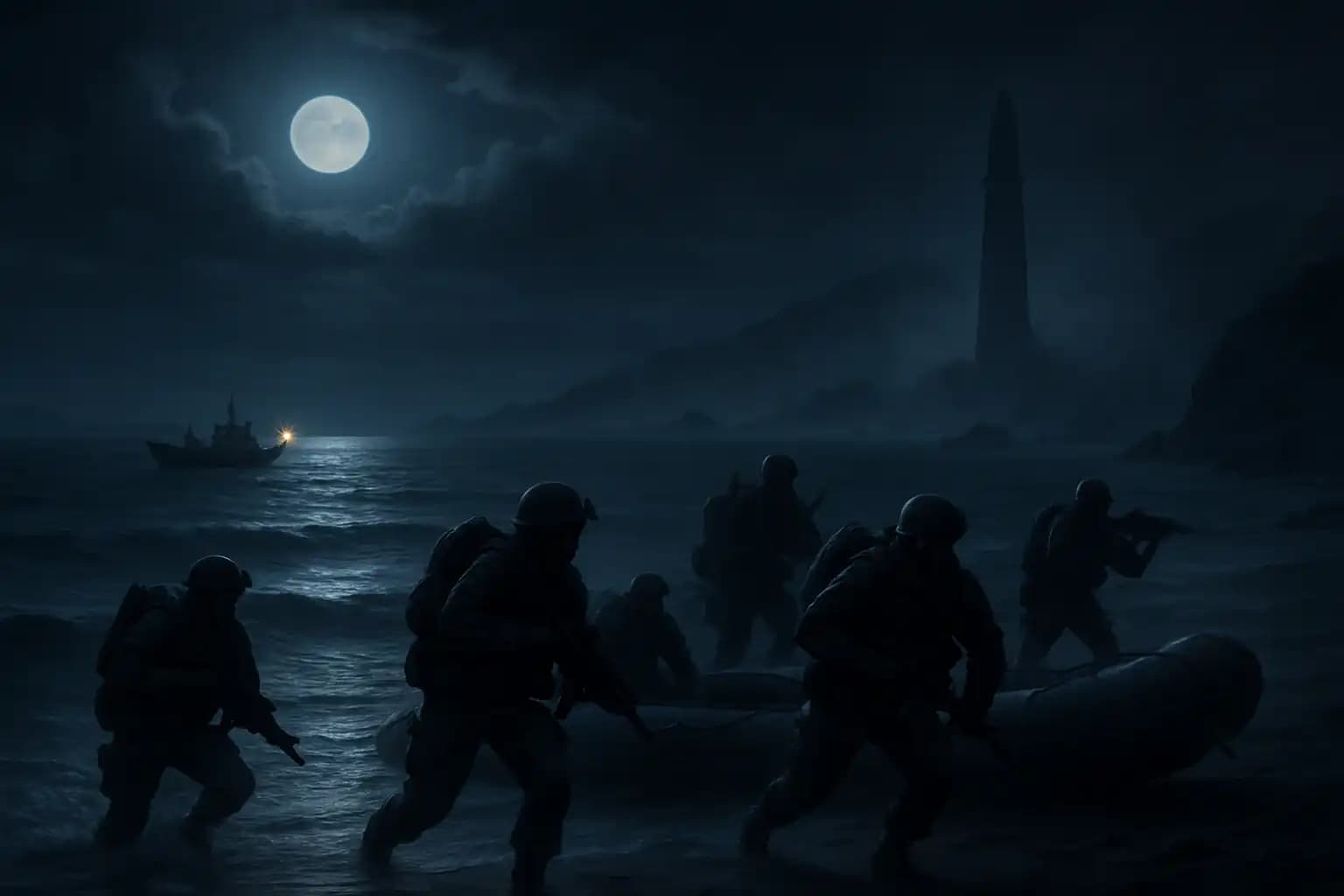

In early 2019, U.S. Navy SEAL Team 6—renowned for high-stakes operations—covertly entered North Korea on a winter night. They aimed to plant a surveillance device to intercept Kim Jong Un’s inner circle. What unfolded showcased not Hollywood heroics, but a stark reminder that elite forces can succumb to chaos and uncertainty.
Recent in-depth reporting revealed the mission’s details (New York Times, LiveNOW from FOX, The Guardian). Officials and eyewitnesses reported that a North Korean fishing vessel spotted the SEALs. Panic ensued: shots were fired, civilians died, and the team’s cover was compromised. In the realm of covert operations—where SEAL Team 6’s history consists of deniable responsibility and plausible successes—the disaster highlighted the perilous gap between effective force and moral calamity.
Inside JSOC’s Shadow: Special Operations Between History and Hysteria
The SEAL Team 6 mission represented a strategic gamble and high-wire diplomacy with a secretive, nuclear-armed regime. Historical precedents exist in other operations (black ops case studies). JSOC operations blur the lines where intelligence, sabotage, and plausible deniability intersect. Unlike tactical raids against Middle Eastern terror suspects, a failed operation in North Korea bears nuclear-level consequences for both operatives and the globe.
Advertisement
As events unfolded, the willingness to greenlight such missions revealed the U.S. command’s desperation to counter emerging threats. Analysts note a recurring pattern, reminiscent of covert surveillance efforts on adversaries discussed in darkly humorous digital corners like web rabbit holes and the classified tests detailed in clandestine aerospace programs.
The Deadly Cost of Secrecy: Civilians, Diplomacy, and Disinformation
The mission’s bloody aftermath, resulting in the deaths of unarmed North Korean civilians, exacerbated already tense diplomatic relations. Pyongyang’s propaganda machine exploited the event, issuing threats while Western officials scrambled for damage control. As seen in other intelligence failures—like leaked UFO program files ()—the opacity of special operations complicates fact from fiction, fueling disinformation and psychological warfare on all sides.