
On the Bronze Age steppe, over 4,000 years ago, the prehistoric Catacomb culture constructed a remarkable structure atop a high ridge overlooking a river flowing south toward the Black Sea. This site, often referred to as a temple or sanctuary, raises intriguing questions about the rituals and beliefs of its creators.
Key Takeaways
- The site is located about 40 km north of the Sea of Azov, near the town of Molans.
- Archaeological excavations revealed a complex structure with multiple phases of construction.
- The site likely served as a ritual center, possibly dedicated to a thunder god.
- The Catacomb culture had complex burial practices and social hierarchies.
- Many similar mounds exist in the region, suggesting a broader cultural significance.
The Site’s Location
The mysterious temple mound is situated approximately 40 km north of Melitopol, near the Mnaa River. This river flows into the Sea of Azov, and the mound itself stands at a remarkable height of 80 meters above the floodplain. Initially, it appeared to be just a large mound of earth, but extensive archaeological excavations revealed its true nature.
Phases of Construction
The site underwent several phases of construction, indicating its evolving significance over time. The earliest phase, dating back to around 2500 BC, featured 13 steep radial embankments made of large clay blocks, forming a circular platform about 20 meters in diameter. This platform was surrounded by paths, suggesting it was a place of gathering and ritual.
Advertisement
- First Phase: 13 steep embankments and a central altar.
- Second Phase: New ramps and paths were constructed, enhancing access to the altar.
- Third Phase: The mound was expanded, and a single wide ramp was created, indicating a shift in ritual practices.
Ritual Significance
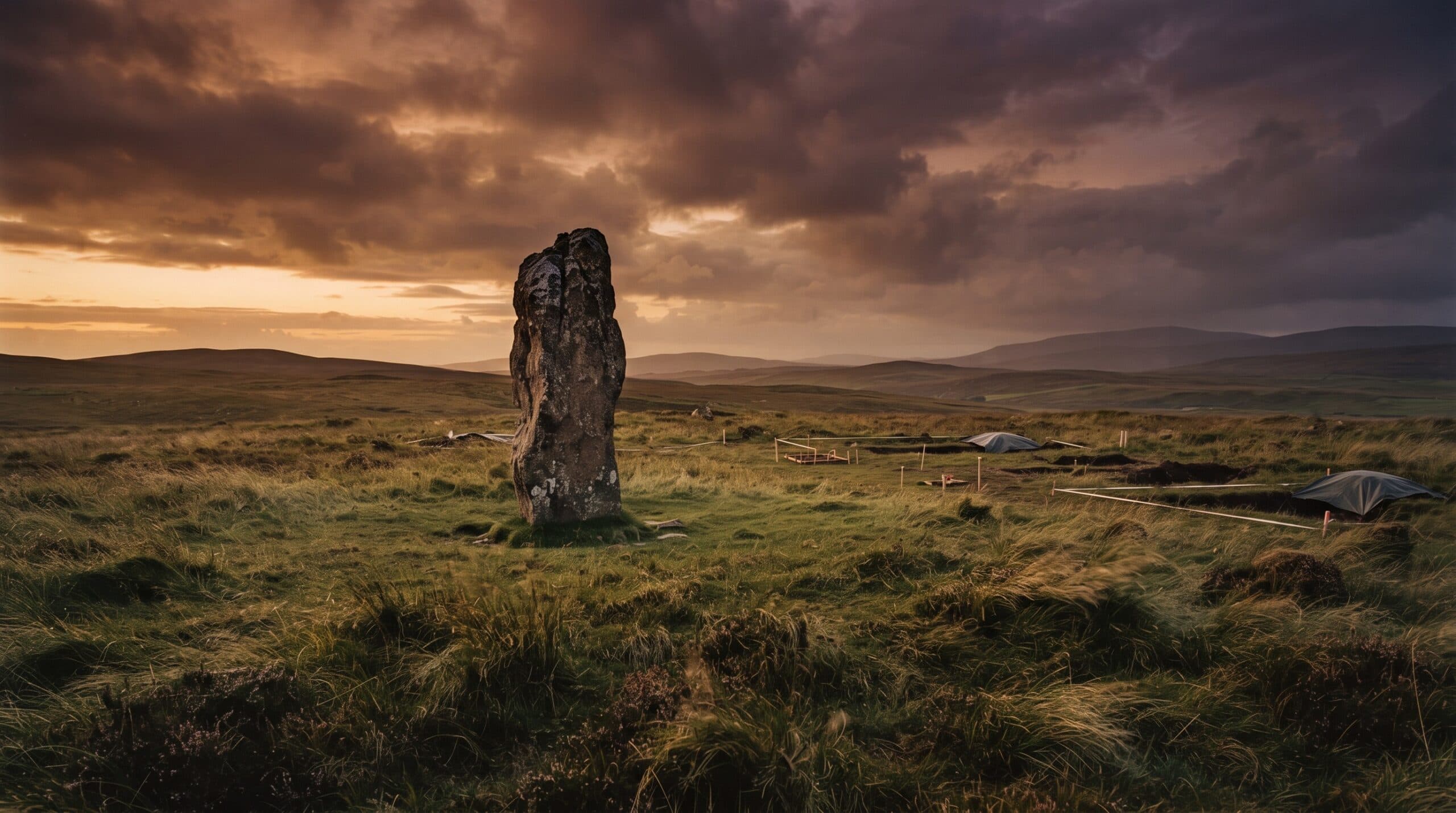
The temple mound likely served as a significant ritual site for the Catacomb culture. Evidence suggests that animal sacrifices and offerings may have taken place here, as fragments of animal bones were found among the remains of reeds used in rituals. The presence of a unique altar and the layout of the site indicate that it was a focal point for communal gatherings.
Worship and Beliefs
Archaeologists speculate that the site may have been dedicated to a thunder god, possibly linked to the Indo-European deity known as Pinos. This interpretation is supported by the discovery of an axe-shaped stele, which may symbolize the god’s connection to storms and fertility. The elevated position of the mound above the river valley further reinforces this idea, as it would have been a prominent landmark in the landscape.