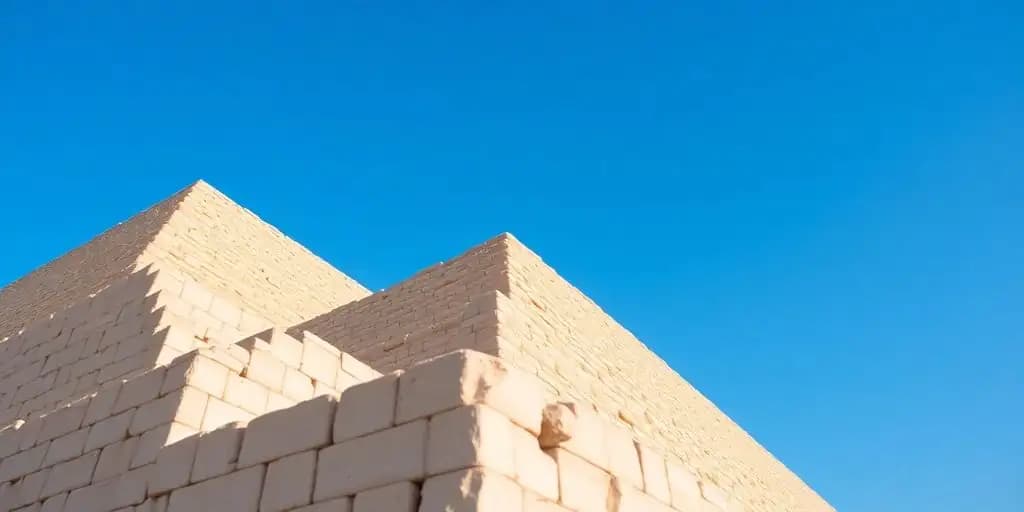

The Khafre Pyramid, one of the most iconic structures of ancient Egypt, has long been a subject of intrigue. Despite its massive size, many have questioned whether it contains hidden chambers or passages. Recent discussions have sparked interest in the results of a muon scan conducted in the 1960s, revealing surprising insights into this ancient marvel.
Key Takeaways
- The Khafre Pyramid was muon scanned in the 1960s, not recently.
- The scan aimed to detect cosmic rays passing through the pyramid.
- Results showed no significant chambers above the burial chamber.
- Only 19% of the pyramid’s volume was explored during the scan.
- The likelihood of hidden chambers remains low based on current knowledge.
The Khafre Pyramid’s Internal Layout
The internal structure of the Khafre Pyramid is relatively simple compared to its grandeur. The known layout includes:
- Burial Chamber: The main resting place of the pharaoh.
- Horizontal Passageway: Connecting the burial chamber to the outside.
- Lower Chamber: Positioned below the burial chamber.
- Descending Passageway: Leading down into the pyramid’s depths.
Interestingly, the only significant internal structure created within the masonry is the upper inclined passageway. This raises the question: what lies within the massive limestone blocks that make up the pyramid?
Advertisement
Muon Scanning: A Brief Overview
Muon scanning is a technique that uses cosmic rays to detect hidden structures. In 2016, advancements in this technology led to significant discoveries in the Great Pyramid. However, many were surprised to learn that the Khafre Pyramid had already been scanned back in 1965.
The proposal to scan the Khafre Pyramid was accepted by Egyptian authorities, and in 1968, detectors were placed inside the burial chamber. This was a groundbreaking moment in archaeological science, as it allowed researchers to gather data without damaging the structure.
Advertisement
Results of the Khafre Pyramid Muon Scan
The findings from the muon scan were quite definitive. The scientists concluded: