A March Vatican meeting between Pope Leo XIV and representatives of the International Association of Exorcists has triggered a fresh wave of interest in demonic-possession narratives, occult panic, and institutional…
Art Grindstone is the hard-nosed storyteller behind Unexplained.co, a veteran investigator whose life’s work sits at the crossroads of the paranormal, fringe science, and the shadows most people try not to look into. With decades spent chasing impossible stories — black-budget psychic programs, vanished Cold War experiments, desert rituals that sparked UFO waves, and the strange phenomena buried in America’s forgotten backroads — Art brings a rare combination of skepticism, awe, and journalistic precision. He’s not here to debunk. He’s not here to blindly believe. He follows the evidence wherever it leads — even when it leads someplace deeply uncomfortable. Known for his immersive, cinematic style and his ability to turn obscure research into gripping narrative, Art has built a devoted following across podcasts, long-form features, documentaries, and serialized investigations. His interviews are direct. His analysis is unflinching. His voice has become a staple in the modern paranormal renaissance — the guy people turn to when a story is too strange, too complex, or too dangerous for anyone else to touch. Off-mic, Art works with a distributed network of researchers, archivists, and field operatives who help surface the stories mainstream media ignores. On-mic, he transforms their findings into meticulous, high-impact reporting that refuses to insult the intelligence of true believers. His philosophy is simple: Take the phenomenon seriously. Treat the audience with respect. Tell the story as if the world depends on it — because sometimes it does. When Art Grindstone digs into a case, he isn’t just chasing a mystery. He’s tracing the fault lines of reality itself.
4 min · 956 words
In This Report(11)
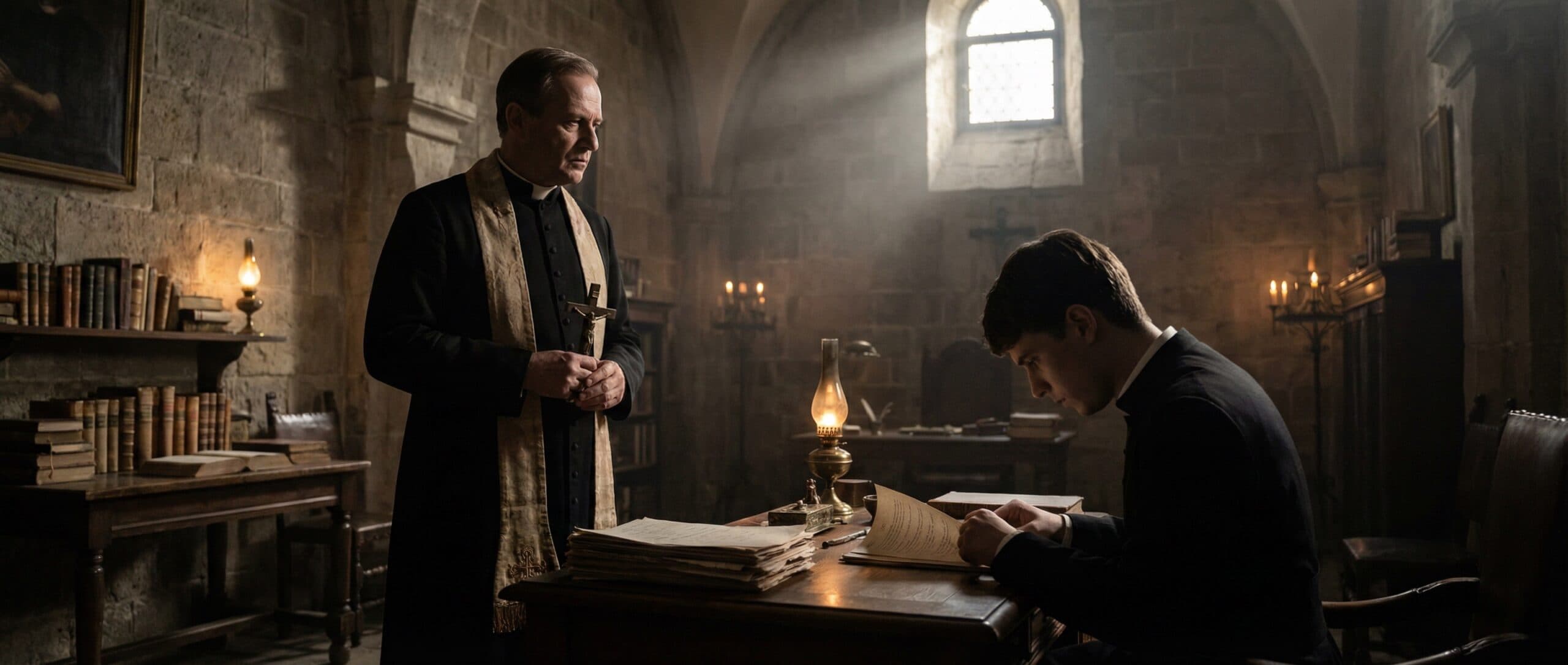
A March Vatican meeting between Pope Leo XIV and representatives of the International Association of Exorcists has triggered a fresh wave of interest in demonic-possession narratives, occult panic, and institutional religion’s response to spiritual warfare claims. The group reportedly urged the pope to ensure every Catholic diocese has one or more properly trained exorcists, citing what they describe as rising cases linked to occultism, esotericism, Satanism, and spiritual distress. According to EWTN News, this story is drawing attention well beyond its original niche.
For unexplained audiences, this lands right in the sweet spot where official religion overlaps with the paranormal. It’s not a random exorcist podcast or fringe testimony; it’s the Vatican-adjacent infrastructure treating exorcism as an active pastoral issue.
What Happened
This story works because it sounds like a horror movie headline but is rooted in real Church bureaucracy and doctrine. Reporting from AL.com summary adds context to how the story is being framed.
Advertisement
On March 13, 2026, Pope Leo XIV met privately with leaders of the International Association of Exorcists.
EWTN and follow-on reporting say the exorcists asked for every diocese worldwide to have trained practitioners.
The group described a rise in people harmed through involvement with occult practices and asked for more formal Church-level training and oversight.
Coverage also emphasized exorcism formation for priests and bishops, meaning this is being framed as a structural issue, not just sensational anecdote.
The timing is notable because mainstream and tabloid media have been primed by ongoing pop-culture fascination with exorcism, demonology, and “real life” possession accounts.
What Evidence Exists
Here’s what is known: A March Vatican meeting between Pope Leo XIV and representatives of the International Association of Exorcists has triggered a fresh wave of interest in demonic-possession narratives, occult panic, and institutional religion’s response to spiritual warfare claims. The group reportedly urged the pope to ensure every Catholic diocese has one or more properly trained exorcists, citing what they describe as rising cases linked to occultism, esotericism, Satanism, and spiritual distress.
The strongest evidence in stories like this is often not a final proof object, but a mixture of witness accounts, media framing, prior folklore, and the cultural weight of the subject itself. That is why separating verified facts from interpretation matters.
Japan Just Confirmed It Has UAP Footage — and Is Analyzing Pentagon Files Near Its Borders
Japan’s formal entry into the UAP transparency wave signals an international domino effect. What the country knows about UAP encounters near Japanese territory and why it matters now.
May 13, 2026 • 5 min read
Articles
Hidden in Every Human Genome: Two ‘Ghost’ Ancestors Science Has Never Found
A new Science study finds that everyone alive carries DNA from at least one unknown human ancestor. The fossils are still missing—but the genetic signal spans the globe.
Aug 21, 2026 • 9 min read
Strange History
The Scottish Well Burial That May Have Been an Iron Age Closing Ritual
A 2,000-year-old burial in a stone-lined Scottish well may record an Iron Age closing ritual—but the bones still hold the strangest clues.
Aug 19, 2026 • 8 min read
Authoritative coverage and primary reporting should stay central to the analysis, including sources such as:
Researchers and skeptics have argued that unexplained stories often grow fastest when the emotional framing is stronger than the evidentiary record. That does not mean the story is meaningless. It means the burden of proof and the burden of interpretation are not the same thing.
The most widely cited explanation is usually the least exotic one that still fits the known facts. But unresolved cases persist because the simplest explanation does not always feel emotionally complete to the audience following them.
Why It Matters
It legitimizes paranormal-adjacent belief inside a major institution
When exorcists meet the pope and ask for expanded training, it gives spiritual warfare narratives renewed credibility for believers.
It merges religion, occult panic, and modern anxiety
Stories about rising Satanism or occult practice often function as cultural mirrors for broader fears about moral decline, social fragmentation, and loss of spiritual grounding.
It’s a rare case where the unexplained comes with organizational receipts
This isn’t just “someone claims possession.” It’s a coordinated request from a formal association seeking wider infrastructure.
The story invites both belief and skepticism
Believers will see confirmation that dark spiritual forces are increasing. Skeptics will see moral panic packaged in ecclesiastical language. That tension is fertile content territory.
It can travel across formats
This works as a quick news hit, a deeper religious-paranormal analysis, or a cultural piece on why exorcism keeps resurging in public imagination.
Advertisement
The Bigger Unexplained Angle
What gives this topic staying power is not just the headline claim, but the way it plugs into deeper themes: secrecy, folklore, institutional mistrust, symbolic fear, wonder, and the human tendency to keep revisiting mysteries that never fully resolve.
That is exactly why the unexplained-wordpress standard requires more than a quick summary. Strong articles need context, internal discovery, authoritative links, explicit uncertainty, and sections that can stand on their own for readers and AI systems alike.
A March Vatican meeting between Pope Leo XIV and representatives of the International Association of Exorcists has triggered a fresh wave of interest in demonic-possession narratives, occult panic, and institutional religion’s response to spiritual warfare claims. The group reportedly urged the pope to ensure every Catholic diocese has one or more properly trained exorcists, citing what they describe as rising cases linked to occultism, esotericism, Satanism, and spiritual distress.
Why is this getting attention now?
It legitimizes paranormal-adjacent belief inside a major institution. When exorcists meet the pope and ask for expanded training, it gives spiritual warfare narratives renewed credibility for believers.
Is Vatican Exorcist Surge proven?
No. These articles are written to separate what is verified, what is claimed, and what remains uncertain. Mystery does not automatically equal proof.
What should readers focus on?
Focus on the evidence, the source quality, the skeptical or conventional explanations, and why the story still resonates even when certainty is missing.
Art Grindstone is the hard-nosed storyteller behind Unexplained.co, a veteran investigator whose life’s work sits at the crossroads of the paranormal, fringe science, and the shadows most people try not to look into. With decades spent chasing impossible stories — black-budget psychic programs, vanished Cold War experiments, desert rituals that sparked UFO waves, and the strange phenomena buried in America’s forgotten backroads — Art brings a rare combination of skepticism, awe, and journalistic precision. He’s not here to debunk. He’s not here to blindly believe. He follows the evidence wherever it leads — even when it leads someplace deeply uncomfortable. Known for his immersive, cinematic style and his ability to turn obscure research into gripping narrative, Art has built a devoted following across podcasts, long-form features, documentaries, and serialized investigations. His interviews are direct. His analysis is unflinching. His voice has become a staple in the modern paranormal renaissance — the guy people turn to when a story is too strange, too complex, or too dangerous for anyone else to touch. Off-mic, Art works with a distributed network of researchers, archivists, and field operatives who help surface the stories mainstream media ignores. On-mic, he transforms their findings into meticulous, high-impact reporting that refuses to insult the intelligence of true believers. His philosophy is simple: Take the phenomenon seriously. Treat the audience with respect. Tell the story as if the world depends on it — because sometimes it does. When Art Grindstone digs into a case, he isn’t just chasing a mystery. He’s tracing the fault lines of reality itself.