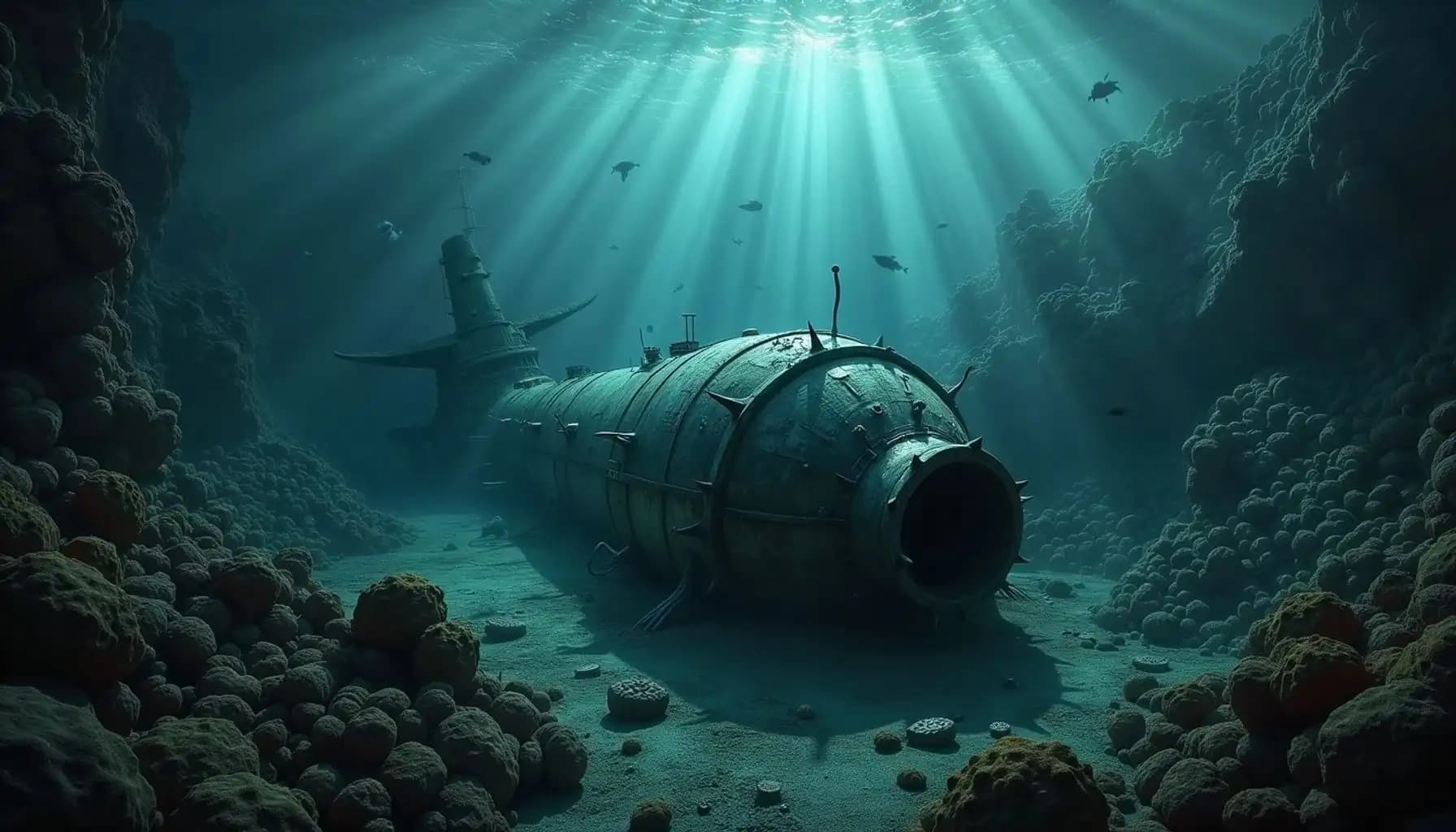

In June 2011, Swedish wreck divers Peter Lindbergh and Dennis Åsberg made a shocking discovery in the Baltic Sea. While exploring the Gulf of Bothnia, their sonar revealed an unidentified object nearly 300 feet below the surface. This nearly 200-foot cylindrical anomaly sparked intrigue and speculation about its origins, leading to an extraordinary expedition to uncover its secrets.
Key Takeaways
- Discovery: A mysterious cylindrical object was found in the Baltic Sea.
- Expedition: The Ocean X team embarked on a mission to investigate the anomaly.
- Theories: Speculations range from extraterrestrial origins to man-made structures.
- Challenges: The expedition faced technical difficulties and environmental hazards.
- Scientific Analysis: Experts weighed in on the potential nature of the object.
The Start Of An Adventure
Peter and Dennis, seasoned treasure hunters, were no strangers to the thrill of discovery. Their passion for uncovering lost wrecks drove them to explore the depths of the Baltic Sea. On what began as a routine expedition, they stumbled upon a sonar image that would change everything. The object appeared almost perfectly round, leading to immediate comparisons to a UFO.
The Expedition Team
The Ocean X team was formed, consisting of experienced divers, technical operators, and a dedicated ship’s crew. Their mission was clear: to investigate the anomaly and determine its nature. With a budget of 120,000 Euros, every day counted, and the pressure was on.
Advertisement
Theories Abound
As news of the discovery spread, theories began to emerge:
- Extraterrestrial: Some speculated it could be a crashed alien spacecraft.
- Man-Made: Others suggested it might be a sunken ship or a military craft.
- Natural Phenomenon: Some believed it could be a geological formation or volcanic rock.
Technical Challenges
The expedition faced numerous challenges, including equipment failures and adverse weather conditions. A storm threatened to delay their mission, and the team had to navigate through treacherous waters. Despite these setbacks, they remained determined to uncover the truth.
The Search Begins
Using advanced sonar technology, the team scanned the seabed. They employed a multi-beam sonar for detailed imaging and a side-scan sonar for broader coverage. The search area spanned over 1.16 square miles, making the task akin to finding a needle in a haystack.