World War 3, Iran, and Prophecy: The Investigation Into…
Prophecy
World War 3, Iran, and Prophecy: The Investigation Into Why Apocalyptic Theories Keep Converging Here
Every generation gets at least one geopolitical flashpoint that conspiracy culture begins treating as the place where history, religion, and catastrophe finally merge. Right now, for a huge section of the internet, that…
Art Grindstone is the hard-nosed storyteller behind Unexplained.co, a veteran investigator whose life’s work sits at the crossroads of the paranormal, fringe science, and the shadows most people try not to look into. With decades spent chasing impossible stories — black-budget psychic programs, vanished Cold War experiments, desert rituals that sparked UFO waves, and the strange phenomena buried in America’s forgotten backroads — Art brings a rare combination of skepticism, awe, and journalistic precision. He’s not here to debunk. He’s not here to blindly believe. He follows the evidence wherever it leads — even when it leads someplace deeply uncomfortable. Known for his immersive, cinematic style and his ability to turn obscure research into gripping narrative, Art has built a devoted following across podcasts, long-form features, documentaries, and serialized investigations. His interviews are direct. His analysis is unflinching. His voice has become a staple in the modern paranormal renaissance — the guy people turn to when a story is too strange, too complex, or too dangerous for anyone else to touch. Off-mic, Art works with a distributed network of researchers, archivists, and field operatives who help surface the stories mainstream media ignores. On-mic, he transforms their findings into meticulous, high-impact reporting that refuses to insult the intelligence of true believers. His philosophy is simple: Take the phenomenon seriously. Treat the audience with respect. Tell the story as if the world depends on it — because sometimes it does. When Art Grindstone digs into a case, he isn’t just chasing a mystery. He’s tracing the fault lines of reality itself.
8 min · 1,819 words
In This Report(18)
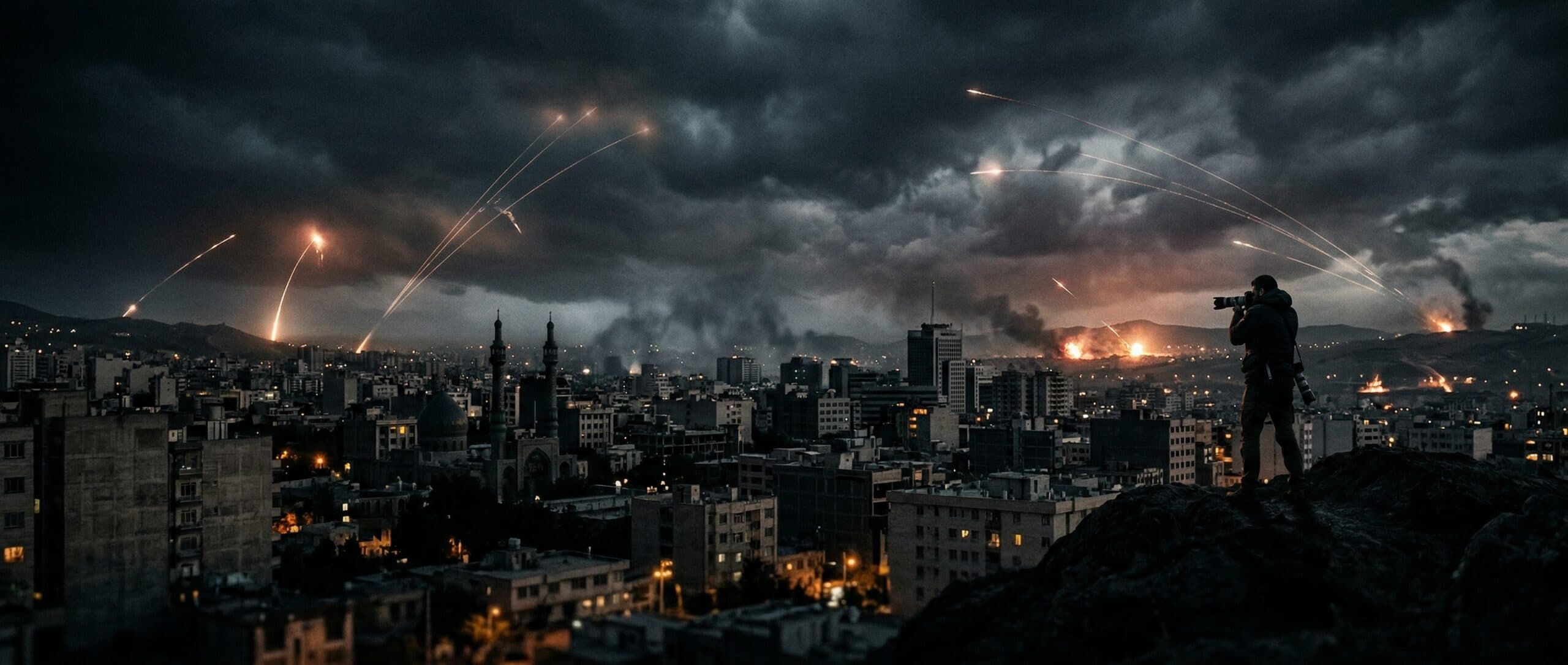
Every generation gets at least one geopolitical flashpoint that conspiracy culture begins treating as the place where history, religion, and catastrophe finally merge. Right now, for a huge section of the internet, that flashpoint is Iran. Not because Iran is the only unstable actor in the world, but because it sits at the crossroads of World War 3 fears, biblical and Islamic end-times speculation, proxy-war escalation, energy shock scenarios, and a long-running conviction that prophecy and geopolitics are not separate systems at all.
This pillar investigation looks at why Iran keeps appearing at the center of World War 3 prophecy narratives, how modern conspiracy culture connects military escalation to religious expectation, and why so many audiences now treat a Middle East crisis not just as a political event, but as a possible sign that prophetic timelines are accelerating.
Why Iran Became the Center of the World War 3 Prophecy Narrative
Iran occupies a uniquely unstable symbolic position in global anxiety. It is not merely a nation-state in conflict with its rivals. In the imagination of conspiracy culture, Iran is a hinge point: a place where energy chokepoints, regional war, nuclear escalation, proxy conflict, intelligence intrigue, and ancient prophetic language all appear to overlap.
Advertisement
That is what gives the topic such unusual emotional force. A border dispute somewhere else may feel strategic. Iran feels apocalyptic.
The reason is not only military. It is narrative. Iran already sits inside decades of Western prophecy commentary, anti-globalist fear, biblical speculation, and civilizational rhetoric. Once military tensions rise, the prophecy machine activates almost automatically.
The World War 3 Framework: Why Iran Keeps Looking Like the Trigger
For many people searching terms like “World War 3 and Iran prophecy,” the question is not whether the world is unstable. It is whether Iran is the event horizon that could turn instability into something irreversible.
Two New Loch Ness Reports Bring 2026 Sightings to 13—But What Was Actually Seen?
Two new reported encounters bring the 2026 Loch Ness sighting count to 13. Here is what the reports establish—and what they do not.
Aug 26, 2026 • 6 min read
Articles
Two New Loch Ness Reports Bring 2026 Sightings to 13: But What Was Actually Seen?
Two new reported encounters bring the 2026 Loch Ness sighting count to 13. Here is what the reports establish and what they do not.
Aug 24, 2026 • 6 min read
Space
A ‘Black Hole Star’ May Be Hiding Inside the Early Universe’s Red Dots
One crimson point in the infant universe is so bright that ordinary starlight cannot explain it. A new Nature study argues it may be a dense gas envelope powered from within by a growing black hole.
Aug 20, 2026 • 8 min read
oil routes and energy pricing
nuclear rhetoric and deterrence language
Russian and Chinese strategic calculations
If you were designing the perfect scenario for apocalyptic speculation, you would build something that looked very much like an Iran-centered escalation map.
Iran in Prophecy Culture: Why Political Analysis Is Never Enough
This is where the story leaves conventional foreign-policy commentary and enters the much stranger terrain of prophetic geopolitics. For many audiences, especially in the Christian conspiracy ecosystem, Iran is not just a modern state. It is a prophetic actor.
Depending on the interpretive tradition, Iran gets tied into:
Ezekiel war speculation
end-times alliance theories
Jerusalem-centered escalation models
Armageddon preconditions
the return of temple, Antichrist, or tribulation frameworks
Even when specific theological mappings are debated, the emotional function is the same: Iran becomes one of the few places in the world where military headlines are treated as possible prophecy updates.
That is why ordinary escalation stories suddenly produce extraordinary audience reactions. Readers are not just asking what happened. They are asking whether a prophetic threshold has been crossed.
The Israel-Iran Axis and the Theology of Escalation
The Israel-Iran relationship supercharges the prophecy layer in a way few other geopolitical rivalries can. A conflict involving shipping routes or sanctions may be important, but once Israel and Iran are placed in direct or proxy confrontation, the event is no longer read only through strategy. It is read through sacred geography.
For conspiracy audiences, the escalation is not just alarming. It feels narratively inevitable.
Why Prophecy Content Thrives When War Feels Plausible
Prophecy spikes during periods of geopolitical stress because prophecy offers what normal analysis cannot: an emotional theory of inevitability. Military experts talk about incentives, deterrence, factions, red lines, and logistics. Prophecy culture talks about destiny.
That difference matters because anxiety wants shape. A strategic briefing can explain risk, but a prophetic interpretation can explain meaning. For a frightened public, meaning is often more powerful than evidence.
This is why modern prophecy content is so algorithmically successful. It takes complicated conflict and translates it into a narrative of signs, thresholds, and cosmic timing. The audience no longer has to track dozens of military variables. It only has to ask: is this the sign we were warned about?
The Conspiracy Layer: Is War Being Managed Toward a Script?
For true conspiracy audiences, the prophecy angle rarely stops at interpretation. It becomes suspicion. The question changes from “Does this fulfill prophecy?” to “Are elites managing events in ways that deliberately activate prophecy expectations?”
This is where the story becomes much darker.
In that frame, Iran is not just an adversary. It is a symbolic trigger point inside a much larger script — one involving:
energy manipulation
security-state expansion
mass fear conditioning
religious polarization
economic shock preparation
the manufacturing of consent through apocalyptic framing
This does not require a literal cabal reading prophecy charts in a bunker. It only requires systems of power to understand that prophecy language mobilizes people.
And once you accept that, even partially, every military escalation begins to feel like it might be both real conflict and symbolic theater at the same time.
Why Iran Outperforms Other Conflict Zones in End-Times Speculation
Many regions are unstable. Not all of them produce this much prophecy intensity. Iran does for several reasons:
it is tied to Israel in public imagination
it intersects with oil and global markets
it carries decades of U.S. adversarial narrative weight
it sits close to sacred geography in prophecy culture
it is easy for both secular analysts and religious interpreters to slot into bigger narratives
This is also why Iran-centered fear can quickly spread into unrelated areas like finance, crypto panic, prepper culture, and spiritual countdown communities. Once the symbolic engine starts, it drags other sectors with it.
The Religious Overlay: Christian, Islamic, and New Age Interpretations
Another reason this topic is so sticky is that Iran can be integrated into multiple prophetic systems at once. In Christian prophecy culture, Iran often appears inside end-times war maps and Jerusalem-centered conflict scenarios. In some Islamic eschatological discussions, regional conflict takes on its own symbolic significance. In New Age and fringe spirituality circles, war in the Middle East is often framed as part of a broader planetary transition or consciousness purge.
That means the same event can be consumed through radically different metaphysical lenses while still producing the same emotional output: history feels accelerated.
That shared acceleration effect is what makes Iran such a durable prophecy node.
What the Skeptics Get Right
A serious investigation has to say this clearly: Iran is also the perfect target for narrative overreach. It is possible to over-symbolize every missile strike, over-read every political speech, and force prophecy onto events that are better explained by deterrence, revenge, regional competition, and domestic politics.
Skeptics are right to warn that not every crisis in the Middle East is evidence of biblical fulfillment or elite scripting. Conflict in the region is real enough without adding supernatural scaffolding to every escalation.
But skepticism alone does not explain why these prophecy narratives keep returning so powerfully. To understand that, you have to look beyond factual correction and into the emotional infrastructure of fear.
Our Investigation: Why These Narratives Refuse to Die
The reason World War 3, Iran, and prophecy keeps returning as a combined search theme is that it satisfies three deep psychological needs at once:
It simplifies chaos. Prophecy organizes geopolitical complexity into an intelligible story.
It gives fear a destination. Instead of diffuse anxiety, people get a named hotspot.
It transforms politics into meaning. War stops being only about power and becomes about destiny.
That is a potent combination. It turns ordinary geopolitical analysis into something spiritually and emotionally totalizing.
This is also why Iran keeps outperforming many other flashpoints in apocalyptic discourse. It is not just a conflict zone. It is a symbolic machine.
So Is Iran Really the Prophetic Trigger for World War 3?
The honest answer is that no one knows. There is no clean bridge from modern military reporting to prophetic certainty. But there is a very real bridge from fear to interpretation, and from interpretation to belief. That bridge is what people are actually walking when they search for this topic.
Some readers will take that as proof that prophecy is unfolding. Others will see it as evidence that the internet has become an apocalypse amplifier. Both views miss something important: the power of this story lies not only in what may happen next, but in how millions of people are already being taught to read current events as if the script has begun.
FAQ
Frequently Asked Questions
Why is Iran so often linked to World War 3 prophecy?
Because Iran sits at the intersection of Middle East conflict, Israel-focused escalation, oil and energy concerns, and long-running end-times interpretations in both religious and conspiracy cultures.
Do biblical prophecy watchers specifically focus on Iran?
Yes. Many prophecy interpreters connect Iran to broader end-times war theories, especially those involving Israel, regional alliances, and Jerusalem-centered escalation.
Does this mean World War 3 is inevitable?
No. Prophecy narratives often treat geopolitical stress as confirmation of a larger timeline, but that is not the same thing as objective inevitability. Military reality is still shaped by strategy, deterrence, and political choices.
Why do conspiracy audiences connect war and prophecy so easily?
Because prophecy gives chaotic world events a sense of hidden structure, while conspiracy thinking adds the belief that powerful actors may already understand or exploit that structure.
What is the biggest takeaway from the Iran prophecy narrative?
The biggest takeaway is that Iran functions as both a real geopolitical flashpoint and a symbolic trigger in modern apocalyptic culture. The overlap between those two roles is what makes the story so powerful.
Art Grindstone is the hard-nosed storyteller behind Unexplained.co, a veteran investigator whose life’s work sits at the crossroads of the paranormal, fringe science, and the shadows most people try not to look into. With decades spent chasing impossible stories — black-budget psychic programs, vanished Cold War experiments, desert rituals that sparked UFO waves, and the strange phenomena buried in America’s forgotten backroads — Art brings a rare combination of skepticism, awe, and journalistic precision. He’s not here to debunk. He’s not here to blindly believe. He follows the evidence wherever it leads — even when it leads someplace deeply uncomfortable. Known for his immersive, cinematic style and his ability to turn obscure research into gripping narrative, Art has built a devoted following across podcasts, long-form features, documentaries, and serialized investigations. His interviews are direct. His analysis is unflinching. His voice has become a staple in the modern paranormal renaissance — the guy people turn to when a story is too strange, too complex, or too dangerous for anyone else to touch. Off-mic, Art works with a distributed network of researchers, archivists, and field operatives who help surface the stories mainstream media ignores. On-mic, he transforms their findings into meticulous, high-impact reporting that refuses to insult the intelligence of true believers. His philosophy is simple: Take the phenomenon seriously. Treat the audience with respect. Tell the story as if the world depends on it — because sometimes it does. When Art Grindstone digs into a case, he isn’t just chasing a mystery. He’s tracing the fault lines of reality itself.