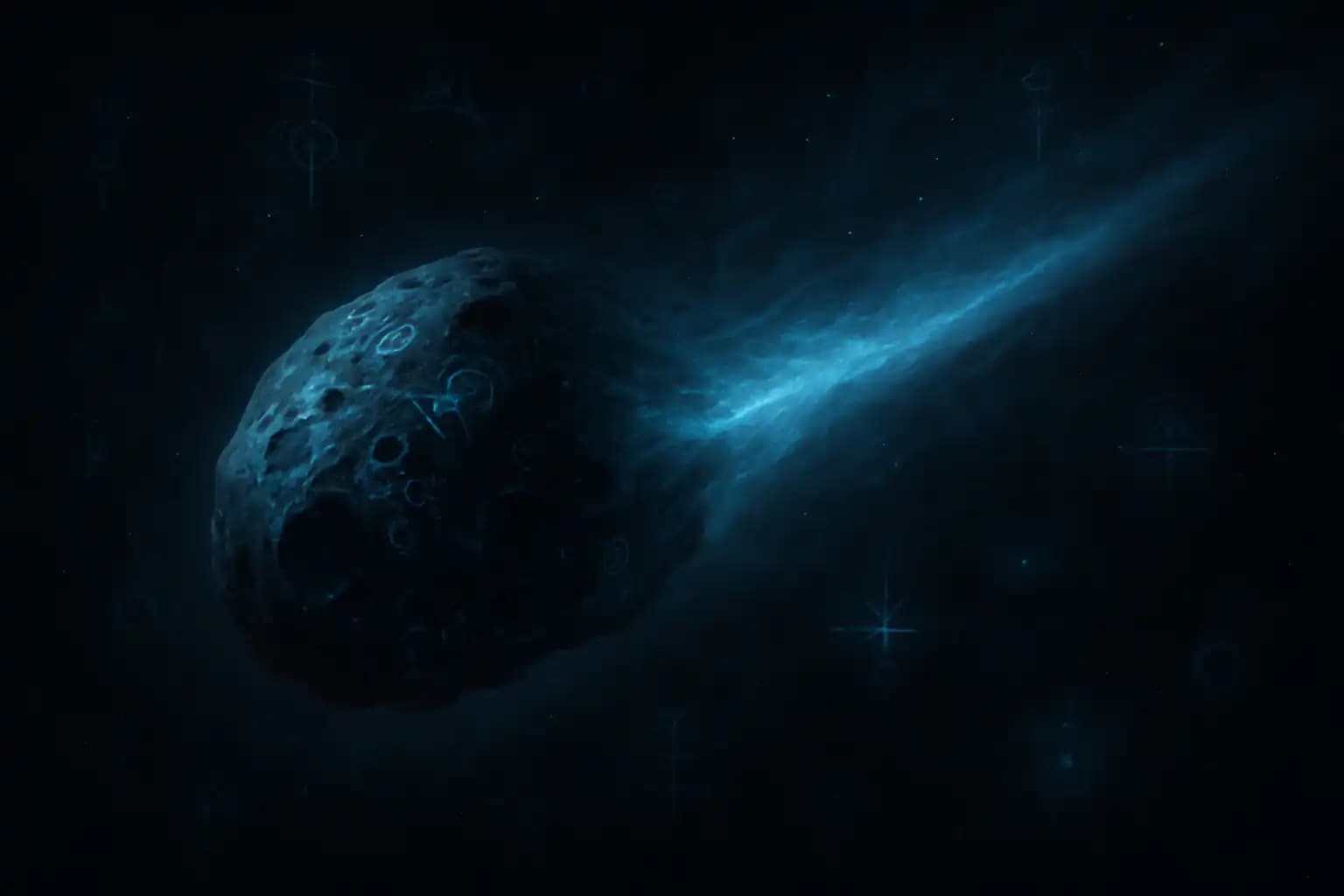

The first interstellar object, ʻOumuamua, surprised astronomers. Now, in 2025, we meet 3I/Atlas—a cosmic visitor that challenges our understanding. Shrouded in scientific mystery and internet speculation, the comet ignites intense debate: What is it? Where did it come from? What secrets hide in its icy core?
With each update from space agencies and viral discussions, the legend of 3I/Atlas grows. Its journey captivates academic journals and speculative YouTubers, merging precise calculations with dramatic tension typical of doomsday thrillers. For those intrigued by astrophysics and the unknown, this is the deep-dive awaited.
The Origin Story: What Makes 3I/Atlas Interstellar?
3I/Atlas is the third confirmed interstellar object—highlighted in Scientific American. Like rogue elements from distant star systems, these objects escape our Sun’s gravity. According to Wikipedia, cosmic collisions often expel them from their home systems, allowing them to wander through interstellar space for billions of years, until they pass solar neighborhoods like ours.
Advertisement
Excitement surged when 3I/Atlas appeared, potentially over seven billion years old—predating the Solar System itself. For more on its stunning origins and implications linked to Hopi prophecy, see this feature on cosmic omens and alien invasion speculation.
Strange Orbits and the Bizarre Path of 3I/Atlas
Forget predictable planetary orbits. 3I/Atlas’s hyperbolic trajectory screams “visitor.” According to ScienceAlert, 3I/Atlas is neither returning nor staying. Its erratic path has astronomers rethinking models of the Oort cloud and interstellar debris fields. Even the most seasoned astrophiles struggle to keep up. In an era where sky-watcher apps track strange objects, interest in these cosmic anomalies has hit a cultural peak, oscillating between awe and panic.
This cosmic unease mirrors rising anxiety around phenomena like the “Black Cube UFO” sightings at military bases. When objects defy expectations, speculation runs wild.