Ancient Astronaut Claims Are Surging Again: Why Real Archaeology Keeps Getting Repackaged as Alien Evidence | Unexplained
Space
Ancient Astronaut Claims Are Surging Again: Why Real Archaeology Keeps Getting Repackaged as Alien Evidence
The latest wave of ancient astronaut content is not being driven by a single discovery. It is being driven by a familiar online formula: take a real archaeological update, strip away its scientific context, and recast…
Art Grindstone is the hard-nosed storyteller behind Unexplained.co, a veteran investigator whose life’s work sits at the crossroads of the paranormal, fringe science, and the shadows most people try not to look into. With decades spent chasing impossible stories — black-budget psychic programs, vanished Cold War experiments, desert rituals that sparked UFO waves, and the strange phenomena buried in America’s forgotten backroads — Art brings a rare combination of skepticism, awe, and journalistic precision. He’s not here to debunk. He’s not here to blindly believe. He follows the evidence wherever it leads — even when it leads someplace deeply uncomfortable. Known for his immersive, cinematic style and his ability to turn obscure research into gripping narrative, Art has built a devoted following across podcasts, long-form features, documentaries, and serialized investigations. His interviews are direct. His analysis is unflinching. His voice has become a staple in the modern paranormal renaissance — the guy people turn to when a story is too strange, too complex, or too dangerous for anyone else to touch. Off-mic, Art works with a distributed network of researchers, archivists, and field operatives who help surface the stories mainstream media ignores. On-mic, he transforms their findings into meticulous, high-impact reporting that refuses to insult the intelligence of true believers. His philosophy is simple: Take the phenomenon seriously. Treat the audience with respect. Tell the story as if the world depends on it — because sometimes it does. When Art Grindstone digs into a case, he isn’t just chasing a mystery. He’s tracing the fault lines of reality itself.
6 min · 1,271 words
In This Report(13)
The latest wave of ancient astronaut content is not being driven by a single discovery. It is being driven by a familiar online formula: take a real archaeological update, strip away its scientific context, and recast it as evidence that extraterrestrials once shaped human civilization. That formula is working again in April 2026, and it says as much about internet culture as it does about the enduring pull of ancient alien mythology.
If you want the direct answer, here it is: there is no new mainstream archaeological evidence proving ancient astronauts visited Earth. What is happening instead is a fresh burst of viral reinterpretation, where legitimate finds, dating updates, and museum discoveries are being folded into a pre-existing story that many audiences already want to believe.
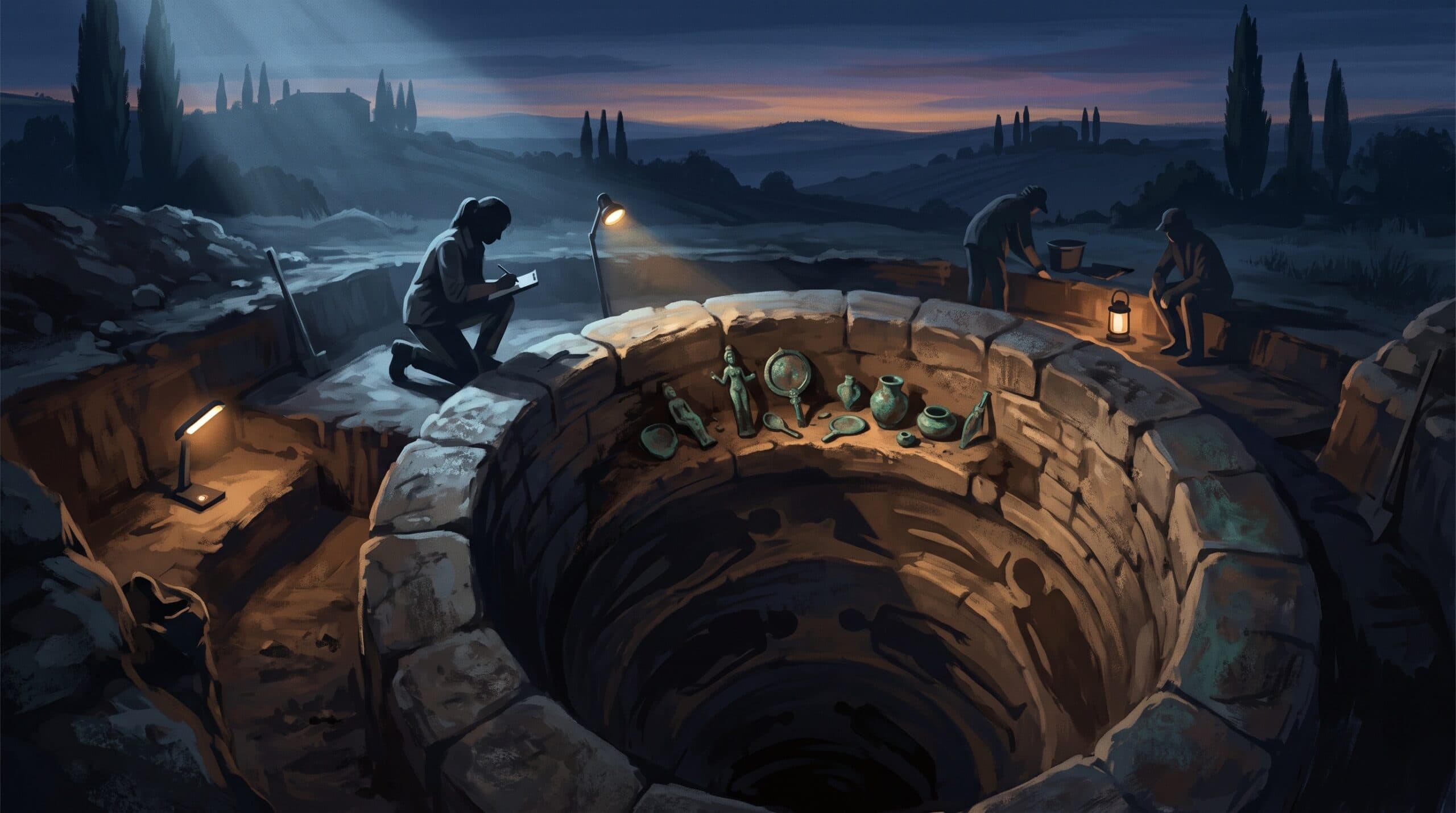
That matters because real archaeology already offers enough wonder on its own. Research published through institutions like the Archaeological Institute of America and reporting aggregated by ScienceDaily’s archaeology coverage show how often legitimate discoveries are richer, stranger, and more human than viral alien retellings suggest.
Advertisement
What This Story Actually Says
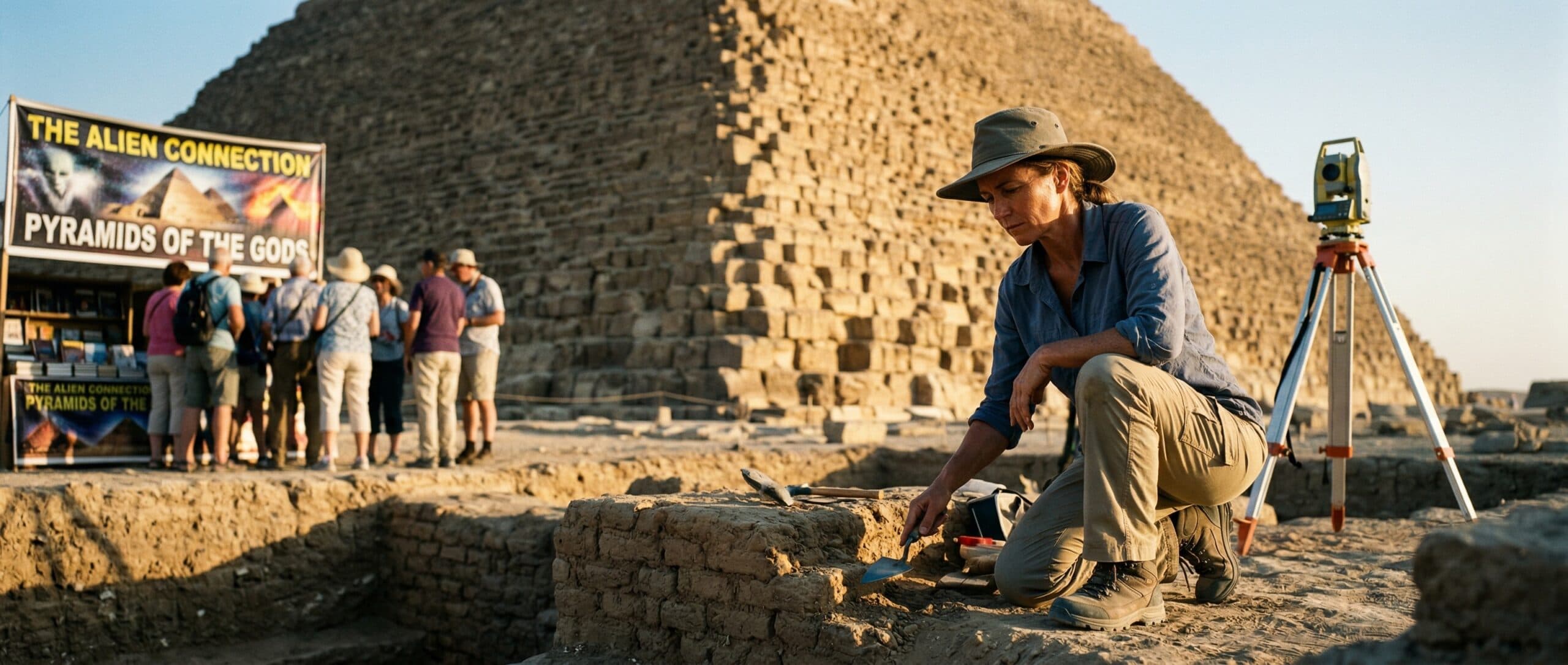
Across late March and early April 2026, fringe creators and YouTube channels have been circulating new posts about so-called ancient astronaut evidence. The pattern is highly recognizable: a real discovery is announced or revisited, an unusual artifact or chronology detail is isolated, and then the explanation is stretched toward alien intervention.
The underlying source material is often mundane by scientific standards. It might involve a revised excavation date, a misunderstood symbolic image, or an archaeological press release framed far beyond what researchers actually said. But once the item is edited into a short-form clip or dramatic thumbnail, the claim becomes less about evidence and more about narrative momentum.
That distinction matters. The online version of the story is usually not “archaeologists found proof of extraterrestrials,” but rather “why aren’t experts admitting what this clearly means?” That framing turns uncertainty into suspicion and turns specialist caution into alleged suppression.
Why Ancient Astronaut Content Spreads So Easily
The ancient astronaut theory has always been built for virality. It offers a clean, dramatic explanation for complex historical questions. It replaces slow scholarship with a cinematic answer: ancient people did incredible things, therefore something non-human must have helped them.
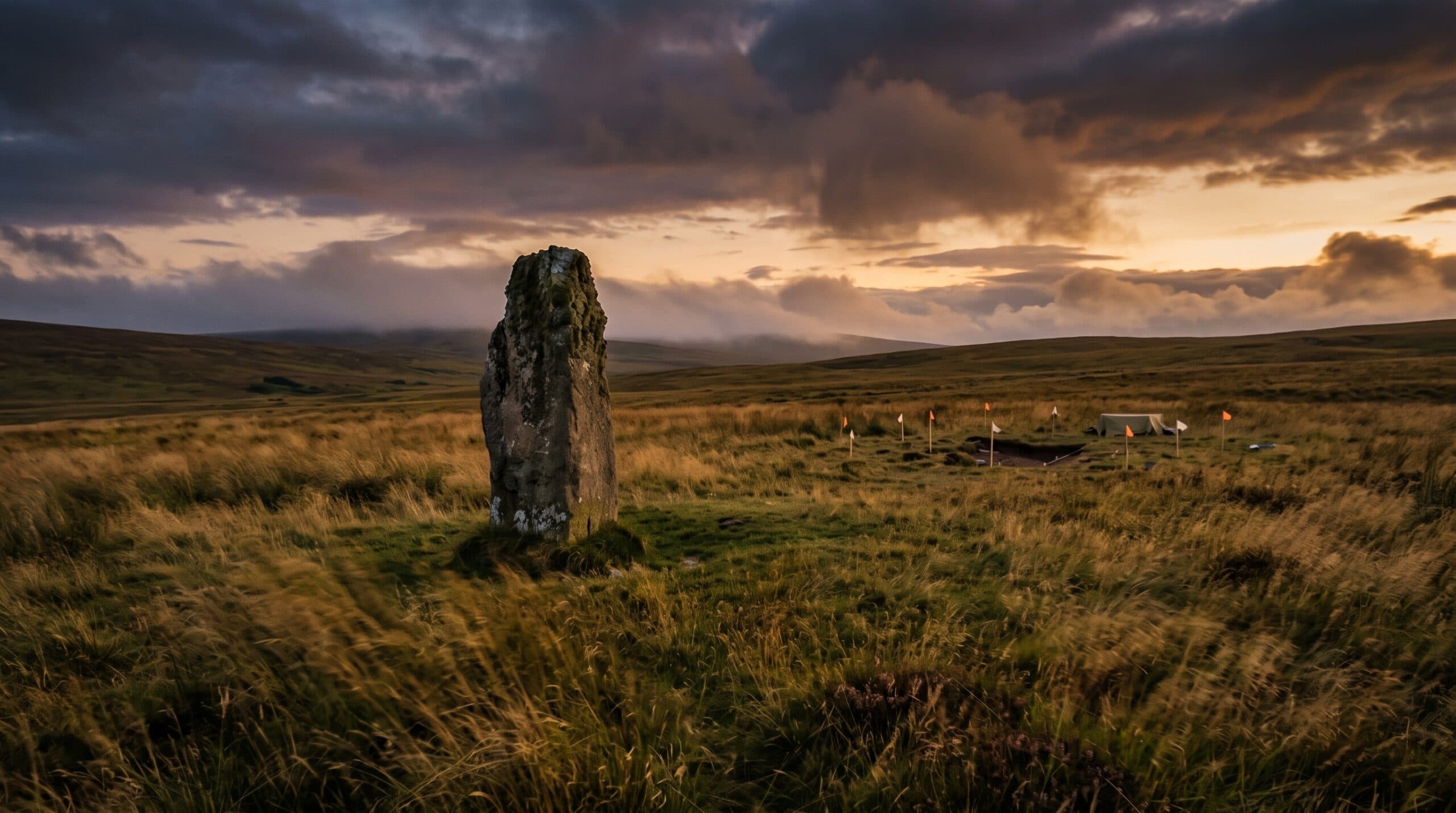
The Lonely Rock That Led Archaeologists to a 3,700-Year-Old Ritual Site
A single stone spotted by a student led archaeologists to a 3,700-year-old ritual site—and raised new questions about how ancient landscapes were read.
Aug 17, 2026 • 4 min read
Ancient Civilizations
1957 Electrogravitics Secret: The Classified Research Program Whose Watchers Have All ‘Gone’
A viral essay claims that classified electrogravitics research made real progress in the 1950s — and that everyone who knew the truth about it has since disappeared from the public record. The story is spreading through high-strangeness forums.
May 14, 2026 • 7 min read
Ancient Civilizations
1957 Electrogravitics Secret: The Classified Research Program Whose Watchers Have All ‘Gone’
A viral essay claims that classified electrogravitics research made real progress in the 1950s — and that everyone who knew the truth about it has since disappeared from the public record. The story is spreading through high-strangeness forums.
May 13, 2026 • 7 min read
That logic spreads especially well online because it rewards pattern recognition over context. A carved figure, a strange alignment, or an engineering achievement can be presented as a mystery in seconds. The harder work—reading excavation reports, cultural histories, and peer-reviewed interpretations—does not travel nearly as fast.
It also benefits from familiarity. Audiences have been trained by decades of television, documentaries, and internet culture to read archaeological ambiguity as a clue pointing toward aliens. Once that interpretive lens is in place, almost any surprising historical detail can be turned into “evidence.”
What the Evidence Actually Supports
The strongest evidence here supports something much less sensational: ancient societies were technically skilled, symbolically sophisticated, and often more capable than modern mythmakers give them credit for. Mainstream archaeology does not need extraterrestrials to explain architecture, ritual systems, trade networks, astronomy, or symbolic art.
That does not mean every historical puzzle is solved. Archaeology is full of open questions, contested timelines, and evolving interpretations. But an open question is not the same thing as proof of alien contact. In practice, the ancient astronaut frame usually enters the conversation after the evidence, not before it. It is applied to material that already exists rather than discovered through rigorous investigation.
Readers who want a grounded approach should pay attention to what archaeologists actually claim, how a find was documented, whether a sensational interpretation appeared only after the story hit social media, and whether the strongest version of the evidence really requires a non-human explanation. Good starting points include the public resources of Smithsonian history reporting and the more technical archive at Archaeology magazine.
What Skeptics and Archaeologists Would Say
Mainstream experts tend to push back on ancient astronaut claims for two reasons. First, the claims usually rely on selective reading. A dramatic detail is amplified while the surrounding cultural and technical context is ignored. Second, the theory often underestimates ancient people themselves, implying they could not have built, designed, or understood complex systems without outside intervention.
That criticism is not just academic nitpicking. It goes to the heart of why many archaeologists find the ancient alien frame so frustrating. It can erase indigenous knowledge, flatten cultural complexity, and replace real human achievement with a pseudo-mythology dressed up as contrarian truth.
There is also a media literacy problem here. Once an artifact is labeled “impossible” or “unexplained” in a viral clip, the burden shifts unfairly onto experts to debunk an interpretation that was never well-supported in the first place.
Why This Story Still Matters in 2026
The current surge matters because it shows how easily real science can be repackaged into speculative content ecosystems. When audiences are primed for cover-up narratives, even careful archaeological reporting can become raw material for conspiracy-minded storytelling.
Advertisement
It also matters because the ancient astronaut myth is a gateway theory. It does not stay confined to archaeology. It often overlaps with broader claims about hidden histories, suppressed technology, elite secrecy, and institutional deception. In other words, it is part of a larger belief environment, not just a quirky theory about the past.
For unexplained coverage, that makes it a valuable subject. The bigger question is not simply whether people believe in ancient aliens. It is why this frame continues to outperform more evidence-based explanations whenever a visually compelling discovery appears online.
The Bigger Pattern Behind the Ancient Alien Revival
What keeps this story alive is not proof. It is interpretive hunger. Audiences want a version of history that feels hidden, forbidden, and bigger than the official one. Ancient astronaut content satisfies that appetite while borrowing legitimacy from genuine archaeology.
That is why these revivals keep happening in cycles. New artifacts are not required. A fresh clip, a dramatic voiceover, or a decontextualized quote can restart the entire machine. The result is a cultural loop in which scholarship generates wonder, social media reframes wonder as suspicion, and suspicion gets monetized as revelation.
Final Assessment
The April 2026 ancient astronaut surge does not reveal new proof of extraterrestrial contact. It reveals how durable the ancient alien narrative remains when real archaeology is fed into a high-speed attention economy. The strongest takeaway is not that experts are hiding alien evidence. It is that ambiguity still sells better than context, and that history becomes easiest to distort when wonder is stripped away from the people who actually created it.
Frequently Asked Questions
Is there any new proof of ancient astronauts in April 2026?
No. The current surge is being driven by reinterpretations of real archaeological stories, not by new mainstream evidence proving extraterrestrial contact.
Why do ancient alien claims keep going viral?
Because they offer dramatic, easy-to-share explanations for complex historical questions and perform extremely well in visual, short-form media environments.
What do archaeologists usually object to?
They object to selective use of evidence, loss of cultural context, and the implication that ancient civilizations could not achieve remarkable things without non-human help.
Why does this matter beyond archaeology?
Because ancient astronaut content often feeds larger conspiracy ecosystems built around hidden history, elite secrecy, and distrust of mainstream institutions.
Art Grindstone is the hard-nosed storyteller behind Unexplained.co, a veteran investigator whose life’s work sits at the crossroads of the paranormal, fringe science, and the shadows most people try not to look into. With decades spent chasing impossible stories — black-budget psychic programs, vanished Cold War experiments, desert rituals that sparked UFO waves, and the strange phenomena buried in America’s forgotten backroads — Art brings a rare combination of skepticism, awe, and journalistic precision. He’s not here to debunk. He’s not here to blindly believe. He follows the evidence wherever it leads — even when it leads someplace deeply uncomfortable. Known for his immersive, cinematic style and his ability to turn obscure research into gripping narrative, Art has built a devoted following across podcasts, long-form features, documentaries, and serialized investigations. His interviews are direct. His analysis is unflinching. His voice has become a staple in the modern paranormal renaissance — the guy people turn to when a story is too strange, too complex, or too dangerous for anyone else to touch. Off-mic, Art works with a distributed network of researchers, archivists, and field operatives who help surface the stories mainstream media ignores. On-mic, he transforms their findings into meticulous, high-impact reporting that refuses to insult the intelligence of true believers. His philosophy is simple: Take the phenomenon seriously. Treat the audience with respect. Tell the story as if the world depends on it — because sometimes it does. When Art Grindstone digs into a case, he isn’t just chasing a mystery. He’s tracing the fault lines of reality itself.