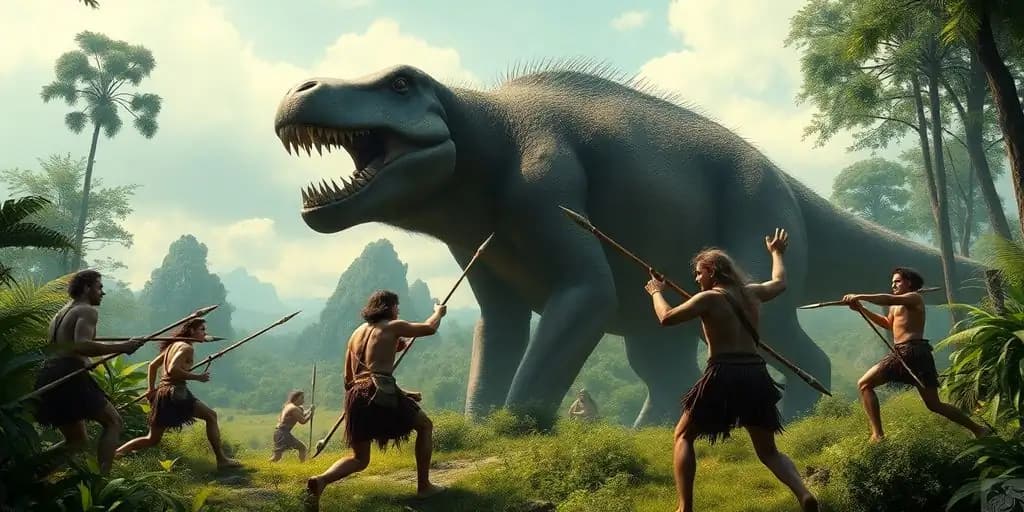

In the heart of East Africa lies Olorgesailie, a site that reveals the incredible story of our ancestors, Homo erectus, who lived between 1 million and 300,000 years ago. This location, rich in archaeological finds, showcases the remarkable hunting strategies employed by these early humans against formidable prey.
Key Takeaways
- Location: Olorgesailie, Southern Kenya, near ancient Lake shores.
- Hominin: Homo erectus, known for their advanced tools and social strategies.
- Prey: Theropithecus oswaldi, a giant baboon-like primate, was hunted by early humans.
- Hunting Techniques: Evidence suggests cooperative hunting and the use of tools like handaxes and wooden spears.
The site of Olorgesailie is not just another archaeological dig; it’s a window into the past. Here, our ancestors faced off against Theropithecus oswaldi, a creature that was three times the size of a modern baboon, equipped with sharp canines and living in tight-knit social groups. So, why would Homo erectus take such a risk? What tools and tactics did they use? Let’s explore this fascinating story.
The Setting of Olorgesailie
Olorgesailie is located in the Eastern Rift Valley of Kenya. Hundreds of thousands of years ago, it was near the shores of an ancient lake, providing water and attracting various animals like hippos, zebras, and elephants. The earliest human remains found here date back nearly a million years, with abundant handaxes discovered, indicating that this site was a hub of activity for Homo erectus.
Advertisement
Tools of the Trade
Homo erectus is credited with creating the Acheulean handaxes, which were used for butchering animals and possibly as weapons. These tools were essential for survival, allowing them to process meat and defend themselves. The layers of Olorgesailie that interest us date between 400,000 to 700,000 years ago, a time when Homo erectus had spread across much of the world.
Evidence of Hunting
At Olorgesailie, researchers found butchered remains of various animals, including hippopotamus, elephant, zebra, giraffe, and, notably, Theropithecus oswaldi. The evidence suggests that these hominins were skilled hunters, likely using wooden spears to ambush their prey. They may have also practiced persistence hunting, chasing animals until they were exhausted.