
Key Takeaways
- A magnitude 7.6 earthquake hit offshore of Aomori Prefecture on 8 December 2025 at 23:15 JST (14:15 UTC), with the epicenter at approximately 40.96°N, 142.18°E and a depth of 50–54 km, according to USGS and JMA reports.
- Tsunami warnings were issued by JMA and PTWC, forecasting up to 3 meters in some areas, but observed waves reached only 0.2–0.7 meters; seismic intensity hit upper-6 in places like Hachinohe, followed by aftershocks including an M5.5 event 15–20 minutes later.
- Mainstream agencies highlight the uncertainty—this could stand alone or signal a larger rupture, as seismology can’t predict definitively; community voices, like Stefan Burns, speculate on escalation, though these ideas lack peer-reviewed backing yet.
A Cold Night, a Rolling Sea
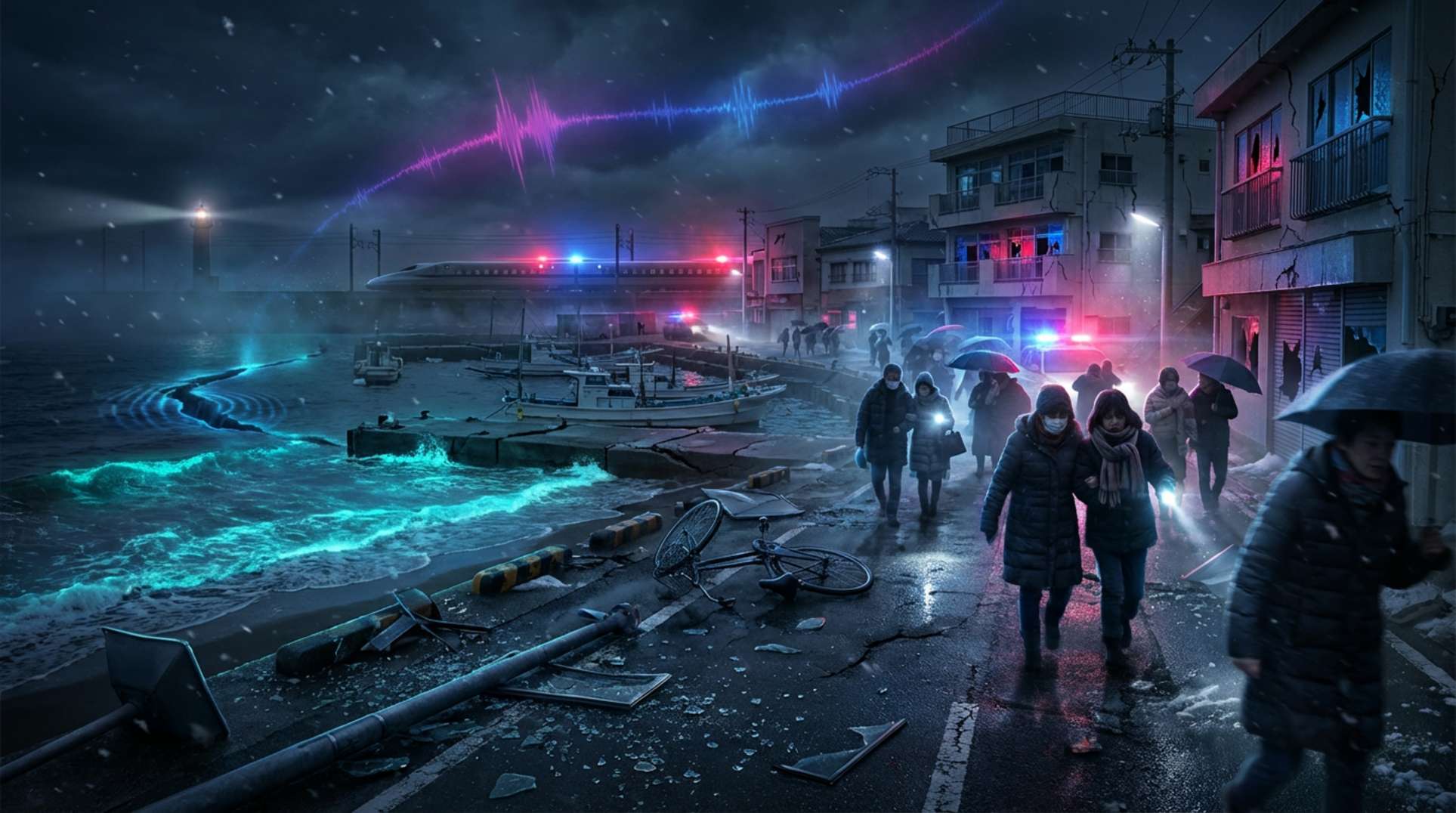
It was deep into the evening on 8 December 2025, 23:15 JST, when the ground beneath northeastern Honshu began to heave. Coastal towns like Hachinohe and Misawa felt the prolonged shaking, a relentless roll that shattered glass and toppled debris. Residents, bundled against the winter chill, grabbed what they could and fled to higher ground as tsunami alerts blared from phones and sirens. Footage from NHK and local sources captured the chaos: streets emptying, waves lapping at ports under the dark sky. Injuries mounted, power flickered out in patches, and the Tōhoku Shinkansen ground to a halt for safety checks. Evacuation orders swept across areas, affecting around 90,000 people in those tense hours. The fear lingered, amplified by memories of past disasters, turning a cold night into something far more ominous.
What Witnesses and Analysts Report
Those on the ground didn’t hold back in sharing what they saw. Social media lit up with raw videos from Hachinohe and nearby spots—buildings swaying, waves surging into ports, families rushing uphill with whatever they could carry. Regional reporters from NHK and local outlets fed us on-the-scene footage, painting a picture of real disruption amid the aftershocks. Then there’s Stefan Burns, the geophysicist who’s been tracking these patterns. In his video breakdown, he positions this M7.6 as part of a broader spike in anomalous quake activity, floating the idea it might foreshadow a bigger rupture. Reactions in our circles vary: some nod along, concerned about the implications, while others push back, calling for more solid evidence. Online forums are buzzing with alternative angles too—ties to solar flares, space weather, even resonance effects—though mainstream seismologists and plenty of our own urge caution, reminding us these links aren’t locked in by hard science yet.
Timelines, Tracks, and Hard Data
Let’s anchor this in the facts we can verify. The USGS event page (id us6000rtdt) logs the quake at magnitude 7.6, coordinates roughly 40.96°N, 142.18°E, depth 50–54 km, striking at 14:15 UTC (23:15 JST). JMA clocked seismic intensity up to upper-6 in Aomori areas like Hachinohe and fired off tsunami warnings estimating up to 3 meters along the northeastern coast. PTWC echoed with advisories for hazardous waves within 1,000 km. Actual tsunami heights at ports? They topped out at 0.2–0.7 meters, with some hitting 0.5–0.7 meters. Aftershocks rolled in, including an M5.5 about 15–20 minutes later. Infrastructure took hits: Tōhoku Shinkansen sections suspended, power outages scattered, injuries and property damage reported. Evacuation alerts reached around 90,000 people early on. Check sources like USGS, JMA bulletins via Reuters or CNN, PTWC advisories, and NHK reports for the raw details.
What was the magnitude and location of the earthquake? How significant was the tsunami that followed? Could this earthquake be a foreshock to something bigger? What alternative theories are being discussed? What should readers watch for next?