Key Takeaways
- Eyewitness reports often describe close encounters with a large, bipedal, hairy figure, accompanied by large footprints that are frequently cast in plaster, along with nocturnal vocalizations, tree knocks, and evasive behavior.
- Supporting data includes the BFRO’s database of around 75,000 reports, with 5,000 to 6,000 classified as credible, plus over 300 footprint casts studied in labs like Jeffrey Meldrum’s, and spatial analyses highlighting consistent hotspots.
- Key unresolved issues persist, such as the lack of uncontested physical specimens like bones or DNA with proven provenance, despite decades of evidence; FBI tests from the 1970s identified submitted hair samples as originating from the deer family, leaving mainstream science unconvinced.
A Night in the Old Growth
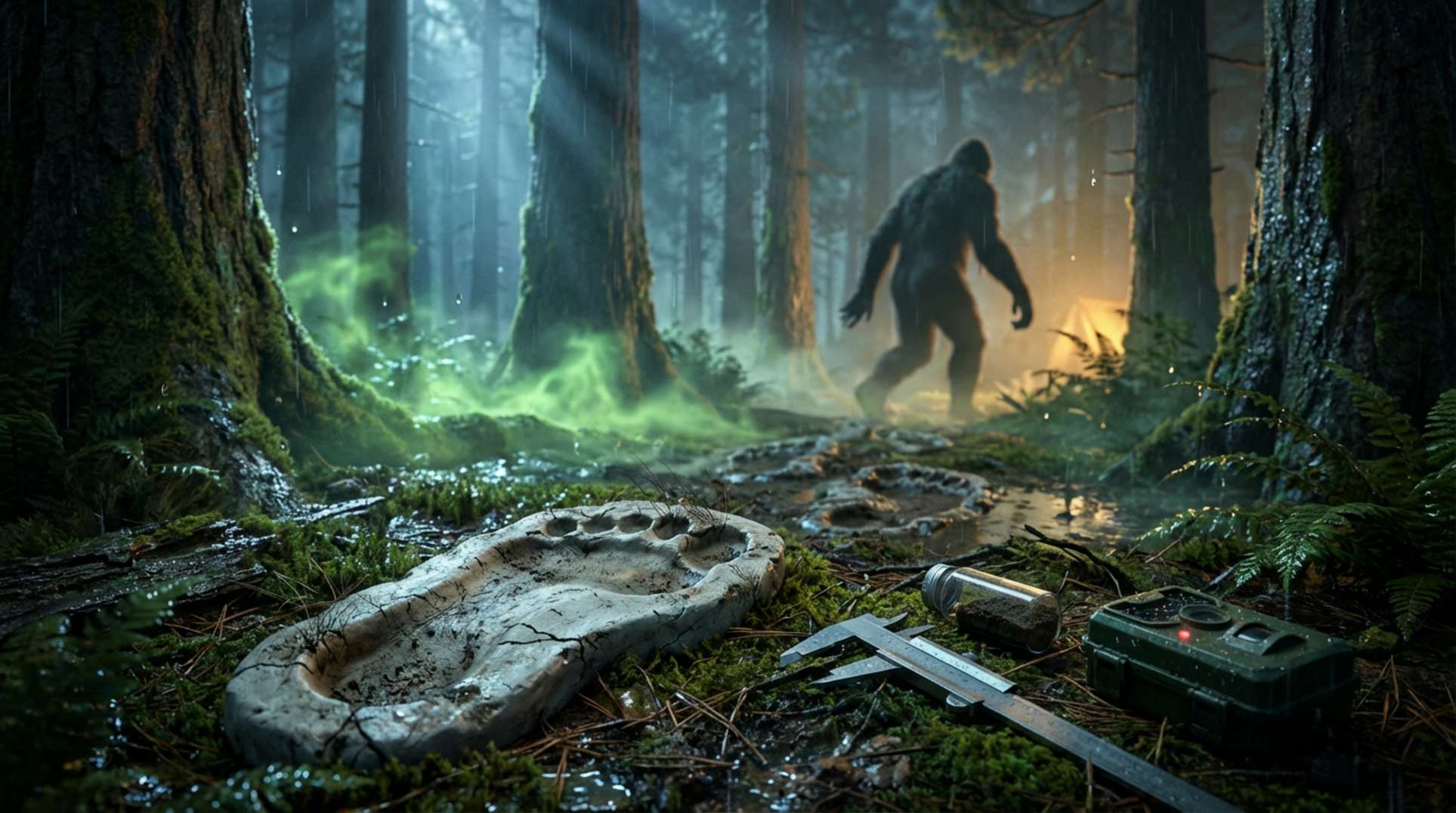
Picture this: You’re deep in the Pacific Northwest’s ancient forests, where towering pines block out the stars. It’s dusk, and the air hangs heavy with the scent of damp earth and evergreen. A distant knock echoes through the timber—sharp, deliberate, like wood on wood. Then a low howl cuts the silence, raw and primal, sending chills down your spine. These are the settings for so many reports: isolated, rugged spots in places like Washington state, the Sierra Nevada, or Appalachia, often under cover of night. Indigenous stories of ‘wild men’ have whispered through these lands for generations, adding layers of lore that make every rustle feel charged with possibility.
What Witnesses and Analysts Report
Witnesses across the board describe brief but intense sightings—a massive, hairy biped striding through the underbrush, vanishing just as quickly. Footprints turn up, big and detailed, often preserved in plaster casts. Nights bring howls and screams that echo for miles, punctuated by branch knocks that seem like signals. Bait left out disappears without a trace. Long-term observers note patterns, like repeat visits to certain spots. Community investigators step in here: they gather these accounts through groups like the BFRO, where reports get submitted with details, casts, and sometimes audio. Teams organize expeditions, set up stakeouts, and deploy camera traps. To sort the wheat from the chaff, BFRO classifies reports into A, B, or C levels based on detail and the odds of misidentification, all fed into their public database for anyone to search.
Timelines, Tracks, and Hard Data
Researchers have built a solid archive over the years. The BFRO’s Geographical Database holds thousands of reports, publicly accessible, backing their claim of about 75,000 submissions total, with 5,000 to 6,000 deemed credible internally. In 2019, the FBI released 22 pages from the 1970s, detailing tests on hair and tissue samples labeled as ‘Bigfoot’—results pointed to deer family origins. Jeffrey Meldrum’s lab curates over 300 plaster casts of alleged Sasquatch prints, while the Patterson-Gimlin film from October 20, 1967, remains a cornerstone of visual evidence. Crowd-sourced maps highlight hotspots: Washington state leads, followed by clusters in the Sierra Nevada, Ohio River Valley, and central Florida. Here’s a quick table to break it down:
| Source | Type of Evidence | Key Finding | Limitations |
|---|---|---|---|
| BFRO Geographical Database | Report database | ~75,000 reports, ~5,000–6,000 credible | Relies on self-reported data; subjective classifications |
| FBI 2019 Release | Hair/tissue analysis | Samples matched deer family | Limited to 1970s samples; no broader endorsement |
| Meldrum Lab | Footprint casts | Over 300 casts studied | No proven chain of custody for all; no DNA link |
| Patterson-Gimlin Film | Video footage | 1967 recording of bipedal figure | Debated authenticity; no physical specimen |
Official Story vs. What the Data Suggests
Official channels keep it straightforward. The FBI doesn’t back Bigfoot as a real species; their 1970s tests on those hair samples came back as deer, plain and simple. Mainstream science echoes that skepticism—without bones, fossils, or DNA with solid provenance, most experts won’t bite. They demand hard proof for such a bold claim. On the flip side, BFRO runs as a volunteer network, classifying reports to build credibility. A few academics, like Jeffrey Meldrum, dig into footprint shapes and collect casts, arguing the patterns deserve a closer look. It’s a standoff: institutions see isolated failures, while field researchers point to accumulating clues that hint at something more.
Why There’s Still a Mystery
No one’s laid hands on an uncontested specimen—bones, tissue, or DNA with a clear trail back to the source. That’s the big hole in the story. Reports pile up, but questions linger about how casts and samples are handled, or whether interviews follow consistent rules. Blind reviews of ‘credible’ tags could tighten things up. Looking ahead, tools like environmental DNA sampling in hotspot areas might change the game. Pair that with standardized field methods—proper casting, geotagged photos, camera arrays—and we could shift from scattered stories to something verifiable. These aren’t dead ends; they’re paths waiting to be followed.
What It All Might Mean
These encounters tie into deep roots—Indigenous tales of hairy giants that stretch back centuries, woven into the fabric of places like the Pacific Northwest. We’ve got stacks of reports and casts, yet tests like the FBI’s keep skepticism alive without that slam-dunk specimen. It leaves room for doubt, but also for wonder: is this a cultural echo, or an undiscovered piece of the natural world? If you’re out there chasing leads, stick to protocols—secure your samples, calibrate those casts, tag your media, and team up for eDNA work. Together, we might bridge the gap between whispers in the woods and facts on the table.
Frequently Asked Questions
Eyewitnesses often report close sightings of a large, bipedal, hairy figure, along with large footprints, nocturnal howls, tree knocks, and evasive behavior. These patterns appear in heavily forested, low-population areas like the Pacific Northwest and Appalachia.
The BFRO has collected around 75,000 reports, classifying 5,000 to 6,000 as credible, and maintains a public database. Over 300 footprint casts exist in labs like Jeffrey Meldrum’s, with hotspots identified in spatial analyses, though no uncontested physical specimens have emerged.
The FBI tested hair samples in the 1970s and concluded they came from the deer family, releasing files in 2019 without endorsing Bigfoot’s existence. Mainstream science remains skeptical, requiring bones or DNA for acceptance, while community groups like BFRO continue independent investigations.
Despite numerous reports and casts, no proven physical specimen exists, and issues like sample provenance persist. Advances in eDNA sampling and standardized protocols could help resolve ambiguities, turning anecdotal evidence into verifiable data.