A BBC feature spotlighting sociological research into Bigfoot hunters is giving the Sasquatch conversation a fresh 2026 angle. Instead of asking “Is Bigfoot real?” the story asks a more interesting question: what kind…
Art Grindstone is the hard-nosed storyteller behind Unexplained.co, a veteran investigator whose life’s work sits at the crossroads of the paranormal, fringe science, and the shadows most people try not to look into. With decades spent chasing impossible stories — black-budget psychic programs, vanished Cold War experiments, desert rituals that sparked UFO waves, and the strange phenomena buried in America’s forgotten backroads — Art brings a rare combination of skepticism, awe, and journalistic precision. He’s not here to debunk. He’s not here to blindly believe. He follows the evidence wherever it leads — even when it leads someplace deeply uncomfortable. Known for his immersive, cinematic style and his ability to turn obscure research into gripping narrative, Art has built a devoted following across podcasts, long-form features, documentaries, and serialized investigations. His interviews are direct. His analysis is unflinching. His voice has become a staple in the modern paranormal renaissance — the guy people turn to when a story is too strange, too complex, or too dangerous for anyone else to touch. Off-mic, Art works with a distributed network of researchers, archivists, and field operatives who help surface the stories mainstream media ignores. On-mic, he transforms their findings into meticulous, high-impact reporting that refuses to insult the intelligence of true believers. His philosophy is simple: Take the phenomenon seriously. Treat the audience with respect. Tell the story as if the world depends on it — because sometimes it does. When Art Grindstone digs into a case, he isn’t just chasing a mystery. He’s tracing the fault lines of reality itself.
4 min · 944 words
In This Report(13)
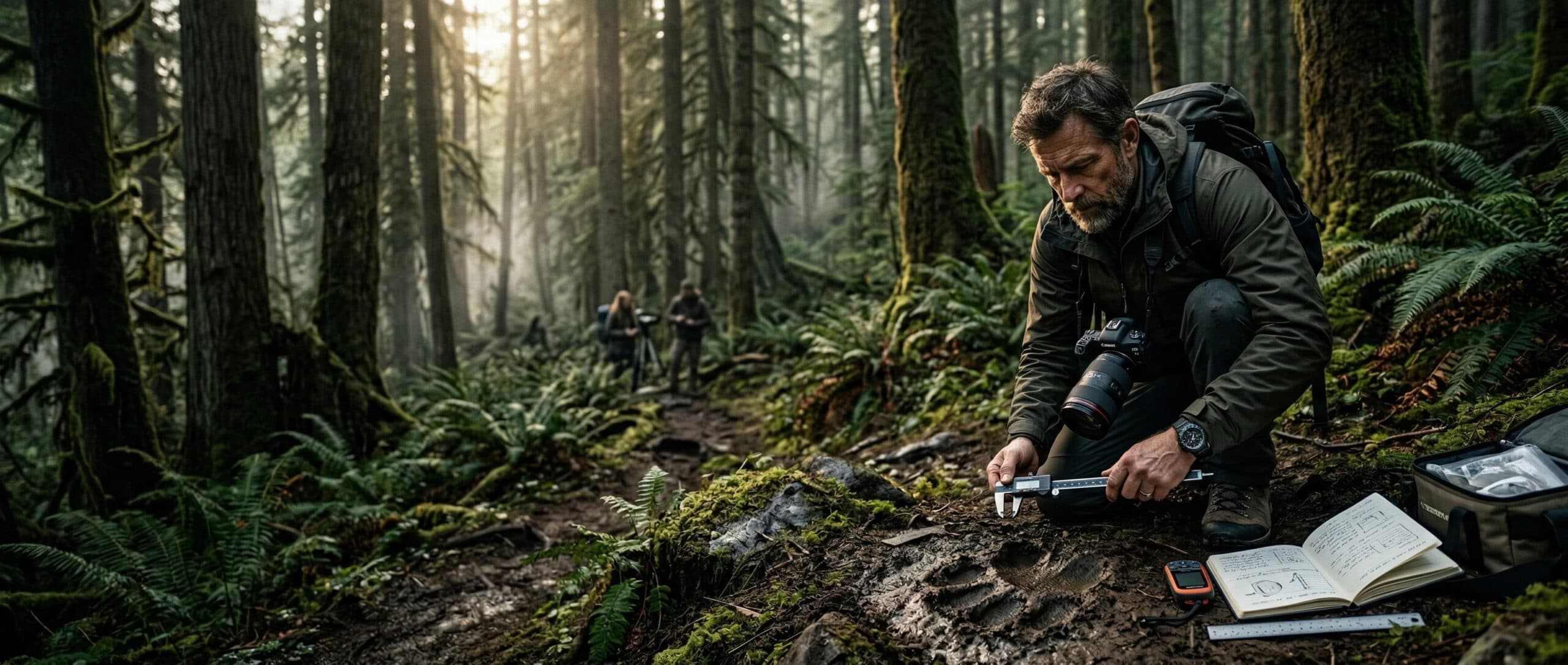
A BBC feature spotlighting sociological research into Bigfoot hunters is giving the Sasquatch conversation a fresh 2026 angle. Instead of asking “Is Bigfoot real?” the story asks a more interesting question: what kind of people build their lives around searching for a creature science has never confirmed? According to BBC News, the story is gaining attention well beyond its original niche.
Researchers interviewed more than 160 Bigfoot hunters over three years for the book *Bigfooters and Scientific Inquiry*. The result is a serious look at belief, fieldwork, masculinity, anti-elitism, technology, and the desire to “re-enchant” a disenchanted world.
That is why this story matters. It is not just about the headline claim itself, but about the way uncertainty, symbolism, and public appetite for hidden meaning keep turning partial information into a larger mystery event.
Advertisement
What This Story Actually Says
What makes this trend notable is the shift from monster coverage to **belief-community coverage**. Media is increasingly treating Bigfoot less as a jump-scare topic and more as a living American folk ecosystem. Additional framing from BBC version helps explain why the claim is traveling.
BBC is amplifying the study as a human-interest and culture story.
The article describes a serious subculture of dedicated investigators using drones, infrared cameras, audio recorders, footprint casting tools, and homebrew DNA testing kits.
It outlines two broad Bigfoot belief camps:
**Apers**: Bigfoot is an unknown primate.
**Woo-Woos**: Bigfoot is interdimensional, paranormal, or alien-adjacent.
Why This Topic Spreads So Easily
Stories like this spread because they land at the intersection of real-world uncertainty and symbolic interpretation. Once a subject carries enough emotional charge, audiences do not just ask whether it is true. They ask what it means.
A BBC feature spotlighting sociological research into Bigfoot hunters is giving the Sasquatch conversation a fresh 2026 angle. Instead of asking “Is Bigfoot real?” the story asks a more interesting question: what kind of people build their lives around searching for a creature science has never confirmed?
What the Evidence Actually Supports
The strongest evidence in stories like this is often narrower than the online reaction suggests. That is why it is important to separate direct reporting, contextual interpretation, speculation, and audience mythmaking rather than treating them as one unified thing.
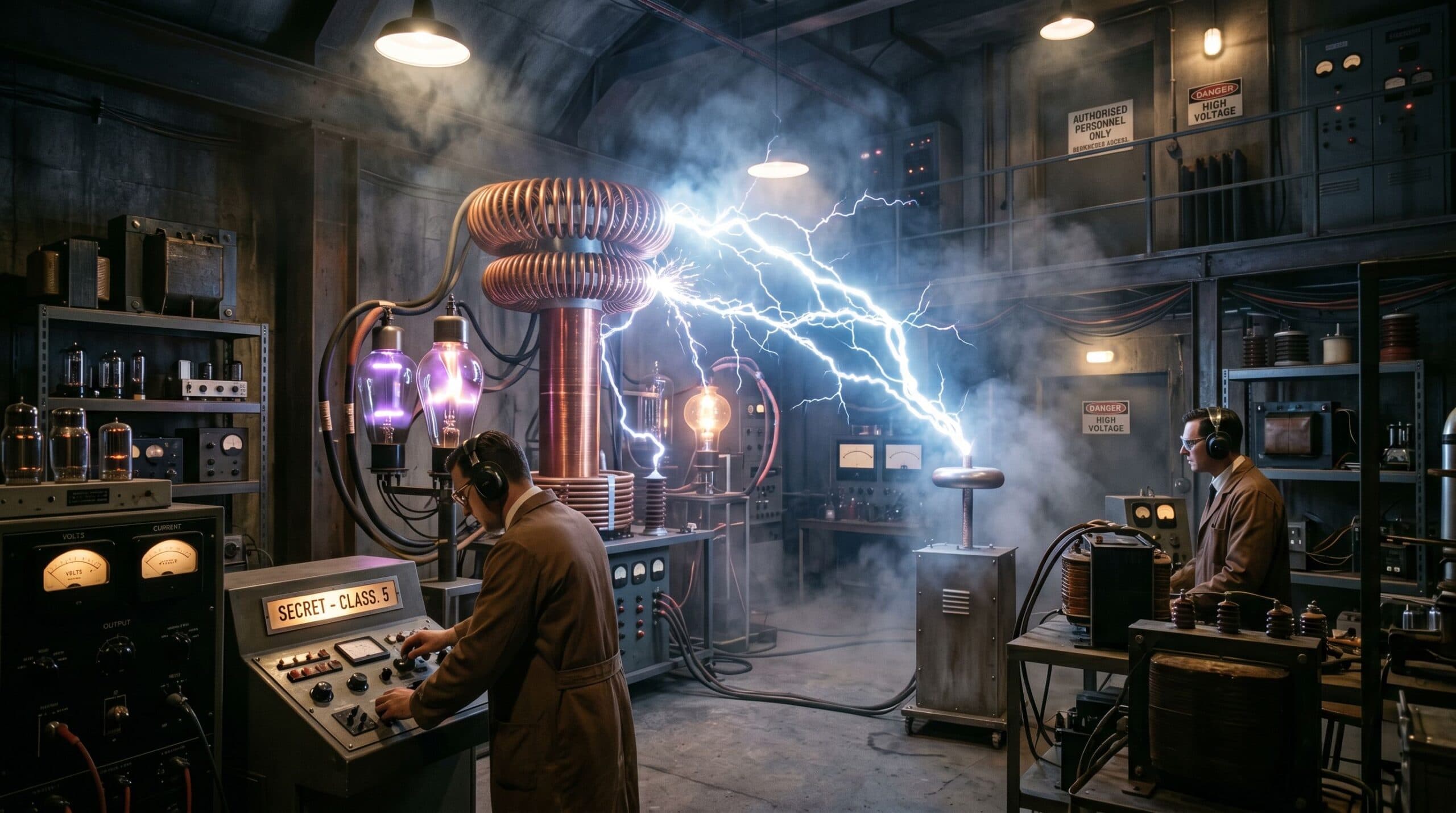
1957 Electrogravitics Secret: The Classified Research Program Whose Watchers Have All ‘Gone’
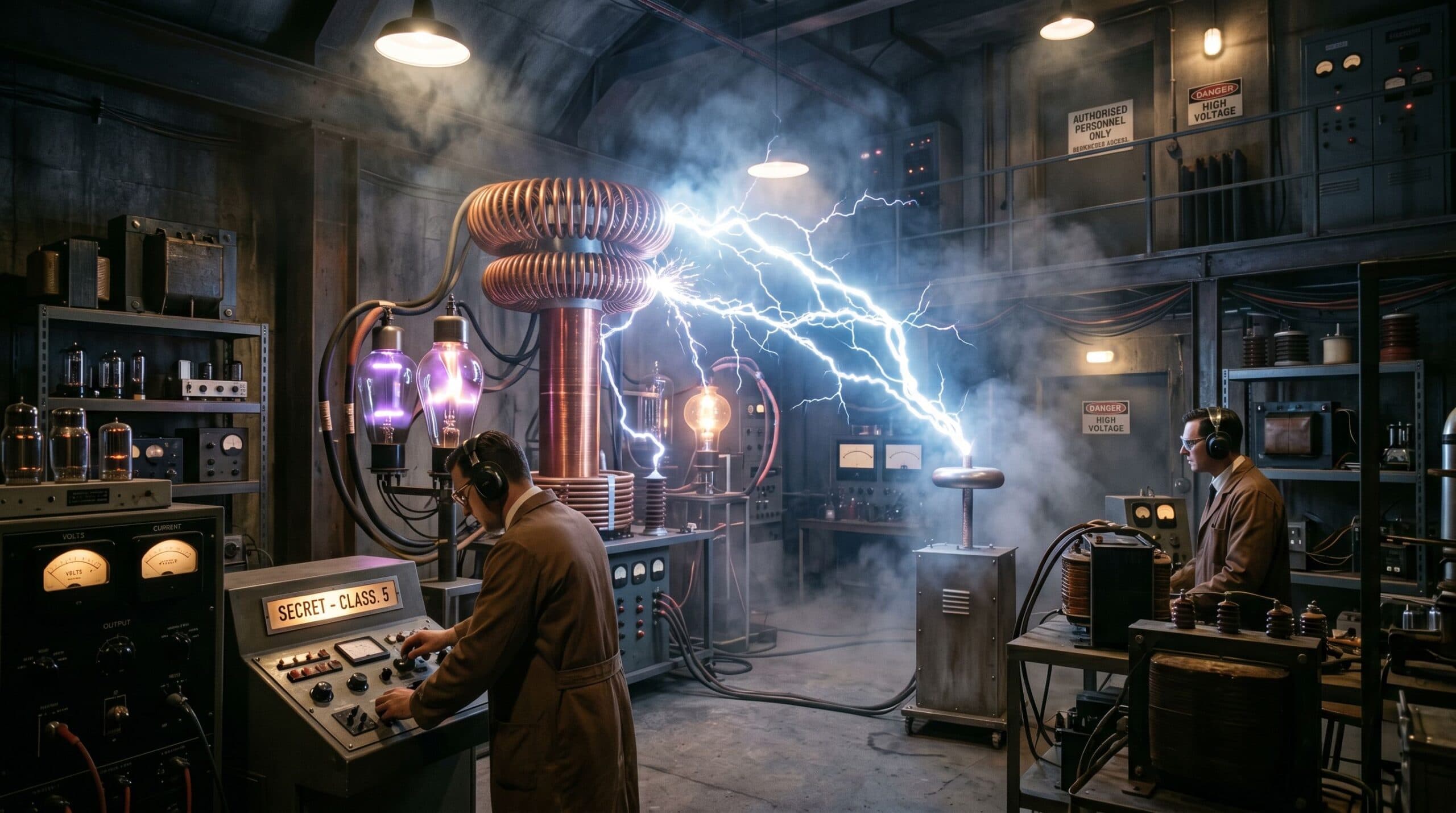
A viral essay claims that classified electrogravitics research made real progress in the 1950s — and that everyone who knew the truth about it has since disappeared from the public record. The story is spreading through high-strangeness forums.
May 14, 2026 • 7 min read
Ancient Civilizations
1957 Electrogravitics Secret: The Classified Research Program Whose Watchers Have All ‘Gone’
A viral essay claims that classified electrogravitics research made real progress in the 1950s — and that everyone who knew the truth about it has since disappeared from the public record. The story is spreading through high-strangeness forums.
May 13, 2026 • 7 min read
Prophecy
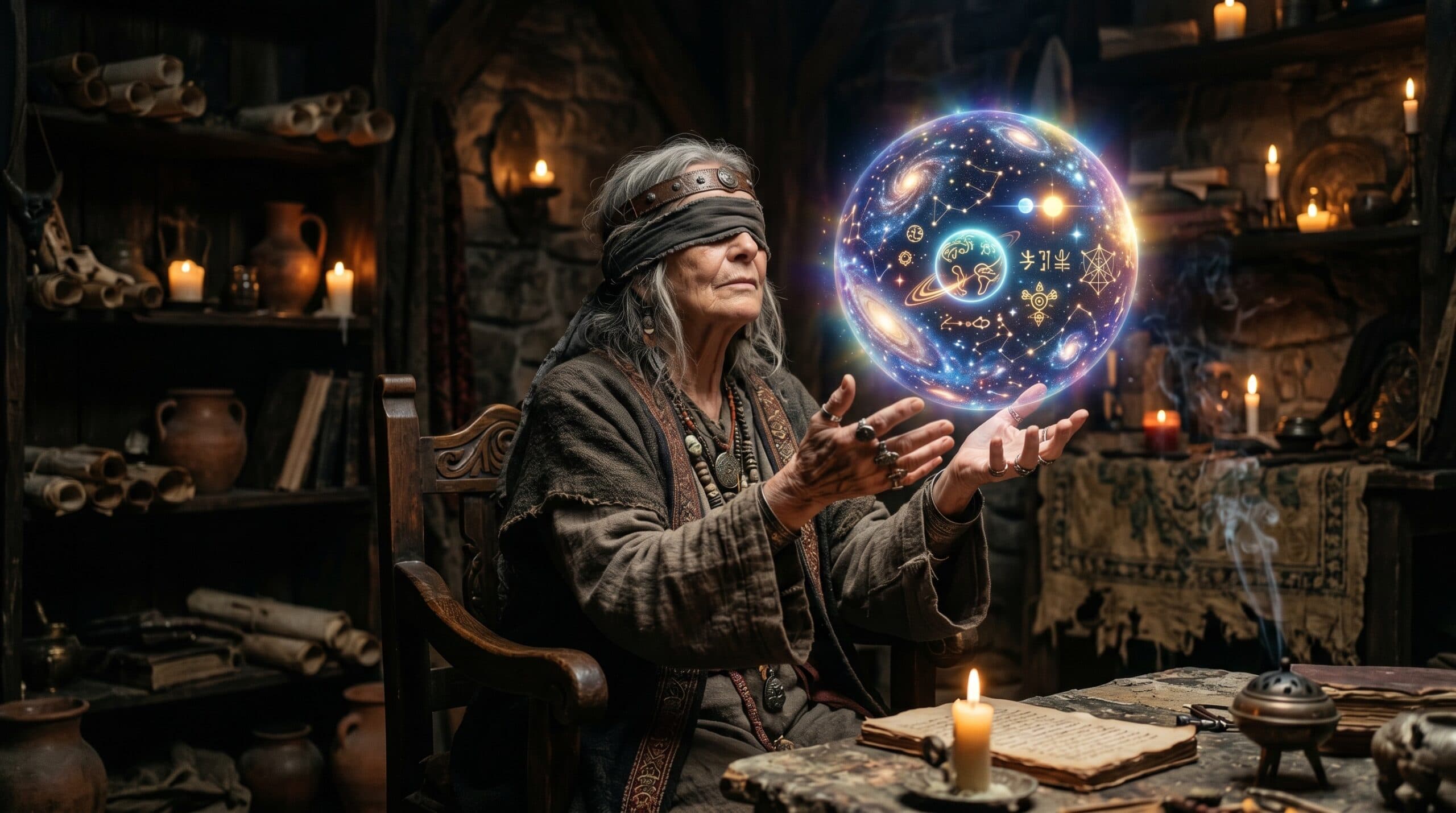
Baba Vanga’s 2026 Alien Prophecy: The Blind Mystic Who Predicted Mass Alien Contact and Why People Are Taking It Seriously Again
Bulgarian mystic Baba Vanga reportedly predicted that non-human contact would occur in 2026. With UFO disclosure accelerating in real-time, the timing has prophecy watchers locked in.
May 12, 2026 • 5 min read
Coverage and reporting relevant to this topic include:
The strongest skeptical response is usually that ambiguity gets inflated faster than evidence does. That does not make the story worthless. It means the audience should be careful not to mistake symbolic power for proof.
In many of these cases, the most likely explanation is still the least dramatic one that fits the known facts. But because emotionally satisfying explanations travel farther than cautious ones, the mystery version often spreads first and hardest.
Why This Story Still Matters
This matters because it reframes cryptid culture as a social force rather than just a curiosity. Bigfoot hunters are not just meme fodder in this telling; they are amateur researchers, pilgrims, hobbyists, and counter-establishment knowledge seekers.
That framing opens up richer content territory:
– Why are people still searching in an age of satellites and smartphones?
– Why do ambiguous traces remain more compelling than conclusive proof?
– Is Bigfoot belief a protest against expert culture, or a parallel form of grassroots inquiry?
There is also a bigger unexplained-theme takeaway here: a lot of paranormal culture survives because it gives people meaning, community, and adventure. The hunt itself may be the real phenomenon.
Advertisement
The Bigger Unexplained Pattern
For unexplained coverage, the deeper value is often cultural rather than evidentiary. These stories reveal what people fear, what they hope, what they distrust, and how quickly they build meaning around incomplete information.
That is exactly why the newer SEO/GEO standard works better than the old short-form template. It is designed to answer the headline question, ground the reader in what is actually known, include stronger context, and still explain why the story has such emotional force.
The real significance of stories like this is often not that they prove an extraordinary claim, but that they show how extraordinary interpretations take shape. In other words, the mystery is not only in the event. It is also in the reaction.
Frequently Asked Questions
What is this story about?
A BBC feature spotlighting sociological research into Bigfoot hunters is giving the Sasquatch conversation a fresh 2026 angle. Instead of asking “Is Bigfoot real?” the story asks a more interesting question: what kind of people build their lives around searching for a creature science has never confirmed?
Why is this getting attention now?
This matters because it reframes cryptid culture as a social force rather than just a curiosity. Bigfoot hunters are not just meme fodder in this telling; they are amateur researchers, pilgrims, hobbyists, and counter-establishment knowledge seekers.
Is Bigfooters and Scientific Inquiry proven?
No. These articles are written to separate what is verified, what is claimed, and what remains uncertain. Mystery does not automatically equal proof.
What should readers focus on?
Focus on the evidence, the source quality, the skeptical or conventional explanations, and why the story still resonates even when certainty is missing.
Art Grindstone is the hard-nosed storyteller behind Unexplained.co, a veteran investigator whose life’s work sits at the crossroads of the paranormal, fringe science, and the shadows most people try not to look into. With decades spent chasing impossible stories — black-budget psychic programs, vanished Cold War experiments, desert rituals that sparked UFO waves, and the strange phenomena buried in America’s forgotten backroads — Art brings a rare combination of skepticism, awe, and journalistic precision. He’s not here to debunk. He’s not here to blindly believe. He follows the evidence wherever it leads — even when it leads someplace deeply uncomfortable. Known for his immersive, cinematic style and his ability to turn obscure research into gripping narrative, Art has built a devoted following across podcasts, long-form features, documentaries, and serialized investigations. His interviews are direct. His analysis is unflinching. His voice has become a staple in the modern paranormal renaissance — the guy people turn to when a story is too strange, too complex, or too dangerous for anyone else to touch. Off-mic, Art works with a distributed network of researchers, archivists, and field operatives who help surface the stories mainstream media ignores. On-mic, he transforms their findings into meticulous, high-impact reporting that refuses to insult the intelligence of true believers. His philosophy is simple: Take the phenomenon seriously. Treat the audience with respect. Tell the story as if the world depends on it — because sometimes it does. When Art Grindstone digs into a case, he isn’t just chasing a mystery. He’s tracing the fault lines of reality itself.