Calls From the Dead: Chatsworth, Organs, BEK Myths
True Crime
Calls From the Dead: Chatsworth, Organs, BEK Myths
Key Takeaways Chatsworth train collision on September 12, 2008: A head-on crash between Metrolink and Union Pacific trains killed 25 people. The NTSB blamed engineer distraction from texting and pushed for Positive…
Art Grindstone is the hard-nosed storyteller behind Unexplained.co, a veteran investigator whose life’s work sits at the crossroads of the paranormal, fringe science, and the shadows most people try not to look into. With decades spent chasing impossible stories — black-budget psychic programs, vanished Cold War experiments, desert rituals that sparked UFO waves, and the strange phenomena buried in America’s forgotten backroads — Art brings a rare combination of skepticism, awe, and journalistic precision. He’s not here to debunk. He’s not here to blindly believe. He follows the evidence wherever it leads — even when it leads someplace deeply uncomfortable. Known for his immersive, cinematic style and his ability to turn obscure research into gripping narrative, Art has built a devoted following across podcasts, long-form features, documentaries, and serialized investigations. His interviews are direct. His analysis is unflinching. His voice has become a staple in the modern paranormal renaissance — the guy people turn to when a story is too strange, too complex, or too dangerous for anyone else to touch. Off-mic, Art works with a distributed network of researchers, archivists, and field operatives who help surface the stories mainstream media ignores. On-mic, he transforms their findings into meticulous, high-impact reporting that refuses to insult the intelligence of true believers. His philosophy is simple: Take the phenomenon seriously. Treat the audience with respect. Tell the story as if the world depends on it — because sometimes it does. When Art Grindstone digs into a case, he isn’t just chasing a mystery. He’s tracing the fault lines of reality itself.
5 min · 1,188 words
In This Report(8)
Key Takeaways
Chatsworth train collision on September 12, 2008: A head-on crash between Metrolink and Union Pacific trains killed 25 people. The NTSB blamed engineer distraction from texting and pushed for Positive Train Control safety tech.
Family claims in Chatsworth: Relatives said they got about 35 calls from victim Charles E. Peck’s phone in the hours after the wreck. Investigators never publicly confirmed finding Peck’s handset, leaving telecom angles unexplained.
Three patterns under the lens: Repeated calls from the dead, organ recipients picking up donor traits through ‘cellular memory,’ and Black-Eyed Children encounters—starting from 1990s internet posts, with plenty of stories but slim hard proof.
Night Calls, A New Heart, and Children at the Window
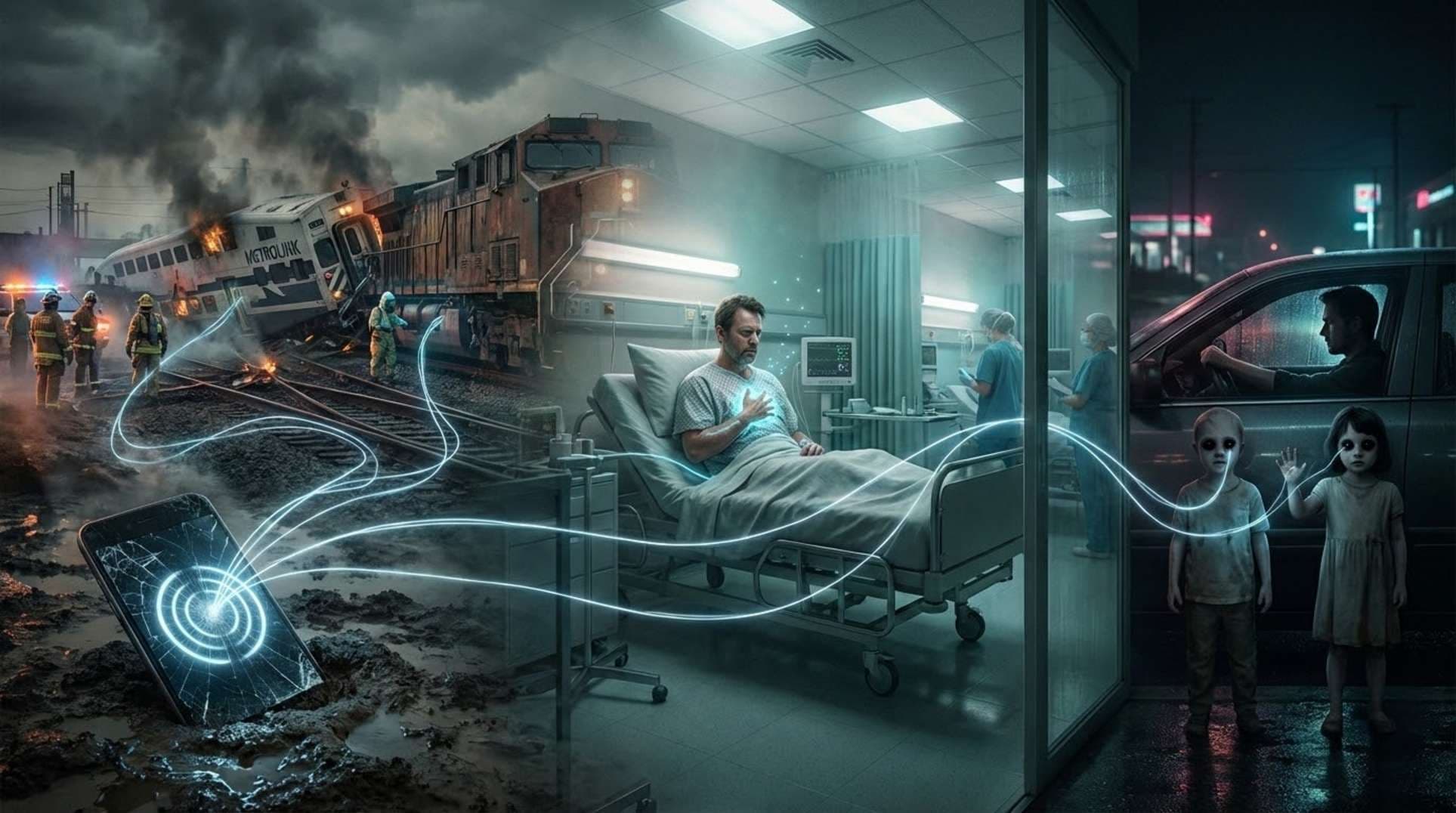
Picture this: Dawn breaks over twisted metal and diesel fumes at the Chatsworth rail yard on September 12, 2008. Rescue crews sift wreckage while a phone—somewhere—keeps ringing families with calls from the dead. Cut to a hospital ward, sterile and hushed, where a new heart beats in rhythm. The patient wakes with cravings that aren’t their own, echoes of a life they never lived. Then, a dark road at midnight. A driver idles, uneasy, as two small figures tap the window. Their eyes: solid black. They ask to come in, their voices flat, insistent.
These scenes aren’t fiction. In Chatsworth, families reported around 35 calls from Charles Peck’s number while search teams combed the site. Transplant stories circulate in the press—like a 2008 case where a heart recipient later died just like his donor—though they’re anecdotes, not lab results. Black-Eyed Children tales trace back to Brian Bethel’s mid-1990s posts: kids with pitch-black eyes, begging for entry, stirring dread.
What Witnesses and Analysts Report
Families in the Chatsworth case described dozens of calls—around 35 over 11 to 12 hours—from Peck’s phone after the crash. Press outlets and fact-checkers like Snopes have rounded up their testimonies. It’s a pattern that shows up in other death-related stories, collected in paranormal archives.
Advertisement
Black-Eyed Children witnesses often share similar details: encounters at night, at doors or car windows. The kids demand permission to enter or a ride, speaking in monotones. Dread hits hard, and their eyes lack any white—just black voids. Forums, Reddit threads, and podcasts are full of these accounts, building a shared lore.
Organ recipients sometimes talk about shifts: new food likes, changed habits, even handwriting tweaks. Media spots highlight wild coincidences, like a recipient marrying the donor’s widow or mirroring their death. These pop up in popular stories and transplant circles, though verification varies.
What happened in the Chatsworth train crash?
Did families really receive calls from the dead in Chatsworth?
What’s the evidence for Black-Eyed Children?
Do organ transplants really transfer memories or traits?
How did officials respond to these phenomena?
Advertisement
Frequently Asked Questions
What happened in the Chatsworth train crash?
On September 12, 2008, a Metrolink train collided head-on with a Union Pacific freight train, killing 25 people. The NTSB report attributed it to the engineer being distracted by texting.
Did families really receive calls from the dead in Chatsworth?
Relatives reported about 35 calls from victim Charles Peck's phone after the crash, over 11-12 hours. However, investigators never publicly confirmed recovering the handset, leaving room for telecom explanations like network glitches.
What's the evidence for Black-Eyed Children?
Accounts started with Brian Bethel's mid-1990s posts and spread online, describing kids with solid black eyes demanding entry and causing dread. They're consistent in folklore but lack independent verification, often seen as urban legends.
Do organ transplants really transfer memories or traits?
Recipients report changes like new cravings or behaviors, termed 'cellular memory' in speculative literature. Peer-reviewed sources treat it as anecdotal, possibly psychosocial, with no proven biological mechanism, though media anecdotes highlight striking coincidences.
How did officials respond to these phenomena?
For Chatsworth, the NTSB focused on human error and safety tech, not addressing calls directly. Transplant experts view changes as subjective, not mechanistic. BEKs are dismissed by fact-checkers as folklore without physical proof.
Two New Loch Ness Reports Bring 2026 Sightings to 13—But What Was Actually Seen?
Two new reported encounters bring the 2026 Loch Ness sighting count to 13. Here is what the reports establish—and what they do not.
Aug 26, 2026 • 6 min read
Articles
Two New Loch Ness Reports Bring 2026 Sightings to 13: But What Was Actually Seen?
Two new reported encounters bring the 2026 Loch Ness sighting count to 13. Here is what the reports establish and what they do not.
Aug 24, 2026 • 6 min read
Articles
Hidden in Every Human Genome: Two ‘Ghost’ Ancestors Science Has Never Found
A new Science study finds that everyone alive carries DNA from at least one unknown human ancestor. The fossils are still missing—but the genetic signal spans the globe.
Aug 21, 2026 • 9 min read
Community voices add layers—some BEK witnesses go silent after ‘letting them in,’ fueling speculation. Transplant anecdotes persist despite spotty backing, and calls-from-the-dead reports keep surfacing, treated seriously by those who’ve lived them.
Timelines, Tracks, and Hard Data
The NTSB’s final report on Chatsworth (RAR-10/01) pins the September 12, 2008, collision on engineer distraction—texting while on duty. It led to 25 deaths and calls for tech fixes. You can pull the PDF straight from their site.
Family reports peg about 35 calls from Peck’s phone post-crash, as noted in Snopes summaries. But no public word on recovering the handset—that’s a key gap.
Black-Eyed Children kicked off with Brian Bethel’s 1990s forum posts, spreading via online horror spots. Atlas Obscura and Snopes track how it grew into modern folklore.
On transplants, peer-reviewed pieces from PubMed (2019, 2020, 2024) touch on ‘cellular memory’—recipients adopting donor traits. They call it speculative, needing more study. Press like Fox News and the Evening Standard in 2008 shared a case of a heart recipient’s eerie parallels to his donor’s life and death.
Date
Event
Verifiable Source
Unresolved Evidence
Sept 12, 2008
Chatsworth collision
NTSB Report RAR-10/01
Handset not publicly confirmed recovered
Mid-1990s
BEK origin posts
Brian Bethel forums, Atlas Obscura
No independent physical verification
2008
Heart recipient anecdote
Fox News, Evening Standard
Anecdotal, not peer-reviewed
Official Story vs. What the Data Suggests
The NTSB stands firm on Chatsworth: engineer texting caused it, backed by recorder data and signals. That’s the hard line from the agency.
But telecom quirks—like auto-redials or network glitches—could explain those calls. Without the handset confirmed, forensic answers stay out of reach.
In transplant circles, doctors see recipient changes as real reports but chalk them up to psychology or meds. Ideas like neural tissue carrying memories? Still guesses, not proven.
Folklorists view Black-Eyed Children as urban legends, born online and spread socially—no need for supernatural proof.
Witnesses push back, saying their experiences don’t fit neat boxes. Families feel those calls were more than glitches; recipients sense deeper connections. We present both sides, respecting the raw accounts while eyeing the evidence gaps.
The Open Questions Investigators Should Keep on the Table
For calls like Chatsworth, dig into carrier records and network logs. Check if the handset or SIM turned up for analysis. Model how a lost device might trigger repeated calls via retries.
Advertisement
Transplant work needs solid cases: match donor details blindly, track changes over time. Rule out meds, surgery effects, or grief before chasing biology.
With BEKs, chart reports by time, place, and online buzz. Hunt police files or extra witnesses. Interview ‘let-in’ claimants carefully, minding trauma.
Run the odds: How rare is a recipient dying like their donor in a big population? Base rates help spot true anomalies.
Reporters, shield sources facing threats or pain. Scrutinize claims without hype or outright rejection—test the support, honor the stories.
What It All Might Mean
We know Chatsworth’s tragedy is real, with NTSB’s cause nailed down. Calls after deaths, recipient shifts, and BEK tales form patterns people swear by, rooted in traceable origins.
What’s unclear: Can missing phones log those calls? Does biology pass on memories? Any hard proof for BEKs beyond stories?
These accounts highlight grief’s pull, tech’s weird traces, and how tales grow from coincidence. They matter for those chasing anomalies—showing where evidence meets the unknown. If you’re diving deeper, I can pull NTSB docs, studies, or interview guides—just say the word.
Frequently Asked Questions
On September 12, 2008, a Metrolink train collided head-on with a Union Pacific freight train, killing 25 people. The NTSB report attributed it to the engineer being distracted by texting.
Relatives reported about 35 calls from victim Charles Peck’s phone after the crash, over 11-12 hours. However, investigators never publicly confirmed recovering the handset, leaving room for telecom explanations like network glitches.
Accounts started with Brian Bethel’s mid-1990s posts and spread online, describing kids with solid black eyes demanding entry and causing dread. They’re consistent in folklore but lack independent verification, often seen as urban legends.
Recipients report changes like new cravings or behaviors, termed ‘cellular memory’ in speculative literature. Peer-reviewed sources treat it as anecdotal, possibly psychosocial, with no proven biological mechanism, though media anecdotes highlight striking coincidences.
For Chatsworth, the NTSB focused on human error and safety tech, not addressing calls directly. Transplant experts view changes as subjective, not mechanistic. BEKs are dismissed by fact-checkers as folklore without physical proof.
↑
06
The Open Questions Investigators Should Keep on the Table
Art Grindstone is the hard-nosed storyteller behind Unexplained.co, a veteran investigator whose life’s work sits at the crossroads of the paranormal, fringe science, and the shadows most people try not to look into. With decades spent chasing impossible stories — black-budget psychic programs, vanished Cold War experiments, desert rituals that sparked UFO waves, and the strange phenomena buried in America’s forgotten backroads — Art brings a rare combination of skepticism, awe, and journalistic precision. He’s not here to debunk. He’s not here to blindly believe. He follows the evidence wherever it leads — even when it leads someplace deeply uncomfortable. Known for his immersive, cinematic style and his ability to turn obscure research into gripping narrative, Art has built a devoted following across podcasts, long-form features, documentaries, and serialized investigations. His interviews are direct. His analysis is unflinching. His voice has become a staple in the modern paranormal renaissance — the guy people turn to when a story is too strange, too complex, or too dangerous for anyone else to touch. Off-mic, Art works with a distributed network of researchers, archivists, and field operatives who help surface the stories mainstream media ignores. On-mic, he transforms their findings into meticulous, high-impact reporting that refuses to insult the intelligence of true believers. His philosophy is simple: Take the phenomenon seriously. Treat the audience with respect. Tell the story as if the world depends on it — because sometimes it does. When Art Grindstone digs into a case, he isn’t just chasing a mystery. He’s tracing the fault lines of reality itself.